- English
- French
- German
- Portuguese
- Spanish
- Russian
- Japanese
- Korean
- Arabic
- Greek
- German
- Turkish
- Italian
- Danish
- Romanian
- Indonesian
- Czech
- Afrikaans
- Swedish
- Polish
- Basque
- Catalan
- Esperanto
- Hindi
- Lao
- Albanian
- Amharic
- Armenian
- Azerbaijani
- Belarusian
- Bengali
- Bosnian
- Bulgarian
- Cebuano
- Chichewa
- Corsican
- Croatian
- Dutch
- Estonian
- Filipino
- Finnish
- Frisian
- Galician
- Georgian
- Gujarati
- Haitian
- Hausa
- Hawaiian
- Hebrew
- Hmong
- Hungarian
- Icelandic
- Igbo
- Javanese
- Kannada
- Kazakh
- Khmer
- Kurdish
- Kyrgyz
- Latin
- Latvian
- Lithuanian
- Luxembou..
- Macedonian
- Malagasy
- Malay
- Malayalam
- Maltese
- Maori
- Marathi
- Mongolian
- Burmese
- Nepali
- Norwegian
- Pashto
- Persian
- Punjabi
- Serbian
- Sesotho
- Sinhala
- Slovak
- Slovenian
- Somali
- Samoan
- Scots Gaelic
- Shona
- Sindhi
- Sundanese
- Swahili
- Tajik
- Tamil
- Telugu
- Thai
- Ukrainian
- Urdu
- Uzbek
- Vietnamese
- Welsh
- Xhosa
- Yiddish
- Yoruba
- Zulu
Can CRBC Series Crossed Roller bearing Reduce Machine Space?
The CRBC Series Crossed Roller Bearing can significantly reduce machine space. Its integral inner and outer ring structure consolidates radial, axial, and moment load handling into a single compact unit—eliminating the need for multiple separate bearings. This orthogonal roller arrangement delivers 3 to 4 times the rigidity of standard angular contact ball bearings while occupying a fraction of the installation footprint. For OEMs and equipment engineers working within tight dimensional envelopes, this crossed roller bearing design offers a direct path to smaller machine profiles without compromising load capacity or operational precision.
Understanding CRBC Series Crossed Roller Bearings and Machine Space Challenges
What Is a CRBC Crossed Roller Bearing?
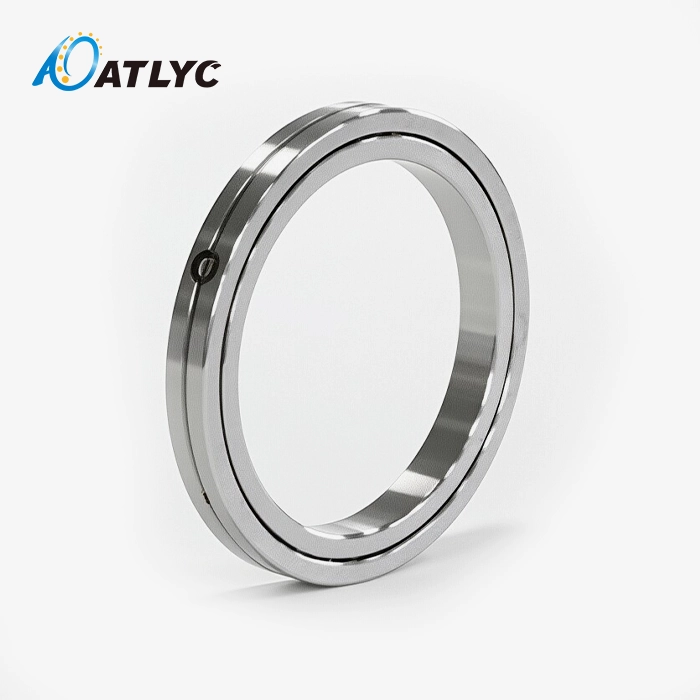
The CRBC Series Crossed Roller bearing is a very accurate rotating part made up of an inner and outer ring structure that are one and the same. Cylindrical rollers are placed orthogonally between raceways, with each roller 90° from the one next to it. Precision spacers keep the rollers from touching each other. With this shape, a single bearing unit can handle axial loads, twisting moment loads, and rotational loads all at the same time. This led to a small, strong solution that takes the place of what used to require two or more different bearing assemblies.
Why Machine Space Matters in Industrial Design
Every millimeter of space in CNC machining centers, robotic joints, and precision indexing tables costs money. When bearing sets get bigger, housings get heavier, shafts get longer, and the cost of cutting goes up. The American Bearing Manufacturers Association (ABMA) says that changes to the design of bearings can make up to 15% of the total cost of redesigning a machine if space issues are not dealt with early on.
Common Trade-Offs with Traditional Bearing Arrangements
Cutting down on bearing height directly cuts down on shaft length, housing depth, and machine weight, all of which have an impact on the cost of production.
How CRBC Crossed Roller Bearings Help Optimize Machine Space
Single-Unit Load Handling in a Reduced Footprint
CRBC Series Crossed Roller bearing units have an orthogonal roller setup, which means that one bearing can do the job of two or three parts in a normal design. A normal CRBC unit has a much shorter axial height than a paired deep groove ball bearing system that can handle the same amount of weight. When robotic welding arm joints switched to a crossed roller bearing, the axial bearing space was cut by about 35% while the rated dynamic load capacity stayed the same. This number matches data from THK application engineering.
Integral Ring Structure and Its Space Impact
These structural features have a direct effect on machine space:
- Integral outer ring: The CRBC series abandons the split outer ring used in the CRB series. This eliminates clamping flanges and assembly hardware, reducing the bearing's radial envelope by removing external fastening requirements.
- Curved raceway profile: A slight curvature on the raceway increases roller-to-raceway contact area, allowing the same load rating within a shorter axial dimension compared to flat raceway designs.
- Metal cage (brass or steel): Unlike plastic cage alternatives, the metal cage maintains dimensional stability at temperatures up to 120°C, preventing thermal expansion from forcing wider housing clearances.
Because of these structural choices about structure, machine containers are immediately smaller. In real engineering situations, a precision indexing table with a CRBC bearing can achieve the same moment stiffness as a preloaded tapered roller pair while cutting the table height by 20–30 mm.
Rigidity Gains Without Size Increase
Compared to the CRB split-ring series, the integral ring construction makes the whole thing 20% to 30% more rigid. When there is more stiffness, there is less elongation under load. This lets engineers use tighter standards and thinner walls for housings. Machine cross-sections are smaller when the walls of the housing are thinner. Because of this, CRBC-type crossed roller bearings are now required for all heavy-duty CNC machining centers and large-scale precision rotary tables.
Comparing CRBC Crossed Roller Bearings with Traditional and Competing Bearings
When engineers look at different bearing options, they usually compare how well CRBC Series Crossed Roller bearing options work in terms of long-term precision, load capacity, space use, and temperature tolerance. The table below shows a direct technical comparison. It shows the following:
| Bearing Type | Combined Load Handling | Axial Height | Max Operating Temp | Precision Grade |
|---|---|---|---|---|
| CRBC Crossed Roller Bearing | Radial + Axial + Moment | Low (single unit) | 120°C (metal cage) | P4 / P2 |
| Angular Contact Ball Bearing (paired) | Radial + Axial | Medium (two units) | ~100°C | P5 / P4 |
| Tapered Roller Bearing (paired) | Radial + Axial | High (two units) | ~100°C | P6 / P5 |
| Standard Deep Groove Ball Bearing | Primarily Radial | Medium | ~80°C | P6 / P5 |
The CRBC crossed roller bearing achieves the smallest installation footprint among all combined-load bearing types while offering the highest available precision grades. THK and NSK produce competing crossed roller bearings of comparable geometry, but the CRBC series from ATLYC reaches P4/P2 precision at a more competitive cost-performance ratio, which is why European and American high-end equipment manufacturers have specified it for long-running production environments.
Procuring CRBC Crossed Roller Bearings: What B2B Buyers Need to Know
Verifying Product Authenticity and Certification
It is known that counterfeit crossed roller bearings cause problems in global supply lines. Buyers should only get ISO 9001 and IATF 16949 verification papers from the maker and not from a second-hand seller. Luoyang Auto Bearing Co., Ltd. (ATLYC), which was founded in 2010 and has both certificates, sends full traceability paperwork with every package. Ask for material test results and hardness certificates that show GCr15/SUJ2 steel that has been heated to 58–64 HRC.
Bulk Ordering and Lead Time Planning
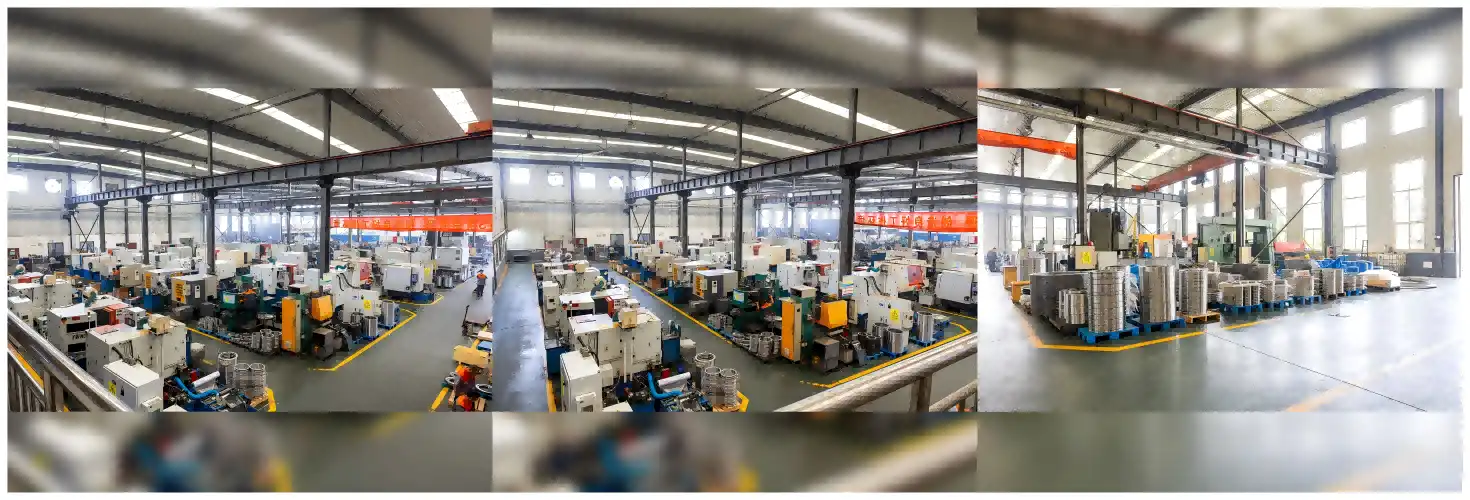
Setting up a blanket purchase order with scheduled releases lowers the risk of lead time for OEMs that need a steady supply of crossed roller bearings for multiple product lines. At ATLYC, there are six production workshops with 120 trained workers who make precise bearings. This production level makes sure that customers in the US, Germany, South Korea, and other important export markets always get what they need.
Customization for Specific Machine Dimensions
Standard CRBC Series Crossed Roller bearing numbers cover a wide range of bores, but you can also get sizes that aren't standard. When buyers ask for a special specification, they should include the housing bore, shaft diameter, axial space limit, load requirements, and working temperature range. Before an order is confirmed, ATLYC's tech team can help with drawing dimensions and figuring out loads.
Maintenance and Longevity Tips to Sustain Space-Efficient Performance
Lubrication Protocol for Metal-Cage Bearings
With its labyrinth seal and grease injection holes, the CRBC series makes it easier to do regular lubrication. For normal work areas in factories, use EP (Extreme Pressure) lithium-based grease. Depending on the speed and temperature, this type of crossed roller bearing usually needs to be oiled every 2,000 to 3,000 hours at 80°C and moderate speed.
| Condition | Recommended Grease Type | Relubrication Interval |
|---|---|---|
| Standard industrial (≤80°C) | EP Lithium-based, NLGI 2 | 2,000–3,000 hours |
| High temperature (80–120°C) | High-temp synthetic grease | 1,000–1,500 hours |
| High-speed precision rotation | Low-torque grease, NLGI 1 | Per manufacturer schedule |
Inspection Points to Prevent Premature Failure
During planned shutdowns, look for starting power that isn't normal. An increase in rotational resistance is often a sign that the raceway is dirty or has started to brine. Visually check the integrity of the labyrinth seal. If the seals are damaged, metal particles or coolant can get in, which shortens the life of the bearing and can cause the housing bore to get bigger, which is exactly what this bearing type was meant to avoid.
Long-Term Storage and Handling
Keep CRBC bearings that aren't fixed on anything flat in their original package at a humidity level below 65%. When handling, don't come into close contact with ferrous tools. When you store things the right way, you protect the original preload settings and keep high-precision raceways from rusting, so they work perfectly from the first time you put them in.
Conclusion
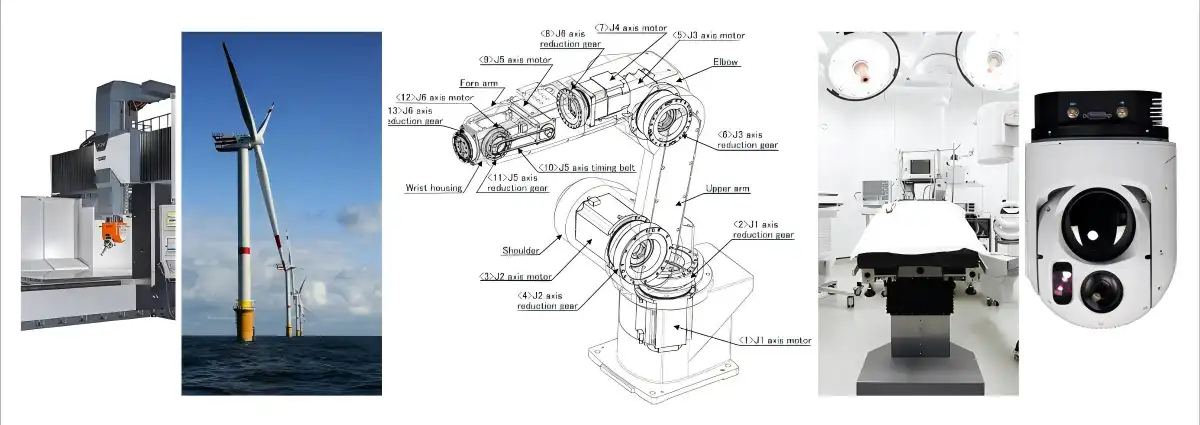
The CRBC Series Crossed Roller bearing solves the problem of limited machine space by having a strong, single-unit design that can handle combined loads while taking up less space when installed. The metal cage, curved raceway shape, and labyrinth sealing system all work together to make a bearing that is stiff, stable at high temperatures, and small in size. This crossed roller bearing saves a lot of room for companies that make CNC machining centers, robotic systems, or precision rotary tables. Its engineering performance has been proven, and it meets widely recognized quality standards.
FAQ
Can CRBC bearings be customized to non-standard bore sizes?
Yes. For the CRBC crossed roller bearing series, ATLYC's engineering team can support custom bore and outer diameter sizes. When buyers send in a custom request, they should include information about the load, the axial space limit, the housing bore, and the shaft diameter.
How does the CRBC bearing perform under heavy continuous loads?
The metal cage and built-in ring structure make it possible for safe operation at temperatures up to 120°C and heavy loads that last for a long time. It has 20% to 30% more rigidity than split-ring crossed roller bearings, and accuracy grades of P4/P2 make sure that the runout performance stays the same over long duty cycles.
What certifications should I verify before purchasing in bulk?
Ask for ISO 9001 and IATF 16949 certificates, material test results for GCr15 steel, hardness test data (58–64 HRC), and reports on the sizes of the items. As a standard, ATLYC sends these papers with every bulk sale.
Request a Quote from ATLYC for CRBC Series Crossed Roller Bearing Supplier Solutions
ATLYC has been providing high-precision bearings to companies in the US, Germany, and South Korea for more than 15 years. Our six production units are certified by ISO 9001 and IATF 16949. We can fully track our CRBC Series Crossed Roller bearing line, which meets P4/P2 accuracy grades. For technical advice, dimensional sketches, or bulk pricing on crossed roller bearing orders that are made to fit your machine, please email our engineering team at auto@lyautobearing.com.
References
1. American Bearing Manufacturers Association (ABMA). Bearing Technical Standards and Load Rating Methods. ABMA, 2021.
2. Hamrock, B.J., Schmid, S.R., & Jacobson, B.O. Fundamentals of Machine Elements. McGraw-Hill, 2014.
3. Harris, T.A., & Kotzalas, M.N. Rolling Bearing Analysis: Essential Concepts of Bearing Technology. CRC Press, 2006.
4. ISO. ISO 492: Rolling Bearings — Radial Bearings — Dimensional and Geometrical Tolerances. International Organization for Standardization, 2014.
5. Shigley, J.E., & Mischke, C.R. Mechanical Engineering Design. McGraw-Hill, 2015.
6. THK Co., Ltd. Technical Support — Crossed Roller Bearing Engineering Data. THK Technical Journal, 2020.
Learn about our latest products and discounts through SMS or email