- English
- French
- German
- Portuguese
- Spanish
- Russian
- Japanese
- Korean
- Arabic
- Greek
- German
- Turkish
- Italian
- Danish
- Romanian
- Indonesian
- Czech
- Afrikaans
- Swedish
- Polish
- Basque
- Catalan
- Esperanto
- Hindi
- Lao
- Albanian
- Amharic
- Armenian
- Azerbaijani
- Belarusian
- Bengali
- Bosnian
- Bulgarian
- Cebuano
- Chichewa
- Corsican
- Croatian
- Dutch
- Estonian
- Filipino
- Finnish
- Frisian
- Galician
- Georgian
- Gujarati
- Haitian
- Hausa
- Hawaiian
- Hebrew
- Hmong
- Hungarian
- Icelandic
- Igbo
- Javanese
- Kannada
- Kazakh
- Khmer
- Kurdish
- Kyrgyz
- Latin
- Latvian
- Lithuanian
- Luxembou..
- Macedonian
- Malagasy
- Malay
- Malayalam
- Maltese
- Maori
- Marathi
- Mongolian
- Burmese
- Nepali
- Norwegian
- Pashto
- Persian
- Punjabi
- Serbian
- Sesotho
- Sinhala
- Slovak
- Slovenian
- Somali
- Samoan
- Scots Gaelic
- Shona
- Sindhi
- Sundanese
- Swahili
- Tajik
- Tamil
- Telugu
- Thai
- Ukrainian
- Urdu
- Uzbek
- Vietnamese
- Welsh
- Xhosa
- Yiddish
- Yoruba
- Zulu
Is the Tapered Roller Bearing 30 Series Suitable for Gearbox Systems?
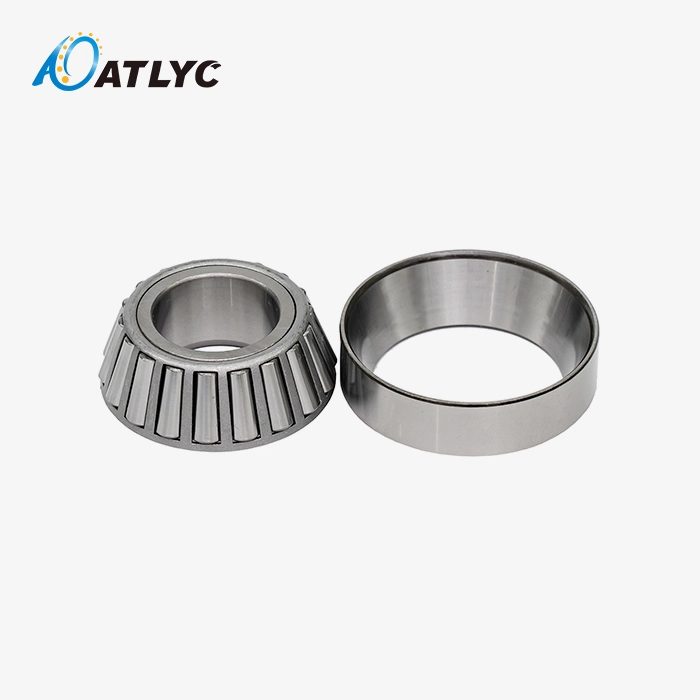
The answer is yes. The Tapered Roller Bearing 30 series represents a foundational solution for gearbox applications requiring combined radial and unidirectional axial load capacity. With contact angles ranging from 10° to 30° and a separable design that simplifies installation and clearance adjustment, these metric single-row bearings conform to ISO 355 standards, offering engineers reliable performance across automotive, industrial machinery, and equipment applications. The tapered geometry ensures uniform force distribution, making this series particularly well-suited for medium to light-load gearbox scenarios where precise load management is essential.
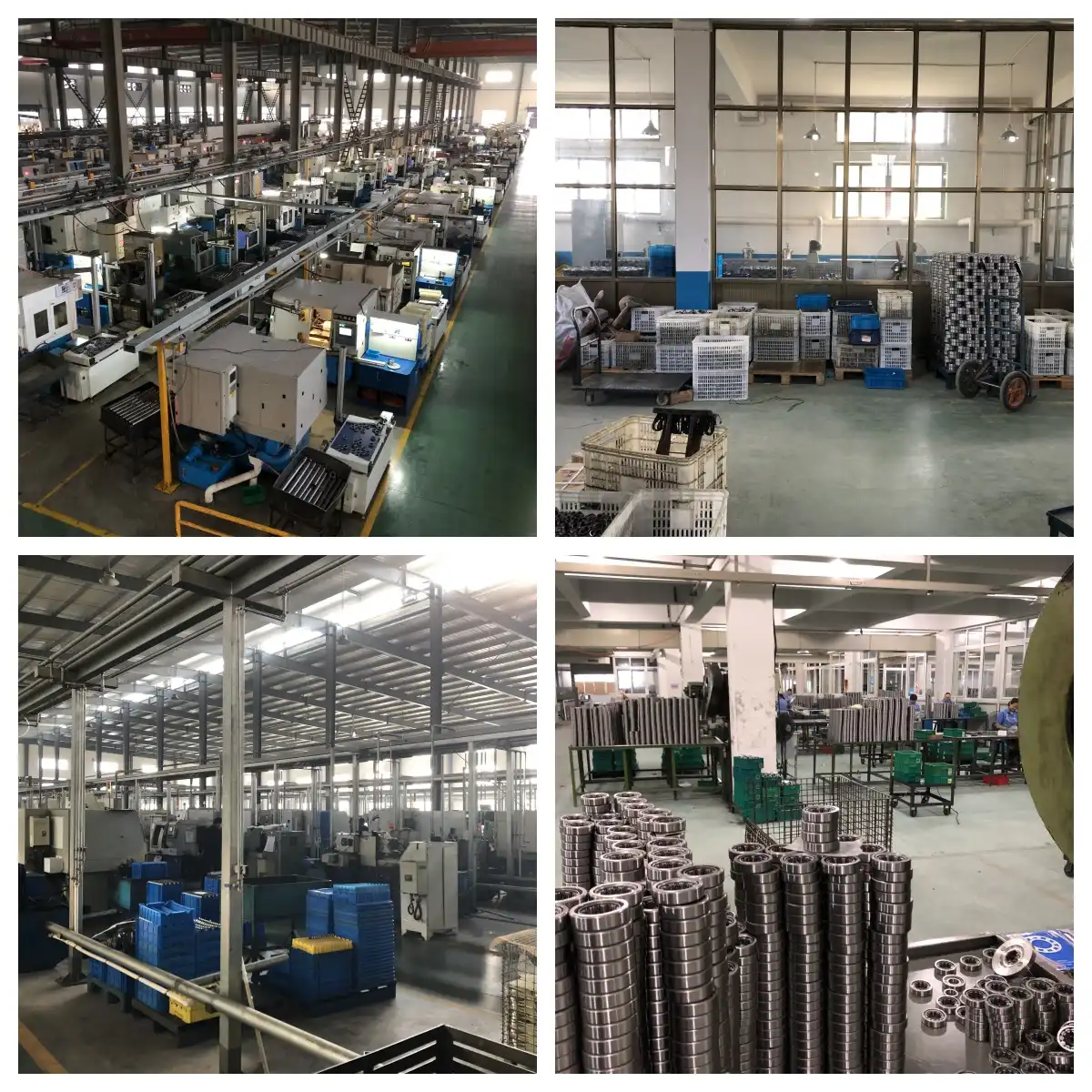
Introduction
Tapered roller bearings are very important in mechanical systems, especially when they have to support both axial and rotational loads and need to last a long time and be accurate. Choosing the right bearing set for a gearbox has a direct effect on how reliable, efficient, and cheap the system is to maintain over time. Gearboxes have to work in tough conditions with changing torque, speeds, and constant rotation. They need parts that can handle both radial forces from gear mesh and axial thrust from helical gear designs. This detailed guide aims to answer that question by looking at how well the 30 series tapered roller bearing works in gearboxes. We give buying clients useful information that helps them make smart sourcing choices that meet performance needs and are also cost-effective. With 15 years of experience making things at ATLYC, which has grown from a single workshop to six specialised production facilities, we've seen how choosing the right bearings can make a big difference in how well a gearbox works in automotive, agricultural, and industrial reducer applications.
Understanding the Tapered Roller Bearing 30 Series
The 30 series represents a robust design optimised for medium-duty industrial applications where space constraints meet significant load requirements. Understanding this bearing family's construction and capabilities helps procurement professionals evaluate whether it matches their gearbox specifications and operational demands.
Core Design Architecture
The basic structure has an inner ring with a tapered track, an outer ring (cup) that can be taken apart, a single row of tapered rollers, and a cage assembly that can be made of stamped steel or brass. This open-type design lets you add dust covers if you need more protection against contamination. The tapered shape makes sure that all the contact points of the rolling elements meet at a single point along the centerline of the bearing. This eliminates the edge loading that leads to premature wear in cylindrical options. At ATLYC, we follow strict dimensional tolerances that are in line with ISO 9001 and IATF 16949 standards. With a qualification rate of over 99.9%, each tapered bearing goes through rigorous testing across 12 key performance factors. Our thirty years of experience making precision bearings has taught us to pay close attention to quality. This way, you can be sure that the parts you receive will meet strict technical requirements from the moment they are installed.
Dimensional Range and Versatility
In the 30 series, the sizes range from 10 mm to 500 mm for the inner diameter, 26 mm to 1000 mm for the outer diameter, and 8 mm to 200 mm for the width. Because of this wide range of measurement options, design engineers can choose specific bearing configurations that fit the gearbox shaft diameters and housing limitations. Because tapered roller units are modular, you can pair cones and cups from the same series to get the best fit without having to wait for special manufacturing. Comparisons with similar series like the 30200 and 31 families show subtle differences in performance. The 30200 series usually has slightly bigger cross-sections for the same bore sizes, which means they can hold more weight when there is room in the gearbox. On the other hand, the 31 series has steeper contact angles that make it better for uses where the axial load is higher than the rotational force. Knowing these differences helps buying teams, Tapered Roller Bearing 30 series, choose the exact type of bearing that will work best with the load conditions of their gearbox.
Performance Characteristics Relevant to Gearbox Systems
Gearbox applications present unique challenges that require bearings capable of managing complex load patterns while maintaining positional accuracy over extended service intervals. The 30 series demonstrates several performance attributes specifically aligned with these operational demands.
Combined Load Handling Capacity
The tapered roller design is great at handling the radial and axial forces that happen at the same time when a gearbox works. When helical or bevel gears transfer power, they create thrust loads that are perpendicular to the shaft axis, as well as rotational loads that come from the mesh forces of the gears. The contact angle of the 30 series is between 10° and 30°, so it can handle both types of loads evenly. In many gearbox designs, this means that separate thrust bearings are not needed. This ability to handle two loads at once makes bearing arrangements easier, cuts down on the number of parts needed, and lowers the overall weight of the system compared to setups that use separate radial and thrust bearing types. The converging contact shape evenly distributes load along the tapered roller length. Instead of the point contact that you see in ball bearings, each roller keeps line contact along its entire length. This bigger touch area spreads out stress better and lets the 30 series handle heavier loads compared to its width and length. In real-world gearbox situations, this means that the bearings will last longer, even when they are used continuously and are hit by shock loads from quick changes in torque or direction.
Thermal Management and Clearance Control
The temperature rise in a gearbox is caused by friction between the gear mesh and the bearings and the churning of the grease. Because tapered roller units are designed to be taken apart, the internal space can be precisely controlled by moving them along the axis while they are being put together. In gearbox situations where shafts and housings expand due to heat during operation, this adjustability is very important. You can set the initial bearing clearance to account for expected thermal growth, which keeps the optimal preload throughout the working temperature range. Unlike fixed-clearance bearing types, the 30 series can be adjusted after installation, for example, during gearbox assembly or maintenance periods. This feature lets manufacturing errors in housing bores and shaft shoulders be taken into account while also getting the best load distribution between bearing rows when they are paired up. Setting the correct clearance limits the production of internal heat, lowers the frequency of vibrations, and increases the service life of the lubricant. All of these things have a direct effect on the reliability of gearboxes and maintenance plans in industrial settings.
Comparing the 30 Series with Alternative Bearing Choices for Gearboxes
Selecting optimal bearing types for gearbox applications requires understanding performance trade-offs between various bearing families. While multiple options exist, each presents distinct advantages and limitations based on load characteristics, speed requirements, and space constraints.
Tapered Rollers versus Ball Bearings
Deep groove ball bearings offer lower friction and higher speed capability compared to tapered roller alternatives, making them attractive for gearbox positions experiencing primarily radial loads with minimal axial thrust. However, ball bearings exhibit reduced load capacity per unit volume due to point contact geometry. In gearbox applications where combined loads exist—particularly helical gear configurations generating significant thrust forces—the 30 series tapered roller design provides superior durability and extended service intervals. Angular contact ball bearings bridge this performance gap by accommodating combined loads through their contact angle design. Nevertheless, the line contact achieved by tapered rollers still surpasses angular contact ball bearings in load-carrying capacity for equivalent envelope dimensions. Procurement decisions favouring ball bearings typically occur in high-speed gearbox positions where rotational speeds exceed 8,000 RPM, or in applications where axial loads remain consistently below 30% of radial load magnitude. Beyond these operating envelopes, tapered roller bearings like the 30 series deliver better cost-per-performance value.
Cylindrical Roller Bearings Comparison
Cylindrical roller bearings excel in handling pure radial loads with minimal shaft deflection due to Tapered Roller Bearing 30 series their high radial stiffness. Gearbox positions supporting intermediate shafts often benefit from cylindrical rollers where thrust loads are managed by separate bearings at shaft ends. However, standard cylindrical roller designs cannot accommodate axial forces without additional thrust bearing arrangements, increasing system complexity and part count. The 30 series eliminates this complexity by integrating axial load capacity within a single bearing unit. This simplification reduces assembly time, minimises potential misalignment issues between separate bearing types, and lowers total bearing system weight. In gearbox applications where space limitations restrict bearing span length, the combined load capability of tapered rollers becomes particularly valuable by allowing shorter shaft overhangs without compromising load capacity or rigidity requirements.
Procurement Considerations for Tapered Roller Bearing 30 Series
Strategic sourcing of bearings directly impacts manufacturing costs, supply chain reliability, and product quality outcomes. Procurement professionals navigating global bearing markets must balance multiple factors when selecting suppliers and products for gearbox applications.
Quality Certification and Manufacturing Standards
Compliance with ISO 9001 quality management systems and IATF 16949 automotive standards demonstrates a manufacturer's commitment to consistent production processes and continuous improvement. At ATLYC, our quality management system has evolved over 15 years from serving domestic clients to meeting the rigorous requirements of export customers across South Korea, the United States, Germany, Russia, Iran, and Turkey. This geographic diversity demands adherence to various regional certification requirements while maintaining unified quality standards across our six production workshops. Precision grades constitute another critical specification impacting gearbox performance. The 30 series is available in P0 (normal), P6 (higher than normal), and P5 (precision) tolerance classes conforming to ISO standards. Automotive transmission applications typically specify P6 or P5 grades to maintain tight backlash tolerances and minimise noise generation. Industrial gearbox applications with lower speed requirements often utilise P0 grade bearings, achieving significant cost savings without compromising functional performance. Understanding which precision grade matches your application requirements prevents over-specification that increases procurement costs unnecessarily.
Supplier Evaluation and Verification
Recognising established bearing brands like SKF, Timken, NTN, NSK, FAG, and KOYO ensures access to premium products backed by extensive engineering resources and global service networks. These manufacturers maintain comprehensive technical databases, application engineering support, and warranty programs that reduce implementation risks for critical gearbox designs. However, mid-tier manufacturers like ATLYC offer compelling alternatives combining ISO-certified quality with competitive pricing structures, particularly valuable for high-volume production scenarios where cost-performance optimisation drives sourcing decisions. Verifying authorised distributor status remains essential to avoiding counterfeit products that compromise gearbox reliability. Counterfeit bearings lack proper heat treatment, utilise inferior steel grades, and exhibit dimensional variations, causing premature failure. Requesting manufacturer certificates of conformity, conducting incoming inspection protocols, and establishing direct communication channels with bearing producers help procurement teams ensure supply chain integrity. Our customer service team provides transparent documentation and welcomes facility audits from qualified buyers seeking to validate our manufacturing capabilities and quality control processes.
Installation and Maintenance Best Practices for Gearbox Applications
Maximising bearing service life and gearbox reliability requires proper installation procedures, Tapered Roller Bearing 30 series and ongoing maintenance protocols tailored to operational conditions. Even premium-quality bearings fail prematurely when installation errors or maintenance neglect compromise their performance capabilities.
Installation Procedures and Tools
The separable design of tapered roller bearings simplifies installation compared to non-separable bearing types but demands attention to clearance adjustment for optimal performance. Begin by thoroughly cleaning the shaft and housing to remove protective coatings, machining debris, and contamination that could cause misalignment or surface damage. Install the cone assembly onto the shaft using appropriate mounting tools—hydraulic presses for interference fits or bearing heaters for thermal expansion mounting on larger sizes. Avoid striking bearing rings directly with hammers, as impact loads create brinelling damage to raceways that initiates premature fatigue failures. After mounting the cone, position the shaft assembly into the housing and install the cup into the housing bore. The cup's interference fit typically ranges from 0.001 to 0.003 inches, depending on housing material and operating temperature range. Adjust axial position to achieve specified bearing clearance, typically measured using dial indicators while rocking the shaft to settle rollers against raceways. Proper clearance settings prevent preload conditions, causing excessive heat generation while avoiding excessive looseness that permits skidding and wear acceleration. Alignment verification during installation prevents uneven load distribution across roller lengths. Measure shaft runout at bearing seats and housing bore concentricity to ensure geometric tolerances remain within specifications. Misalignment exceeding 0.002 inches per inch of bearing width creates edge loading concentrations that drastically reduce bearing fatigue life. In gearbox assemblies with multiple bearing positions, systematically verify alignment at each location before final torquing of housing components.
Monitoring and Inspection Protocols
Vibration analysis can tell you early on if there are problems with bearings before they fail completely. Record amplitude and frequency spectra at different speeds and load situations during gearbox commissioning to get a baseline of the vibrations. Set up regular vibration monitoring—every month for important gearboxes and every three months for normal industrial uses—and compare current results to baseline values. When amplitudes rise by more than 25% or new frequency peaks show up in bearing defect ranges, it means that damage is getting worse and needs to be looked into. If necessary, the bearing may need to be replaced during the next scheduled maintenance interval. Temperature monitoring works with vibration analysis to find problems with lubrication, overloading, or clearance. Put temperature sensors in the bearing housing and set the alarms to go off 20°F above standard operating temperatures. Sudden temperature changes mean that the bearings are lacking lubrication or getting contaminated, which requires quick attention. Gradual temperature rises over weeks or months can mean that bearings are wearing out or that the lubricant is breaking down, which requires oil analysis and inspection planning. Visual inspections done at regular maintenance intervals show how contamination gets in, how seals break down, and early-stage wear patterns. Check the bearing parts for discolouration that could mean they are overheating, pitting from dirt, or cracking from stress caused by being out of line. Use bearing micrometres to measure the depth of the raceway's wear and compare the results to the manufacturer's replacement standards. Usually, 0.001 inches of material loss is enough to warrant replacement. Systematically write down the results of the inspection. This will help you keep track of problems over time and make design changes for future generations of gearboxes.

Conclusion
The Tapered Roller Bearing 30 series delivers proven performance in gearbox applications requiring balanced radial and axial load capacity within compact envelope dimensions. Its separable design, adjustable clearance capability, and robust tapered geometry provide gearbox manufacturers with reliable solutions backed by decades of field validation across automotive, agricultural, and industrial sectors. Procurement professionals benefit from understanding the series' technical capabilities, proper installation requirements, and maintenance protocols that maximise return on bearing investment. Partnering with ISO-certified manufacturers like ATLYC ensures access to quality components meeting international standards while maintaining competitive cost structures essential for global market success.
FAQ
1. Can the 30 Series Handle High Axial Loads in Gearboxes?
The 30 series accommodates moderate axial loads typical of helical gear configurations with helix angles up to 20 degrees. For applications where axial forces exceed 50% of radial loads, consider the 31 or 32 series with steeper contact angles providing enhanced thrust capacity.
2. How Do I Choose Between the 30 and 32000 Series for Reducer Applications?
The 32000 series offers approximately 30-40% higher load ratings in larger cross-sections, ideal for heavy-duty industrial reducers. Select the 30 series when space constraints limit radial dimensions or when medium-duty loads align with its capacity range, optimising cost-performance balance.
3. What Are Typical Lead Times for OEM Orders?
Standard configurations ship within 5-10 business days for quantities under 1,000 units. Customised specifications or large-volume orders typically require 4-6 weeks of production scheduling. Contact ATLYC's procurement team at auto@lyautobearing.com to discuss specific timeline requirements for your gearbox production schedule.
Partner with ATLYC for Precision Bearing Solutions
ATLYC stands ready to support your gearbox bearing requirements with our Tapered Roller Bearing 30 series comprehensive Tapered Roller Bearing 30 series product line, manufactured to ISO 9001 and IATF 16949 standards. Our 15 years of specialised manufacturing experience across six dedicated production workshops ensure consistent quality, competitive pricing, and reliable delivery schedules that keep your production lines operating efficiently. As a trusted Tapered Roller Bearing 30 series supplier serving OEMs across South Korea, the United States, Germany, and beyond, we combine precision manufacturing with responsive technical support tailored to your specific application needs. Contact our engineering team at auto@lyautobearing.com today to discuss custom specifications, request technical documentation, or obtain volume quotations that demonstrate our commitment to long-term partnership success.
References
1. Harris, T.A. and Kotzalas, M.N., "Advanced Concepts of Bearing Technology: Rolling Bearing Analysis," CRC Press, Fifth Edition, 2006.
2. Witte, D.C., "Operating Torque of Tapered Roller Bearings," ASLE Transactions, Vol. 16, No. 1, 1973.
3. ISO 355:2007, "Rolling Bearings - Tapered Roller Bearings - Boundary Dimensions and Series Designations," International Organisation for Standardisation.
4. Tallian, T.E., "Failure Atlas for Hertz Contact Machine Elements," ASME Press, Second Edition, 1999.
5. Eschmann, P., Hasbargen, L., and Weigand, K., "Ball and Roller Bearings: Theory, Design and Application," John Wiley & Sons, Third Edition, 1985.
6. Zhou, R.S. and Hoeprich, M.R., "Torque of Tapered Roller Bearings," Journal of Tribology, Transactions of the ASME, Vol. 113, 1991.
Learn about our latest products and discounts through SMS or email