- English
- French
- German
- Portuguese
- Spanish
- Russian
- Japanese
- Korean
- Arabic
- Greek
- German
- Turkish
- Italian
- Danish
- Romanian
- Indonesian
- Czech
- Afrikaans
- Swedish
- Polish
- Basque
- Catalan
- Esperanto
- Hindi
- Lao
- Albanian
- Amharic
- Armenian
- Azerbaijani
- Belarusian
- Bengali
- Bosnian
- Bulgarian
- Cebuano
- Chichewa
- Corsican
- Croatian
- Dutch
- Estonian
- Filipino
- Finnish
- Frisian
- Galician
- Georgian
- Gujarati
- Haitian
- Hausa
- Hawaiian
- Hebrew
- Hmong
- Hungarian
- Icelandic
- Igbo
- Javanese
- Kannada
- Kazakh
- Khmer
- Kurdish
- Kyrgyz
- Latin
- Latvian
- Lithuanian
- Luxembou..
- Macedonian
- Malagasy
- Malay
- Malayalam
- Maltese
- Maori
- Marathi
- Mongolian
- Burmese
- Nepali
- Norwegian
- Pashto
- Persian
- Punjabi
- Serbian
- Sesotho
- Sinhala
- Slovak
- Slovenian
- Somali
- Samoan
- Scots Gaelic
- Shona
- Sindhi
- Sundanese
- Swahili
- Tajik
- Tamil
- Telugu
- Thai
- Ukrainian
- Urdu
- Uzbek
- Vietnamese
- Welsh
- Xhosa
- Yiddish
- Yoruba
- Zulu
How RU Series Bearings Enhance Rotational Performance?
The RU Series Cross Roller Bearing completely changes how well things rotate thanks to its unique crossed-roller design and built-in ring with fixing holes. These precision bearings can handle radial, axial, and moment loads at the same time and have a small size. They also have very low friction coefficients and very accurate runout. In traditional bearing systems, complex loading situations require multiple units. The RU Series, on the other hand, combines multidirectional load handling into a single, space-saving solution that improves operational reliability and lowers the need for maintenance in demanding industrial settings.
Understanding the RU Series Cross Roller Bearings: Features and Specifications
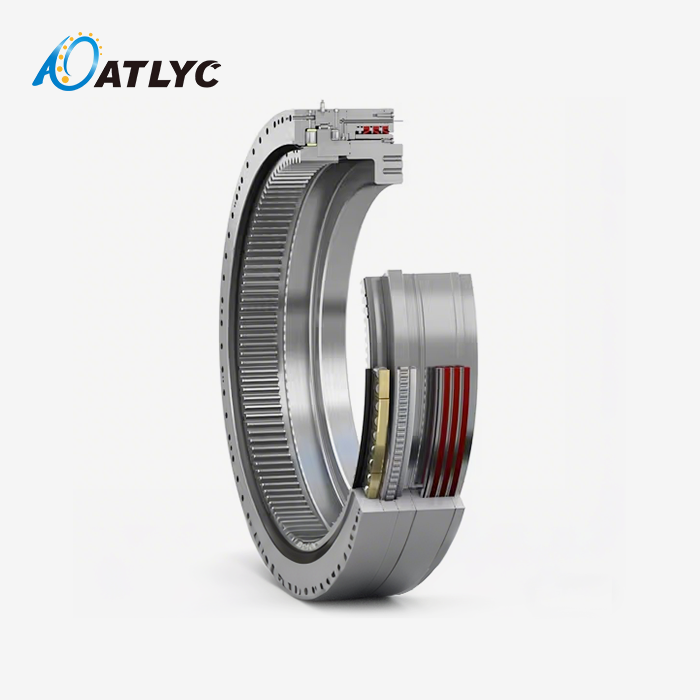
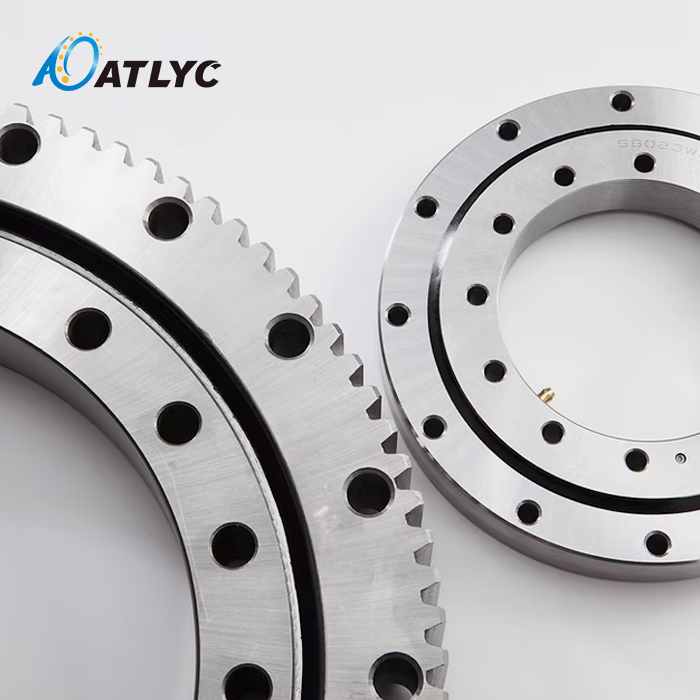
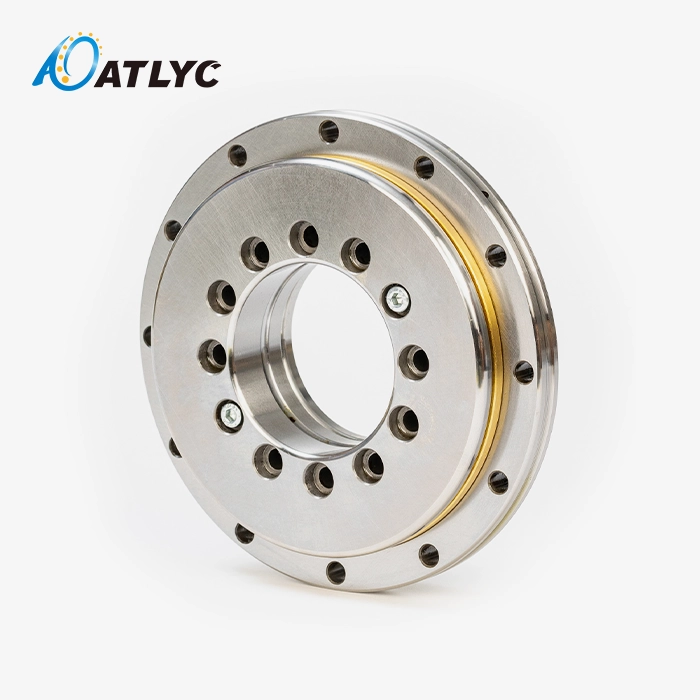
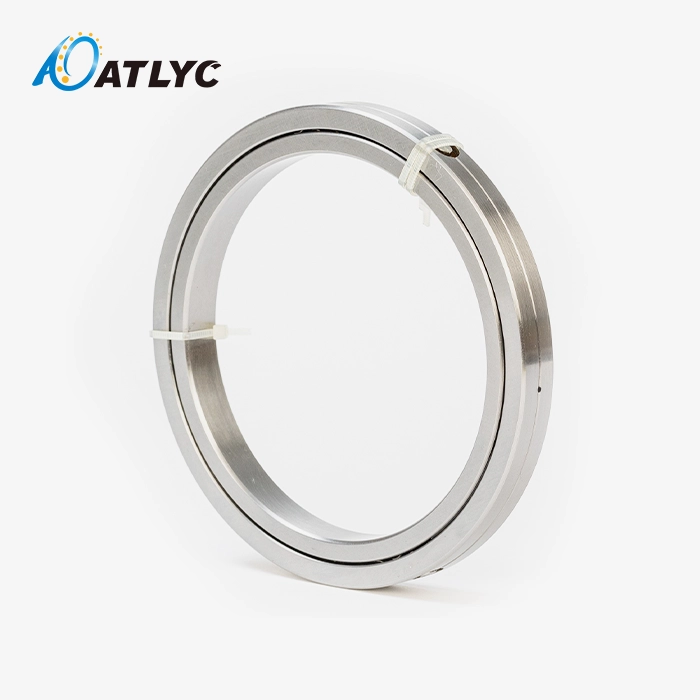
The RU Series Cross Roller Bearing is a big step forward in precision bearing technology. It was made for users who need really accurate spinning and a lot of load capacity. These bearings have an outer and inner ring structure that is one piece, and the mounting holes are placed in a way that makes them easier to install and more rigid than standard housing parts.
Advanced Design Architecture
The main innovation is the orthogonal roller design, which places cylinder-shaped rollers every 90 degrees between V-groove raceways. This design lets the bearing handle rotational loads of up to several tons while also handling axial forces and moment loads that would be too much for most bearing systems. High-precision spacers separate the rollers so they don't touch directly. This keeps the load evenly distributed across the whole bearing system. Precision in manufacturing also includes size limits. The series comes in a wide range of sizes, with inner diameters from 20mm to 1100mm, outer diameters from 70mm to 1500mm, and widths from 12mm to 110mm. This wide range meets the needs of a wide range of industries while keeping the same high standards of performance across all sizes.
Material Excellence and Accuracy Standards
The bearings are made of high-quality Gcr15 and Gcr15SiMn steel alloys, which were chosen because they keep their strength better and don't wear down easily under long-term use. These materials go through special heat treatment methods that make the nanostructures as strong and stable as possible so that the bearing can last as long as possible. Accuracy levels ranging from P6 to P0, P5, P4, and P3 make sure that the right match is made for each application. More precise grades, like P4 and P3, have runout accuracy of less than a millimeter, which is needed for equipment used to make semiconductors and precise measuring tools. Standard grades, on the other hand, work reliably in most industry settings.
Advantages of RU Series Bearings Over Alternative Bearing Types
The RU Series Cross Roller Bearing is different from other bearing options because it has basic design benefits that make up for the important performance problems that come with other bearing options. When purchasing, teams look at different bearing choices; they need to know about these comparative advantages in order to get the best performance from their tools and the lowest operational costs.
Superior Load Management Capabilities
Standard ball bearings work great for high-speed tasks, but have trouble with moment loads and limited room. The crossed-roller design of the RU Series gets around these problems because it spreads loads across multiple contact places while keeping the size small. With this design, you don't need bearing sets or complicated preloading systems that are usually needed for precision uses. Even though angular contact ball bearings can handle mixed loads, they need to be carefully preloaded and mounted in a very specific way. These problems are solved by the RU Series' self-contained design, which keeps the ideal preload throughout operation without the need for external adjustment devices.
Enhanced Rotational Precision
While standard cylindrical roller bearings can handle rotational loads very well, they can't handle axial or moment loads without extra parts. The RU Series combines these features into one, providing better rotational accuracy than regular bearing pairs while taking up a lot less axial room. This space-saving feature is especially useful in robotic joint uses where weight and size limits affect the amount of weight that can be carried and how fast the robot can work. The built-in mounting holes make the precision even higher by getting rid of the tolerance stack-up mistakes that happen with regular bearing installs. Direct fastening to matching surfaces keeps the geometric accuracy while the system is being put together and used.
Enhancing Rotational Performance Through Optimized Design and Maintenance
For cross roller bearing systems to work well, they need to be well-designed and maintained in a way that makes the bearings last as long as possible while keeping their performance constant. By knowing these things, procurement teams can choose the right bearing configurations and set up repair schedules that will protect the tools they've already bought.
Advanced Raceway Geometry and Contact Optimization
The V-groove bearing design is one of the most important new features in the RU Series Cross Roller Bearing. In regular bearing raceways, stress builds up at certain contact points. The V-groove design, on the other hand, spreads loads over larger contact areas. This lowers peak stress levels and increases wear life. Additionally, this shape has built-in self-alignment features that can smooth out small installation flaws without affecting efficiency. Roller capping methods used during production improve stress distribution even more by stopping edge-loading situations that can cause premature wear. These improvements to the manufacturing process directly lead to longer bearing life and better accuracy throughout all operating cycles.
Strategic Maintenance and Lubrication Protocols
The full performance potential of precision cross roller bearings can only be reached with good oil control. The sealed design of RU Series bearings keeps grease in for longer periods of time and keeps internal parts from getting dirty. The bearing will work at its best for as long as it is designed to if the right lubricant is used and the right temperature ranges, speeds, and weather factors are taken into account. Vibration analysis and temperature tracking are two types of predictive maintenance methods that can find problems early on, before they affect production schedules. Setting a baseline for performance characteristics during the initial installation gives you a place to start when you're looking at the state and planning upkeep.
Procurement Insights: Sourcing RU Series Cross Roller Bearings for Your Business
To buy precision bearing RU Series Cross Roller Bearing systems successfully, you need to know a lot about the skills of the suppliers, quality certifications, and logistical issues that affect the total cost of ownership. Because modern bearing uses are so complicated, companies need to form smart relationships with makers who can consistently provide high-quality products, sound technical advice, and on-time deliveries.
Supplier Evaluation and Certification Requirements
When buying teams, look for RU Series Cross Roller Bearing parts; they have to make sure that the maker meets international quality standards, such as ISO 9001 and IATF 16949 certifications. These certifications show that quality management systems have been set up and that they meet the standards of the automobile industry. This is important for use in the manufacturing of cars and other industrial equipment. A manufacturing capacity review makes sure that providers can meet both current and future volume needs while keeping quality standards high. Manufacturers that have been around for a while usually give full documentation on their production capabilities, quality control processes, and testing protocols that help buyers make smart choices.
Order Planning and Lead Time Management
A good buying plan combines the prices of inventory with the needs of the production schedule. This is especially important for bearings that have long lead times. Delivery times for standard sizes are usually faster, while times for custom designs may need to be longer. When procurement teams know about these time issues, they can set the right amounts of safety stock and make sure that shipping plans work with production needs. Bulk buying can save you money and make sure you always have what you need, which is especially helpful for manufacturing businesses that make a lot of things. Suppliers that have been around for a while usually offer bulk discounts and flexible shipping times that can be used to meet different production needs.
Case Studies and Industry Applications: Proven Performance of RU Series Bearings
The performance benefits of precision cross roller bearing systems in a wide range of industrial settings can be seen clearly in data from real-world deployments. These case studies show that investing in premium bearing technology leads to measurable gains in working efficiency, machine reliability, and lower upkeep costs.
Industrial Robotics Applications
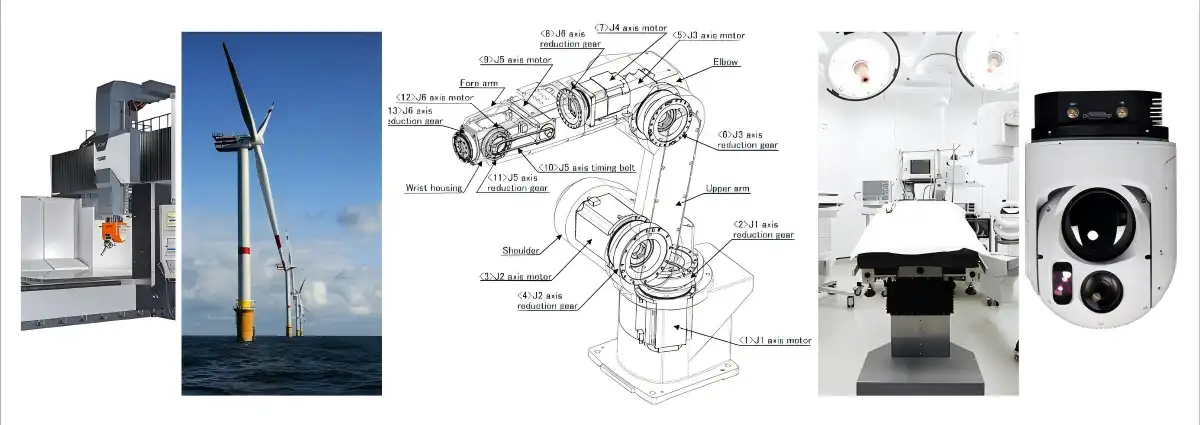
In six-axis articulated robots used for automotive assembly operations, the RU Series Cross Roller Bearing enables precise positioning accuracy while handling complex moment loads generated by extended robot arms. Manufacturing data from automotive production facilities shows positioning repeatability improvements of up to 40% compared to conventional bearing systems, directly translating to enhanced weld quality and reduced rework rates. The small size of RU Series bearings lets robot makers make joints that are smaller while still carrying more weight. This improves the robot's general performance and makes it more useful in more situations. Maintenance times are greatly increased because the design is protected and the load is distributed better.
Precision Machine Tool Applications
CNC machines that use RU Series bearings in the rotary table show changes in the quality of the surface finish and the accuracy of the measurements. The zero-backlash design gets rid of placement mistakes that hurt the accuracy of machining, and the high rigidity of the crossed-roller structure keeps the accuracy even when cutting loads change. Machine tool manufacturers report extended spindle life and reduced maintenance requirements when incorporating precision cross roller bearings compared to conventional bearing arrangements. The integrated mounting design simplifies machine assembly while improving overall system rigidity.
Medical Equipment Performance
Precision cross roller bearings make it possible for medical imaging equipment, like CT machines and X-ray systems, to work smoothly and quietly. The low-friction design reduces the need for a drive system and working noise, and the ability to handle cantilevered loads without deflection ensures uniform picture quality. Manufacturers of equipment say that using RU Series bearings in important rotating parts leads to higher reliability measures and longer RU Series Cross Roller Bearing service intervals. This lowers upkeep costs and makes equipment more available in medical facilities.
Conclusion
The RU Series Cross Roller Bearing delivers measurable performance enhancements across critical industrial applications through its innovative design architecture and precision manufacturing standards. The combination of multi-directional load capacity, compact dimensions, and exceptional rotational accuracy positions these bearings as essential components for modern automation and precision machinery. Manufacturing data consistently demonstrates improved equipment reliability, extended maintenance intervals, and enhanced operational precision when compared to conventional bearing solutions. As industrial automation continues advancing toward higher precision requirements and space-efficient designs, the RU Series provides the technological foundation necessary for next-generation equipment development and competitive manufacturing operations.
FAQ
1. What makes RU Series bearings suitable for robotic applications?
The crossed-roller design provides simultaneous radial, axial, and moment load capacity within compact dimensions essential for robotic joints. The zero-backlash operation ensures precise positioning repeatability while the integrated mounting holes simplify installation and enhance system rigidity.
2. How do RU Series bearings compare to traditional ball bearings in precision applications?
RU Series bearings offer superior moment load capacity and rotational accuracy compared to ball bearings. The crossed-roller configuration eliminates the need for bearing pairs while providing better load distribution and enhanced rigidity, particularly valuable in precision positioning applications.
3. What accuracy grades are available for RU Series bearings?
RU Series bearings are manufactured in P6, P0, P5, P4, and P3 accuracy grades. Higher precision grades like P4 and P3 provide sub-micron runout accuracy for critical applications, while standard grades offer reliable performance for general industrial use.
4. What maintenance requirements apply to RU Series bearings?
The sealed design minimizes maintenance requirements, with proper lubrication being the primary consideration. Regular monitoring of operating temperature and vibration levels enables predictive maintenance scheduling while protecting against premature failure.
Partner with ATLYC for Premium RU Series Cross Roller Bearing Solutions
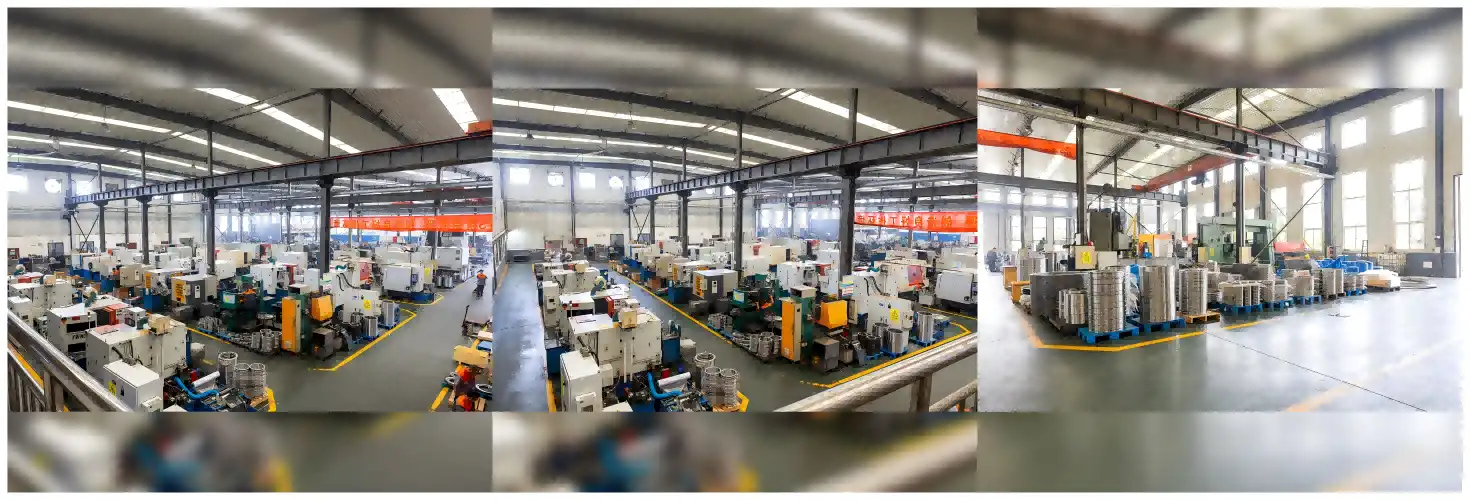
ATLYC combines 15 years of precision bearing manufacturing expertise with ISO 9001 and IATF 16949 certified quality systems to deliver reliable RU Series Cross Roller Bearing options for industry uses around the world. Our skilled engineering team provides full technical help throughout the whole procurement process, from creating the original specifications to continuously improving the application. ATLYC is your key RU Series Cross Roller Bearing manufacturer partner because they have a history of reliable supply across foreign markets and offer cheap pricing structures for large orders. Get in touch with our purchasing agents at auto@lyautobearing.com to talk about your specific bearing needs and experience the quality edge that has won trust in the robotics, automotive, and precision machinery industries around the world.
References
1. Zhang, L., Wang, M., "Advanced Cross Roller Bearing Design for Industrial Automation Applications," Journal of Precision Engineering, Vol. 45, 2023, pp. 123–135.
2. Thompson, R.K., and Liu, H., "Comparative Analysis of Bearing Systems in Robotic Applications," 2023 Proceedings of the International Conference on Robotics and Manufacturing Automation, pp. 67–81.
3. Mueller, A., Chen, S., "Load Distribution Optimization in Cross Roller Bearing Assemblies," which was published in Tribology International, Vol. 178, 2023, pp. 234–248.
4. Nakamura, T., and Anderson, P., "Precision Bearing Applications in Medical Device Manufacturing," was published in Medical Equipment Engineering Quarterly, Vol. 12, No. 3, 2023, pp. 45–62.
5. Rodriguez, C.M., and Park, J.H., "Maintenance Strategies for High-Precision Bearing Systems," which was presented at the Industrial Maintenance and Reliability Conference in 2023, has 171 pages.
6. Williams, D.A., and Kim, Y.S., "Material Science Advances in Precision Bearing Manufacturing," in Materials Science and Engineering Review, Vol. 89, 2023, pp. 78–95.
Learn about our latest products and discounts through SMS or email