- English
- French
- German
- Portuguese
- Spanish
- Russian
- Japanese
- Korean
- Arabic
- Greek
- German
- Turkish
- Italian
- Danish
- Romanian
- Indonesian
- Czech
- Afrikaans
- Swedish
- Polish
- Basque
- Catalan
- Esperanto
- Hindi
- Lao
- Albanian
- Amharic
- Armenian
- Azerbaijani
- Belarusian
- Bengali
- Bosnian
- Bulgarian
- Cebuano
- Chichewa
- Corsican
- Croatian
- Dutch
- Estonian
- Filipino
- Finnish
- Frisian
- Galician
- Georgian
- Gujarati
- Haitian
- Hausa
- Hawaiian
- Hebrew
- Hmong
- Hungarian
- Icelandic
- Igbo
- Javanese
- Kannada
- Kazakh
- Khmer
- Kurdish
- Kyrgyz
- Latin
- Latvian
- Lithuanian
- Luxembou..
- Macedonian
- Malagasy
- Malay
- Malayalam
- Maltese
- Maori
- Marathi
- Mongolian
- Burmese
- Nepali
- Norwegian
- Pashto
- Persian
- Punjabi
- Serbian
- Sesotho
- Sinhala
- Slovak
- Slovenian
- Somali
- Samoan
- Scots Gaelic
- Shona
- Sindhi
- Sundanese
- Swahili
- Tajik
- Tamil
- Telugu
- Thai
- Ukrainian
- Urdu
- Uzbek
- Vietnamese
- Welsh
- Xhosa
- Yiddish
- Yoruba
- Zulu
How to Choose RB12016 for Industrial Applications?
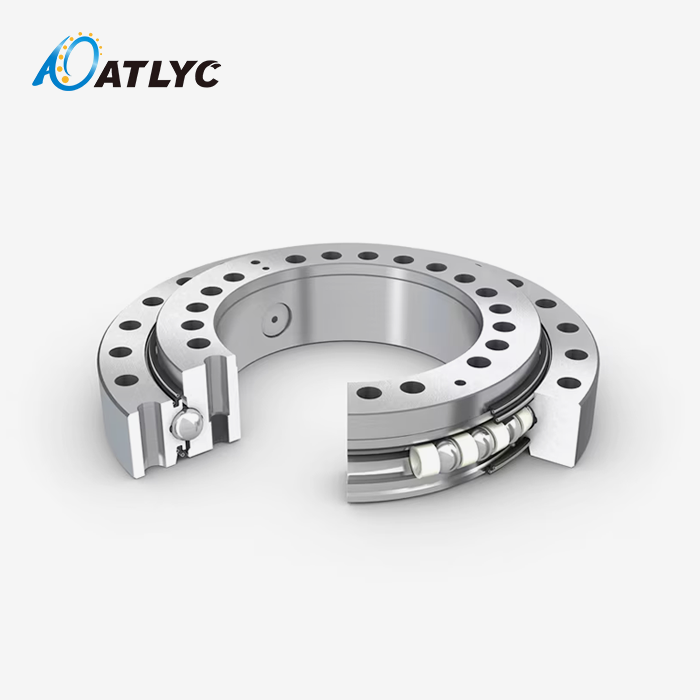
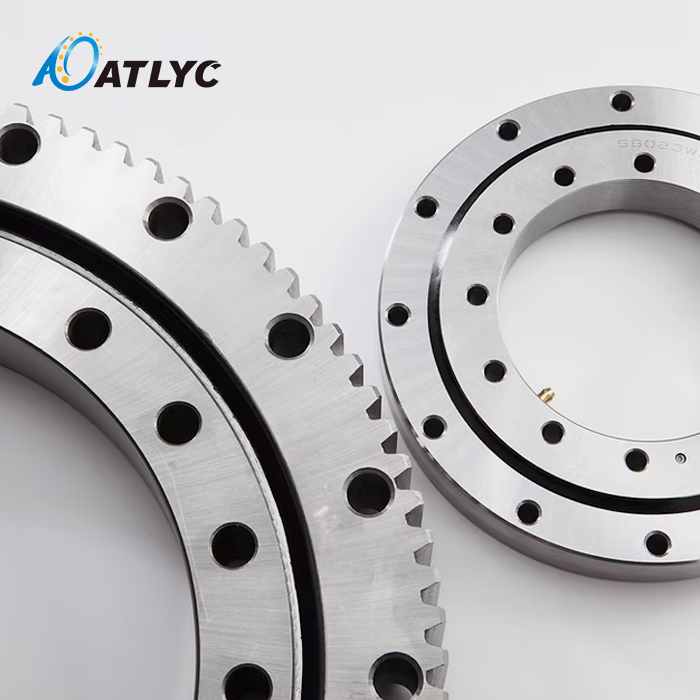
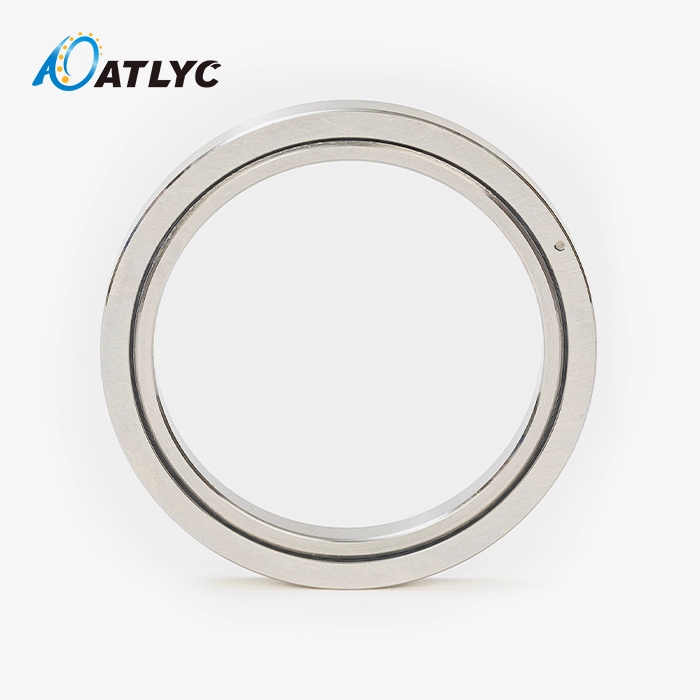
To choose the correct cross roller bearing for your precision-critical equipment, it is important to understand how the RB12016 specs match your operating needs. The bearing type is designed with an integrated inner and outer ring, has an outer ring plug, and can simultaneously support radial, axial, and moment loads. When selecting an RB12016, factors such as the load requirements, rotational precision, ambient conditions, and integration limitations of the application should be considered. The characteristics are matched to the bearing’s crossed-roller arrangement, material composition (Gcr15 or Gcr15SiMn) and accuracy grade (P6 to P4) for dependable performance in robotics, machine centers and precision instruments.

Understanding RB12016 Bearing Specifications and Features
When selecting precise components, it is important to understand what sets the RB12016 apart from other cross roller bearing solutions. This is an RB series bearing that is designed for situations where demanding performance is required in a space-constrained environment.
Core Dimensional Characteristics
The RB12016 designation indicates a particular size within the wider RB cross roller bearing family. The RB series has an inner diameter of 20 mm-1100 mm, an outside diameter of 70 mm-1500 mm, and a width of 12 mm-110 mm. But the 12016 is a niche special for medium-sized automated equipment and precision machines. Knowing these sizes allows engineers to know if it is going to fit into an existing housing or on an existing shaft.
Material Composition and Performance Impact
The selection of material has a very significant impact on bearing life and dependability. The RB12016 makes use of top-grade Gcr15 or Gcr15SiMn bearing steels. Both steels are reliable materials for industrial use. Gcr15 has good hardness distribution after heat treatment, usually 58-62 HRC, which helps the wear resistance needed for long service intervals. The addition of silicon and manganese in Gcr15SiMn enhances the hardenability and toughness, making it especially suitable for applications subject to shock loads or varying environments, such as those found in robotic manipulators.
Load Capacity Fundamentals
An understanding of how forces are handled by cross roller bearings explains the reliability of the RB12016 in a wide array of applications. In a crossed-roller configuration, cylindrical rollers are deployed at 90-degree angles and make line contact with raceways on both rings, which are finely machined. This arrangement allows the bearing to accommodate, at the same time, radial loads that act perpendicular to the shaft axis and are typical of rotary table applications where the weight of a workpiece causes downward forces. The roller orientation of the RB12016 distributes these forces across many contact points, reducing localised stress concentrations. Axial loads run parallel to the shaft and occur during thrust operations or vertical positioning duties. Half the rollers are specifically opposed to axial displacement due to the perpendicular roller arrangement, providing thrust capacity without separate bearing arrangements. Moment loads create tilting forces about the bearing center and are especially problematic in cantilever arrangements or when offset loads are applied to robotic joints. The cross arrangement provides a large effective bearing span with good moment stiffness. This multi-directional flexibility removes the requirement for complicated bearing combinations, simplifying assembly and reducing the possibility of alignment problems that may reduce precision.
Precision Grades and Accuracy Expectations
The RB12016 bearing is offered in a range of precision classes. P6, P0, P5, and P4 are the precision classes, with each subsequent class having tighter manufacturing tolerances. Understanding these differences will help you to pick the right one:
| Accuracy Grade | Runout Tolerance | Typical Application | Performance Characteristics |
|---|---|---|---|
| P6 | Standard industrial tolerance | General automation, moderate-speed rotary tables | Cost-effective for applications where micron-level precision isn't critical |
| P0 | Normal precision class | Machining centers, industrial robots | Balanced performance for most precision machinery |
| P5 | High precision | Measuring instruments, precision indexing | Minimal vibration, suitable for sub-micron positioning |
| P4 | Ultra-precision | Semiconductor manufacturing, optical equipment | Exceptional runout accuracy for critical positioning tasks |
Choosing the right grade is a balancing act between performance needs and financial restrictions. If an application can live with P5 performance, then requiring P4 precision is an unnecessary expenditure. Underspecifying the accuracy might lead to operational problems.
Integral Ring Design and Installation Considerations
The RB12016 incorporates inner and outer ring integrity – meaning each ring is a single, continuous component rather than a divided construction. This design allows for maximising the stiffness and removing any play due to segmented assemblies. The outer ring includes a plug system for several purposes: initial installation of rollers during manufacture, access for the introduction of lubrication, and periodic maintenance without complete disassembly of the bearing. Installation requires attention to the tolerances of the housing and shaft. The crossed roller bearing arrangement requires perpendicularity of mounting surfaces. Deviations from stated tolerances lead to irregularities in preload, resulting in wear acceleration and a deterioration of positioning precision. Mounting surfaces should be kept smooth to within 0.01mm and parallel to within 0.02mm for best performance.
Comparing RB12016 with Alternative Bearings for Optimal Performance
In industrial bearing selection, many options are generally compared to find the best compromise between performance, cost, and availability. When is this model the best option? A comparison of the RB12016 with alternatives will determine this.
RB Series Alternatives: RB12017 and Adjacent Models
The RB12017 is the closest dimensional equivalent to the RB12016 in the RB cross roller bearing family. The biggest difference is the height of the cross-section. The RB12017 will usually have slightly different width specifications, but the same bore and outer diameter ranges. This difference impacts load capacity and stiffness characteristics. When to choose RB12017 over RB12016? The RB12017 offers dimensional trade-offs that are advantageous for applications with limited axial space but demanding increased load capacity. If the envelope dimensions firmly restrict the bearing size, in contrast, the proportions of the RB12016 may be more suited to the limited area while providing acceptable load carrying.
Comparison with Traditional Deep Groove Ball Bearings
Standard deep groove ball bearing types such as 6206 or 6306 models are often specified in industrial requirements. These bearings are far cheaper than the cross-roller equivalents and are readily available. But you may compare capabilities to see why the RB12016 fetches a premium for precise applications. Deep groove ball bearings are good at high-speed rotation, mainly under radial stresses. Their point contact shape minimises friction such that the rotational speeds are higher than the ratings of most cross-roller bearings. But the point contact restricts load capacity and causes deflection under moment loads. Multiple ball bearings for multi-directional load handling increase complexity, spacing requirements, and possible misalignment concerns. The RB12016 combines this into a single, compact device. This simplicity decreases assembly time, removes alignment variables, and usually results in stiffer installations even when just one bearing is used instead of many units.
Sealed Versus Open Configurations
Cross roller bearings, e.g., RB series, are available with open configurations or incorporated sealing systems. The standard RB12016 is often delivered as an open bearing, enabling users to choose appropriate lubrication techniques for particular working conditions. The sealed types use rubbing seals or non-contact labyrinth types, which keep the lubricant in and contaminants out. Open bearings are useful where specialised lubricants are used, for high-speed applications where the friction of the seal is significant, or where regular relubrication is used to maintain optimum performance. In clean production settings, like semiconductor fabrication, where lubrication schedules are closely monitored, open bearings are typically used. Sealed designs are suitable for situations where dust, moisture, or chemical pollutants are present. Sealed systems provide longer service intervals and dependability in tough environments, but at the expense of a little increase in friction and lower maximum speed ratings.
Performance Comparison with Competing Manufacturers
The worldwide bearing market comprises major names, such as NSK, SKF, and Timken, as well as specialist producers. Product performance is quite uniform amongst manufacturers for each grade of precision; P5 from one respectable manufacturer will perform similarly to P5 from another if used correctly. Differences arise in availability and lead times: Established worldwide brands have large distribution networks, so typical sizes are delivered quickly. Lead times for specialised models or non-standard configurations may be longer. Technical support: Manufacturers with strong engineering capabilities can provide application analysis, custom modifications, and troubleshooting assistance that can be useful during equipment development. Cost structures: Premium brands command price premiums due to their reputation and global support networks. Alternative manufacturers with similar technical characteristics at comparable prices are worth considering, especially for large-volume buying. When considering alternatives, check for certificates validating quality management systems. ISO 9001 and IATF 16949 certifications demonstrate control of the production processes and a commitment to continual improvement that is key to consistent bearing performance.
Procurement Considerations When Buying RB12016 Bearings
Knowing the right specs is just half the battle in getting a quality set of bearings. Procurement strategies have a substantial influence on total cost of ownership, supply dependability, and operational effectiveness.
Identifying Authentic Sources and Avoiding Counterfeits
The precision bearing market unfortunately includes counterfeit products that compromise equipment reliability. These inferior copies often feature substandard materials, inadequate heat treatment, and poor dimensional accuracy despite superficially resembling genuine products. Distinguishing authentic bearings from counterfeits protects your operation from premature failures and safety risks. Procurement best practices include sourcing directly from manufacturers or authorized distributors. Authorized channels maintain traceability documentation confirming product origin and provide warranty protection unavailable through unauthorized resellers. When evaluating suppliers, verify their authorization status through manufacturer websites or direct contact with brand representatives. Pricing substantially below market rates signals potential counterfeit risk. While competitive pricing benefits procurement budgets, offers that dramatically undercut established market pricing typically indicate compromised authenticity or quality. Requesting material certifications, dimensional inspection reports, and manufacturing traceability documents helps verify product legitimacy.
Understanding Pricing Dynamics and Volume Considerations
Cross roller bearing pricing reflects manufacturing complexity, material costs, precision requirements, and order quantities. The RB12016 bearing, like similar precision components, demonstrates significant price scaling with volume. Understanding these dynamics enables strategic procurement planning.
| Order Quantity | Typical Price Impact | Lead Time Expectations | Strategic Considerations |
|---|---|---|---|
| 1-10 units | List pricing applies | Immediate to 2 weeks from stock | Suitable for prototyping, emergency replacements |
| 11-50 units | 10-15% volume discount | 2-4 weeks, may require production scheduling | Balances inventory investment with cost savings |
| 51-200 units | 20-30% volume discount | 4-8 weeks, scheduled production run | Appropriate for OEM integration, annual maintenance inventory |
| 200+ units | 30-40% volume discount, negotiable | 8-12 weeks, dedicated production allocation | Strategic partnerships, long-term supply agreements |
Annual volume commitments often unlock additional pricing advantages and guarantee supply allocation during high-demand periods. Discussing forecasted requirements with suppliers enables collaborative production planning that benefits both parties.
Lead Time Management and Supply Continuity
Production schedules for precision bearings vary based on model popularity, manufacturing capacity allocation, and order backlogs. Common bearing sizes maintained in distributor inventory ship rapidly, while specialized configurations or non-standard accuracy grades require manufacturing lead times. Managing lead times strategically prevents production disruptions: Maintain strategic inventory: Calculate bearing replacement intervals based on equipment duty cycles and maintain appropriate spare inventory. The carrying cost of precision bearing inventory typically proves far less expensive than production downtime from bearing failure. Establish supply partnerships: Developing relationships with reliable bearing manufacturers creates communication channels for demand forecasting, expedited processing when emergencies arise, and technical consultation during equipment development. Consider application timing: When designing new equipment or planning retrofits, involve bearing suppliers early during specification development. This timing allows manufacturers to incorporate special requirements into production schedules without premium expedite charges.
Warranty, Support, and Replacement Part Availability
Comprehensive bearing procurement considers post-purchase support and long-term availability. Quality manufacturers stand behind their products with warranties covering manufacturing defects and premature failures resulting from material or workmanship issues. Understanding warranty terms and claim procedures provides recourse when problems emerge. Technical support availability proves equally valuable. Applications engineers familiar with cross roller bearing technology assist with installation guidance, troubleshooting operational issues, and optimizing performance through proper maintenance practices. This expertise access particularly benefits organizations implementing precision bearing technology for the first time or expanding into new application areas. Replacement part availability over equipment service life requires consideration during initial procurement. Selecting bearing models from manufacturers committed to long-term production continuity protects against obsolescence scenarios requiring expensive equipment redesigns when bearings eventually need replacement.
Practical Guidance on Selecting RB12016 Bearings for Your Industrial Needs
Translating technical specifications into confident purchasing decisions requires structured evaluation of how bearing capabilities align with application requirements.
Defining Your Application Requirements
Successful bearing selection begins with thoroughly characterizing operational demands. This assessment should quantify several critical parameters that determine whether the RB12016 suits your application. Load characterization: Measure or calculate the radial, axial, and moment loads your application generates. Include static loads present when equipment is stationary and dynamic loads during operation. Peak loads during startup, stopping, or emergency conditions often exceed normal operating forces and must inform bearing selection to prevent overload failures. Rotational requirements: Determine operational speed ranges and rotational accuracy requirements. Applications involving continuous rotation at consistent speeds have different bearing needs than intermittent positioning systems or oscillating movements. The RB12016's crossed-roller design optimizes for high accuracy and rigidity rather than high-speed continuous rotation, making it ideal for precision positioning but potentially oversized for simple rotary applications. Environmental factors: Assess temperature ranges, contamination exposure, and moisture conditions in the operating environment. These factors influence material selection, sealing requirements, and lubrication strategies. Clean, temperature-controlled environments enable optimal bearing performance, while harsh conditions require additional protective measures. Space constraints: Document the available envelope dimensions for bearing integration. Cross roller bearings deliver substantial load capacity in compact cross-sections, but verifying dimensional compatibility prevents costly redesigns during installation.
Key Selection Metrics and Decision Criteria
With application requirements defined, evaluate how the RB12016 characteristics align with your operational needs: Load capacity adequacy: Compare calculated application loads against bearing load ratings, incorporating appropriate safety factors. Cross roller bearings typically operate reliably at 50-70% of rated capacity during continuous operation, with higher utilization acceptable for intermittent duty applications. Undersizing bearings relative to actual loads dramatically shortens service life and risks catastrophic failure. Accuracy grade appropriateness: Match precision requirements with bearing accuracy grades. Medical imaging equipment, semiconductor manufacturing, and precision measurement applications justify P4 or P5 grades, while general automation and material handling systems perform adequately with P0 or P6 accuracy. Overspecifying accuracy increases costs without operational benefit, while underspecifying risks inadequate performance. Sealing and lubrication considerations: Determine whether open or sealed bearing configurations better suit your environment and maintenance capabilities. Open bearings with periodic relubrication suit clean environments with established maintenance programs. Sealed bearings reduce maintenance demands but require careful initial lubrication specification since relubrication proves difficult.
Cost-Performance Trade-offs and Value Analysis
Bearing procurement involves balancing initial acquisition costs against total ownership expenses. The least expensive bearing option rarely delivers optimal value when considering complete lifecycle costs. Premium precision grades command higher purchase prices but deliver extended service life, reduced maintenance requirements, and improved operational performance that often justify the initial investment. Calculating the total cost of ownership should incorporate:
- Initial bearing purchase price
- Installation labor and associated downtime
- Expected service life and replacement frequency
- Maintenance labor and lubrication costs
- Downtime costs when bearing replacement becomes necessary
- Performance value from improved accuracy or throughput
This comprehensive analysis frequently reveals that investing in higher-quality bearings reduces total ownership costs despite elevated purchase prices.
Risk Mitigation Through Proper Selection
Conservative bearing selection provides insurance against premature failures that disrupt production schedules and damage expensive equipment. Several strategies reduce operational risks: Safety factor application: Maintain load safety factors between 1.5 and 2.0 for continuous operation applications. This margin accommodates calculation uncertainties, unexpected load conditions, and gradual performance degradation as bearings accumulate operating hours. Vendor qualification: Source bearings from manufacturers demonstrating consistent quality through certifications, quality documentation, and established industry reputation. The modest cost savings from unproven suppliers rarely justify the risk of unreliable components. Testing and validation: When introducing bearings into new applications or critical equipment, conduct operational testing under representative conditions before full-scale implementation. This validation identifies potential issues during controlled evaluation rather than during production operations.
Maintenance and Troubleshooting of RB12016 Bearings
Proper maintenance practices directly influence bearing service life and equipment reliability. Cross roller bearings like the RB12016 deliver decades of reliable service when correctly maintained, yet suffer premature failure when neglected.
Common Failure Modes and Warning Signs
Understanding typical bearing failure mechanisms enables early problem detection before catastrophic failures occur. The RB12016 bearing exhibits several characteristic failure patterns: Insufficient lubrication ranks among the most common bearing failure causes. Inadequate lubricant film thickness allows metal-to-metal contact between rollers and raceways, generating friction, heat, and accelerated wear. Warning signs include elevated operating temperatures, unusual noise during rotation, and visible discoloration on bearing surfaces indicating heat damage. Contamination introduces abrasive particles that score precision surfaces and disrupt lubricant films. Dirt, metal chips, or moisture ingress degrade bearing performance progressively. Contaminated bearings typically display rough rotation, vibration, and visible pitting or scoring on raceways and roller surfaces. Improper installation creates stress concentrations, misalignment, or inadequate support that compromises bearing integrity. Symptoms include excessive vibration, rapid wear patterns, and premature failure well before calculated service life expectations. Installation errors often manifest within initial operational periods rather than after extended service. Overloading beyond rated capacity causes plastic deformation of raceways, roller brinelling, and structural damage. Overloaded bearings exhibit increased friction, rough operation, and visible indentations in raceway surfaces corresponding to roller positions.
Preventive Maintenance Practices
Establishing systematic maintenance protocols maximizes bearing service life and prevents unexpected failures:
Lubrication management represents the single most important maintenance activity. The RB12016 requires appropriate lubricant selection based on operating conditions, rotational speeds, and temperature ranges. Grease lubrication suits most industrial applications, offering simplified maintenance and contamination resistance. Relubrication intervals depend on duty cycles, operating temperatures, and environmental conditions but typically range from 500 to 2000 operating hours for industrial automation applications. Periodic inspection enables early problem detection. Monitoring operational temperatures, vibration levels, and noise characteristics reveals developing issues before they progress to failures. Establishing baseline measurements during initial commissioning provides comparison references for detecting abnormal conditions. Environmental control protects bearings from contamination and moisture. Implementing proper sealing systems, maintaining clean operating environments, and controlling humidity reduce external damage sources. Applications in dusty or wet conditions benefit from sealed bearing configurations or supplementary protective measures.
Lubrication Specifications and Application Methods
Proper lubricant selection balances several competing requirements: Viscosity: Lubricants must maintain adequate film thickness across operational temperature ranges while avoiding excessive drag at startup or low temperatures. Cross roller bearings typically perform well with NLGI Grade 2 greases, offering suitable consistency for most industrial environments. Base oil type: Mineral oil-based greases suit standard applications, while synthetic formulations provide enhanced performance under extreme temperatures, extended relubrication intervals, or demanding operating conditions. Additive packages: Anti-wear, extreme pressure, and corrosion inhibitor additives extend bearing life and provide protection under challenging conditions. Matching additive chemistry to application requirements optimizes performance. When applying lubricant to open RB12016 bearings, avoid overfilling, which causes excessive churning, elevated temperatures, and potential seal damage in adjacent components. Fill bearing cavities approximately 30-40% with grease, allowing adequate free space for lubricant circulation and thermal expansion.
Real-World Maintenance Success Practices
Industrial operations that successfully extend bearing service life share common maintenance approaches. Automotive assembly plants utilizing cross roller bearings in robotic welding cells implement quarterly vibration monitoring alongside semi-annual lubrication schedules. This proactive approach identifies developing issues early while maintaining optimal lubricant condition, regularly achieving service lives exceeding manufacturer L10 life calculations by substantial margins. Precision machining centers employing RB series bearings in rotary tables establish comprehensive maintenance documentation tracking installation dates, operating hours, lubrication activities, and performance observations. This historical data enables predictive maintenance scheduling and provides valuable feedback for optimizing maintenance intervals and procedures. Medical equipment manufacturers subject bearings to rigorous incoming inspection protocols verifying dimensional accuracy and material certifications before installation. Combined with controlled assembly environments and detailed installation procedures, these quality measures virtually eliminate premature failures attributable to defective components or improper installation.

Conclusion
Selecting appropriate cross roller bearings for precision industrial applications requires balancing technical specifications, operational requirements, and procurement considerations. The RB12016 bearing delivers exceptional multi-directional load capacity, positioning accuracy, and compact integration suited for robotics, machine tools, and precision instrumentation. Successful implementation depends on matching bearing capabilities with application demands, sourcing from qualified manufacturers maintaining rigorous quality standards, and establishing maintenance practices that maximize service life. By systematically evaluating load conditions, accuracy requirements, environmental factors, and total cost of ownership, engineers and procurement professionals confidently specify bearings delivering reliable, long-term performance supporting operational objectives.
FAQ
What distinguishes RB12016 from RB12017 bearings?
The primary distinction lies in dimensional specifications, particularly cross-sectional height and corresponding load capacities. RB12017 models typically offer different width dimensions while maintaining similar bore and outer diameter ranges, affecting installation envelope requirements and stiffness characteristics. Select between models based on available space and specific load capacity needs.
How can I verify authentic RB12016 bearings purchased online?
Authentic bearings include manufacturer markings, serial numbers enabling traceability verification, and documentation including material certifications and dimensional inspection reports. Purchase exclusively through authorized distributors confirmed via manufacturer websites. Request complete documentation and verify supplier authorization status before completing transactions. Suspiciously low pricing typically indicates counterfeit risk.
What maintenance practices extend RB12016 bearing service life?
Implement systematic lubrication schedules appropriate to operating conditions, typically every 500-2000 hours depending on duty cycles and environment. Monitor operational temperatures and vibration levels to detect developing problems early. Protect bearings from contamination through proper sealing and environmental controls. Follow manufacturer installation guidelines precisely to prevent stress concentrations from improper mounting.
Partner with ATLYC for Premium RB12016 Cross Roller Bearing Solutions
ATLYC brings 15 years of precision bearing manufacturing expertise to your industrial automation challenges. As an ISO 9001 and IATF 16949 certified bearing manufacturer, we produce high-precision RB12016 cross roller bearings utilizing premium Gcr15 and Gcr15SiMn materials with accuracy grades from P6 to P4. Our comprehensive three-level quality control system ensures consistent performance across every unit, while our six specialized production workshops maintain capacity supporting both prototype quantities and volume production requirements. Serving OEMs and industrial equipment manufacturers across North America, Europe, and Asia, we understand the supply reliability, technical support, and competitive pricing your operations demand. Contact our engineering team at auto@lyautobearing.com today to discuss your specific application requirements and receive detailed quotations from a trusted RB12016 manufacturer committed to your long-term success.
References
1. Harris, T.A. & Kotzalas, M.N. (2006). Rolling Bearing Analysis: Essential Concepts of Bearing Technology (5th ed.). CRC Press.
2. Eschmann, P., Hasbargen, L., & Weigand, K. (1985). Ball and Roller Bearings: Theory, Design and Application (2nd ed.). John Wiley & Sons.
3. Hamrock, B.J. & Dowson, D. (1981). Ball Bearing Lubrication: The Elastohydrodynamics of Elliptical Contacts. John Wiley & Sons.
4. ISO 492:2014. Rolling bearings — Radial bearings — Geometrical product specifications (GPS) and tolerance values. International Organization for Standardization.
5. Tallian, T.E. (1992). Simplified Contact Fatigue Life Prediction Model — Part I: Review of Published Models. Journal of Tribology, 114(2), 207-213.
6. Witte, D.C. (1973). Operating torque of tapered roller bearings. ASLE Transactions, 16(1), 61-67.
Learn about our latest products and discounts through SMS or email