- English
- French
- German
- Portuguese
- Spanish
- Russian
- Japanese
- Korean
- Arabic
- Greek
- German
- Turkish
- Italian
- Danish
- Romanian
- Indonesian
- Czech
- Afrikaans
- Swedish
- Polish
- Basque
- Catalan
- Esperanto
- Hindi
- Lao
- Albanian
- Amharic
- Armenian
- Azerbaijani
- Belarusian
- Bengali
- Bosnian
- Bulgarian
- Cebuano
- Chichewa
- Corsican
- Croatian
- Dutch
- Estonian
- Filipino
- Finnish
- Frisian
- Galician
- Georgian
- Gujarati
- Haitian
- Hausa
- Hawaiian
- Hebrew
- Hmong
- Hungarian
- Icelandic
- Igbo
- Javanese
- Kannada
- Kazakh
- Khmer
- Kurdish
- Kyrgyz
- Latin
- Latvian
- Lithuanian
- Luxembou..
- Macedonian
- Malagasy
- Malay
- Malayalam
- Maltese
- Maori
- Marathi
- Mongolian
- Burmese
- Nepali
- Norwegian
- Pashto
- Persian
- Punjabi
- Serbian
- Sesotho
- Sinhala
- Slovak
- Slovenian
- Somali
- Samoan
- Scots Gaelic
- Shona
- Sindhi
- Sundanese
- Swahili
- Tajik
- Tamil
- Telugu
- Thai
- Ukrainian
- Urdu
- Uzbek
- Vietnamese
- Welsh
- Xhosa
- Yiddish
- Yoruba
- Zulu
How to Lubricate RE3010UUCC0 Crossed Roller Bearings?
Lubricating RE3010UUCC0 Crossed Roller Bearings requires selecting high-quality grease with appropriate viscosity, applying lubricant evenly across the V-groove raceways and cylindrical rollers, and ensuring the dual contact seals remain intact. Clean the bearing surfaces, inject lubricant through designated ports, and rotate the bearing slowly to distribute grease uniformly. Monitor temperature and noise levels post-lubrication to verify proper application and prevent under- or over-lubrication that could compromise bearing life in precision machinery.

Introduction
When it comes to precision machines, RE3010UUCC0 Crossed Roller Bearings are the most important parts that need to be accurate all the time. In robotics, machine tools, and automated production systems where rotational accuracy is very important, these special bearings are very important. With a 30 mm inner diameter, a 55 mm outer diameter, and a 10 mm width, they are very small but can handle a lot of weight. But even the most modern bearing design can't work as well as it could if the oil isn't managed well.
There have been many times when bad cleaning methods caused bearings to fail early, stopping production lines and requiring expensive emergency repairs. Good lubrication increases the useful life of machinery, lowers the heat caused by friction, and keeps the close limits that make crossed roller technology important. This guide is for purchasing managers, maintenance engineers, and original equipment manufacturers (OEMs) who want to find reliable ways to improve bearing performance while keeping total ownership costs low. Knowing how to lubricate things the right way helps you make smart choices about what to buy and how to maintain it so that your equipment investment is safe.
Understanding RE3010UUCC0 Crossed Roller Bearings
Technical Specifications and Structural Design
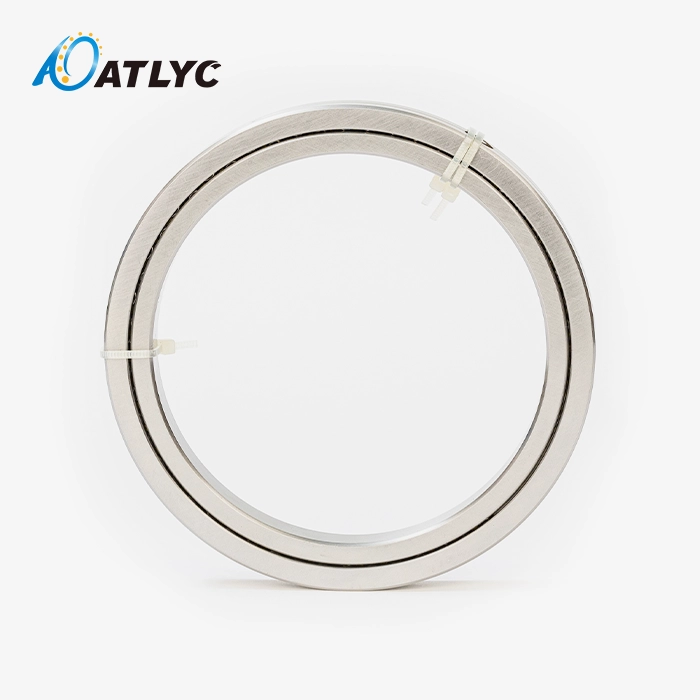
The RE3010UUCC0 Crossed Roller Bearings have an integral outer ring and a split inner ring. This design makes the outer ring more accurate when it rotates. This design makes it different from regular ball bearings, which can't match its rigidity or load capacity. The bearing is made from high-quality Gcr15 or Gcr15SiMn steel and can achieve precision grades from P6 (normal accuracy) to P2 (ultra-precision), so it can meet the needs of a wide range of businesses.
The 10mm width of the bearing makes good use of limited room in small machines while still keeping the structure strong under heavy loads. The "UU" name means that it has dual contact seals that keep outside contaminants from getting into the internal parts and speeding up wear and tear and lowering performance. In industrial settings, where dust, wetness, and small particles can damage bearings, this sealing system is especially useful.
Crossed Roller Principle and Load Handling
RE3010UUCC0 Crossed Roller Bearing technology is based on cylindrical rollers arranged at right angles to each other. Each roller can handle different types of loads because they are placed so that they are orthogonal to each other. One roller can handle circular forces, while its friend can handle axial loads. The V-groove raceway design makes sure that the rollers stay in the right place and at the right angle of contact during all of the rotation cycles.
| Load Type | Capacity Feature | Advantage Over Ball Bearings |
|---|---|---|
| Radial | Line contact distribution | 3-5x higher load rating |
| Axial | Alternating roller support | Bi-directional handling |
| Moment | Crossed configuration | Single-bearing solution |
Because it can handle loads going in more than one way, there is no need for multiple bearing arrangements. This makes the assembly simpler and reduces the number of possible failure places. The design works especially well in robotic joints that need to get the most out of the fewest parts possible because of space and weight issues.
Industrial Applications and Performance Requirements
In machining centers, RE3010UUCC0 Crossed Roller Bearings keep precision rotary tables in place even when they are cutting a lot of metal. These bearings are used in joint systems of industrial robots, where smooth spinning and no backlash have a direct effect on the accuracy of the end-effector. RE3010UUCC0 Crossed Roller Bearings technology is needed for the stability and accuracy that it offers in medical imaging equipment, measuring tools, and devices used to make integrated circuits.
The bearing can handle extended loads without distortion, which is useful for manufacturing manipulators. RE3010UUCC0 Crossed Roller Bearings have a low friction coefficient, which means they can rotate smoothly even when loads are complicated. Because of these performance traits, it is important to manage lubrication properly. Without enough lubrication, the very qualities that make these bearings valuable start to break down quickly.
Why Proper Lubrication Matters for RE3010UUCC0 Bearings
Friction Reduction and Wear Prevention
When rollers and raceways touch each other, friction is created, which makes heat and speeds up the breakdown of materials. When you lubricate these surfaces properly, you make a protected film that separates them. This lets the rollers move easily while wasting as little energy as possible. When lubrication fails, there is more friction, which raises working temperatures and can change the properties of materials and their limits for size.
When bearing surfaces aren't properly oiled, they come into direct contact with each other. This creates wear particles that act as abrasives inside the bearing assembly. These particles speed up damage, creating a cycle of destruction that quickly lowers performance. We have proof of situations where inadequate lubrication cut bearing life by 60–70% compared to units that were properly maintained and used in the same conditions.
Different but still very bad problems happen when there is too much lubrication. Too much spinning of the grease inside the bearing makes it hot and increases the resistance. The dual contact seals on RE3010UUCC0 Crossed Roller Bearings can get clogged up with too much oil, which builds up pressure that weakens the seals and lets dirt and other things in. To escape both extremes, it is important to have balanced lubrication control.
Operational Reliability and Cost Impact
When bearings fail, they usually do so without warning, turning planned operations into emergency shutdowns. Unexpected downtime often has secondary costs that are ten times or more higher than the cost of replacing the bearing. These indirect costs include lost production, faster shipping for new parts, and extra work. If you lubricate things properly, you can avoid these costly breaks.
As lubrication wears away, noise levels rise, which is an early sign that problems are starting to happen. Temperature tracking shows that the lubrication is breaking down before it causes a fatal failure. Systematic lubrication protocols keep the boundary layer protected, which stops wear from moving forward and extends the life of bearings. Putting money into good lubrication pays off in the form of longer service intervals and lower maintenance costs.
Step-by-Step Guide to Lubricating RE3010UUCC0 Bearings
Pre-Lubrication Preparation and Safety Protocols
Before getting ready to lubricate RE3010UUCC0 Crossed Roller Bearings, all equipment must be turned off, and lockout/tagout procedures must be followed to keep machines from turning on by accident. Before you start maintenance, let the bearings cool to room temperature. Working on hot bearings can burn you and may break down new oil. To keep things running smoothly, make sure you have all the tools, oils, and cleaning supplies you need before you start working.
Check the bearing system for damage that can be seen, dirt, or wear patterns that don't seem normal. Carefully check the integrity of the seals because damaged seals make lubrication less effective and let contaminants in. Write down the current working conditions, such as temperature readings, noise levels, and any changes in performance that could mean problems are starting to appear.
To keep contaminants from getting into the bearing housing during the lubrication process, clean the outside of the housing. Clean with lint-free cloths and solutions that won't leave behind residues or react with materials that hold weight. Make sure that the new grease meets or goes beyond the requirements of the old lube to keep things working well together.
Selecting Optimal Lubricants
Choosing the right grease has a huge effect on how well and how long a bearing lasts. For high-precision RE3010UUCC0 Crossed Roller Bearings to work properly, they need oils that have certain properties. When picking a lubricant, keep these important things in mind:
Viscosity requirements: The viscosity of the base oil must match the speed and load of the bearing. A higher viscosity makes it easier to support loads, but at high speeds, it makes friction worse. Less viscosity lowers friction, but big loads may make it hard to keep the film thick enough.
Temperature range: The temperature of the operating environment determines which lubricant to use. When used in robotics, RE3010UUCC0 Crossed Roller Bearings usually see moderate temperature changes. When used in machine tools, however, they may see larger temperature changes. Choose grease that is rated for the full temperature range of your application plus a safety cushion.
Material compatibility: Check to see if the grease works with Gcr15 steel and seal materials. Some additives don't work well with certain elastomers that are used in contact seals. Precision bearings usually work well with lithium-based greases that have anti-wear agents.
Contamination resistance: The consistency of the grease affects its resistance to contamination. NLGI Grade 2 grease is a good mix of being easy to pump and staying strong. Higher grades don't wash out as easily, but they might be hard to spread out properly in tight bearing systems.
| Lubricant Property | Recommended Range | Impact on Performance |
|---|---|---|
| Base Oil Viscosity | 68-100 cSt @ 40°C | Load capacity and friction balance |
| NLGI Grade | 2-3 | Distribution and retention |
| Temperature Range | -20°C to +120°C | Operational envelope |
| Drop Point | >180°C | Thermal stability margin |
Application Techniques and Distribution Methods
If your bearing assembly has plugs or access covers in the lubrication ports, take them off. Clean the port threads and the area around them so that debris doesn't get into the new lubricant. Use a grease gun that lets you control how much pressure it puts out. Too much pressure can damage seals or push oil past holding points.
Slowly and steadily add oil, letting it flow into the RE3010UUCC0 Crossed Roller Bearings holes without leaving any air spaces. Keep an eye out for grease showing up on the other side of the bearing. This means that the hole is fully filled. While applying the lubricant, turn the bearing by hand to help spread it evenly across all of the roller and raceway surfaces.
When you feel a little reluctance, it means that the grease is at the right amount. The RE3010UUCC0 Crossed Roller Bearings hole shouldn't be stuffed all the way to the top; it should be 30–50% full of grease. During operation, extra lubricant churns, creating heat and resistance that hurt performance. Wipe off any extra grease from the outside of the seals and surfaces.
Post-Lubrication Verification and Monitoring
After lubricating the bearing, run it at a slower speed for the first few times it is used. Keep a close eye on the temperature rise—a small rise is normal as new grease spreads, but too much heat means you're using too much grease or there are problems with the application. Listen for strange sounds that could mean that the lube isn't being spread out evenly or that there is contamination.
After the first use, check the state of the seals to make sure they are still properly set and working. Check for oil leaks, which could mean that the seals are broken or there is too much fill. Write down the date, type of grease, and amount used for greasing in maintenance records to set a standard for future service times.
Set up rules for monitoring that use temperature sensors and vibration analysis tools when possible. These technologies can tell when grease is breaking down before performance starts to suffer. You can catch problems early by setting alert thresholds based on measurements taken right after proper lubrication.
Comparing Lubrication Approaches: RE3010UUCC0 vs Other Bearings
Distinctive Requirements of Crossed Roller Designs
When it comes to cleaning, RE3010UUCC0 Crossed Roller Bearings are different from other types of bearings because their rollers are arranged in a horizontal pattern. Because they touch at points, ball bearings need less lubricant volume than cylindrical roller bearings, which touch in lines. These two types of bearings are opposites, but RE3010UUCC0 Crossed Roller Bearings are in the middle. They need careful distribution across alternating roller orientations.
Even though they are similar in some ways, slewing ring bearings usually work much more slowly and can handle thicker greases. Because RE3010UUCC0 Crossed Roller Bearings are small, they can't hold as much grease. This makes the quality of the lubricant and the accuracy of the application more important than in bigger bearing assemblies, where extra capacity gives you extra safety margins.
The design of the seal has a big effect on how it is oiled. The dual contact seals on RE3010UUCC0 Crossed Roller Bearing units keep the grease in well, but they make re-lubrication harder than with open bearing designs. Knowing these differences helps support teams come up with the right methods instead of using general ones that might not work.
Performance Optimization Through Proper Lubrication
Case studies from manufacturing show that performance goes up significantly when lubrication protocols match the design characteristics of the bearings. After using RE3010UUCC0 Crossed Roller Bearings specific lubrication methods, a European machine tool maker cut the number of times they had to repair bearings by 45%. When robotic joints switched from using regular lithium grease to formulations made for precision bearings, noise levels dropped by 8 to 12 decibels.
Optimized lubrication makes temperature stability better, which helps keep tighter dimensional tolerances in precision applications. Runout accuracy is already very good in RE3010UUCC0 Crossed Roller Bearing designs, but it gets worse quickly when the oil stops working. If you do the right upkeep, it stays stable. These performance markers have a direct effect on the quality of the work and the dependability of the tools.
Procuring and Maintaining RE3010UUCC0 Bearings with Confidence
Strategic Supplier Selection and Procurement Practices
To find trusted RE3010UUCC0 Crossed Roller Bearings providers, you need to look at more than just the unit price. Getting manufacturing certifications like ISO 9001 and IATF 16949 shows that you care about quality control and systems. At ATLYC, we have both licenses, which makes sure that the output standards are the same in all six of the workshops that we've built since we started in 2010.
Managing lead times is very important when making plans for production schedules or keeping track of inventory levels. Talk to potential suppliers about their bulk order capabilities to find out about their delivery reliability and capacity limits. Our 120-person team is in charge of production, research and development, quality control, and assembly. This gives us the ability to adapt to different order amounts while still upholding quality standards.
The difference between great providers and commodity vendors is the availability of technical help. Having access to technical knowledge can help you choose the best RE3010UUCC0 Crossed Roller Bearings, install them correctly, and keep them in good shape. Talking to knowledgeable representatives about lubrication compatibility, operating conditions, and application-specific problems adds a lot of value on top of the product itself.
Building Long-Term Partnership Value
For bearing buying to work well, it's not just about making deals; it's also about building strategic relationships that support ongoing operational needs. When suppliers understand your production processes, quality standards, and cost limits, they can help you stay ahead of the competition. Working with clients in South Korea, the US, Germany, Russia, Iran, and Turkey has taught us how important it is to communicate clearly and deliver on time.
Maintenance support services, such as suggestions for re-lubrication, check routines, and help with fixing problems, get the most out of your bearing investment. Building relationships with manufacturers who offer these resources lowers the risk of downtime and increases the life of equipment. Our team gives technical advice that is relevant to each application. This helps customers use best practices instead of general maintenance plans.
To get the best cost-performance ratio, you have to balance the initial bearing cost with all of your ownership costs, such as repairs, energy use, and replacements. RE3010UUCC0 Crossed Roller Bearings that are cheaper but come from suppliers that don't have good quality control systems often cost more in the long run because they break down early and cause production to stop. These hidden costs can be avoided by working with manufacturers who can show large-scale production, continuous improvement, and international experience.

Conclusion
Proper maintenance is the key to the success and life of RE3010UUCC0 Crossed Roller Bearings. Because of their unique form, orthogonal rollers need to be carefully oiled, applied, and watched over all the time. Balanced lubrication management keeps these bearings' precision and load capacity, which make them useful in tough situations, without letting them get too little or too much oil. Strategic buying from qualified makers makes sure that you can get original parts that are made to meet foreign standards. Setting up maintenance schedules that are specific to the features of RE3010UUCC0 Crossed Roller Bearings increases the reliability of equipment and lowers the cost of ownership. Investing in good cleaning methods and working together with suppliers pays off in the form of longer service life, less downtime, and uniform production quality.
FAQ
1. How often should RE3010UUCC0 crossed roller bearings be re-lubricated?
The amount of time between re-lubrications depends on things like speed, load, temperature, and the surroundings. When RE3010UUCC0 Crossed Roller Bearings are used at moderate speeds in clean environments, they usually need to be oiled every 3,000 to 5,000 hours. Service may need to be done more often, every 1,000 to 2,000 hours, for high-speed uses or dirty settings. Instead of just following time-based plans, keep an eye on the temperature and noise levels to find the best times for your situation.
2. What lubricant specifications are compatible with these precision bearings?
Greases with an NLGI Grade 2-3 consistency and a lithium complex or polyurea base work well in most situations. At 40°C, the viscosity of the base oil should be between 68 and 100 cSt, and it should be able to work in temperatures as low as -20°C and as high as +120°C. Check that the materials will work with Gcr15 steel and seals for RE3010UUCC0 Crossed Roller Bearings. Do not mix different kinds of grease because formulations that don't work well together can react to make compounds that hurt bearing surfaces.
3. What warning signs indicate immediate re-lubrication needs?
When strange noises, like grinding or squealing sounds, get louder, it means that the lubrication is breaking down. Temperature rises of 10 to 15°C above normal levels show that there is more friction because the RE3010UUCC0 Crossed Roller Bearings aren't well oiled. Vibration amplitude increases picked up by monitoring gear point to uneven lubrication distribution. Take care of these signs right away to keep the bearing from getting damaged. Waiting speeds up wear and could lead to catastrophic failure that requires a whole new bearing instead of simple maintenance.
Partner with ATLYC for Superior RE3010UUCC0 Crossed Roller Bearings
ATLYC has been making RE3010UUCC0 Crossed Roller Bearings for 15 years and can help you with your precision machinery needs. Our ISO 9001 and IATF 16949-approved factories make high-quality crossed roller bearings that meet global standards for stability in size and material. As a well-known company that sells RE3010UUCC0 Crossed Roller Bearings, we know how important it is to use the right oil to get the most out of bearings in robotics, machine tools, and automation.
Our engineering team helps you set up lubrication routines that work best for your working conditions and provides technical support throughout the purchase and maintenance lifetime. Our 120-person production team backs up our reliable lead times and consistent quality for manufacturers in the US and around the world. Get in touch with us at auto@lyautobearing.com to talk about your RE3010UUCC0 Crossed Roller Bearings needs and find out how our manufacturing capabilities and application knowledge can help you reach your business goals.
References
1. Harris, T.A. & Kotzalas, M.N. (2006). Advanced Concepts of Bearing Technology: Rolling Bearing Analysis, Fifth Edition. CRC Press.
2. Khonsari, M.M. & Booser, E.R. (2017). Applied Tribology: Bearing Design and Lubrication, Third Edition. John Wiley & Sons.
3. Neale, M.J. (1993). The Tribology Handbook, Second Edition. Butterworth-Heinemann.
4. Eschmann, P., Hasbargen, L. & Weigand, K. (1985). Ball and Roller Bearings: Theory, Design and Application, Second Edition. John Wiley & Sons.
5. Hamrock, B.J., Schmid, S.R. & Jacobson, B.O. (2004). Fundamentals of Fluid Film Lubrication, Second Edition. Marcel Dekker.
6. Budynas, R.G. & Nisbett, J.K. (2011). Shigley's Mechanical Engineering Design, Ninth Edition. McGraw-Hill Education
Learn about our latest products and discounts through SMS or email