- English
- French
- German
- Portuguese
- Spanish
- Russian
- Japanese
- Korean
- Arabic
- Greek
- German
- Turkish
- Italian
- Danish
- Romanian
- Indonesian
- Czech
- Afrikaans
- Swedish
- Polish
- Basque
- Catalan
- Esperanto
- Hindi
- Lao
- Albanian
- Amharic
- Armenian
- Azerbaijani
- Belarusian
- Bengali
- Bosnian
- Bulgarian
- Cebuano
- Chichewa
- Corsican
- Croatian
- Dutch
- Estonian
- Filipino
- Finnish
- Frisian
- Galician
- Georgian
- Gujarati
- Haitian
- Hausa
- Hawaiian
- Hebrew
- Hmong
- Hungarian
- Icelandic
- Igbo
- Javanese
- Kannada
- Kazakh
- Khmer
- Kurdish
- Kyrgyz
- Latin
- Latvian
- Lithuanian
- Luxembou..
- Macedonian
- Malagasy
- Malay
- Malayalam
- Maltese
- Maori
- Marathi
- Mongolian
- Burmese
- Nepali
- Norwegian
- Pashto
- Persian
- Punjabi
- Serbian
- Sesotho
- Sinhala
- Slovak
- Slovenian
- Somali
- Samoan
- Scots Gaelic
- Shona
- Sindhi
- Sundanese
- Swahili
- Tajik
- Tamil
- Telugu
- Thai
- Ukrainian
- Urdu
- Uzbek
- Vietnamese
- Welsh
- Xhosa
- Yiddish
- Yoruba
- Zulu
Is the ZKLDF Rotary Table Bearing Good for Grinding Machines?
The ZKLDF Rotary Table Bearing works very well in grinding machines because it was carefully designed and can handle heavy loads. This special bearing has a special angular contact ball design with a 60° contact angle. This lets it handle axial, radial, ZKLDF Rotary Table Bearing, and twisting moment loads all at the same time. Its built-in fastening structure gets rid of the need for complicated housing, which makes installation easier and improves positional accuracy. The precision-ground raceways and improved thermal properties of this bearing allow for continued high-speed operation without dimensional instability. These are important features that make it ideal for demanding grinding environments where accuracy, speed, and reliability are key to success.
Introduction
Precision grinding machines depend on rotary table bearings for stability. These bearings directly affect the accuracy of the work, the efficiency of production, and the general life of the equipment. When you choose the right bearing for your grinding processes, you're putting in better reliability during continuous production cycles, better performance, and lower maintenance costs. On the global market today, there are many bearing options. In the industrial manufacturing sector, rotary table bearings made for high-precision applications have become very popular. The ZKLDF series is an example of a unique engineering approach to meeting the strict needs of grinding applications. These bearings have a strong structure and excellent technical specs that meet quality standards around the world. More and more, procurement managers, design engineers, and OEM partners are using these solutions to find reliable parts that are both high-performing and low-cost. This in-depth review looks at how these precision bearings meet the tough needs of modern grinding processes. It will help you make smart sourcing choices based on technical evidence and real-world application insights.
Understanding ZKLDF Rotary Table Bearings and Their Specifications
The ZKLDF Rotary Table Bearing represents an advanced engineering solution specifically developed for high-speed precision machine tool applications requiring exceptional combined load support and rotational accuracy. Unlike conventional bearing systems that require multiple components and complex housing assemblies, this bearing technology integrates mounting capability directly into its structural design, eliminating unnecessary complexity while delivering superior performance in demanding industrial environments.
Core Structural Architecture
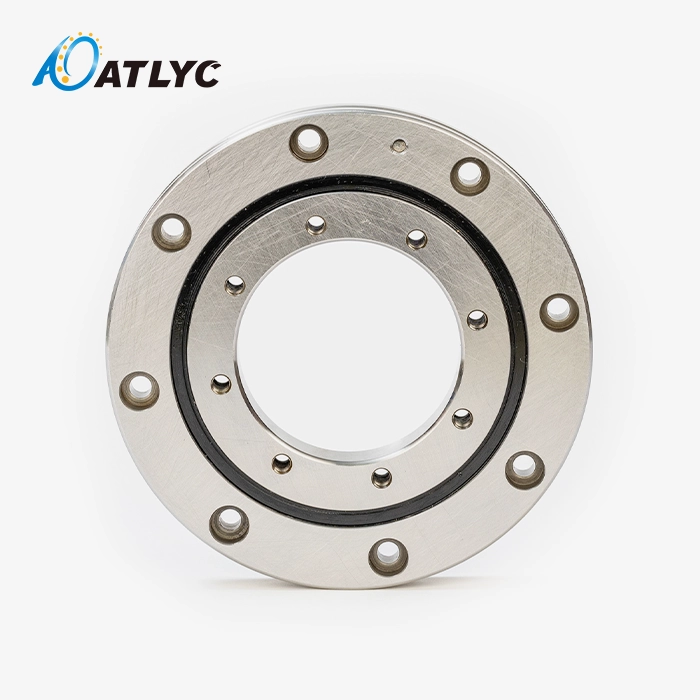
The design of the bearing setup is very complex and works best for precise tasks. The outer ring is made of a single piece and has an L-shaped cross-section. The inner ring assembly is made of two pieces and has two ball-and-cage arrangements that are arranged back-to-back in an O shape. This design makes a 60° contact angle that handles loads from multiple directions well, which is very important for grinding machines that have to deal with changing cutting forces and loads while they are working. The built-in mounting holes are a big improvement over previous methods. These don't need locking rings or bearing housings because they can be attached directly to other machine parts. This makes the assembly less complicated, which lowers the number of tolerance stack-up mistakes. This directly leads to better system rigidity and higher positioning accuracy, which are needed for the ZKLDF Rotary Table Bearing for grinding operations.
Material Quality and Manufacturing Standards
We make these accurate bearings out of high-quality steel that has been heated and treated in advanced ways. Precision grinding and superfinishing are used on both the inner and outer raceways to make the surfaces meet international standards. This way of making things makes sure that the quality is the same across all production batches, which is important when you're making long-term deals for mission-critical parts. The double-row angular contact ball arrangement lets you handle axial loads, radial loads, and composite tilting moments from multiple directions at the same time. This ability to hold loads in more than one way is especially useful for grinding jobs where moving the workpiece and indexing the rotary table make loading complicated. Even when equipment faces cutting forces that change direction or unusual loads that would weaken less durable designs, the bearing keeps its structure intact.
Performance Evaluation: Is the ZKLDF Rotary Table Bearing Suitable for Grinding Machines?
Evaluating bearing performance for grinding applications requires examining several critical factors that directly impact production outcomes. Through our experience working with mid-to-large manufacturers and OEMs across multiple continents, we've identified key performance metrics that determine suitability for precision grinding environments.
Load-Bearing Capacity and Rigidity
The double-row precision contact configuration delivers exceptional load-carrying capacity across multiple load vectors. The 60° contact angle optimizes force transmission, ensuring stable operation beneath combined axial, radial, and tilting moment loads. This setup maintains structural integrity even when equipment encounters aggressive cutting parameters or off-center loading conditions common in surface grinding and cylindrical grinding applications. During operation, grinding machines generate substantial cutting forces that translate into complex bearing loads. The bearing's reinforced ring design and optimized ball geometry distribute these forces effectively, preventing premature wear and maintaining positional accuracy over extended operational periods. This rigidity proves essential when achieving tight tolerance requirements on finished workpieces.
Speed Capability and Thermal Stability
Precision-ground raceways and optimized ball geometry reduce friction and heat generation during operation. This enables continuous high-speed rotation while maintaining dimensional stability—a critical requirement when grinding operations demand sustained spindle speeds. The bearing's thermal characteristics prevent speed-related deformation that can compromise machining accuracy, particularly during extended production runs where thermal growth becomes a significant concern. Heat management becomes particularly important in grinding applications where ambient temperatures rise due to cutting fluid circulation and motor operation. The bearing design incorporates features that facilitate heat dissipation, maintaining stable operating temperatures even during intensive grinding cycles. This thermal stability translates directly into consistent part quality and extended bearing service life.
Installation and Maintenance Best Practices for ZKLDF Rotary Table Bearings
Proper installation procedures directly impact bearing performance and service life. We've worked with numerous manufacturing facilities implementing these bearings in grinding equipment, and the installations following best practices consistently achieve superior operational outcomes compared to those taking shortcuts during assembly.
Step-by-Step Installation Guidelines
Begin installation by thoroughly cleaning all mounting surfaces, the ZKLDF Rotary Table Bearing, and inspecting them for damage or irregularities. Any surface imperfections can create stress concentrations that compromise bearing performance. Verify that mounting surfaces meet flatness specifications outlined in technical documentation—this step proves critical for achieving proper load distribution across the bearing assembly. Position the bearing carefully, aligning mounting holes with corresponding features on the machine structure. The integrated mounting holes simplify this process by eliminating intermediate components. Use calibrated torque wrenches when tightening mounting bolts, following the torque sequence specified in installation guidelines. Proper bolt torque ensures uniform clamping force around the bearing circumference, preventing distortion that could affect rotational accuracy. Check rotational freedom after initial mounting but before final torque application. The bearing should rotate smoothly without binding or excessive resistance. Any unusual resistance indicates misalignment or contamination requiring correction before proceeding. This verification step prevents damage that could occur if powered operation begins with improper bearing seating.
Essential Maintenance Routines
Establishing routine maintenance schedules prevents unexpected failures and extends bearing service life. Inspection checkpoints should include visual examination of seals, verification of mounting bolt torque, and assessment of rotational smoothness during machine idle conditions. These checks identify developing issues before they progress to failure modes requiring equipment downtime. Lubrication schedules depend on operating conditions, including rotational speed, load intensity, and ambient environment. Grinding applications typically require more frequent lubrication intervals due to contamination risks from grinding fluids and swarf. Use lubricants meeting specifications outlined in bearing documentation—improper lubricant selection can reduce service life substantially. The bearing's integrated lubrication features simplify this maintenance task, allowing technicians to complete relubrication quickly during scheduled maintenance windows. Monitor bearing operating temperature during routine operation. Elevated temperatures beyond normal operating ranges indicate potential issues, including inadequate lubrication, excessive loading, or seal failure, allowing coolant contamination. Addressing temperature anomalies promptly prevents cascading failures that could damage adjacent machine components.
Procurement Insights for ZKLDF Rotary Table Bearings
Procurement professionals navigating global bearing markets require clear guidance on sourcing authentic precision components efficiently and cost-effectively. We've established procurement frameworks that help purchasing teams secure reliable supply while managing costs and delivery timelines effectively.
Sourcing Through Authorized Channels
Purchasing through authorized distributors ensures product authenticity and access to manufacturer support services. Authorized channels maintain proper storage conditions, preventing bearing degradation before installation, and they provide documentation verifying product specifications and quality certifications. This traceability becomes essential when equipment qualification requires a documented component pedigree. Official online channels increasingly offer convenient procurement options with transparent pricing and streamlined ordering processes. These platforms typically provide detailed product specifications, application guides, and compatibility information, helping purchasers make informed selections. Digital procurement reduces communication delays and provides order tracking capabilities that simplify inventory management.
OEM Supply Agreements and Bulk Purchasing
Manufacturers incorporating these bearings into production equipment benefit from establishing OEM supply agreements. These arrangements provide pricing advantages through volume commitments while securing supply continuity for production planning. OEM agreements typically include provisions for technical collaboration, allowing bearing specifications to be optimized for specific equipment designs. Bulk purchasing delivers cost advantages when you're standardizing bearing selections across multiple machine installations. Consolidated orders reduce per-unit pricing while simplifying inventory management through larger but less frequent deliveries. Negotiating favorable payment terms within bulk purchase agreements improves cash flow management during equipment manufacturing cycles.
Why Choose ZKLDF Rotary Table Bearings for Your Grinding Machines?
Selecting bearing solutions for precision grinding equipment requires evaluating multiple factors beyond initial purchase price. Total ownership cost, operational reliability, and supplier capability all influence long-term project success.
Design Features for High-Precision Applications
The bearing design incorporates features specifically addressing precision grinding requirements. Integrated mounting capability streamlines equipment assembly, reducing installation time while eliminating potential sources of misalignment that can affect system performance. This simplified assembly proves particularly valuable during equipment commissioning when time pressures drive project schedules. The 60° contact angle configuration optimizes performance for the combined loading conditions typical in grinding applications. This design handles tilting moments more effectively than bearing arrangements using shallower contact angles, maintaining rotational accuracy even when workpiece positioning creates asymmetric loading. The back-to-back ball ZKLDF Rotary Table Bearing arrangement provides balanced load distribution, preventing deflection under varying operational conditions.
Return on Investment and Risk Reduction
Investment analysis demonstrates favorable returns when bearing reliability prevents unscheduled downtime. Grinding operations typically involve expensive workpieces and tight production schedules where equipment failures create substantial financial impacts beyond immediate repair costs. Selecting reliable bearings reduces these operational risks while supporting consistent production throughput. Maintenance cost optimization represents another economic advantage. The bearing's simplified installation reduces labor requirements during initial equipment assembly and subsequent replacement activities. Accessible lubrication features minimize maintenance time during routine service intervals. These factors combine to lower total ownership costs across the bearing's operational lifespan.
Innovation and Ongoing Development
Bearing technology continues evolving as manufacturing requirements advance. Ongoing research initiatives focus on extending speed capabilities, improving load capacity, and enhancing environmental resistance for demanding applications. These development efforts position precision bearing solutions as forward-thinking partnerships supporting customers' long-term technology needs rather than simple component transactions. Collaboration opportunities exist for OEM partners seeking customized bearing solutions optimized for specific equipment designs. Engineering consultation services help design teams evaluate bearing selections during equipment development, ensuring optimal performance from initial deployment. This collaborative approach creates value beyond standard catalog products, addressing unique application challenges through tailored engineering solutions.
Conclusion
The ZKLDF Rotary Table Bearing delivers proven performance in grinding machine applications through precision engineering, robust load management, and simplified installation characteristics. Its unique structural design, featuring integrated mounting capability and optimized contact angles, addresses the rigorous demands of modern grinding operations. When you evaluate bearing solutions based on technical specifications, cost-efficiency, and supplier reliability, these precision components represent compelling options worthy of serious consideration. Manufacturing professionals seeking dependable bearing solutions benefit from partnering with suppliers demonstrating production scale, international quality certifications, and proven export experience. The combination of precision manufacturing capabilities, adherence to global standards, and comprehensive technical support creates value throughout the procurement process and operational lifespan.
FAQ
1. What is the expected lifespan of ZKLDF rotary table bearings in typical grinding applications?
Service life expectancy varies based on operating conditions, including rotational speed, load intensity, and maintenance quality. Under normal grinding operations with proper installation and regular maintenance, these precision bearings typically deliver service lives ranging from 20,000 to 30,000 operating hours. Aggressive cutting parameters, inadequate lubrication, or contaminated environments reduce operational life, while optimized conditions can extend service beyond typical expectations. Implementing condition monitoring programs helps predict remaining useful life and schedule replacements during planned maintenance windows rather than responding to unexpected failures.
2. Can ZKLDF rotary table bearings be customized for specific grinding machine models?
Yes, customization options exist for specific application requirements. Engineering teams can work with bearing manufacturers to modify dimensional specifications, load ratings, and mounting configurations to match unique machine designs. Custom sealing arrangements address particular contamination concerns in grinding environments. Lubrication system adaptations accommodate specific coolant compatibility requirements. The customization process typically requires detailed application information, including load calculations, speed requirements, and environmental conditions, to ensure optimized bearing performance in specialized grinding equipment configurations.
3. What practical installation tips ensure maximum durability?
Cleanliness throughout installation proves critical—even microscopic contamination reduces bearing life substantially. Verify mounting surface flatness using precision measurement tools rather than visual inspection alone. Follow specified torque sequences and values precisely, as improper bolt loading creates stress concentrations, causing premature failure. Check rotational freedom before final assembly to confirm proper alignment. Apply appropriate lubricant immediately after installation to prevent corrosion during storage before equipment commissioning. Document installation procedures and measurements to establish baseline references for future maintenance activities and troubleshooting if performance issues develop during operation.
Partner with ATLYC for Premium ZKLDF Rotary Table Bearing Solutions
ATLYC delivers precision-engineered rotary table bearings meeting the demanding requirements of grinding machine applications worldwide. As an established ZKLDF Rotary Table Bearing manufacturer with fifteen years of continuous ZKLDF Rotary Table Bearing development, we combine ISO 9001 and IATF 16949 certified quality management systems with comprehensive technical support, ensuring successful implementation in your equipment. Our engineering team provides application consultation tailored to your specific grinding requirements, while our global logistics network ensures reliable delivery to customers across six continents. Contact our technical sales specialists at auto@lyautobearing.com to discuss your precision bearing requirements and discover how ATLYC's manufacturing capabilities, competitive pricing, and commitment to quality can enhance your grinding operations with dependable rotary table bearing solutions designed for long-term performance.
References
1. Hamrock, B.J., Schmid, S.R., and Jacobson, B.O. (2004). Fundamentals of Fluid Film Lubrication, Second Edition. Marcel Dekker, New York.
2. Harris, T.A. and Kotzalas, M.N. (2006). Advanced Concepts of Bearing Technology: Rolling Bearing Analysis, Fifth Edition. CRC Press, Boca Raton.
3. ISO 199:2014. Rolling bearings — Thrust bearings — Geometrical product specifications (GPS) and tolerance values. International Organization for Standardization, Geneva.
4. Eschmann, P., Hasbargen, L., and Weigand, K. (1985). Ball and Roller Bearings: Theory, Design and Application, Second Edition. John Wiley & Sons, Chichester.
5. Weck, M. and Brecher, C. (2006). Werkzeugmaschinen 2: Konstruktion und Berechnung, Eighth Edition. Springer-Verlag, Berlin.
6. Zhou, R.S. and Wang, H. (2012). "Friction and Wear Performance of Precision Spindle Bearings in Machine Tool Applications," Tribology Transactions, Volume 55, Issue 4, pp. 394-402.
Learn about our latest products and discounts through SMS or email