- English
- French
- German
- Portuguese
- Spanish
- Russian
- Japanese
- Korean
- Arabic
- Greek
- German
- Turkish
- Italian
- Danish
- Romanian
- Indonesian
- Czech
- Afrikaans
- Swedish
- Polish
- Basque
- Catalan
- Esperanto
- Hindi
- Lao
- Albanian
- Amharic
- Armenian
- Azerbaijani
- Belarusian
- Bengali
- Bosnian
- Bulgarian
- Cebuano
- Chichewa
- Corsican
- Croatian
- Dutch
- Estonian
- Filipino
- Finnish
- Frisian
- Galician
- Georgian
- Gujarati
- Haitian
- Hausa
- Hawaiian
- Hebrew
- Hmong
- Hungarian
- Icelandic
- Igbo
- Javanese
- Kannada
- Kazakh
- Khmer
- Kurdish
- Kyrgyz
- Latin
- Latvian
- Lithuanian
- Luxembou..
- Macedonian
- Malagasy
- Malay
- Malayalam
- Maltese
- Maori
- Marathi
- Mongolian
- Burmese
- Nepali
- Norwegian
- Pashto
- Persian
- Punjabi
- Serbian
- Sesotho
- Sinhala
- Slovak
- Slovenian
- Somali
- Samoan
- Scots Gaelic
- Shona
- Sindhi
- Sundanese
- Swahili
- Tajik
- Tamil
- Telugu
- Thai
- Ukrainian
- Urdu
- Uzbek
- Vietnamese
- Welsh
- Xhosa
- Yiddish
- Yoruba
- Zulu
RA8008UUCC0 Crossed Roller Bearing Buying Guide
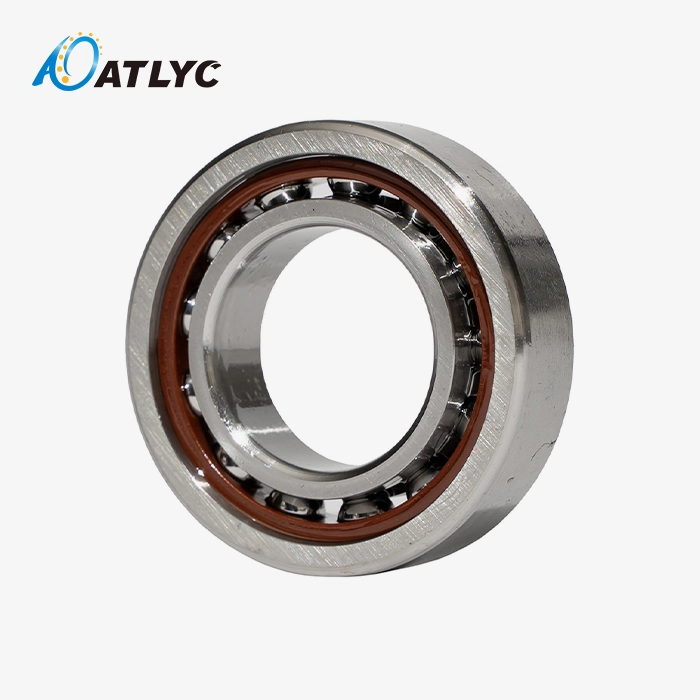
When sourcing precision components for high-performance industrial equipment, understanding the technical specifications and procurement considerations becomes paramount. The RA8008UUCC0 crossed roller bearing represents a specialised solution for applications demanding exceptional load capacity within constrained installation spaces. This ultra-compact bearing has an 80mm inner diameter, a 96mm outer diameter, and a very thin 8mm width, using a crossed roller design to handle radial, axial, and moment loads at the same time. The separable outer ring design, combined with CC0 preload specification and dual UU seals, provides zero-backlash operation critical for automation equipment, robotics, and precision machinery. Selecting the correct bearing specification and reliable manufacturer directly impacts equipment uptime, maintenance expenses, and overall production efficiency.

Understanding RA8008UUCC0 Crossed Roller Bearings
Essential Dimensions and Material Specifications
The dimensional profile of this thin-section bearing defines its application suitability. With an 80mm bore and 96mm outside diameter, the component maintains an exceptionally compact footprint, while the 8mm cross-section delivers surprising load capacity. We manufacture these bearings from high-carbon chromium steel—specifically GCr15 and GCr15SiMn alloys—hardened to HRC 58-64 through precision heat treatment. This material selection ensures durability under continuous operation while maintaining dimensional stability across temperature variations. The chromium content enhances corrosion resistance, extending service life in challenging industrial environments. The weight reduction achieved through this thin-wall design reaches approximately 50% compared to conventional bearing series. This characteristic proves invaluable for robotic applications where minimising rotational inertia improves response times and reduces energy consumption. The lighter assembly weight also decreases stress on mounting structures without compromising rigidity or load-handling capability.
Internal Construction and Load Distribution
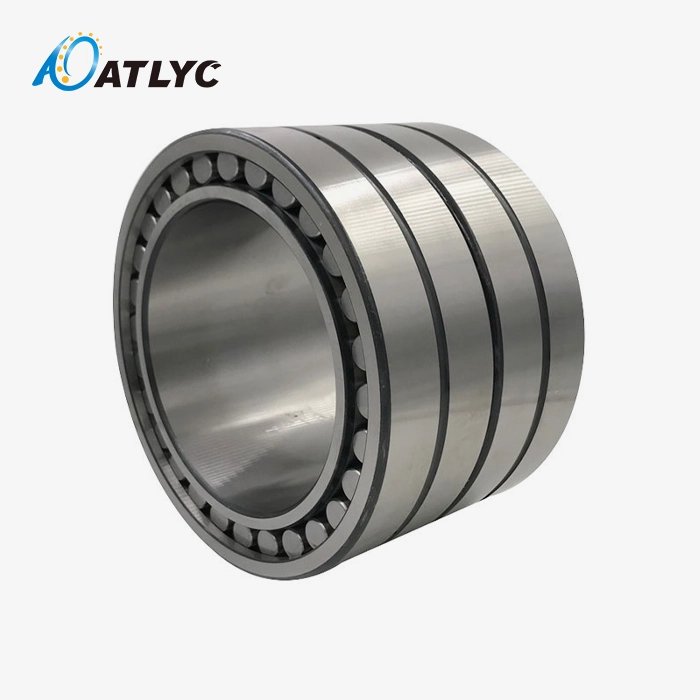
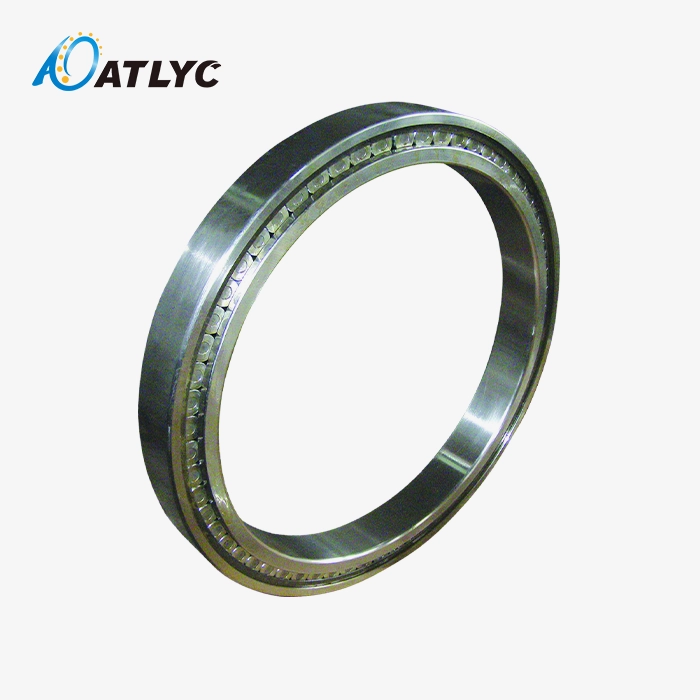
The crossed roller arrangement positions cylindrical rolling elements orthogonally at precise 90-degree intervals within V-groove raceways machined into both rings. This geometry creates multiple contact points that distribute applied forces across the roller length rather than concentrating stress at single points as occurs with ball bearings. Spacer retainers separate each roller, preventing metal-to-metal contact between rolling elements while maintaining accurate positioning throughout rotation. The separable outer ring construction facilitates installation in assemblies where inner ring access proves limited. This feature allows mounting the bearing in two stages, reducing installation complexity and enabling easier maintenance procedures. The integrated inner ring maintains concentricity and simplifies alignment during assembly operations.
Our CC0 preload specification applies negative clearance ranging from -2 to -5 microns, eliminating internal play. While this preload increases starting torque slightly, it delivers the zero-backlash operation required for precision positioning systems. The preload magnitude balances rigidity requirements against friction considerations, optimising performance for typical industrial automation applications.
Precision Classes and Performance Characteristics
We offer multiple precision grades to match application requirements and budget constraints. Standard P0 class bearings suit general industrial machinery where moderate accuracy suffices. P5 and P4 classes provide enhanced runout precision for applications like semiconductor manufacturing equipment and medical imaging devices. The highest P2 precision grade addresses ultra-demanding applications requiring sub-micron repeatability, though procurement lead times and costs increase accordingly. The dual UU contact seals protect internal components from contamination while retaining factory-filled lithium-soap grease. These seals create labyrinth barriers that exclude dust particles down to micron levels, critical for maintaining bearing performance in machining centres and automated production lines. The sealed configuration eliminates relubrication requirements for standard duty cycles, reducing maintenance overhead and preventing contamination from external lubricant application.
Operating temperature ranges extend from -20°C to +80°C under standard conditions, covering most industrial automation environments. Applications involving elevated temperatures or extreme cold require consultation regarding appropriate seal materials and lubricant specifications.
Comparison and Decision-Making for RA8008UUCC0 Bearing Selection
Performance Against Alternative Bearing Types
Comparing crossed roller bearings with angular contact ball bearings reveals distinct advantages for specific load conditions. Angular contact bearings excel in high-speed applications but require paired installation and preload adjustment during assembly. The crossed roller design handles moment loads more effectively within a single bearing, simplifying equipment design and reducing component count.
Cylindrical roller bearings provide excellent radial capacity but require separate thrust bearing arrangements for axial loads. The crossed roller configuration manages combined loading through a single component, decreasing assembly complexity and reducing overall installation space requirements. This consolidation proves particularly valuable in compact robotic joints where envelope dimensions constrain design options.
Standard deep groove ball bearings offer a lower cost but cannot match the rigidity and moment load capacity of crossed roller designs. Applications requiring high positioning accuracy under varying loads benefit from the superior stiffness characteristics of crossed roller construction. The crossed roller bearing maintains rotational precision even when moment loads create tilting forces that would compromise ball bearing performance.
Sealed Versus Open Configuration Considerations
The UU sealed version incorporated in this model provides comprehensive contamination protection suitable for most industrial environments. Sealed bearings eliminate maintenance intervals associated with relubrication while preventing ingress of coolant, metallic particles, and airborne contaminants. We recommend sealed configurations for machining centres, automation equipment, and any application where external contamination risks exist.
Open bearings without seals offer advantages in ultra-high vacuum applications or environments requiring specialised lubricants incompatible with standard seal materials. The absence of seal friction slightly reduces starting torque and running resistance. However, open bearings demand rigorous environmental controls and planned maintenance schedules, increasing operational complexity and cost over the bearing lifecycle.
Evaluating Supplier Alternatives and Brand Options
Major bearing manufacturers including NSK, THK, and IKO produce RA8008UUCC0 Crossed Roller Bearing with similar specifications, each offering distinct advantages. Global brands typically maintain extensive distribution networks ensuring parts availability, though premium pricing reflects brand positioning. Chinese manufacturers like ATLYC have invested substantially in manufacturing technology and quality systems, now producing bearings meeting international standards at competitive price points.
When evaluating suppliers, we recommend verifying ISO 9001 and IATF 16949 certifications that demonstrate established quality management systems. Manufacturing capacity matters for procurement security—facilities with dedicated crossed roller bearing production lines ensure consistent availability and shorter lead times. Technical support capabilities differentiate suppliers, particularly for customised specifications or application engineering assistance.
Authorised distributors assure genuine products and valid warranties. Purchasing through verified channels protects against counterfeit components that compromise equipment reliability. We maintain direct relationships with OEM customers and qualified distributors, ensuring product authenticity and technical support availability throughout the bearing service life.
Practical Applications and Maintenance of RA8008UUCC0 Bearings
Industrial Robotics and Automation Equipment
Collaborative robot manufacturers integrate these bearings into wrist and elbow joints where compact dimensions and zero-backlash operation prove essential. The bearing prevents arm droop under cantilevered tool loads while enabling position repeatability within ±0.01mm. Weight reduction achieved through the thin-section design improves robot payload capacity and reduces energy consumption during rapid movements. The sealed construction protects against welding spatter, cutting fluids, and other contaminants common in manufacturing environments.
Semiconductor wafer handling systems utilise these bearings in transfer arms operating within ISO Class cleanrooms. The UU seals prevent grease outgassing and particle generation that would contaminate sensitive processes. The bearing manages eccentric loads created during wafer extension and retraction while fitting within restricted vertical envelopes, enabling denser equipment layouts that increase cleanroom productivity.
Precision Machine Tools and Medical Devices
Rotary tables and indexing systems in machining centres rely on their moment load capacity for accurate positioning under cutting forces. The bearing maintains angular positioning accuracy throughout tool engagement, ensuring dimensional consistency across production runs. Medical imaging equipment incorporates these bearings in C-arm rotation mechanisms where smooth, vibration-free operation ensures image quality and patient safety. Portable surgical robots benefit from their compact size and light weight, which improve device manoeuvrability in operating room environments.
Measuring instruments and coordinate measuring machines (CMMs) demand the sub-micron repeatability available through higher precision grades. The bearing's rigidity prevents deflection under probe contact forces, maintaining measurement accuracy across the full working envelope. Temperature stability of the bearing materials ensures dimensional consistency during extended measurement cycles.
Maintenance Protocols and Service Life Optimisation
The factory-installed lithium-soap grease provides adequate lubrication for standard duty cycles without regreasing requirements. Operating environments exceeding 80°C or involving chemical exposure may require consultation regarding compatible lubricants. We recommend against disassembling sealed bearings, as reassembly compromises seal effectiveness and risks contamination of internal components.
Periodic inspection routines should monitor rotational smoothness and listen for unusual noise indicating wear or contamination. Any rough spots felt during manual rotation or audible grinding suggest immediate replacement to prevent secondary damage to adjacent components. Proper installation procedures prove critical—the thin-wall construction requires mounting fixtures that distribute installation forces evenly around the circumference to prevent ring distortion.
Housing tolerances directly affect bearing performance. We recommend H7 shaft fits and H7 housing bores for standard installations, with tighter tolerances specified for applications demanding maximum runout accuracy. Housing rigidity matters significantly because the thin bearing rings conform to mounting surface irregularities. Inadequate housing stiffness allows bearing deflection under load, which compromises the precision advantages of the crossed roller design.
Procurement Guide for RA8008UUCC0 Crossed Roller Bearings
Sourcing Channels and Supply Chain Reliability
Direct manufacturer relationships provide optimal pricing and lead time predictability for OEMs with established production volumes. ATLYC maintains production capacity dedicated to the RA8008UUCC0 Crossed Roller Bearing, ensuring consistent availability even during supply chain disruptions affecting component markets. Our minimum order quantities accommodate both prototype development projects and volume production requirements, offering flexibility throughout your product lifecycle.
Industrial distributors stock common configurations for rapid delivery, though selection typically focuses on high-volume specifications. Custom preload values, seal configurations, or precision grades often require direct manufacturer engagement. We maintain technical sales staff capable of reviewing application requirements and recommending appropriate specifications, supporting your engineering team during product development phases.
Online B2B platforms offer price transparency and simplified procurement processes, though verifying seller authenticity and product genuineness remains critical. We recommend requesting ISO certifications, manufacturing facility documentation, and sample inspection reports before committing to volume purchases through unfamiliar suppliers.
Pricing Structure and Lead Time Expectations
Bearing costs scale with precision grade, with P0 standard accuracy providing the most economical option for general applications. P5 precision typically adds a 30-40% cost premium, while P4 and P2 grades may double the base pricing due to specialised manufacturing processes and tighter quality controls. Volume discounts begin at quantities exceeding 100 pieces, with more substantial reductions available for annual purchase agreements supporting your production planning.
Standard lead times range from 4-6 weeks for common specifications maintained in production rotation. Custom preload values or precision grades may extend delivery to 8-12 weeks depending on manufacturing queue status. We recommend maintaining safety stock for critical applications and engaging suppliers early in your product development cycle to accommodate procurement timelines.
Shipping considerations affect total landed cost—air freight provides rapid delivery at premium rates, while ocean transport reduces costs for large orders at the expense of extended transit times. We coordinate logistics to balance delivery urgency with transportation expenses, optimising your total procurement cost.
Quality Assurance and Warranty Coverage
ISO 9001 and IATF 16949 certifications demonstrate systematic quality management, though verification of active certification status proves important. We provide complete dimensional inspection reports and material certifications with each shipment, documenting compliance with specified requirements. Incoming inspection protocols at your facility should verify critical dimensions and rotational smoothness before installation.
Warranty coverage typically extends 12 months from the shipment date or 6 months from installation, whichever occurs first. Coverage includes manufacturing defects but does not cover damage from improper installation, inadequate lubrication, or exceeding specified load ratings. We maintain technical support services to assist with application troubleshooting and failure analysis, helping identify root causes when premature wear occurs.
How to Choose the Right RA8008UUCC0 Bearing for Your Needs?
Defining Operational Parameters
Load calculations form the foundation of proper bearing selection. Document maximum radial, axial, and moment loads your application generates, including dynamic forces during acceleration and deceleration phases. The crossed roller design handles combined loading effectively, though exceeding rated capacities dramatically reduces service life. We provide engineering support to verify load calculations and confirm bearing adequacy for your specific duty cycle.
Operating speed affects bearing performance through centrifugal forces on rolling elements and heat generation from friction. The crossed roller configuration typically operates at lower speeds than ball bearings due to higher contact stresses, making it ideally suited for precision positioning applications rather than continuous high-speed rotation. The temperature operating range must account for ambient conditions plus heat generated during operation.
Environmental factors influence seal selection and lubricant specification. Exposure to chemicals, wash-down procedures, or extreme temperatures requires consultation to ensure compatible materials. Cleanroom applications demand verification that seals prevent particle generation, while vacuum environments may necessitate specialised greases that don't outgas.
Matching Precision Requirements to Application Demands
P0 standard precision suffices for many industrial automation applications where positioning accuracy within 0.05 mm meets functional requirements. Machine tools and inspection equipment benefit from P5 precision, delivering enhanced runout accuracy and improving finished part quality and measurement repeatability. Semiconductor manufacturing equipment and ultra-precision instruments justify P4 or P2 grades where sub-micron accuracy proves essential.
Higher precision grades increase bearing cost and procurement lead times, making specification of appropriate accuracy class an economic decision balancing performance requirements against budget constraints. We assist customers in evaluating whether application performance truly demands premium precision or whether standard accuracy adequately serves functional needs.
Supplier Capability Assessment
Manufacturing capacity directly impacts supply reliability. Facilities producing crossed roller bearings continuously maintain specialised tooling and skilled operators that ensure consistent quality and availability. We operate six production workshops, including dedicated facilities for precision bearing manufacturing, supporting scalable production from prototype through volume requirements.
Technical support capabilities differentiate bearing suppliers significantly. Engineering staff who understand application requirements can recommend optimal specifications and identify potential issues before production commitment. We maintain application engineering support for customers developing new equipment, reviewing load conditions and suggesting design modifications that optimise bearing performance and service life.
Quality management systems verified through ISO 9001 and IATF 16949 certifications assure consistent manufacturing processes. We've maintained these certifications since 2015, demonstrating commitment to quality standards recognised globally. Our quality inspection teams verify dimensional accuracy, material properties, and rotational characteristics throughout production, ensuring every bearing meets specification before shipment.

Conclusion
Selecting the appropriate crossed roller bearing requires balancing technical specifications against application requirements and procurement considerations. The RA8008UUCC0 Crossed Roller Bearing delivers exceptional performance in compact installations demanding simultaneous management of radial, axial, and moment loads. Understanding dimensional constraints, load conditions, precision requirements, and environmental factors guides proper specification. Evaluating supplier capabilities, such as quality certifications, manufacturing capacity, and technical support, helps ensure a reliable supply of genuine components that meet performance expectations. We encourage procurement professionals to engage manufacturers early during product development, leveraging application engineering expertise to optimise bearing selection and avoid costly redesigns. Proper specification and supplier selection establish the foundation for equipment reliability and long-term operational success.
FAQ
What distinguishes the CC0 preload specification from standard clearance bearings?
The CC0 designation indicates negative clearance, meaning the bearing is assembled with slight interference, creating preload between rollers and raceways. This preload eliminates internal play, providing zero-backlash operation essential for precision positioning systems. Standard clearance bearings contain slight internal play allowing thermal expansion but permitting small positioning errors. The preload increases starting torque slightly while dramatically improving rigidity and rotational accuracy.
How should I determine if P5 precision justifies the cost premium over P0 standard accuracy?
Evaluate your application's positioning requirements and tolerances for finished work. P0 accuracy typically delivers runout within 0.05mm, adequate for general industrial machinery. P5 precision improves accuracy to approximately 0.01mm, benefiting applications like machine tools where positioning directly affects finished part quality. Calculate whether improved accuracy increases production efficiency or finished product value sufficiently to justify the 30-40% cost increase.
Can these bearings be disassembled for cleaning and regreasing?
We strongly advise against disassembling crossed roller bearings. The outer ring separability facilitates installation, but components are assembled with precise preload and roller positioning. Disassembly compromises seal effectiveness and risks contamination. The factory-filled grease provides adequate lubrication for the bearing's design life under normal conditions. Applications requiring extended service or unusual conditions should specify open bearings compatible with planned maintenance procedures.
Partner with ATLYC for Reliable RA8008UUCC0 Crossed Roller Bearing Supply
ATLYC brings 15 years of bearing manufacturing expertise to your precision component requirements. Our ISO 9001 and IATF 16949 certified facilities produce crossed roller bearings meeting international quality standards while offering competitive pricing and reliable delivery schedules. We maintain dedicated engineering support to assist with specification selection and application optimisation, ensuring you receive components that are precisely matched to your equipment demands. Contact our technical sales team at auto@lyautobearing.com to discuss your RA8008UUCC0 Crossed Roller Bearing requirements. We provide detailed quotations, technical documentation, and sample availability for evaluation. As an established crossed roller bearing manufacturer serving global OEMs and distributors, we deliver the quality assurance and supply reliability your production schedules demand.
References
1. Harris, T.A. & Kotzalas, M.N. (2006). Advanced Concepts of Bearing Technology: Rolling Bearing Analysis, Fifth Edition. CRC Press, Boca Raton.
2. Budynas, R.G. & Nisbett, J.K. (2015). Shigley's Mechanical Engineering Design, Tenth Edition. McGraw-Hill Education, New York.
3. ISO 199:2014. Rolling Bearings – Thrust Bearings – Geometrical Product Specifications (GPS) and Tolerance Values. International Organisation for Standardisation, Geneva.
4. Eschmann, P., Hasbargen, L. & Weigand, K. (1985). Ball and Roller Bearings: Theory, Design and Application, Second Edition. John Wiley & Sons, Chichester.
5. Palmgren, A. (1959). Ball and Roller Bearing Engineering, Third Edition. SKF Industries Inc., Philadelphia.
6. Hamrock, B.J., Schmid, S.R. & Jacobson, B.O. (2004). Fundamentals of Fluid Film Lubrication, Second Edition. Marcel Dekker, New York.
Learn about our latest products and discounts through SMS or email
_1772782093670.webp)