- English
- French
- German
- Portuguese
- Spanish
- Russian
- Japanese
- Korean
- Arabic
- Greek
- German
- Turkish
- Italian
- Danish
- Romanian
- Indonesian
- Czech
- Afrikaans
- Swedish
- Polish
- Basque
- Catalan
- Esperanto
- Hindi
- Lao
- Albanian
- Amharic
- Armenian
- Azerbaijani
- Belarusian
- Bengali
- Bosnian
- Bulgarian
- Cebuano
- Chichewa
- Corsican
- Croatian
- Dutch
- Estonian
- Filipino
- Finnish
- Frisian
- Galician
- Georgian
- Gujarati
- Haitian
- Hausa
- Hawaiian
- Hebrew
- Hmong
- Hungarian
- Icelandic
- Igbo
- Javanese
- Kannada
- Kazakh
- Khmer
- Kurdish
- Kyrgyz
- Latin
- Latvian
- Lithuanian
- Luxembou..
- Macedonian
- Malagasy
- Malay
- Malayalam
- Maltese
- Maori
- Marathi
- Mongolian
- Burmese
- Nepali
- Norwegian
- Pashto
- Persian
- Punjabi
- Serbian
- Sesotho
- Sinhala
- Slovak
- Slovenian
- Somali
- Samoan
- Scots Gaelic
- Shona
- Sindhi
- Sundanese
- Swahili
- Tajik
- Tamil
- Telugu
- Thai
- Ukrainian
- Urdu
- Uzbek
- Vietnamese
- Welsh
- Xhosa
- Yiddish
- Yoruba
- Zulu
RA15008UUCC0 Precision Cross Roller Bearing Buying Guide
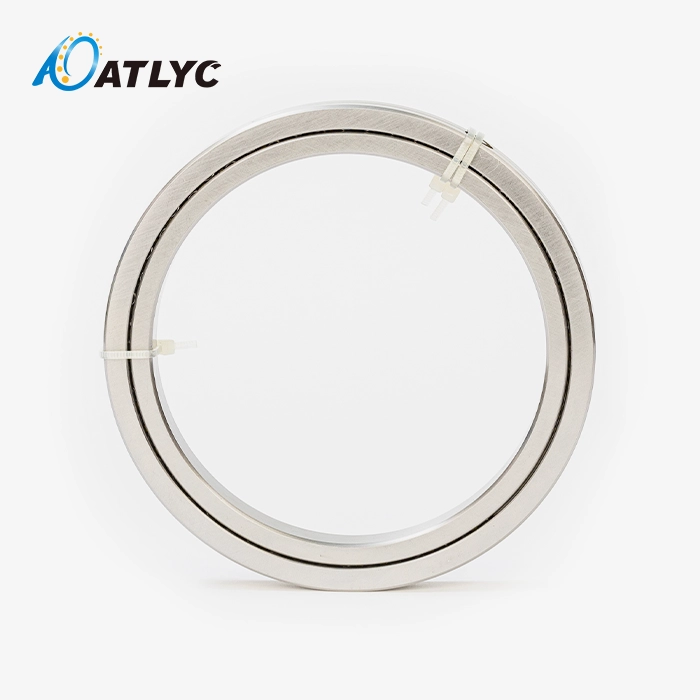
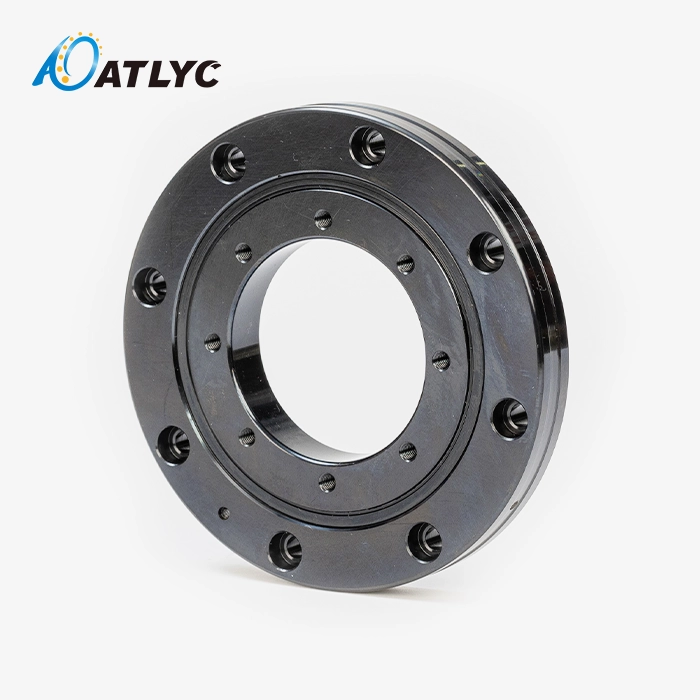
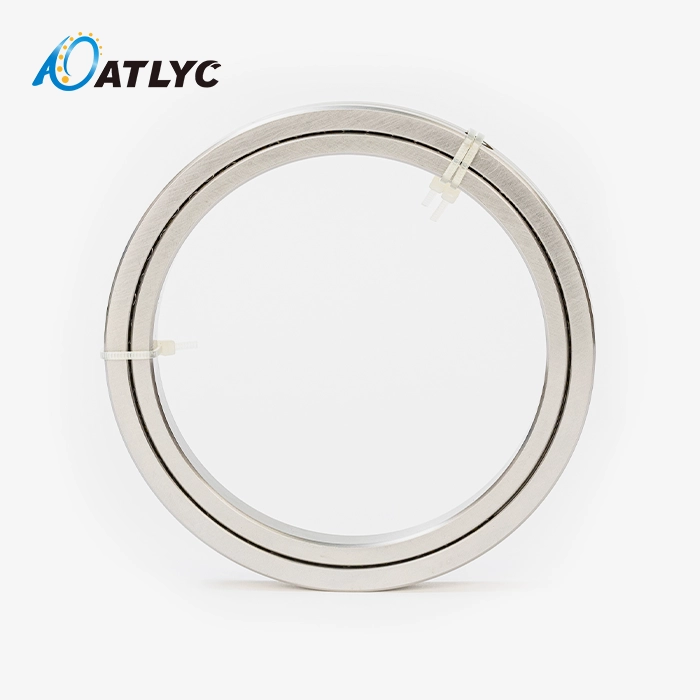
Selecting the right precision cross roller bearing demands careful evaluation of technical specifications, supplier reliability, and long-term performance metrics. This comprehensive buying guide addresses critical procurement considerations for the RA15008UUCC0 Precision Cross Roller Bearing model—an ultra-thin bearing engineered with a separable outer ring design, 150mm inner diameter, 166mm outer diameter, and 8mm width. Understanding its unique cross roller arrangement, dual rubber seals, and negative clearance configuration empowers purchasing managers and engineers to make informed decisions that balance cost efficiency with operational excellence in demanding industrial environments.

Understanding RA15008UUCC0 Precision Cross-Roller Bearing Specifications
Thorough technical knowledge is the foundation of successful procurement. The RRA15008UUCC0 Precision Cross Roller Bearing is from the RA series and stands out due to its integrated inner ring rotation design and its removable outer ring. While ensuring structural integrity during operation, this arrangement facilitates installation.
Dimensional Characteristics and Geometric Design
The dimensions of the bearing are 150 mm on the inside, 166 mm on the outside, and an extremely narrow 8 mm in width. Engineers can reduce the weight of the assembly without compromising its load capacity because to this tiny cross-section. The V-grooved rolling surfaces are machined to exacting specifications, and the cylindrical rollers are positioned orthogonally, 90 degrees apart. The cross roller arrangement allows the bearing to handle axial forces, moment loads, and radial forces all at once, unlike angular contact ball bearings that often require paired mounting configurations.
Material Composition and Manufacturing Standards
The parts are heat treated to a hardness of HRC 60–64 after being made from GCr15SiMn alloy and vacuum-degassed GCr15 bearing steel. The dimensional stability and outstanding fatigue resistance are guaranteed by this metallurgical process when subjected to cyclic loading. With the UU designation, you know there are synthetic rubber seals on both sides to keep contaminants out and oil in. In the meantime, for optimal rotational precision and rigidity under severe moment loads, the CC0 clearance standard mandates negative internal clearance (preload).
Accuracy Grades and Performance Ratings
Starting with P0, moving on to P5, P4, and finally P2 (ultra-precision instrumentation grade), the available precision classes cover a wide range of needs. Bore, outer, width, and runout accuracy tolerances are all associated with their respective categories. For automation and medical devices, micron-level positional repeatability is essential, and the cross roller design's intrinsic line-contact geometry provides three to four times more stiffness than point-contact ball bearing alternatives.
Comparing RA15008UUCC0 with Other Precision Bearing Solutions
Making optimal procurement decisions requires understanding how this model differentiates from alternative bearing technologies and competitive offerings.
RA15008UUCC0 Versus RA15006UUCC0 and Similar Models
While both models have a 150 mm bore, the RA15006UUCC0 is narrower (6 mm) than our focus model (8 mm) in profile. Despite the thinner version's weight savings, the RA15008UUCC0 has a 30% higher dynamic load rating and better load capacity and moment rigidity, according to industry calculations. For improved stability, engineers usually request an 8mm width for robotic joints that handle offset loads.
There is another important difference between the RA15008UUCC0 and the RA15008UU (non-preloaded version). By providing almost no elastic displacement when the load is reversed, the CC0 negative clearance gets rid of backlash completely. This quality is necessary in semiconductor wafer alignment stages and precision indexing tables, where the positioning accuracy can't be more than two or three microns.
Structural Comparison with Angular Contact Bearings
Traditional angular contact ball bearings require back-to-back or face-to-face pairing to handle combined loads. This arrangement doubles the axial space requirement and increases assembly complexity. The cross roller bearing consolidates this functionality into a single unit with an 8mm footprint. Maintenance considerations also differ—the separable outer ring design permits inspection and roller set replacement without complete disassembly, reducing downtime in critical production environments.
Market Positioning Against Established Brands
When benchmarked against NSK, IKO, and THK equivalents, the RA15008UUCC0 precision cross roller bearing offers comparable technical performance at a more competitive price point. ISO 9001 and IATF 16949 certifications ensure manufacturing consistency. Procurement managers sourcing from established Chinese manufacturers like Luoyang Auto Bearing benefit from 15 years of accumulated production expertise, six specialised workshops, and a 120-person technical team dedicated to quality assurance. Supply chain considerations favour manufacturers with proven export experience to the United States, Germany, and South Korea—markets that demand rigorous quality documentation and traceability.
Optimising Procurement of RA15008UUCC0 Bearings for B2B Clients
Strategic sourcing requires balancing cost, lead time, authenticity verification, and supplier capability assessment.
Supplier Qualification and Authenticity Verification
Certified compliance with international quality management systems is a hallmark of reliable bearing suppliers. IATF 16949 is tailored to the needs of the automotive sector in terms of defect prevention and continuous development, whereas ISO 9001 is used to validate the processes of organisations. Before placing a purchase, make sure you have the necessary certifications. This is especially important when sourcing cross roller bearings for applications that must comply with regulations.
The dependability of deliveries is affected by production capacity. More often than not, suppliers with numerous production workshops equipped with separate grinding, heat treatment, and assembly lines tend to have lower inventory turnover rates. Supply chain resilience is better displayed by a plant that can manufacture 120,000 bearing units per month compared to smaller enterprises that may have capacity issues during periods of high demand.
Pricing Factors and Total Cost of Ownership
Unit pricing for precision cross roller bearings varies based on accuracy grade, seal configuration, and order volume. P5 accuracy bearings command 20-30% premiums over P6 standard grade, while P4 and P2 ultra-precision variants may cost 50-80% more. However, total cost analysis must account for lifespan extension from superior accuracy—reduced vibration and improved load distribution can double operational life in demanding applications.
Lead times typically range from 4-6 weeks for standard configurations to 8-12 weeks for custom specifications. Distributors maintaining domestic inventory offer faster fulfilment but may charge 15-25% markups. OEM buyers placing annual volume commitments often negotiate pricing 10-18% below spot rates while securing priority allocation during market shortages.
Warranty, After-Sales Service, and Return Policies
Comprehensive warranty coverage should address manufacturing defects, dimensional non-conformance, and premature failure within specified operating parameters. Established manufacturers offering 12-18 month warranties demonstrate confidence in production quality. Technical support availability proves equally critical—suppliers providing application engineering assistance help optimise installation procedures, lubrication selection, and preload adjustment specific to your operating environment.
Return policies accommodating dimensional verification testing allow quality assurance teams to confirm specifications before full integration into assemblies. This provision becomes particularly valuable when sourcing large quantities of precision bearings where a single non-conforming batch can halt production lines.
Maintenance, Lifespan, and Application Insights for RA15008UUCC0
Maximising bearing performance requires understanding proper handling, lubrication practices, and environmental considerations.
Lubrication Requirements and Maintenance Intervals
The dual rubber seals retain factory-applied lithium-based grease suitable for temperatures ranging from -20°C to +120°C. Under normal operating conditions (moderate speeds, clean environments, stable temperatures), the sealed design permits maintenance-free operation for 20,000-30,000 hours. Applications involving higher speeds, thermal cycling, or contaminated environments benefit from re-lubrication intervals every 8,000-12,000 hours.
Installation Best Practices and Common Pitfalls
The separable outer ring design demands careful installation procedures. Uneven clamping force when securing the outer ring to its housing can distort the thin 8mm cross-section, compromising roundness and inducing vibration. Employ a star-pattern torque sequence when tightening mounting bolts, ensuring uniform stress distribution. Torque specifications typically range from 15-25 Nm depending on bolt size and housing material.
Avoid direct impact during assembly. Use soft-faced mallets or hydraulic presses to seat the inner ring onto shafts. Direct hammering can indent the V-groove raceway surfaces, creating stress concentrations that accelerate fatigue crack initiation. Maintain cleanliness throughout installation—particulate contamination introduced during assembly accounts for approximately 35% of premature bearing failures according to industry studies.
Application-Specific Performance Considerations
Industrial robot joints experience complex loading profiles combining constant radial loads from component weight, variable axial forces during acceleration, and moment loads from offset payload positioning. The cross roller bearing's ability to manage these simultaneous loads within an 8mm envelope makes it ideal for collaborative robots where weight directly impacts payload capacity.
Precision rotary tables in machining centres demand exceptional runout accuracy to maintain tight tolerances during multi-axis operations. The CC0 preload configuration in the RA15008UUCC0 minimises axial and radial play, achieving positioning repeatability below 5 microns—sufficient for aerospace component machining and medical implant manufacturing.
Semiconductor wafer handling equipment operates in controlled clean-room environments where contamination prevention is paramount. The UU seals prevent particle generation from lubricant migration while maintaining the low friction coefficient necessary for smooth rotational motion during wafer indexing operations.
Making the Right Choice: Precision Bearing Decision Support for Procurement Teams
Engineers and purchasing managers benefit from structured evaluation frameworks when selecting bearing solutions.
Load Capacity Assessment and Operating Conditions
Calculate actual radial, axial, and moment loads using worst-case operating scenarios. Dynamic load capacity ratings from manufacturer catalogues must exceed calculated loads by safety factors of 1.5-2.0 for standard industrial applications, or 2.5-3.0 for critical operations where failure consequences are severe. The cross-roller bearing's higher rigidity compared to ball-bearing alternatives reduces elastic displacement under load, which is particularly valuable when moment loads exceed 500 Nm.
Speed Limitations and Thermal Management
The line-contact friction inherent in cylindrical roller designs limits operational speeds compared to ball bearings. The RA15008UUCC0 typically operates reliably at speeds below 500-800 RPM, depending on the lubrication method. Grease lubrication suits lower-speed applications, while oil-mist or circulating oil systems extend speed capabilities by improving heat dissipation. Applications requiring speeds exceeding 1,000 RPM may necessitate alternative bearing technologies despite sacrificing some load capacity.
Supplier Credibility and Long-Term Partnership Value
Evaluate potential suppliers based on production scale, quality certifications, technical support capabilities, and supply chain stability. Manufacturers with 15+ years of operational history demonstrate market resilience and accumulated expertise. Those serving export markets, including the United States, Germany, and South Korea, typically maintain stricter quality controls to meet international customer expectations.
Request references from existing customers in similar industries. Site visits to manufacturing facilities provide a firsthand assessment of production capabilities, quality control procedures, and organisational professionalism. Suppliers welcoming factory audits exhibit transparency indicative of quality confidence.

Conclusion
Procuring the RA15008UUCC0 precision cross roller bearing demands comprehensive evaluation of technical specifications, supplier capabilities, and total cost considerations. This ultra-thin bearing's unique combination of separable outer ring design, cross roller load distribution, and CC0 preload configuration delivers exceptional rigidity and accuracy in compact assemblies. Understanding dimensional characteristics, material properties, accuracy grades, and application-specific requirements enables informed decision-making. Successful procurement balances unit pricing with quality certifications, manufacturing capacity, technical support availability, and long-term supply reliability—factors that collectively determine operational excellence in precision automation equipment, robotics, and medical devices.
FAQ
What distinguishes CC0 clearance from standard bearing clearances?
The CC0 designation represents negative internal clearance, commonly termed preload. This configuration eliminates all internal play between rollers and raceways, maximising rigidity and rotational accuracy. Standard clearance bearings (C0 designation) retain slight play, permitting thermal expansion but sacrificing precision. Applications demanding positioning repeatability below 5 microns—such as robotic joints and indexing tables—require the preloaded design despite generating slightly higher friction.
Can the RA15008UUCC0 operate in vacuum or clean-room environments?
Standard UU seals and factory grease suit atmospheric pressure applications. Clean-room operations tolerate the sealed configuration provided particulate generation remains within acceptable limits. Vacuum applications require seal removal and substitution of vacuum-compatible lubricants such as Krytox or Fomblin fluorinated greases to prevent outgassing. Consult with bearing suppliers when specifying models for specialised environments to ensure material compatibility.
How does load capacity compare to similarly sized ball bearings?
The line-contact geometry of cylindrical rollers provides substantially higher load capacity than point-contact ball bearing designs. A cross roller bearing typically achieves 40-60% greater dynamic load rating compared to deep groove ball bearings of equivalent boundary dimensions. This advantage becomes particularly significant when managing combined radial, axial, and moment loads simultaneously—a scenario requiring multiple paired ball bearings but accommodated within a single cross roller unit.
Partner with ATLYC for Your Precision Cross Roller Bearing Needs
ATLYC stands ready to support your RA15008UUCC0 precision cross roller bearing requirements with manufacturing expertise accumulated over 15 years. Our ISO 9001 and IATF 16949 certified facilities operate six specialised workshops staffed by 120 skilled professionals dedicated to producing high-precision bearings meeting international standards. As an experienced bearing manufacturer serving customers across the United States, Germany, South Korea, and beyond, we understand the critical importance of consistent quality, competitive pricing, and reliable lead times for your production operations. Whether you need standard configurations or custom specifications, our engineering team provides comprehensive technical support from initial selection through installation guidance. Contact us today at auto@lyautobearing.com to discuss your precision bearing applications and receive detailed quotations tailored to your volume requirements.
References
1. Harris, T. A., & Kotzalas, M. N. (2006). Essential Concepts of Bearing Technology (5th ed.). CRC Press, Taylor & Francis Group.
2. ISO 5593:1997. Rolling Bearings — Vocabulary. International Organisation for Standardisation.
3. Eschmann, P., Hasbargen, L., & Weigand, K. (1985). Ball and Roller Bearings: Theory, Design and Application (2nd ed.). John Wiley & Sons.
4. Hamrock, B. J., Schmid, S. R., & Jacobson, B. O. (2004). Fundamentals of Fluid Film Lubrication (2nd ed.). Marcel Dekker.
5. SKF Group. (2018). Rolling Bearings Catalogue: Technical Product Information. SKF AB.
6. Khonsari, M. M., & Booser, E. R. (2008). Applied Tribology: Bearing Design and Lubrication (2nd ed.). John Wiley & Sons.
Learn about our latest products and discounts through SMS or email