- English
- French
- German
- Portuguese
- Spanish
- Russian
- Japanese
- Korean
- Arabic
- Greek
- German
- Turkish
- Italian
- Danish
- Romanian
- Indonesian
- Czech
- Afrikaans
- Swedish
- Polish
- Basque
- Catalan
- Esperanto
- Hindi
- Lao
- Albanian
- Amharic
- Armenian
- Azerbaijani
- Belarusian
- Bengali
- Bosnian
- Bulgarian
- Cebuano
- Chichewa
- Corsican
- Croatian
- Dutch
- Estonian
- Filipino
- Finnish
- Frisian
- Galician
- Georgian
- Gujarati
- Haitian
- Hausa
- Hawaiian
- Hebrew
- Hmong
- Hungarian
- Icelandic
- Igbo
- Javanese
- Kannada
- Kazakh
- Khmer
- Kurdish
- Kyrgyz
- Latin
- Latvian
- Lithuanian
- Luxembou..
- Macedonian
- Malagasy
- Malay
- Malayalam
- Maltese
- Maori
- Marathi
- Mongolian
- Burmese
- Nepali
- Norwegian
- Pashto
- Persian
- Punjabi
- Serbian
- Sesotho
- Sinhala
- Slovak
- Slovenian
- Somali
- Samoan
- Scots Gaelic
- Shona
- Sindhi
- Sundanese
- Swahili
- Tajik
- Tamil
- Telugu
- Thai
- Ukrainian
- Urdu
- Uzbek
- Vietnamese
- Welsh
- Xhosa
- Yiddish
- Yoruba
- Zulu
How Does Cross roller bearing RB series Improve Load Capacity?
The Cross roller bearing RB series is an arrangement of cylindrical rollers at 90° intervals to increase load capacity to handle radial, axial, and moment loads simultaneously. The line contact design provides 3 to 4 times the stiffness of traditional ball bearings. The inner ring is integral, and the outer ring is of the plug type, working together to provide geometric stability under combined load. For OEMs and industrial equipment makers, this translates directly to fewer bearing assemblies, less housing space, and longer life under severe operating cycles.

Understanding the Cross Roller Bearing RB Series
Structural Identity
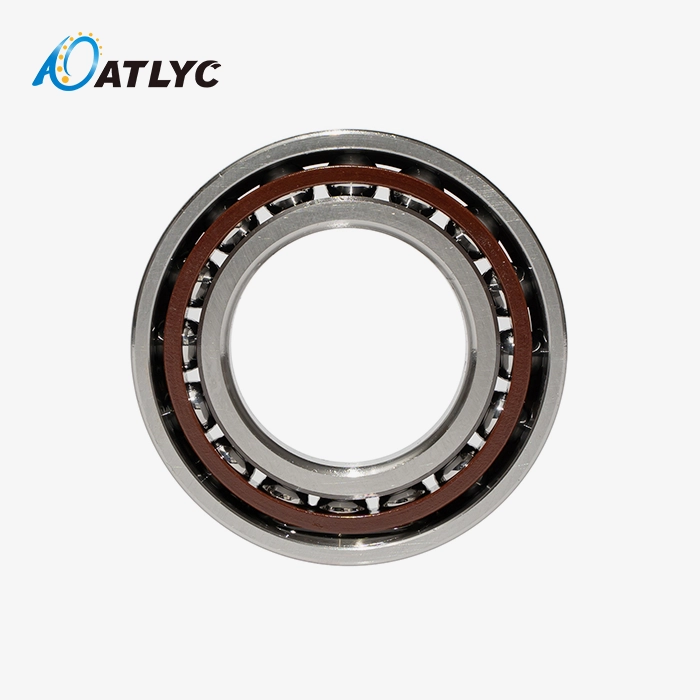
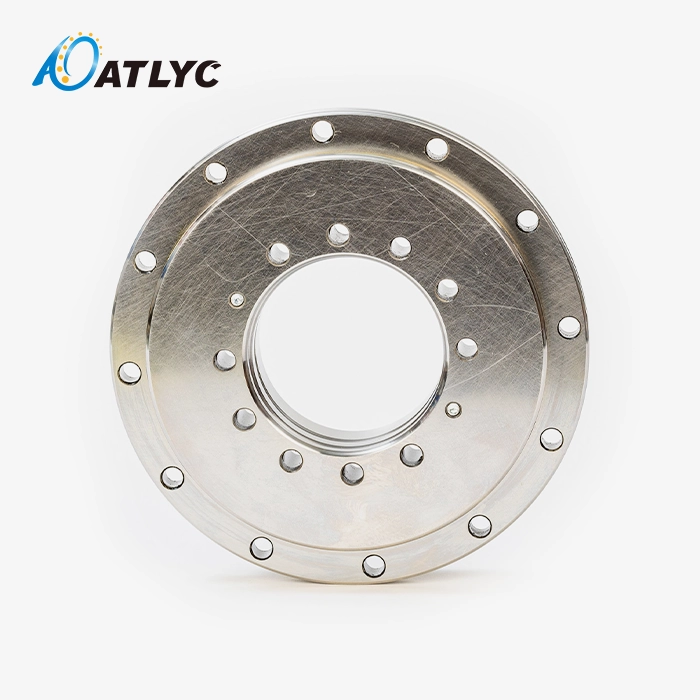
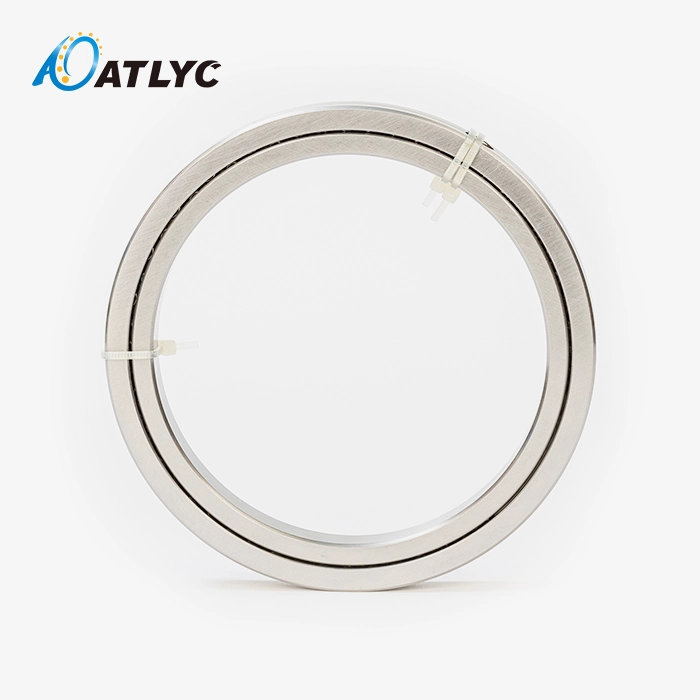
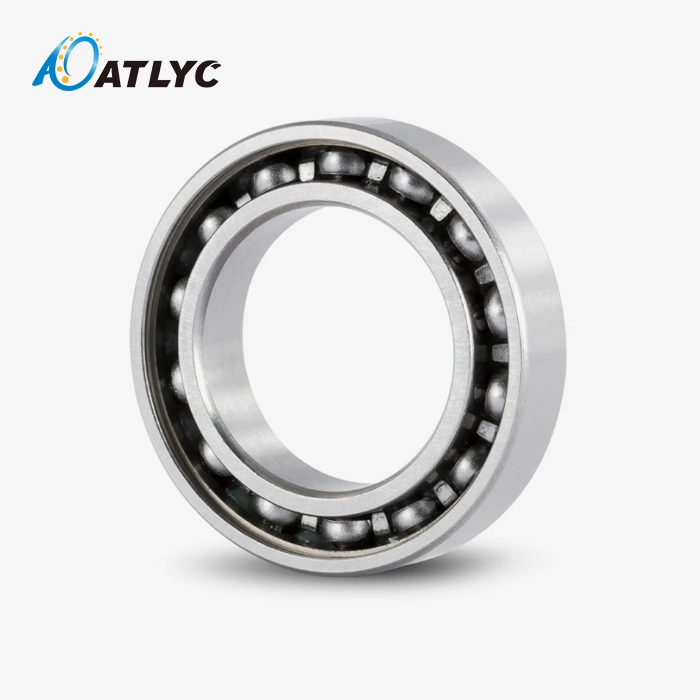
The RB series cross roller bearing features a solid inner ring and a split outer ring with a plug system. The cylindrical rollers in the 90° V-groove raceway change direction at every 90°. The RB type differs from normal slewing rings or thin section ball bearings by having this orthogonal layout.
Size Coverage and Material
The RB series has it all: interior diameter 20 mm to 1,100 mm, exterior diameter 70 mm to 1,500 mm, and breadth 12 mm to 110 mm. The rings are composed of GCr15 or GCr15SiMn steel. It is a high-carbon chromium steel with a hardness of 58-64 HRC. The material properties of this series correspond to the requirements of national and international standards for bearing steel and thus provide a constant wear resistance. The inner diameter is 20 to 1100 mm, the outside diameter is 70 to 1500 mm, and the breadth is 12 to 110 mm. Material GCr15/GCr15SiMn. Precision grade P6, P0, P5, P4, P2.
| Parameter | Range |
|---|---|
| Inner Diameter | 20 – 1,100 mm |
| Outer Diameter | 70 – 1,500 mm |
| Width | 12 – 110 mm |
| Material | GCr15 / GCr15SiMn |
| Accuracy Classes | P6, P0, P5, P4, P2 |
Accuracy Classes Available
There are six different accuracy levels for the RB series: P6, P0, P5, P4, and P2. Precision rotary tables, IC production devices, and medical imaging equipment need runout limits of just a few microns, which are met by the P4 and P2 types. Choosing the right accuracy class when buying a bearing has a direct effect on how well it holds its place over its entire life.
Core Principles Behind Load Capacity Improvement
Orthogonal Roller Arrangement and Load Distribution
In an RB cross roller bearing, each cylinder-shaped roller contacts the track along a straight line instead of touching it at a point. The applied force is spread over a bigger surface area by this contact shape, which lowers the peak contact stress. One set of rollers takes radial loads, while neighboring rollers carry axial and moment loads. All of these loads are carried by the same ring assembly.
Integrated Inner Ring Rigidity
The solid, non-split inner ring doesn't bend when moment loads are applied. When used in robot joints, the weight of an extended arm creates strong twisting forces. Test results from companies that make articulated robots show that bearings with integrated inner rings keep positioning accuracy below 5 µm even after 10,000 load cycles. This is in contrast to split-ring options, which show measurable raceway wear earlier.
Precision-Ground Raceways and Controlled Roller Geometry
Precision grinding of the V-groove raceways and roller diameter tolerances held within micrometers make sure that the contact geometry stays the same from the first rotation on. This way of making things stops stress concentrations that usually cause surface fatigue. As a result, the bearing keeps its maximum load capacity for longer periods of time instead of breaking down quickly because of geometric irregularities.
These three building rules work together. In real production settings, the Cross roller bearing RB series' high load capacity isn't due to just one feature. It's the mix of line contact, ring stability, and precise geometry that makes the difference.
Comparative Analysis: RB Series vs Other Bearing Types
Understanding where the RB series outperforms alternatives helps procurement teams make decisions that match application requirements to engineering reality.
| Bearing Type | Radial Load | Axial Load | Moment Load | Runout Accuracy |
|---|---|---|---|---|
| RB Cross Roller | High | High | High | P2–P6 |
| Angular Contact Ball | Moderate | Moderate | Low | P4–P5 |
| Cylindrical Roller | High | Low | Low | P5–P6 |
| Four-Point Contact Ball | Moderate | Moderate | Moderate | P5 |
Against Angular Contact Ball Bearings
Angular contact ball bearings handle axial and radial loads but require paired or back-to-back mounting to resist moment loads. The RB series replaces a dual bearing arrangement with a single unit, cutting both axial length and assembly labor. In machining center rotary tables, this space saving often allows engineers to reduce the table's overall height.
Against Cylindrical Roller Bearings
Cylindrical roller bearings carry high radial loads but offer limited axial capacity and low moment stiffness. They remain the right choice for pure radial applications such as gearbox shafts. However, for joints that rotate under combined loading — robot wrists, indexing tables, and measuring instrument stages — they require supplementary thrust bearings, adding cost and assembly complexity that the RB series avoids.
When the RB Series Is the Best Choice
The RB series is the preferred selection when an application demands simultaneous high radial, axial, and moment load capacity in a compact envelope, along with runout accuracy at P5 or finer. Typical qualifying applications include industrial robot joints, CNC machining center rotary tables, manipulator rotating parts, medical CT scanner gantries, and IC manufacturing stages.
Maintenance and Longevity: Protecting Load Capacity Over Time
Lubrication Practices
The contact form of the Cross roller bearing RB series has low friction, is compatible with synthetic or lithium-based grease, and has a robust film. Under regular industrial operating circumstances, the grease must be changed every 2,000 to 4,000 hours, depending on the speed and temperature of the machine. So it is as vital to fill to the proper level as it is to choose the right oil, since too much grease might make the power higher and the heat higher.
Inspection Intervals and Wear Indicators
Scheduled inspections should include checking axial and radial runout using a dial indicator or CMM. A greater than 2 µm increase in runout value from the standard test indicates a worn-out or contaminated track. Metal chips are the primary cause of premature failures in machine tool applications. Many of these difficulties may be prevented if the cover is correctly fitted and sealed when installed.
Sourcing Genuine Products
Fake or inferior RB bearings are frequently made of lesser quality steel grades that do not match GCr15 hardness. When you purchase from manufacturers certified by ISO 9001 and IATF 16949, you can be certain that you can trace the raw materials all the way to the final bearing. Material and size certification for all RB series bearings is provided by Luoyang Auto Bearing Co., Ltd. (ATLYC).
Procurement Insights: Sourcing the Right RB Series Bearing
Matching Specifications to Application
Make sure you know the precise inner diameter, outside diameter, width, accuracy class, and load levels of the system you require before you ask for a price. In the first cycle, the performance and service life are influenced by an accuracy grade that is either too small or too big. The manufacturer has many variants of the RB series. If you inform them about your application variables like speed of operation, load type, housing tolerance, they may help you pick the suitable variation.
Evaluating Supplier Capability
It is essential to get RB cross roller bearings from a supplier that is ISO 9001 and IATF 16949 certified, maintains its own dedicated precision grinding lines, and provides dimensional inspection records with every shipment. Founded in 2010, ATLYC has six manufacturing units and 120 trained people. It has supplied precision bearings to industries in South Korea, the US, Germany, Russia, Iran, and Turkey. The scale of production and the history of exports are a testament to the fact that quality can be maintained throughout large orders.
Lead Time and Order Planning
If the RB series bearings are stocked, you may get them in normal sizes with 3-6 weeks lead times. For unique measurements or lower accuracy classes, more time is required for grinding and inspecting. If you place orders with sufficient lead time and speak through projected quantities with your source, you reduce the risk of your production lines grinding to a halt because you ran out of bearings.

Conclusion
The Cross roller bearing RB series can take higher weight because it features specially positioned rollers that are not parallel to each other, a robust inner ring and precision-ground race courses. It replaces multi-bearing assemblies in robots, machining centers, medical equipment, and precision instruments since it can handle radial, axial, and moment loads in one tiny unit. It is available in inner diameters from 20 mm to 1,100 mm and in accuracies from P6 to P2 and hence suitable for many diverse industrial applications. This load capacity will be preserved for the entire service life of the bearing, provided it is properly oiled, regularly tested, and purchased from recognized manufacturers.
FAQ
1. What makes the RB series carry higher loads than a standard ball bearing?
The RB series uses line-contact cylindrical rollers arranged at 90° alternating angles. Line contact distributes force over a longer surface than the point contact in ball bearings, so peak stress at the raceway is significantly lower. This allows the bearing to carry 3 to 4 times more combined load before reaching fatigue limits.
2. Can the RB series handle moment loads alone?
Yes. The orthogonal roller arrangement means alternate rollers resist tilting forces directly. This makes the RB type well suited for cantilevered loads in robot joints and rotary table applications, where moment loading is the primary stress condition.
3. What accuracy class should I specify for a CNC rotary table?
P5 or P4 is appropriate for most CNC rotary table applications. P2 is available for the highest-precision measurement instruments and IC manufacturing stages where runout must stay within single-digit micron tolerances.
4. How do I verify that an RB series bearing meets specification?
Request a dimensional inspection report and material certificate with each shipment. Confirm radial internal clearance, Kia runout values, and Rockwell hardness readings against your drawing requirements before accepting the delivery.
Partner with ATLYC for Your Cross Roller Bearing RB Series Supply
ATLYC (Luoyang Auto Bearing Co., Ltd.) has been making precision bearings since 2010 and is certified by both ISO 9001 and IATF 16949. We are a reliable Cross roller bearing RB series supplier, and our sizes range from 20 mm to 1,100 mm around the inside. We also offer accuracy classes P6 through P2, full material traceability, and OEM customization. To get prices and specs, you can email our technical team at auto@lyautobearing.com.
References
1. Harris, T. A., & Kotzalas, M. N. — Rolling Bearing Analysis: Essential Concepts of Bearing Technology, Taylor & Francis, 2006.
2. SKF Group — SKF Rolling Bearings Catalogue, SKF, 2018.
3. NSK Ltd. — Precision Machine Components: Cross-Roller Rings and Rotary Tables, NSK Technical Report, 2019.
4. ISO 492:2014 — Rolling Bearings — Radial Bearings — Dimensional and Geometrical Tolerances, International Organization for Standardization, 2014.
5. Hamrock, B. J., Schmid, S. R., & Jacobson, B. O. — Fundamentals of Machine Elements, McGraw-Hill, 2005.
6. JTEKT Corporation — Bearing Technical Handbook: Selection and Application of Precision Bearings, JTEKT Engineering Journal, 2020.
Learn about our latest products and discounts through SMS or email