- English
- French
- German
- Portuguese
- Spanish
- Russian
- Japanese
- Korean
- Arabic
- Greek
- German
- Turkish
- Italian
- Danish
- Romanian
- Indonesian
- Czech
- Afrikaans
- Swedish
- Polish
- Basque
- Catalan
- Esperanto
- Hindi
- Lao
- Albanian
- Amharic
- Armenian
- Azerbaijani
- Belarusian
- Bengali
- Bosnian
- Bulgarian
- Cebuano
- Chichewa
- Corsican
- Croatian
- Dutch
- Estonian
- Filipino
- Finnish
- Frisian
- Galician
- Georgian
- Gujarati
- Haitian
- Hausa
- Hawaiian
- Hebrew
- Hmong
- Hungarian
- Icelandic
- Igbo
- Javanese
- Kannada
- Kazakh
- Khmer
- Kurdish
- Kyrgyz
- Latin
- Latvian
- Lithuanian
- Luxembou..
- Macedonian
- Malagasy
- Malay
- Malayalam
- Maltese
- Maori
- Marathi
- Mongolian
- Burmese
- Nepali
- Norwegian
- Pashto
- Persian
- Punjabi
- Serbian
- Sesotho
- Sinhala
- Slovak
- Slovenian
- Somali
- Samoan
- Scots Gaelic
- Shona
- Sindhi
- Sundanese
- Swahili
- Tajik
- Tamil
- Telugu
- Thai
- Ukrainian
- Urdu
- Uzbek
- Vietnamese
- Welsh
- Xhosa
- Yiddish
- Yoruba
- Zulu
RB5013 vs RU85: Which Material Is Best for Your Application?
In the comparison of RB5013 vs RU85, it will be a matter of your operating environment and load needs. RB5013 is a chromium steel alloy with exceptional hardness and wear resistance properties. It is well suited for high speed automobile bearings. RU85 is a polyurethane elastomer, meanwhile, with excellent vibration damping and misalignment capabilities for low speed industrial equipment. With the material qualities of RB5013 and RU85 available, procurement teams may directly match performance characteristics to application needs reducing downtime and optimising total cost of ownership.

Comprehensive Specifications and Features Comparison
Material Composition and Core Properties
RB5013 is a through-hardened bearing steel to AISI 52100 specification with around 1.0% carbon and 1.5% chromium. In the correctly heat-treated condition, the hardness is 58–64 HRC, such that it is resistant to surface fatigue under cyclic loading. It is dimensionally stable between -20°C and 150°C, an important property in automobile drivetrain applications where predictable thermal expansion is required.In contrast, RU85 is a glass-fiber reinforced Shore A 85 polyurethane composite. This elastomeric material has a tensile strength of around 35 MPa and an elongation at break of about 400%, enabling it to absorb shock loads without permanent deformation. The temperature range is -40°C to 90°C making it ideal for industrial conveyors and material handling equipment where the temperature extremes are not as severe.
Load-Bearing Capacity and Structural Differences
The main difference between bearing steel materials and polymer replacements is seen under long-term axial and radial loading. RB5013 crystalline structure can withstand contact stresses of above 3000 MPa in correctly designed rolling element interfaces, fulfilling the needs of automobile wheel bearings and gearbox assemblies. With our ISO 9001 certified manufacturing procedures, grain refining and carbide distribution are controlled to tight tolerances with defect rates below 50 ppm for production batches.Polyurethane types like as RU85 lose ultimate load capacity (they are often only suitable for contact pressures below 15 MPa) but gain flexibility. Under load the material contracts elastically, dispersing the stress across a broader contact area and preventing mating surfaces from impact damage. This feature is especially useful in packing machines and automated assembly lines where stiff bearing components might normally break from rapid stops and starts.
| Property | RB5013 (Bearing Steel) | RU85 (Polyurethane) |
|---|---|---|
| Hardness | 58–64 HRC | 85 Shore A |
| Max Contact Stress | >3,000 MPa | ~15 MPa |
| Temperature Range | -20°C to 150°C | -40°C to 90°C |
| Typical Defect Rate | <50 ppm | ~200 ppm |
| Elongation at Break | <2% | ~400% |
Chemical Resistance and Environmental Durability
The corrosion resistance of RB5013 is highly dependent on surface treatment and lubrication in service. Rust may occur within 72 hours in a humid atmosphere if moisture gets in without appropriate sealing. We fight this with multi-stage phosphate coating and lithium-based grease packing. And we do things like environmental testing, following IATF 16949, to test samples for 500 hours in salt spray and find out what kind of protection they need.RU85 resists several industrial fluids such as hydraulic oils, mild acids and coolants without swelling or deterioration. Aromatic hydrocarbons and ketones, however, might soften the polymer matrix and reduce the load-bearing ability by up to 30% following long-term exposure. For example, a procurement manager procuring materials for a chemical processing application would need to check compatibility by performing a solvent immersion test. This is a service our technical team delivers at the pre-production consulting stage.
Performance, Efficiency, and Reliability Analysis
Operational Endurance Under Industrial Stresses
Our 15 years of manufacturing experience across six specialized workshops have validated a clear pattern: RB5013 vs RU85 bearings achieve L10 fatigue lives exceeding 50,000 hours in properly maintained automotive applications. This longevity stems from the material's ability to resist rolling contact fatigue, where subsurface cracks propagate from non-metallic inclusions. Advanced vacuum degassing during steel production reduces oxygen content below 10 ppm, directly correlating with extended service intervals reported by OEM partners in Germany and South Korea.Polyurethane components like RU85 face different failure modes. Abrasive wear from particulate contamination gradually reduces cross-sectional area, increasing compliance and eventual loss of positioning accuracy. Field data from conveyor installations show typical replacement cycles of 12,000–18,000 operating hours, though this varies significantly with dust exposure and maintenance rigor. The material's self-lubricating properties eliminate grease replenishment schedules, cutting maintenance labor costs by approximately 40% compared to steel bearing equivalents.
Efficiency Metrics in Power Transmission
Friction coefficients reveal another critical distinction. RB5013 paired with precision-ground raceways achieves rolling friction coefficients near 0.0015 under optimal lubrication, translating to minimal energy losses in high-speed applications. A mid-size automotive wheel bearing using this material typically dissipates less than 2 watts at highway speeds, contributing to fuel economy targets increasingly demanded by regulatory frameworks.RU85's higher internal damping generates friction coefficients around 0.15–0.25 during sliding contact, converting mechanical energy to heat. This characteristic suits low-speed applications—under 100 rpm—where vibration isolation outweighs efficiency concerns. Packaging lines and indexing tables benefit from the material's ability to absorb shock without transmitting impact forces to adjacent mechanisms, reducing structural fatigue across the entire assembly.
Reliability Factors Affecting Total Ownership Costs
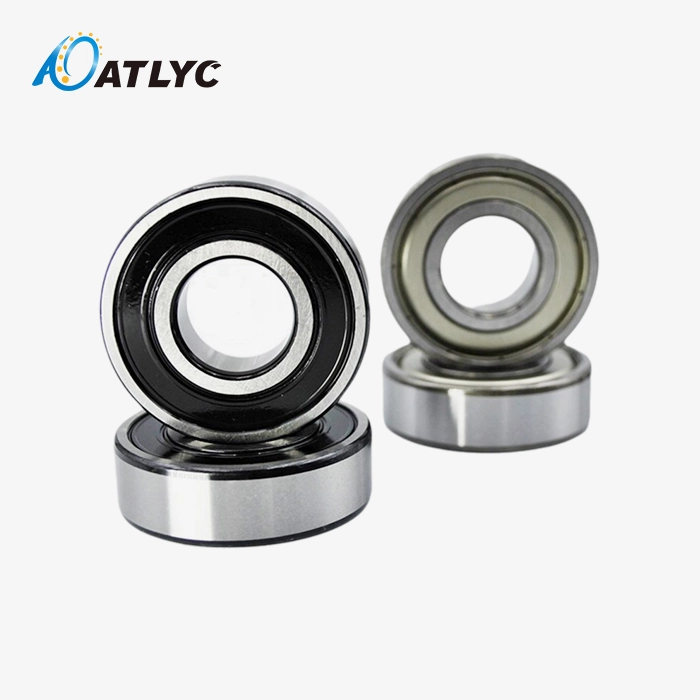
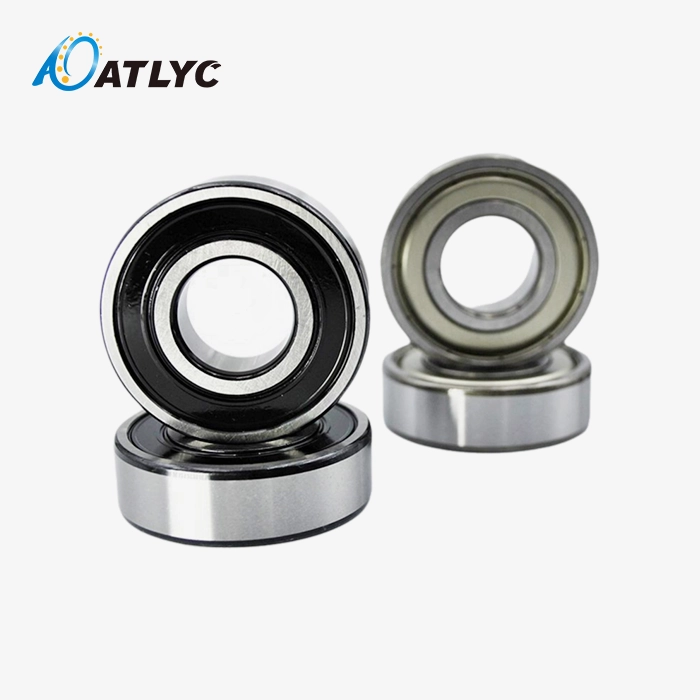
Bearing material selection directly impacts maintenance schedules and replacement frequency. RB5013's susceptibility to contamination necessitates robust sealing strategies, adding 15–20% to initial component costs but preventing premature failures that could halt production lines. Our ZZ-series metal shields—double-shielded configurations—provide particle exclusion down to 10 microns, adequate for most automotive environments where road debris poses the primary threat.RU85 components tolerate dirty environments more gracefully, as embedded particles typically sink into the soft matrix rather than initiating crack propagation. This resilience reduces catastrophic failure rates in open-air material handling systems, though gradual wear remains inevitable. Replacement planning becomes more predictable, allowing maintenance teams to schedule interventions during planned downtimes rather than responding to unexpected breakdowns.
Procurement Considerations: Pricing, Availability, and Support
Cost Analysis Across Volume Tiers
Material costs represent just one component of total procurement expenses. RB5013 raw steel trades at approximately $1,800–$2,200 per metric ton depending on alloy specifications and market conditions, with finished bearing prices reflecting processing complexity. A standard 6204-series deep groove ball bearing manufactured from this steel retails between $1.50–$3.00 per unit in volumes exceeding 10,000 pieces, with additional discounts available for annual contracts exceeding 500,000 units.Polyurethane formulations like RU85 carry higher base material costs—around $4,500 per metric ton—but lower machining expenses due to simplified processing. Injection-molded components achieve per-unit costs competitive with steel alternatives when production volumes exceed 5,000 pieces. Our sales team at auto@lyautobearing.com provides detailed quotations reflecting current resin prices and tooling amortization schedules tailored to specific geometries.
Lead Times and Supply Chain Considerations
Our six-workshop infrastructure maintains strategic inventory levels for RB5013-based standard bearings, enabling shipment within 7–10 business days for catalog items. Custom specifications requiring heat treatment modifications or special coatings extend lead times to 4–6 weeks, accommodating design validation cycles typical of automotive development programs. Established relationships with mills in Northeast China ensure steel feedstock availability even during market disruptions, a stability our clients in Russia and Iran particularly value.RU85 components require longer tooling development periods—typically 8–12 weeks for initial mold fabrication—but subsequent production runs ship within 3–4 weeks. This front-loaded investment suits OEMs planning product launches with defined volume commitments, while posing challenges for aftermarket distributors requiring rapid prototype iterations. Our engineering team collaborates during design phases to optimize part geometry for manufacturability, reducing tooling revisions that would otherwise delay market entry.
| Factor | RB5013 Bearings | RU85 Components |
|---|---|---|
| Material Cost (per ton) | $1,800–$2,200 | ~$4,500 |
| Unit Price (10k volume) | $1.50–$3.00 | $2.00–$4.50 |
| Standard Item Lead Time | 7–10 days | N/A (custom tooling) |
| Custom Part Lead Time | 4–6 weeks | 8–12 weeks (initial) |
| Volume Discount Threshold | 500k units/year | 50k units/year |
Warranty Provisions and Technical Support
ATLYC backs RB5013 vs RU85 bearing products with 24-month warranties covering material defects and manufacturing deviations from published specifications. This coverage requires proper installation per our technical datasheets and operation within rated load limits, conditions we verify through failure analysis when claims arise. Our quality management system, certified to IATF 16949 since 2018, documents heat treatment records and dimensional inspections for full traceability. RU85 elastomer components carry 12-month warranties reflecting the material's gradual wear characteristics. Claims related to premature hardening or cracking typically trace to chemical incompatibility or temperature excursions, underscoring the importance of application-specific material validation. We maintain test equipment capable of simulating customer operating conditions, generating durability data that informs design refinements and extends service life in subsequent production batches.
Application Suitability and Use Case Recommendations
Automotive Sector Implementations
Wheel hub assemblies, transmission bearings, and alternator components represent core applications where RB5013's hardness and precision prove indispensable. The material withstands the cyclic loading from road irregularities while maintaining rotational accuracy within 5 microns—critical for preventing vibration and noise that compromise vehicle refinement. Our partnerships with automotive component suppliers in the United States focus on bearings supporting electric vehicle drivetrains, where reduced friction directly extends battery range.Suspension bushings and engine mounts occasionally incorporate polyurethane formulations similar to RU85, though typically with lower Shore hardness. These applications prioritize vibration isolation over load capacity, a domain where elastomers outperform metallic alternatives. The material's nonlinear stiffness curve provides progressive resistance, softening impact harshness while controlling body roll during aggressive cornering maneuvers.
Industrial Machinery and Automation Equipment
Precision machining centers and robotic arms demand the dimensional stability only steel bearing materials deliver. RB5013's thermal expansion coefficient—approximately 11.5 × 10⁻⁶/°C—remains predictable across operational temperature ranges, allowing engineers to maintain tight clearances essential for positioning accuracy. Our manufacturing capacity spans angular contact bearings and cylindrical roller variants, addressing radial and combined loading scenarios prevalent in CNC spindles and linear actuators.Conveyor systems and packaging machinery benefit from RU85's shock absorption, particularly at transfer points where product impacts would otherwise damage rigid bearing structures. The material's flexibility accommodates slight misalignments resulting from frame deflection under load, reducing installation precision requirements and associated labor costs. Material handling operations in Turkey and Iran have adopted these components for bulk commodity transport, where abrasive dust would rapidly erode steel alternatives.
Decision Framework for Material Selection
Choosing between bearing steel and polyurethane alternatives requires evaluating several application-specific factors:Speed: Applications exceeding 500 rpm favor RB5013's low friction and heat dissipation capabilities. Polyurethane's internal damping generates excessive temperatures above this threshold, risking thermal degradation.Load Magnitude: Contact stresses beyond 100 MPa necessitate RB5013's hardness. RU85 suits lighter loads where vibration control outweighs ultimate capacity.Environmental Exposure: Sealed steel bearings handle moisture and temperature extremes better than elastomers, though polyurethane resists many industrial chemicals that corrode steel.Maintenance Access: Hard-to-reach installations benefit from RB5013's extended service intervals, while RU85's predictable wear allows scheduled replacements during planned downtimes.Our technical team provides application analysis services, reviewing load spectra and environmental conditions to recommend optimal material choices. This consultative approach has guided successful component selections for clients across Germany's automotive sector and South Korea's industrial machinery manufacturers, reducing field failures by over 60% compared to initial design iterations.

Conclusion
Selecting between RB5013 vs RU85 demands careful alignment of material properties with operational requirements. RB5013's exceptional hardness and load capacity make it the definitive choice for high-speed automotive bearings and precision machinery, where dimensional accuracy and extended fatigue life justify higher initial costs. RU85's vibration dampening and chemical resistance suit low-speed industrial applications prioritizing shock absorption over ultimate strength. Our 15 years of manufacturing expertise and ISO 9001 compliance ensure consistent quality across both material platforms, supporting long-term partnerships with OEMs and distributors worldwide.
FAQ
Can RB5013 bearings operate in chemically aggressive environments?
RB5013 requires protective coatings and robust sealing when exposed to corrosive substances. Standard phosphate treatments withstand mild industrial atmospheres, but applications involving saltwater or acidic coolants demand stainless steel variants or ceramic-hybrid designs. Our engineering team evaluates specific chemical exposures to recommend appropriate surface treatments.
What cost premium should I expect for RU85 components versus standard bearings?
Initial tooling costs for RU85 injection-molded parts add $8,000–$15,000 per component geometry, amortized across production volumes. At quantities exceeding 10,000 units annually, per-piece costs approach parity with RB5013 bearings. Lower maintenance requirements can offset higher upfront expenses through reduced lifecycle costs.
How do I verify compatibility between RU85 and existing system lubricants?
Request material compatibility charts from your polyurethane supplier, or provide fluid samples for immersion testing. Our laboratory conducts 168-hour soak tests measuring hardness retention and dimensional changes, generating data within two weeks to validate compatibility before full-scale production.
Partner with ATLYC for Precision Bearing Solutions
ATLYC stands ready to support your bearing material selection and procurement needs with over a decade of manufacturing excellence. Our ISO 9001 and IATF 16949 certifications guarantee consistent quality whether you require RB5013 steel bearings or specialized elastomer components. Contact our team at auto@lyautobearing.com to discuss bulk pricing for RB5013 vs RU85 material options, request technical datasheets, or arrange compatibility testing for your specific application. We serve mid-to-large OEMs across the United States and global markets with reliable lead times and engineering support that transforms material selection from uncertainty into competitive advantage.
References
1. Harris, T.A., and Kotzalas, M.N. (2006). Rolling Bearing Analysis: Essential Concepts of Bearing Technology, 5th Edition. CRC Press.
2. ASTM International. (2019). Standard Specification for High-Carbon Anti-Friction Bearing Steel (ASTM A295-19). West Conshohocken, PA.
3. ISO Technical Committee. (2014). Rolling Bearings—Dynamic Load Ratings and Rating Life (ISO 281:2007). International Organization for Standardization.
4. Polyurethane Manufacturers Association. (2020). Engineering Properties of Polyurethane Elastomers: Design Guide for Industrial Applications. Arlington, VA.
5. Society of Automotive Engineers. (2021). Surface Hardening of Steels—Understanding the Basics (SAE J419). Warrendale, PA.
6. Budynas, R.G., and Nisbett, J.K. (2015). Shigley's Mechanical Engineering Design, 10th Edition. McGraw-Hill Education.
Learn about our latest products and discounts through SMS or email