- English
- French
- German
- Portuguese
- Spanish
- Russian
- Japanese
- Korean
- Arabic
- Greek
- German
- Turkish
- Italian
- Danish
- Romanian
- Indonesian
- Czech
- Afrikaans
- Swedish
- Polish
- Basque
- Catalan
- Esperanto
- Hindi
- Lao
- Albanian
- Amharic
- Armenian
- Azerbaijani
- Belarusian
- Bengali
- Bosnian
- Bulgarian
- Cebuano
- Chichewa
- Corsican
- Croatian
- Dutch
- Estonian
- Filipino
- Finnish
- Frisian
- Galician
- Georgian
- Gujarati
- Haitian
- Hausa
- Hawaiian
- Hebrew
- Hmong
- Hungarian
- Icelandic
- Igbo
- Javanese
- Kannada
- Kazakh
- Khmer
- Kurdish
- Kyrgyz
- Latin
- Latvian
- Lithuanian
- Luxembou..
- Macedonian
- Malagasy
- Malay
- Malayalam
- Maltese
- Maori
- Marathi
- Mongolian
- Burmese
- Nepali
- Norwegian
- Pashto
- Persian
- Punjabi
- Serbian
- Sesotho
- Sinhala
- Slovak
- Slovenian
- Somali
- Samoan
- Scots Gaelic
- Shona
- Sindhi
- Sundanese
- Swahili
- Tajik
- Tamil
- Telugu
- Thai
- Ukrainian
- Urdu
- Uzbek
- Vietnamese
- Welsh
- Xhosa
- Yiddish
- Yoruba
- Zulu
Robot Bearings for Robotics: What Should Engineers Consider?
Choosing robot bearings for current automation systems is an important choice for engineers that directly affects the machine’s performance, accuracy, and lifetime. These specialised elements provide the mechanical underpinning of robotic joints, allowing for smooth rotational or linear motion and handling intricate load situations. The bearings for robots have to give extreme precision, low backlash, and stable performance over millions of cycles – unlike standard bearings. A solid grasp of the technical requirements, material qualities, and environmental conditions that affect bearing selection is critical for optimising robotic system design and guaranteeing long-term dependability in challenging industrial applications.

Key Factors Engineers Must Consider When Choosing Robot Bearings
Load Capacity and Speed Requirements
Matching Robot Bearings specifications to real operating needs calls for a thorough examination of the properties of the payload and the motion profiles. Depending upon the maximum lifting capability of the robot, arm extension, and acceleration patterns, engineers have to compute the static and dynamic load ratings. The static load capacity is the maximum load that a bearing can carry without permanent deformation while the bearing is not moving. (C-rating) dynamic load capacity is an indication of the bearing life under rotating situations at certain loads and speeds. Speed constraints vary greatly with each bearing type and size. Ball bearings, which have reduced friction characteristics, often rotate faster than roller versions. The speed, load and life of a bearing have a well known engineering connection. But real world issues like lubricant quality, mounting accuracy, and heat management impact actual performance. Collaborative robots working at moderate speeds with frequent start-stop cycles need different bearing requirements than high-speed pick-and-place systems that operate continuous duty cycles.
Precision Requirements and Positional Accuracy
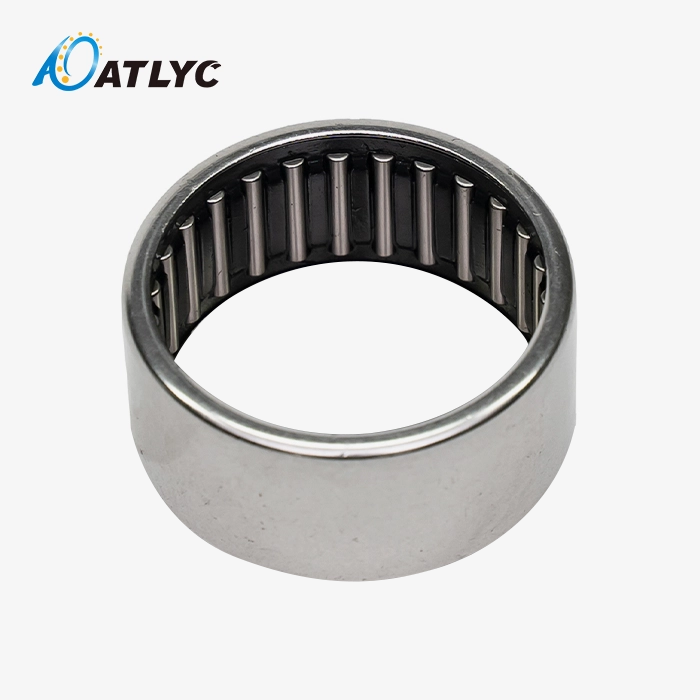
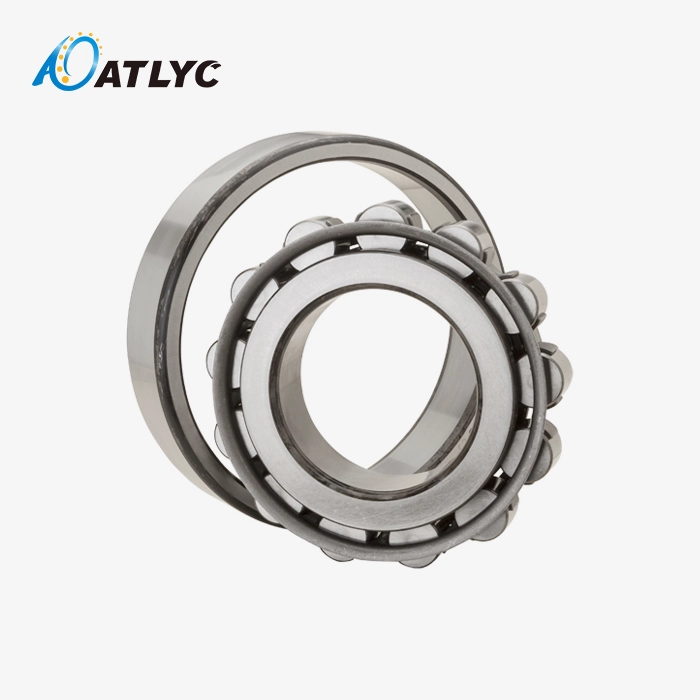
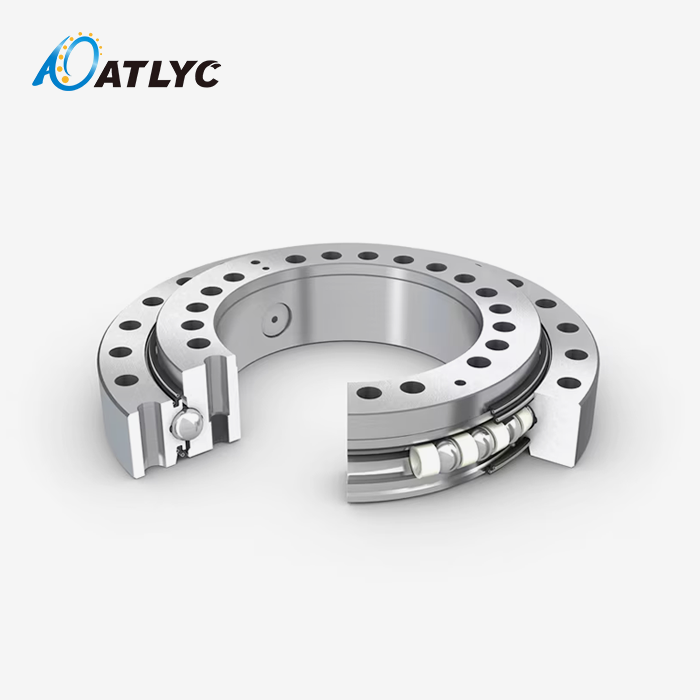
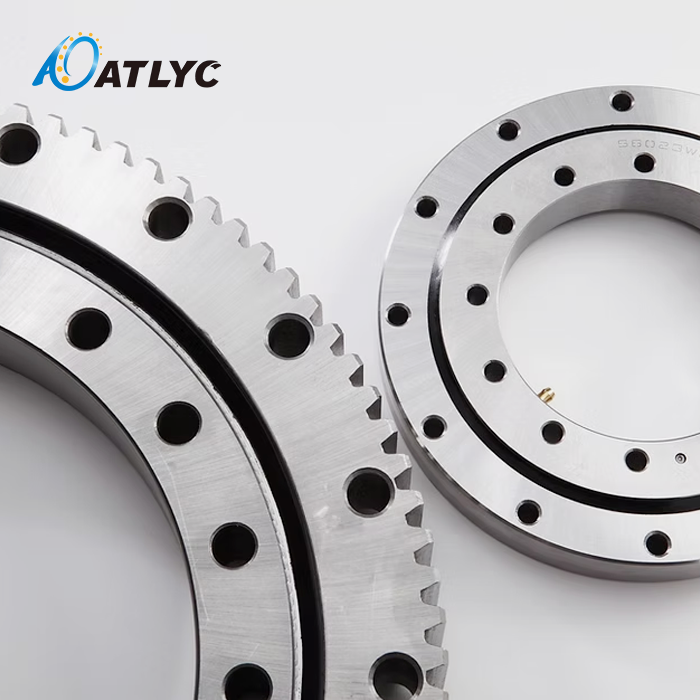
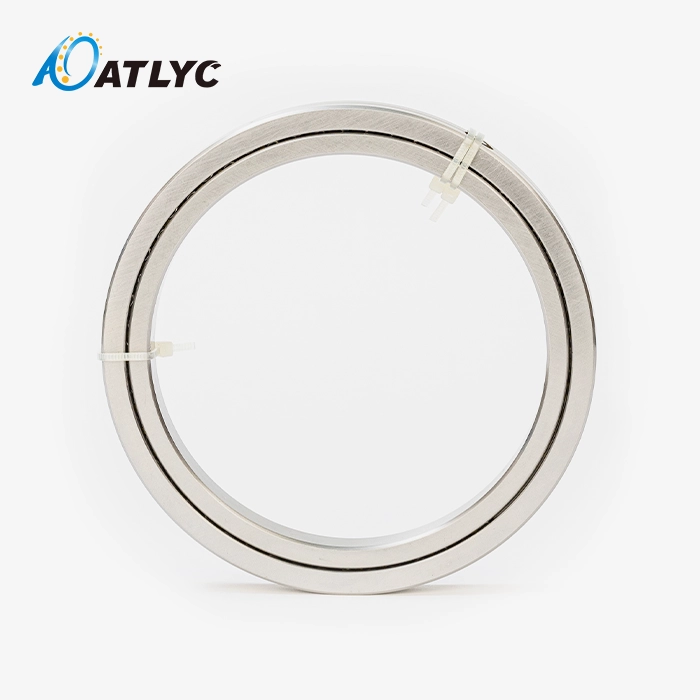
The accuracy of robots directly relies on the quality of bearings, especially the tolerance grades that govern dimensional deviations. ABEC (Annular Bearing Engineers Committee) ratings grade bearings for accuracy, with higher numbers denoting tighter tolerances. General industrial robots will utilise ABEC-3 rated bearings, while ABEC-7 or ABEC-9 are used in semiconductor handling, medical devices and other applications where micron-level positioning is important. Cross roller bearings are the best choice for precision applications due to their unique geometry, which provides exceptional rigidity and minimal runout. Perpendicular roller design prevents tilting moments and provides precise shaft location under varying loads. This design is common in robot wrists and in tool changers where the end-effector performance is dependent on the precision of rotation. There is also the effect of bearing preload adjustment to remove the internal clearances on the accuracy, but excessive preload increases friction and reduces service life.
Environmental Factors and Protection Strategies
Performance and life of a bearing are greatly affected by the operating circumstances. Extreme temperatures modify the viscosity of the lubricant and the sizes of the components, which might cause interference fits to loosen or, at worst, seize. Typical bearings are reliable from -20°C to 120°C, but specific high-temperature alloys or ceramic materials are used for bearings operating near furnaces or in cryogenic settings. The leading cause of premature bearing failure in industrial robots is contamination. Bearing assemblies are subjected to metal chips from machining operations, abrasive dust from grinding operations, and moisture from wash-down procedures that increase wear. Sealed bearing designs are the primary line of defence, but other safety methods include labyrinth seals, purged enclosures and positive pressure systems that keep contaminants out. Food processing plants use robots that need stainless steel bearings and food-grade lubricants so that they may fulfil hygiene regulations.
Noise and Vibration Considerations
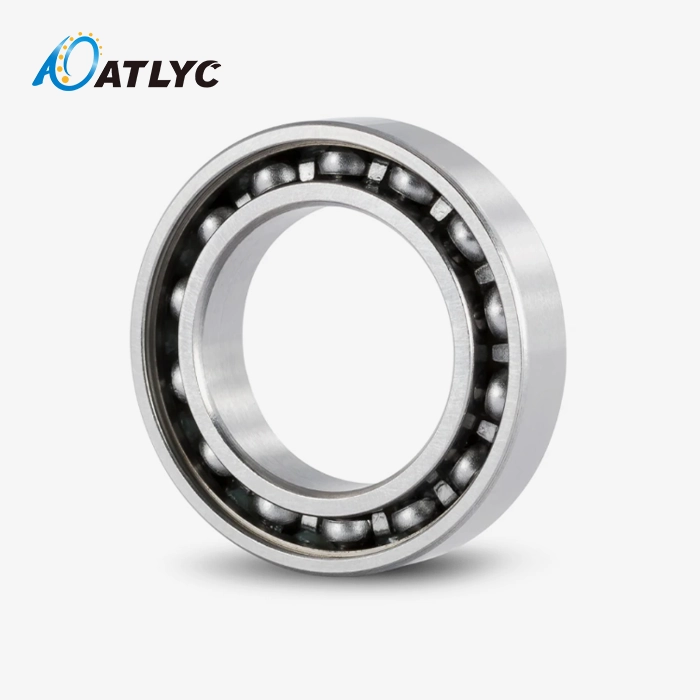
The operational noise affects the ergonomics of the workplace and the functioning of the equipment. Ball bearings are naturally quieter than roller types owing to point contact vs line contact geometry. Ceramic bearings are quieter at high speeds than steel. Acoustic qualities depend on material choices. The noise levels are directly related to the bearing quality. Premium precision bearings are characterised by uniform rolling element geometry and excellent surface finishes to minimise the generation of vibrations. Vibration damping capabilities are of special importance for robots performing measurement, inspection, or assembly tasks where stable positioning is critical. Even modest vibrations carried through bearing assemblies may lead to end-effector oscillations that degrade precision. Engineers solve this by optimising bearing preload, using dampening materials in surrounding structures, and using active vibration control devices. Correct bearing selection eliminates the requirement for corrective measures and improves the overall performance of the system.
Comparing Robot Bearings: Making Informed Decisions
Robot-Specific Versus Standard Bearing Designs
Typical industrial bearings can handle broad motion needs, but robot-specific designs include capabilities to deal with special automation issues. A typical deep groove ball bearing has no problem with radial stresses, but it does not have the combined load handling and accuracy dynamics for a robotic joint. Robot bearings have optimised internal geometry, closer manufacturing tolerances, and particular cage designs to keep the elements spaced apart under dynamic situations. The difference in performance may be seen when considering repeatability standards. Standard bearings may have positional fluctwell-known 10-20 microns, which is suitable for real-world conveyor systems or ordinary equipment. Precision robot bearings are capable of repeatability within 1-5 microns, which is required for precision assembly operations and quality inspection duties. This level of accuracy is not achieved without regulated manufacturing methods, selective element matching, and a stringent quality inspection process that all contribute to the cost of production but result in demonstrable performance benefits.
Ceramic Versus Steel: Cost-Benefit Analysis
Steel bearings, which have shown to be reliable and cost-effective, are widely used in industrial robots. Chrome steel bearings are much cheaper than ceramic bearings and are quite appropriate for most applications. In some cases, ceramic bearings justify their premium price when their unique properties solve critical problems, but they are the default choice for automotive assembly lines, packaging equipment, and material handling robots where operational conditions are moderate because of their load capacity, availability and compatibility with standard mounting practices. The corrosion resistance and non-magnetic nature of ceramic are also important for the development of surgical systems compatible with MRI machines, a major advantage for medical robots. The lighter weight of ceramic allows high-speed pick-and-place robots to achieve shorter cycle times and lower energy usage. Ceramic is used in cleanroom applications because it is rThe performance chemical cleaning agents and generates less particles. The cost-performance estimate has to take into account not only the initial price of the bearing but also the complete life cycle costs including maintenance intervals, downtime costs and changes in system performance.
Sealed Versus Open Bearing Selection
Sealed bearings include permanent or detachable shields to prevent ingress of contaminants but yet keep the lubricant within the bearing. ZZ - Metal shields, providing robust protection for use in settings with big particles or mild wetness. Rubber seals (designation 2RS) provide better resistance to dust and water via contact sealing, but create somewhat more friction and heat. Sealed designs lengthen maintenance intervals considerably and often approach the limits of bearing life before maintenance is necessary. Open bearings provide interior examination and easier relubrication required for situations where lubricant degradation occurs fast. They work best in clean, temperature-controlled areas where it is easy to get to them for maintenance. It is contingent upon how hard the environment is vs how much maintenance can be done. For example, automotive manufacturing robots working in welding cells with large particulate should be sealed for safety, but electronics assembly robots working in climate-controlled cleanrooms may employ open designs with planned lubrication processes.
Brand Comparison and Procurement Considerations
| Bearing Manufacturer | Precision Grade | Application Strength | Price Positioning | Lead Time |
|---|---|---|---|---|
| SKF | ABEC-7/P4 | High-speed robotics, medical equipment | Premium | 8-12 weeks |
| NSK | ABEC-5/P5 | General industrial automation, automotive | Mid-range | 6-8 weeks |
| Timken | ABEC-5 | Heavy-duty robotics, material handling | Mid-premium | 8-10 weeks |
| ATLYC | ABEC-3 to ABEC-7 | Custom automation, OEM applications | Competitive | 4-6 weeks |
Major names like SKF and Timken provide full technical assistance, complete product ranges and proven quality pedigrees that make specifying simple. They are a premium brand, and it’s the result of years of bearing know-how and uniform quality in production plants throughout the globe. Mid-tier manufacturers can deliver similar performance at a lower cost for standard applications, which makes them attractive to cost-sensitive projects that don't require extreme precision. Chinese bearing manufacturers, especially those with ISO 9001 and IATF 16949 certifications, are becoming more competitive on quality and value. Founded in 2010, ATLYC has expanded to six specialised workshops, reflecting the maturity of China’s precision bearing sector. For example, ATLYC manufactures high-precision components for demanding markets such as automotive OEMs and industrial automation integrators in South Korea, the United States, Germany, Russia, Iran and Turkey, backed by 120 skilled employees in production, quality control and engineering support.
Common Challenges and Maintenance Tips for Robot Bearings
Typical Problems Encountered in Industrial Settings
Early bearing failure affects production plans and dramatically increases maintenance costs. Contamination contributes for around 36% of bearing failures, when abrasive particles enter the raceway, creating indentations that exacerbate fatigue. Improper lubrication accounts for another 34% of failures. Metal-to-metal contact might result fbeen rom inadequate lubricant. Heat and churning resistance can result from too much lubricant. Unequal tension on bearing parts during installation, edge loading cuts operating life to a fraction of rated capacity.Wear patterns provide diagnostic insight into underlying issues. Uniform wear throughout the whole racetrack indicates typical ageing under adequate load levels. Localised wear in certain areas implies misalignment or uneven loads. Corrosion pitting occurs when moisture or unsuitable lubricants break down and release acid chemicals. Brinelling occurs when bearings are motionless under stress during travel or long periods of inactivity and appears as uniformly distributed dents along the raceway.
Proactive Maintenance Best Practices
Routine inspection programs help to find growing issues before they lead to catastrophic failure. A visual inspection will reveal evident problems, such as seal failure, corrosion or loss of lubrication. Infrared thermography is used to monitor temperature and to detect anomalous heat production from friction or lack of lubrication. Vibration analysis employing accelerometers in the vicinity of bearing housings may identify early stage degradation that produces distinctive frequency patterns long before audible noise is produced. Proper management of lubrication can significantly improve bearing life. Bearings greased with grease should be re-lubricated at intervals dependent on speed, temperature and environment. Over-greasing results in excessive churning and temperature buildup, whereas under-greasing permits boundary lubrication conditions in which metal surfaces touch directly. Oil lubrication systems need filtering maintenance and viscosity checks to guarantee acceptable film thickness at operating temperatures. Proper handling during installation prevents the introduction of contamination; bearings should stay in their sealed packing until they are mounted and the assembly area must be clear of dust and metal particles.
Troubleshooting Noise and Vibration Issues
Any abnormal bearing noise indicates internal damage that must be addressed immediately. High frequency screaming usually indicates inadequate lubrication, or pollution marking the raceway surface. Rumbling or growling noises indicate extensive wear or spalling when material has broken away from the raceway. The damaged cages lose the required element spacing and make clicking or cracking sounds during rotation which might cause collisions. Vibration diagnostics can reveal particular problems based on the frequency analysis. The vibration frequencies are determined by the geometry of the bearing, the speed of the shaft and the number of rolling elements, in case of flaws in the outer race of the bearing. Inner race faults generate similar patterns, but at varying frequency. The rolling element faults generate distinct signatures when the damaged ball or roller rolls against both raceways. These characteristics are monitored by portable vibration analysers or permanently installed condition monitoring systems, allowing predictive maintenance techniques to replace Robot Bearings during scheduled downtime instead of emergency failures.
Purchasing Guide: How and Where to Source Robot Bearings for Your Applications
Supplier Channel Selection Strategies
Procurement experts are able to buy bearings via a variety of distribution channels, each with its own unique benefits. Authorised distributors of major brands may offer technical support, application engineering advice and inventory availability for common sizes. They work directly with manufacturers to provide authenticity and warranty support, but they often mark up the price for these services.Direct connections with manufacturers are important for OEMs and high-volume customers that need customisation capabilities and reasonable pricing. Working directly with bearing makers like ATLYC allows for specification changes, private label and negotiated rates for yearly production commitments. This strategy demands technical skills to convey specifications properly and quality inspection capability to ensure that supplied goods fulfil the criteria.
Planning Lead Times and Logistics Management
The required time for procurement of bearings varies significantly depending on product availability and customisation requests. Standard catalogue goods arrive from distributor stock in days to accommodate emergency replacement requirements or prototype development. Factory standard items not kept locally in stock will take 4-8 weeks depending on production schedules and delivery methods. Lead periods for custom built bearings with specific materials, seals or dimensional changes are 10-16 weeks due to tooling development and validation testing International procurement from Chinese manufacturers may provide economic benefits but calls for careful logistical planning Sea transportation is an order of magnitude cheaper than air, but takes 3 to 5 weeks longer. The first set of instructions calls for defining the processes for customs clearance, paperwork and quality inspection. Good importers have buffer inventory to absorb lead time fluctuation . They also have quality agreements that spell out inspection requirements, fault management and warranty conditions .
Cost Optimization Through Strategic Purchasing
| Purchase Volume | Typical Discount | Minimum Order | Payment Terms | Custom Options |
|---|---|---|---|---|
| 1-100 pieces | List price | No MOQ | Prepayment | Limited |
| 100-500 pieces | 15-20% discount | Varies by type | 30% deposit | Available |
| 500-2000 pieces | 25-35% discount | Product-specific | 30% deposit | Preferred |
| 2000+ pieces | 35-45% discount | Negotiable | Terms available | Full customization |
Bulk buying is a great way to save money but you need storage space and an upfront commitment. Engineers and procurement teams need to weigh the inventory carrying expenses against the price savings that volume commitments may attain. Blanket annual orders with planned releases provide cost benefits and inventory flexibility with delivery in phases as dictated by production schedules. Buyers have more influence in negotiations if they exhibit technical understanding, explicit quality requirements, and the possibility for a long-term cooperation. Suppliers like clients that are clear about their requirements, purchase often and consistently, and provide feedback on product performance. By discussing whole lifespan value, rather than just unit pricing, we can begin to discuss quality improvements, delivery dependability, and technical support that minimise the total cost of ownership.
Custom Bearing Solutions and Application Engineering
Most robotic applications may use standard catalogue bearings, but specific needs may occasionally necessitate bespoke solutions. Where technical development expenses are justified by unique dimensional envelopes, harsh environmental conditions or performance criteria beyond the norm. Custom bearing projects start with detailed application analysis, recording loads, speeds, temperatures, contamination levels and expected service life. Manufacturers with in-house engineering capabilities like ATLYC with 15 years of development experience in six specialised workshops, work together on specification optimisation. They may recommend material replacements, seal adjustments or design changes that fulfil performance criteria at a lower cost than originally anticipated. It also allows prototype validation testing to confirm performance before investment in production equipment and reduces risk in key applications where bearing failure might damage costly robotic systems or pose a safety issue.

Conclusion
The choice of suitable robot bearings is a compromise between technical performance criteria and practical procurement aspects. Engineers have to consider load capacity, precise grades, environmental protection and material qualities, while procurement teams negotiate prices, lead times and supplier relationships. The bearing business provides everything from cheap goods for ordinary automation to precision-engineered components that enable cutting-edge robotic capabilities. Knowledge of these alternatives, maintenance needs and failure mechanisms allows informed decisions to be made to optimise initial costs vs lifespan costs. Robotics projects are based on solid mechanical foundations. Bearing selection is an important early choice that impacts long term system performance.
FAQ
What is the typical service life of robot bearings in industrial applications?
Bearing lifespan depends on operating conditions including load, speed, temperature, and maintenance quality. Under proper conditions with adequate lubrication and contamination protection, quality bearings typically achieve 20,000 to 50,000 operating hours. High-precision bearings in demanding applications may require replacement after 10,000 hours, while standard bearings in moderate-duty robots can exceed 70,000 hours before performance degradation necessitates replacement.
How do ceramic bearings outperform steel alternatives in robotics?
Ceramic bearings offer several performance advantages: 60% lower weight reduces rotational inertia allowing faster acceleration, lower friction coefficient decreases energy consumption and heat generation, superior corrosion resistance enables operation in harsh chemical environments, and electrical insulation properties prevent bearing damage from stray currents in servo motor applications. These benefits justify premium pricing for specialized applications despite higher initial costs.
Must robot applications use specialized bearings rather than standard industrial types?
Robot-specific bearings deliver measurable advantages in precision, repeatability, and service life compared to standard alternatives. Applications requiring positional accuracy below 10 microns, high cycle counts exceeding millions of operations, or combined loading conditions benefit significantly from engineered robot bearings. General material handling or simple pick-and-place operations with moderate precision requirements may function adequately with standard precision bearings, reducing component costs while accepting slightly reduced performance specifications.
Partner with ATLYC: Your Trusted Robot Bearings Manufacturer
Selecting the right bearing supplier impacts not only component costs but long-term production reliability and technical support quality. ATLYC brings 15 years of specialized manufacturing experience, ISO 9001 and IATF 16949 certification, and proven expertise serving automotive OEMs and industrial automation integrators worldwide. Our engineering team collaborates on application-specific solutions, our six production workshops deliver consistent quality across high-precision bearing categories, and our competitive lead times of 4-6 weeks support your production schedules effectively. Whether you need standard catalog items or custom-engineered solutions, our 120 dedicated professionals stand ready to support your robotics projects. Contact our technical team at auto@lyautobearing.com to discuss your specific requirements and discover how partnering with an experienced robot bearings supplier can optimize your automation systems' performance and reliability.
References
1. Harris, T.A., and Kotzalas, M.N. (2006). Advanced Concepts of Bearing Technology: Rolling Bearing Analysis, Fifth Edition. CRC Press, Boca Raton, Florida.
2. Eschmann, P., Hasbargen, L., and Weigand, K. (1985). Ball and Roller Bearings: Theory, Design and Application, Second Edition. John Wiley & Sons, Chichester, United Kingdom.
3. Hamrock, B.J., Schmid, S.R., and Jacobson, B.O. (2004). Fundamentals of Fluid Film Lubrication, Second Edition. Marcel Dekker, New York.
4. Brändlein, J., Eschmann, P., Hasbargen, L., and Weigand, K. (1999). Ball and Roller Bearings: Theory, Design, and Application, Third Edition. John Wiley & Sons, New York.
5. Tallian, T.E. (1992). Failure Atlas for Hertz Contact Machine Elements, Second Edition. ASME Press, New York.
6. Neale, M.J., editor (1993). The Tribology Handbook, Second Edition. Butterworth-Heinemann, Oxford, United Kingdom.
Learn about our latest products and discounts through SMS or email