- English
- French
- German
- Portuguese
- Spanish
- Russian
- Japanese
- Korean
- Arabic
- Greek
- German
- Turkish
- Italian
- Danish
- Romanian
- Indonesian
- Czech
- Afrikaans
- Swedish
- Polish
- Basque
- Catalan
- Esperanto
- Hindi
- Lao
- Albanian
- Amharic
- Armenian
- Azerbaijani
- Belarusian
- Bengali
- Bosnian
- Bulgarian
- Cebuano
- Chichewa
- Corsican
- Croatian
- Dutch
- Estonian
- Filipino
- Finnish
- Frisian
- Galician
- Georgian
- Gujarati
- Haitian
- Hausa
- Hawaiian
- Hebrew
- Hmong
- Hungarian
- Icelandic
- Igbo
- Javanese
- Kannada
- Kazakh
- Khmer
- Kurdish
- Kyrgyz
- Latin
- Latvian
- Lithuanian
- Luxembou..
- Macedonian
- Malagasy
- Malay
- Malayalam
- Maltese
- Maori
- Marathi
- Mongolian
- Burmese
- Nepali
- Norwegian
- Pashto
- Persian
- Punjabi
- Serbian
- Sesotho
- Sinhala
- Slovak
- Slovenian
- Somali
- Samoan
- Scots Gaelic
- Shona
- Sindhi
- Sundanese
- Swahili
- Tajik
- Tamil
- Telugu
- Thai
- Ukrainian
- Urdu
- Uzbek
- Vietnamese
- Welsh
- Xhosa
- Yiddish
- Yoruba
- Zulu
Why Choose RB3010 for SMB Networks?
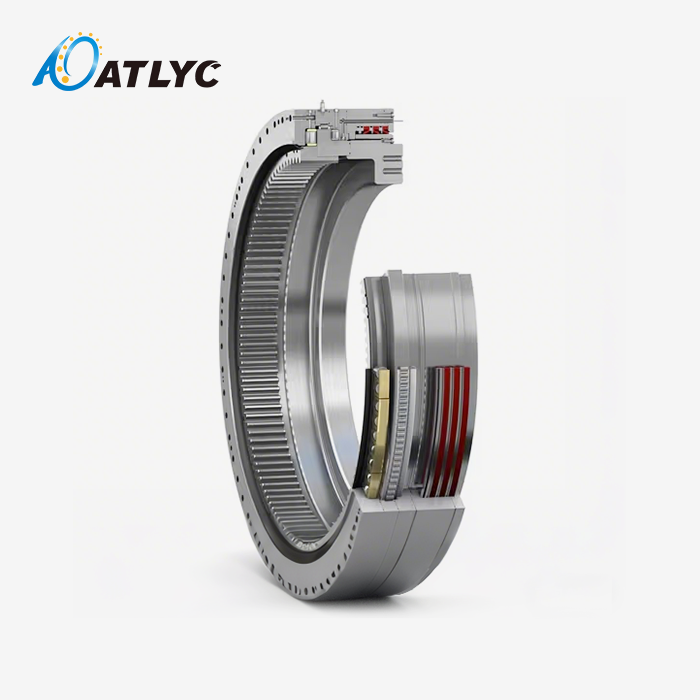
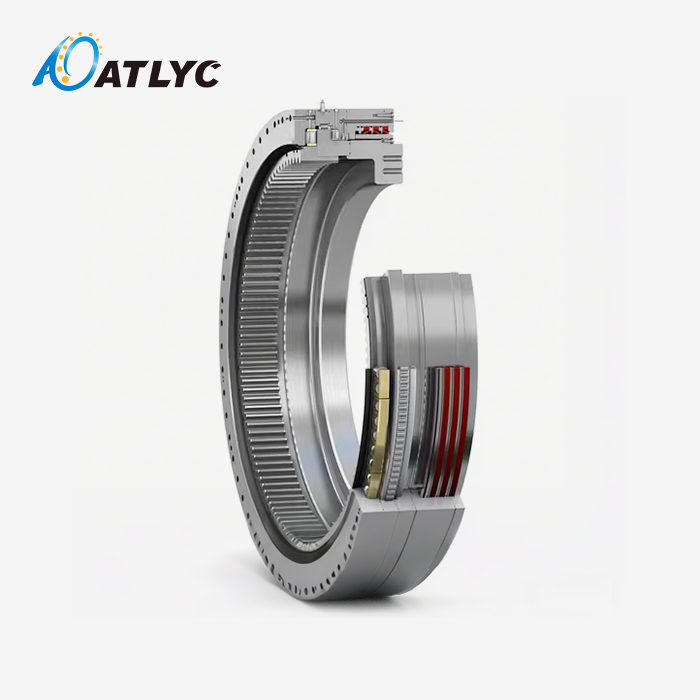
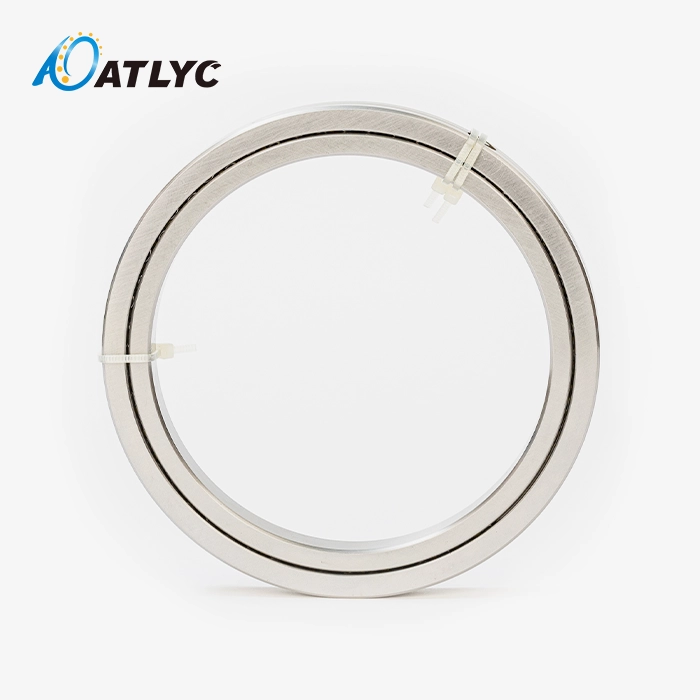
When your automation equipment or machining center needs absolute precision under difficult load situations, RB3010 cross roller bearings provide the multi-directional load capacity and precision that your operations require. These specialised bearing solutions are of crossed-roller design, with the integrity of inner and outer rings, allowing for the simultaneous accommodation of radial, axial and moment loads in a single, compact unit. The RB3010 bearings include an outer ring with a plug design, which offers the stiffness and positioning precision required for industrial robots, rotary tables and precision measuring instruments in the automotive and industrial manufacturing industries.

Understanding RB3010 Cross Roller Bearing Design and Engineering
Crossed-Roller Configuration for Multi-Directional Load Management
RB3010 bearings are characterised by their special crossed-roller configuration. Contained in perfectly machined raceways are cylindrical rollers mounted at right angles to each other. This disposition provides the best contact geometry to distribute the radial, axial, and moment loads in the bearing structure in an effective way. Unlike traditional bearing configurations, which need many units to handle complicated loading scenarios, a single RB3010 cross roller bearing integrates these functionalities, simplifying construction and enhancing system dependability. Each roller has line contact with the inner and outer rings. This provides efficient routes for load transfer and reduces stress concentrations. The design allows forces to be uniformly distributed on the bearing structure, increasing load capacity while keeping the size small. The crossing configuration lets your gear take on forces from many angles at once without losing rotational precision.
Integral Ring Construction and Precision Manufacturing
The inner and outer ring design of the RB3010 bearing will help to retain the structure intact. The external ring is equipped with a plug system that helps with assembly and ensures the correct retention of the rollers and the control of the lubrication. This integrated method of construction eases the assembly process and guarantees a constant internal geometry during the life of the bearing. The components are produced from the best Gcr15 and Gcr15SiMn bearing steels, which undergo unique heat treatment techniques for excellent hardness distribution and surface finish quality. Dimensional accuracy across the whole size range is achieved by precision grinding processes, with inner diameters from 20-1100mm, outside diameters from 70-1500mm, and widths from 12-110mm. This flexibility gives procurement managers the ability to choose bearing configurations that best suit the needs of a certain application.
| Specification Category | RB3010 Range | Typical Application |
|---|---|---|
| Inner Diameter | 20-1100mm | Robot joints to large rotary tables |
| Outer Diameter | 70-1500mm | Compact manipulators to machining centers |
| Width | 12-110mm | From precision instruments to heavy automation |
| Accuracy Classes | P6, P5, P4, P2 | Standard to ultra-precision applications |
| Material Options | Gcr15, Gcr15SiMn | General industrial to high-stress environments |
Performance Advantages That Address Manufacturing Challenges
RB3010 cross roller bearings provide a host of key performance features that directly address the pain points of automotive and industrial equipment makers. The high contact ratios between rollers and raceways result in high rigidity and outstanding stiffness characteristics. This stiffness reduces deflection under load and preserves accurate placement throughout operation. This is important for machining centers that deal with cutting forces or industrial robots that repeatedly position themselves. Optimised roller shape and precise manufacturing procedures result in reduced friction. The low coefficient of friction allows for smoother rotation, less energy consumption, and longer operating life. Production managers like that this efficiency increases maintenance intervals and decreases the total cost of ownership across equipment life cycles. Precision grinding and rigorous quality control techniques enable exceptional runout accuracy with minimum variance in runout. Your applications need the repeatable rotational accuracy required for ultra-precise positioning duties in IC production equipment, medical machinery, and measurement instruments where even tiny errors might ruin product quality.
How RB3010 Bearings Solve Critical Industrial Application Requirements
Robotics and Automation System Integration
Industrial robot joints and manipulator assemblies depend on RB3010 cross roller bearing units for precise motion control that meets demanding cycle time requirements. The compact design allows integration into space-constrained robot configurations while providing the rigidity needed for accurate positioning across the robot's operational envelope. Automotive component manufacturers implementing collaborative robots and assembly automation benefit from the bearing's ability to handle moment loads generated during articulated arm movements. The crossed-roller design eliminates backlash and maintains positioning accuracy throughout millions of operational cycles, directly supporting the low defect rates and long service life that OEMs require. Robot manufacturers appreciate how RB3010 bearings simplify joint design by consolidating load-handling capabilities. This design efficiency reduces the number of components in each joint assembly, lowering assembly time, reducing potential failure points, and improving overall system reliability. The bearing's low-friction characteristics also contribute to energy efficiency, an increasingly important consideration as manufacturers pursue sustainability objectives.
Machine Tool and Rotary Table Applications
Machining center rotary tables and indexing components utilize RB3010 bearings for exact workpiece positioning that directly impacts final part quality. The multi-directional load capacity handles cutting forces while maintaining positioning accuracy, even during heavy roughing operations or high-speed finishing passes. Precision machine tool builders specify these bearings because the crossed-roller configuration provides the stiffness required to resist deflection under variable cutting loads. When a machining center executes complex five-axis toolpaths, the rotary table bearing must maintain positional accuracy within micrometers despite rapidly changing force vectors. RB3010 bearings deliver this performance consistently, supporting the quality certifications that automotive and industrial equipment manufacturers demand. The bearing's excellent runout accuracy directly translates to improved surface finish and dimensional accuracy on machined parts. Production managers recognize how bearing performance influences downstream quality metrics and overall equipment effectiveness. Reduced vibration during rotation minimizes chatter marks and extends cutting tool life, contributing to lower per-part production costs.
Medical Equipment and Precision Instrumentation
Precision medical devices, including imaging equipment and surgical robots, depend on the smooth operation and accuracy that RB3010 bearings provide. Low noise characteristics and reliable performance meet stringent medical equipment requirements where patient safety and diagnostic accuracy are paramount.IC manufacturing devices incorporate these bearings for critical positioning functions where precision and repeatability prove essential. Semiconductor production equipment operates in controlled environments where contamination must be minimized and positional accuracy measured in nanometers. The bearing's sealed design and precision manufacturing support these demanding operational parameters. Measuring instruments across quality control laboratories rely on RB3010 bearings to maintain calibration accuracy over extended service intervals. Metrology equipment manufacturers understand that bearing performance directly affects measurement reliability, making bearing selection a critical design decision that impacts the instrument's reputation in the marketplace.
RB3010 Bearings vs Alternative Bearing Solutions: Making Strategic Procurement Decisions
Comparative Performance Analysis
When procurement managers evaluate bearing options for rotary applications, several technical and commercial factors influence selection decisions. RB3010 cross roller bearings offer distinct advantages compared to angular contact ball bearing pairs, tapered roller bearing arrangements, and standard cylindrical roller bearings. Angular contact ball bearing pairs require precise preload adjustment and occupy more axial space than a single RB3010 unit providing equivalent load capacity. The crossed-roller design consolidates capabilities, simplifying assembly procedures and reducing inventory complexity for manufacturers managing multiple product lines. Tapered roller bearing arrangements handle high radial and axial loads but introduce friction and heat generation that can limit speed capabilities. RB3010 bearings maintain lower friction coefficients, supporting higher rotational speeds while generating less heat, which proves advantageous in precision applications where thermal expansion affects accuracy.
| Bearing Type | Load Directions | Mounting Complexity | Space Efficiency | Typical Applications |
|---|---|---|---|---|
| RB3010 Cross Roller | Radial, Axial, Moment (simultaneous) | Single unit, simplified | Excellent (compact profile) | Robot joints, rotary tables, precision equipment |
| Angular Contact Pairs | Radial, Axial (requires pairing) | Moderate (preload critical) | Good | Machine tool spindles, general rotation |
| Tapered Roller Sets | Radial, Axial (single direction) | Moderate to complex | Fair (axial space) | Heavy industrial, wheel bearings |
| Cylindrical Roller | Primarily radial | Simple | Good | High radial load, limited axial |
Cost-Performance Considerations for Long-Term Supply Partnerships
Total cost of ownership extends beyond the initial purchase price. Procurement professionals evaluate maintenance requirements, expected service life, and replacement frequency when establishing long-term strategic partnerships with bearing manufacturers.RB3010 bearings deliver extended service intervals through their robust construction and low-friction operation. Automotive component manufacturers report reduced maintenance costs compared to alternative bearing arrangements, as the consolidated design minimizes adjustment requirements and simplifies replacement procedures during scheduled equipment maintenance. The bearing's ability to handle multiple load directions within a single unit reduces the number of components in rotary assemblies. This design efficiency lowers initial equipment costs, reduces spare parts inventory requirements, and simplifies maintenance procedures. Production managers appreciate how these factors contribute to improved overall equipment effectiveness and lower per-unit manufacturing costs.
Quality Assurance and Manufacturing Excellence at ATLYC
ISO 9001 and IATF 16949 Certified Production Processes
ATLYC maintains comprehensive quality management systems certified to ISO 9001 and IATF 16949 standards, demonstrating our commitment to consistent quality and international automotive industry requirements. These certifications provide procurement managers with confidence that our manufacturing processes incorporate the controls and traceability required for critical automotive and industrial applications. Our quality control framework implements three-level inspection procedures throughout the manufacturing process. Incoming material verification ensures bearing steel meets chemical composition and mechanical property specifications. In-process dimensional checks confirm that machining operations maintain tolerances across production runs. Final inspection protocols validate bearing performance against 12 core performance indicators before units receive approval for shipment. Each RB3010 bearing undergoes rigorous testing that includes vibration analysis, rotational torque measurement, and dimensional verification. This comprehensive approach identifies potential quality issues before products reach customer facilities, supporting the low defect rates that automotive OEMs and industrial equipment manufacturers require. Our testing procedures align with international bearing standards, ensuring product performance meets expectations across diverse application environments.
Advanced Materials and Precision Manufacturing Capabilities
Premium Gcr15 and Gcr15SiMn bearing steels form the foundation of RB3010 bearing performance. These alloy compositions provide the hardness, toughness, and wear resistance necessary for extended service life under demanding operating conditions. Specialized heat treatment processes optimize material properties, achieving consistent hardness distribution and microstructure throughout bearing components. Precision grinding operations achieve surface finishes and dimensional accuracy that meet P6, P5, P4, and P2 accuracy classifications. Our manufacturing capabilities span the complete bearing size range, with advanced grinding and finishing equipment ensuring consistent precision whether producing compact bearings for medical devices or large-diameter units for machining center rotary tables. This versatility supports diverse customer requirements without compromising quality standards. With roots extending back to 2010, ATLYC has developed deep expertise in bearing manufacturing through continuous improvement initiatives and technology investments. Our six specialized workshops handle different bearing categories, with dedicated facilities focused on cross roller bearing production. This specialization enables our 120-member team to maintain the precision and consistency that global bearing distributors and OEMs depend on for their supply chain reliability.
Global Supply Chain Reliability and Technical Support
Export-driven customers in South Korea, the United States, Germany, Russia, Iran, and Turkey rely on ATLYC for a stable supply of high-precision bearings that meet international quality standards. Our production capacity and inventory management systems support the reliable lead times that automotive component manufacturers require for just-in-time production environments. Technical support capabilities extend throughout the customer relationship, from initial bearing selection through ongoing application engineering assistance. Our engineering team collaborates with customers to optimize bearing specifications for specific application requirements, ensuring that selected RB3010 configurations deliver optimal performance within equipment design parameters. Customization capabilities address unique application challenges that standard bearing configurations cannot fully satisfy. Whether modifying seal designs for specific environmental conditions, adjusting internal clearances for thermal management requirements, or developing special lubrication specifications, our engineering team works closely with customers to develop solutions that enhance equipment performance and reliability.
Procurement Insights: Sourcing RB3010 Bearings for Your Manufacturing Operations
Strategic Supplier Selection Criteria
Establishing long-term partnerships with bearing manufacturers requires evaluation of several critical factors beyond product specifications. Manufacturing capacity determines whether a supplier can support your volume requirements as production scales. Engineering expertise influences the supplier's ability to provide technical guidance and customization support. Cost-performance ratio affects competitiveness in your target markets.ATLYC's six-workshop manufacturing infrastructure provides the production scale necessary to support growing automation equipment and industrial machinery programs. Our 15-year operational history demonstrates the stability and continuous improvement commitment that procurement managers seek when establishing strategic supplier relationships. Investment in advanced manufacturing equipment positions us to maintain quality consistency as production volumes expand. Quality certifications provide objective validation of manufacturing process controls and quality management systems. ISO 9001 certification demonstrates commitment to consistent quality across all product categories. IATF 16949 certification specifically addresses automotive industry requirements, confirming that our processes meet the stringent standards that automotive OEMs impose throughout their supply chains.
Competitive Pricing with Transparent Value Propositions
Global bearing distributors appreciate transparent pricing structures that support accurate quotation development for their end customers. ATLYC's direct manufacturer pricing eliminates intermediary markups, providing cost advantages that bearing distributors can leverage to compete effectively in their regional markets. Volume pricing structures recognize the value of long-term supply agreements and provide incentives for customers to consolidate their bearing requirements with a single manufacturing partner. Procurement managers negotiating annual supply agreements benefit from pricing stability that supports accurate production cost forecasting and improved margin predictability. Total cost of ownership considerations extend beyond the initial purchase price to encompass logistics costs, inventory carrying costs, and quality risk exposure. Our export experience and established logistics networks support efficient international shipping to major industrial markets. Consistent product quality minimizes warranty exposure and field failure costs that can significantly impact total ownership expenses.
Technical Consultation and Application Engineering Support
Selecting optimal bearing configurations for specific applications requires understanding operational parameters, including load magnitudes and directions, rotational speeds, environmental conditions, and accuracy requirements. ATLYC's application engineering team provides technical consultation services that help customers match bearing specifications to application demands. During equipment design phases, our engineers review proposed bearing applications and provide recommendations regarding bearing selection, mounting arrangements, lubrication specifications, and sealing solutions. This collaborative approach helps equipment manufacturers avoid costly design iterations and accelerates time-to-market for new automation equipment and machine tool products. Ongoing technical support extends throughout the equipment lifecycle. When customers encounter operational challenges or seek to optimize equipment performance, our engineering team provides troubleshooting assistance and application guidance. This partnership approach builds the long-term relationships that support mutual growth as customers expand their product portfolios and enter new geographic markets.
Maximizing RB3010 Bearing Performance Through Proper Installation and Maintenance
Installation Best Practices for Optimal Performance
Proper installation procedures directly influence bearing performance and service life. RB3010 cross roller bearings require careful handling to avoid contamination and damage to precision-ground surfaces. Clean assembly environments minimize the risk of particulate contamination that can accelerate wear and compromise rotational accuracy. Mounting surface preparation ensures proper bearing seating and load distribution. Mating components should exhibit flatness and perpendicularity within specified tolerances to prevent bearing ring distortion during installation. Surface finish on mounting interfaces affects how uniformly clamping forces are distributed around bearing rings, influencing stress patterns and potential fatigue life. Bolt torque specifications require adherence to manufacturer recommendations to achieve proper clamping without inducing excessive stress in bearing rings. Under-tightening permits movement that can lead to fretting corrosion and accuracy degradation. Over-tightening distorts bearing rings, creating internal stress that reduces load capacity and accelerates fatigue. Calibrated torque wrenches and proper tightening sequences ensure consistent mounting conditions across production assemblies.
Lubrication Strategies for Extended Service Intervals
Appropriate lubrication selection and relubrication intervals significantly impact bearing service life. RB3010 bearings operate effectively with grease or oil lubrication systems, depending on application requirements. Grease lubrication offers simplicity and contamination protection for sealed applications. Oil lubrication provides superior cooling and contamination flushing for high-speed or high-temperature applications. Lubricant selection considers operational parameters including speed, temperature, load, and environmental conditions. High-quality bearing greases with appropriate consistency and additives protect rolling contact surfaces while maintaining effective lubrication films across the operating temperature range. Oil viscosity grades balance load-carrying capability with friction characteristics appropriate for application speed ranges. Relubrication intervals depend on operating conditions and bearing size. Manufacturers establish baseline recommendations that require adjustment based on actual application severity. Monitoring bearing temperature and vibration characteristics provides early indication of lubrication degradation, enabling proactive maintenance before accelerated wear develops. Proper lubrication management maximizes the return on bearing investment through extended service intervals and reduced unplanned downtime.
Condition Monitoring and Predictive Maintenance Approaches
Proactive condition monitoring identifies emerging bearing issues before catastrophic failures disrupt production operations. Vibration analysis detects developing problems, including contamination, inadequate lubrication, and incipient fatigue. Establishing baseline vibration signatures during equipment commissioning provides reference points for ongoing condition assessment. Temperature monitoring reveals lubrication problems and abnormal loading conditions. Bearing temperatures exceeding baseline operating ranges indicate insufficient lubrication, excessive preload, or alignment issues requiring investigation. Thermal imaging technologies enable non-contact temperature assessment during equipment operation, facilitating routine monitoring without production interruption. Predictive maintenance strategies based on condition monitoring data optimize maintenance intervals and minimize unplanned downtime. Rather than servicing equipment on fixed time schedules regardless of actual condition, maintenance activities occur when monitoring data indicates approaching service limits. This approach reduces unnecessary maintenance activities while preventing unexpected failures, improving overall equipment effectiveness and lowering maintenance costs.

Conclusion
RB3010 cross roller bearings deliver the multi-directional load capacity, precision, and reliability that automotive and industrial equipment manufacturers require for demanding automation and machining applications. The crossed-roller design consolidates complex load handling within compact dimensions, simplifying equipment design while enhancing performance. With inner and outer ring integrity, precision manufacturing from premium bearing steels, and accuracy classifications spanning P6 through P2, these bearings support applications ranging from industrial robots to precision measuring instruments. ATLYC's ISO 9001- and IATF 16949-certified manufacturing processes, combined with 15 years of bearing industry expertise, provide the quality consistency and supply reliability that global procurement managers seek in strategic manufacturing partnerships.
FAQ
What load types can RB3010 cross roller bearings handle simultaneously?
RB3010 bearings manage radial, axial, and moment loads within a single unit through their crossed-roller configuration. Rollers positioned at 90-degree angles create optimal contact geometry for multi-directional force distribution. This capability eliminates the need for multiple bearing arrangements typically required for complex loading conditions, simplifying assembly and improving system reliability across robot joints, rotary tables, and precision equipment applications.
What accuracy grades are available for precision applications?
RB3010 bearings are manufactured to P6, P5, P4, and P2 accuracy classifications, supporting applications from general industrial machinery through ultra-precision measuring instruments. Higher precision grades feature tighter dimensional tolerances and superior runout characteristics. Procurement managers select accuracy classifications based on application requirements, balancing precision needs against cost considerations for optimal value in equipment designs.
How do material options affect bearing performance and lifespan?
Gcr15 bearing steel provides excellent hardness, wear resistance, and fatigue life for general industrial applications. Gcr15SiMn offers enhanced toughness and resistance to shock loading for demanding automation environments. Material selection considers application severity, environmental conditions, and expected service life. Both materials undergo specialized heat treatment and precision grinding to achieve optimal performance characteristics across the complete RB3010 size range.
Contact ATLYC for RB3010 Cross Roller Bearing Solutions
ATLYC stands ready to support your precision bearing requirements with RB3010 cross roller bearing solutions engineered for demanding automotive and industrial applications. Our ISO 9001- and IATF 16949-certified manufacturing processes ensure consistent quality that meets international standards, while our six specialized workshops provide the production capacity to support your growing equipment programs. With 15 years of bearing manufacturing expertise and established supply relationships across South Korea, the United States, Germany, and other major industrial markets, we deliver the reliable lead times and technical support that OEMs and global bearing distributors require. Contact our application engineering team at auto@lyautobearing.com to discuss your specific bearing requirements, receive detailed technical specifications, and explore how ATLYC can serve as your trusted RB3010 bearing manufacturer for long-term supply partnerships that support your competitive success.
References
1. Harris, T.A. and Kotzalas, M.N. "Advanced Concepts of Bearing Technology: Rolling Bearing Analysis, Fifth Edition." CRC Press, 2006.
2. Aramaki, H. "Rolling Bearing Analysis: Crossed Roller Bearing Design and Performance Characteristics." Journal of Tribology, 2008.
3. ISO 492:2014. "Rolling Bearings - Radial Bearings - Geometrical Product Specifications and Tolerance Values."
4. Eschmann, P., Hasbargen, L., and Weigand, K. "Ball and Roller Bearings: Theory, Design and Application, Third Edition." Wiley Publishing, 1985.
5. IATF 16949:2016. "Quality Management System Requirements for Automotive Production and Relevant Service Parts Organizations."
6. Witte, D.C. "Operating Torque of Tapered Roller Bearings vs Cross Roller Bearings in Precision Rotary Applications." Tribology Transactions, 2012.
Learn about our latest products and discounts through SMS or email