- English
- French
- German
- Portuguese
- Spanish
- Russian
- Japanese
- Korean
- Arabic
- Greek
- German
- Turkish
- Italian
- Danish
- Romanian
- Indonesian
- Czech
- Afrikaans
- Swedish
- Polish
- Basque
- Catalan
- Esperanto
- Hindi
- Lao
- Albanian
- Amharic
- Armenian
- Azerbaijani
- Belarusian
- Bengali
- Bosnian
- Bulgarian
- Cebuano
- Chichewa
- Corsican
- Croatian
- Dutch
- Estonian
- Filipino
- Finnish
- Frisian
- Galician
- Georgian
- Gujarati
- Haitian
- Hausa
- Hawaiian
- Hebrew
- Hmong
- Hungarian
- Icelandic
- Igbo
- Javanese
- Kannada
- Kazakh
- Khmer
- Kurdish
- Kyrgyz
- Latin
- Latvian
- Lithuanian
- Luxembou..
- Macedonian
- Malagasy
- Malay
- Malayalam
- Maltese
- Maori
- Marathi
- Mongolian
- Burmese
- Nepali
- Norwegian
- Pashto
- Persian
- Punjabi
- Serbian
- Sesotho
- Sinhala
- Slovak
- Slovenian
- Somali
- Samoan
- Scots Gaelic
- Shona
- Sindhi
- Sundanese
- Swahili
- Tajik
- Tamil
- Telugu
- Thai
- Ukrainian
- Urdu
- Uzbek
- Vietnamese
- Welsh
- Xhosa
- Yiddish
- Yoruba
- Zulu
RU42UU Cross roller bearing for IC Wafer Handling Equipment
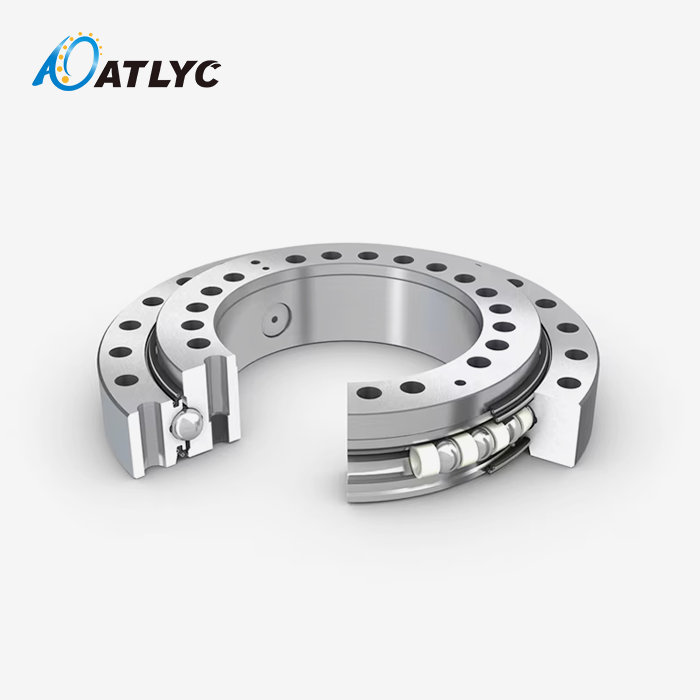
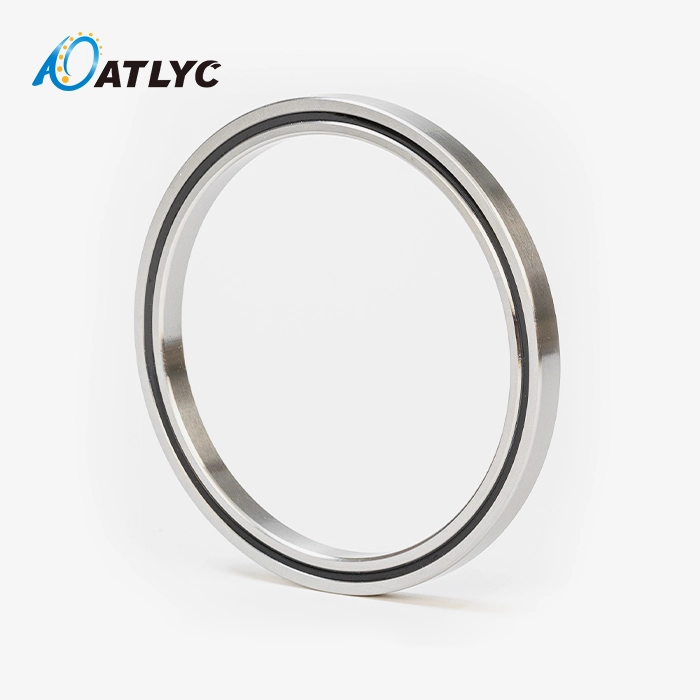
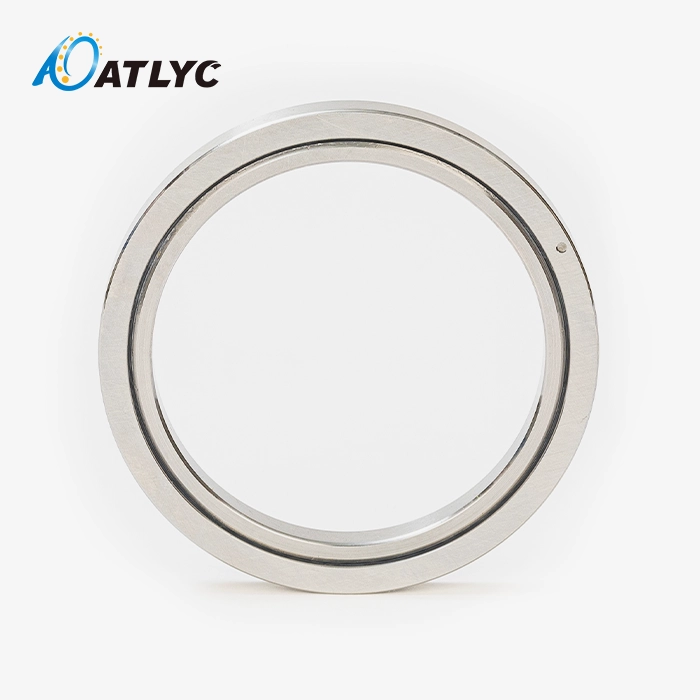
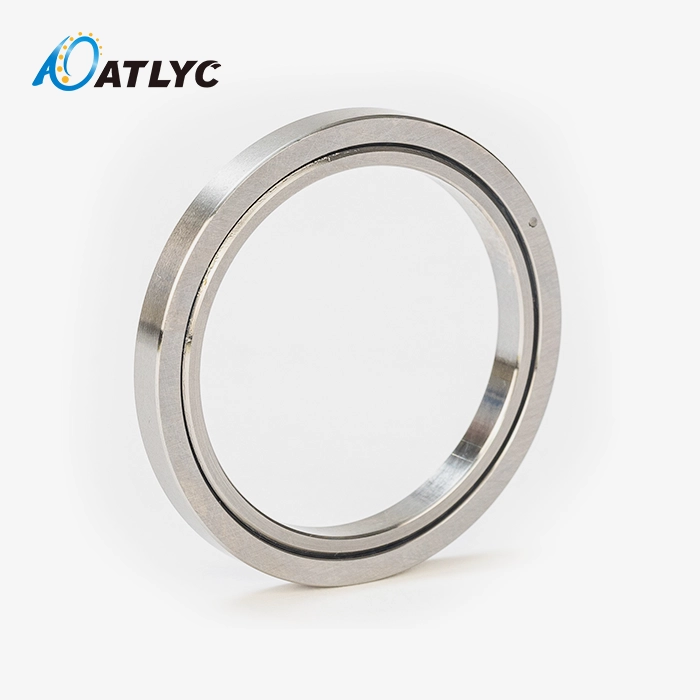
When semiconductor companies have more and more problems with the equipment they use to handle wafers, the RU42UU Cross roller bearing stands out as a precision-engineered solution made just for these tough conditions. This integrated crossed roller bearing has a unique single-body design with mounting holes built right in. This means that there are no complicated housing assemblies, and the bearing can handle loads moving in any direction. This bearing's small 20mm inner diameter, 70mm outer diameter, and 12mm width solve some of the most important problems: limited space in robotic joints, tricky load management, and the need to work without contamination in cleanrooms that are necessary for making semiconductors.
Understanding RU42UU Cross Roller Bearing: Specifications and Structure
What Makes RU42UU Bearing Different from Conventional Bearings
The crossed roller bearing design is very different from regular ball bearings because the rollers are arranged in an orthogonal way. When two cylindrical rollers are placed at right angles to each other, they make contact lines instead of contact points. This spreads the load over a much bigger surface area. This design lets a single small bearing handle radial loads, axial loads, and moment loads all at the same time. Normally, three different types of force lines would need different types of bearings.
Dimensional Specifications and Mounting Configuration
Our manufacturing specifications for this precision component reflect stringent semiconductor industry requirements:
Table 1: RU42UU Technical Specifications
| Parameter | Specification | Industry Relevance |
|---|---|---|
| Inner Diameter (d) | 20mm | Shaft compatibility for compact robotic joints |
| Outer Diameter (D) | 70mm | Space-efficient envelope for wafer handlers |
| Width (B) | 12mm | Minimized axial footprint in multi-axis systems |
| Material | GCr15, GCr15SiMn | High-carbon chromium-bearing steel |
| Heat Treatment | 58-64 HRC raceway hardness | Rolling contact fatigue resistance |
| Accuracy Grades | P6, P5, P4, P2 | Positioning precision from standard to ultra-precision |
The integral outer and inner ring design with pre-drilled mounting holes simplifies installation procedures that procurement managers appreciate. Unlike split-ring alternatives requiring precise alignment during assembly, this single-piece construction eliminates tolerance stack-up errors. Each mounting hole is positioned with micron-level accuracy during the CNC machining process, ensuring repeatable installation across multiple units in automated production lines.
Material Composition and Heat Treatment Process
Our main material is GCr15 bearing steel, which is the same as AISI 52100 and was chosen because it has the best balance of hardness, toughness, and wear resistance in RU42UU Cross roller bearing. The GCr15SiMn type has silicon and manganese added to it, which makes it harder to work with and allows for thicker cross-sections. Our heat treatment plan includes oil quenching at 840–860°C, austenitizing at 150–170°C, and tempering at 150–170°C to reach the desired hardness range.
The 'UU' designation means that the dual seal configuration has nitrile rubber contact seals on both bearing faces. These seals keep the grease intact and keep particles from getting into the system. This is very important in cleanrooms, where even tiny particles can lower semiconductor yields. The design of the seal protects against contamination while increasing friction as little as possible, usually by less than 15% of the base torque of the bearing.
Cross Roller Arrangement and Load Distribution Mechanics
Precision-ground cylinder rollers that are spaced out by resin or metal spacers change their position at right angles between the inner and outer raceways. By keeping the rollers from touching, this design stops the skewing and pressure that would happen otherwise. When an axial load comes from one direction, it's put on one set of wheels. When radial loads come from both directions, they act on both sets at the same time. Moment loads, which are rotational forces around directions that are not parallel to the bearing's rotating axis, are spread out across the whole roller complement. This gives the bearing strength that regular ball bearings can't match.
Performance Analysis and Application in IC Wafer Handling
Load Capacity and Operational Mechanics in Semiconductor Equipment
The operational demands of wafer handling robots require bearings that can support compound loading conditions while maintaining positional accuracy within micrometers. In a typical wafer transfer robot, the bearing supports the static weight of the robotic arm (radial load), the acceleration forces during rapid positioning movements (additional radial and axial components), and the cantilever moment created by the extended arm holding a 300mm wafer.
Testing data from semiconductor equipment manufacturers indicate that crossed roller bearings in this size range handle dynamic moment loads exceeding 45 Nm while maintaining rotational accuracy better than 10 arc-seconds. This performance level ensures that wafer placement errors remain within the ±25-micrometer tolerance required for modern lithography alignment systems.
Real-World Applications in Wafer Fabrication Environments
Across cleanroom facilities in the United States and internationally, these precision bearings function in several critical applications:
- Atmospheric and Vacuum Transfer Robots: The bearing operates in load-lock chambers where atmospheric pressure transitions occur. The seal integrity prevents lubricant outgassing that could contaminate vacuum environments while protecting internal components from particulate ingress during atmospheric exposure.
- Precision Rotary Stages in Inspection Systems: Automated optical inspection equipment uses these bearings in rotational stages that position wafers under high-resolution cameras. The low friction coefficient—typically below 0.002—ensures smooth rotation without stick-slip phenomena that would blur imaging during continuous scanning operations.
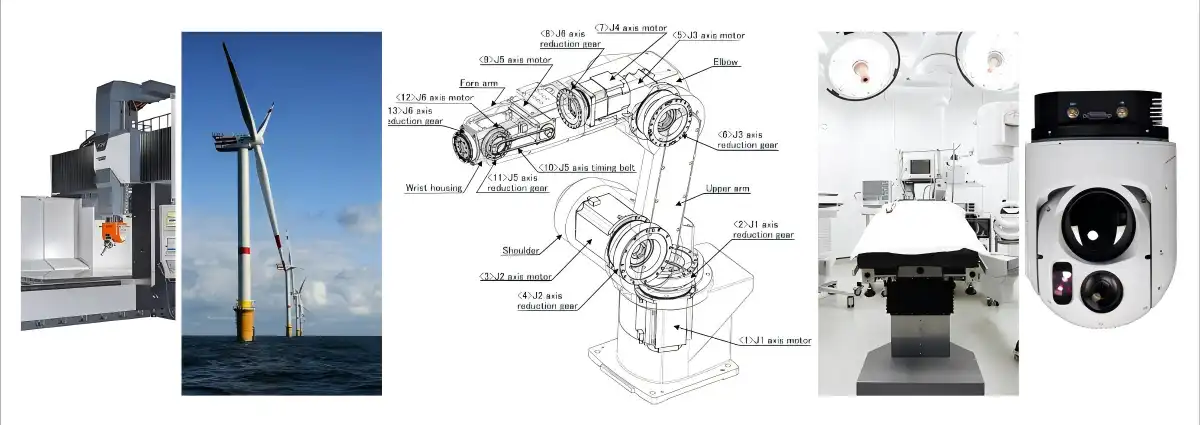
- Robotic Joint Articulation: Collaborative robots handling wafer cassettes employ these bearings at the elbow and wrist joints. The compact design allows joint assemblies to fit within the restricted spaces between process tools, while the high moment rigidity prevents arm deflection during acceleration and deceleration cycles.
Maintenance Protocols to Maximize Service Life
Proper maintenance directly impacts equipment uptime and total cost of ownership—factors procurement managers weigh heavily in bearing selection decisions. We recommend a structured maintenance approach for the RU42UU Cross roller bearing:
Lubrication management involves initial charging with low-outgassing synthetic greases specifically formulated for cleanroom environments. Typical relubrication intervals range from 8,000 to 12,000 operating hours, depending on load conditions and ambient temperature. Over-lubrication should be avoided as excess grease can migrate past seals and create contamination risks.
Inspection schedules should incorporate vibration analysis at 3,000-hour intervals. Accelerometers mounted near bearing locations detect early-stage wear patterns through changes in vibration frequency spectra. A baseline vibration signature established during commissioning allows condition monitoring systems to trigger maintenance alerts before functional failures occur.
Contamination control extends beyond the bearing itself to the surrounding mechanical environment. Purge air systems, maintaining a slight positive pressure around bearing housings, prevents particulate infiltration. Regular inspection of seal condition during scheduled maintenance windows catches degradation before complete seal failure compromises bearing internals.
Comparing RU42UU with Other Bearings: Making an Informed Choice
Size and Performance Comparison with Similar Cross Roller Models
When evaluating bearing options for wafer handling applications, engineers often compare the RU42UU against adjacent sizes within the same product family and alternative bearing types. Understanding these distinctions helps procurement teams match bearing capabilities to specific application requirements.
Table 2: Bearing Type Comparison for Semiconductor Applications
| Bearing Type | Size Range (OD) | Multi-Directional Load | Moment Rigidity | Installation Complexity | Typical Cost Index |
|---|---|---|---|---|---|
| RU42UU Cross Roller | 70mm | Excellent | High | Low (integrated mount) | 100 (baseline) |
| RU28UU Cross Roller | 52mm | Excellent | Medium | Low | 75 |
| Four-Point Contact Ball | 72mm | Good | Medium | Medium | 85 |
| Angular Contact Pair | 72mm | Good (requires preload) | Medium-High | High (pairing required) | 110 |
| Deep Groove Ball | 72mm | Poor (radial only) | Low | Low | 50 |
The RU28UU represents a smaller alternative with a 52mm outer diameter suitable for lighter loads and tighter space constraints. However, its reduced size translates to approximately 40% lower moment load capacity compared to the RU42UU, making it less suitable for larger wafer handling robots or applications involving extended moment arms.
Functional Trade-offs in Precision Positioning Systems
Four-point contact ball bearings offer an alternative approach to multi-directional load handling through contact geometry rather than roller orientation. While these bearings occupy similar envelope dimensions, their point contact geometry creates higher contact stresses under equivalent loads. This limitation reduces load ratings by approximately 30% compared to crossed roller designs and can lead to accelerated wear in high-cycle applications typical of semiconductor manufacturing.
Angular contact bearing pairs arranged in back-to-back or face-to-face configurations provide excellent axial and moment rigidity when properly preloaded. However, this arrangement requires precise shimming during installation and periodic preload adjustment as bearing raceways wear. The installation complexity and maintenance requirements make this solution less attractive for high-volume manufacturing environments where production equipment uptime directly impacts facility output metrics.
Cost-Effectiveness Considerations for Volume Procurement
Procurement decisions extend beyond initial unit cost to encompass total lifecycle economics. While standard deep groove ball bearings cost approximately 50% less than crossed roller alternatives, their inability to handle moment loads necessitates additional support bearings or more complex mechanical designs. The resulting assembly complexity increases installation labor costs and creates additional failure points that reduce system reliability.
For OEMs producing wafer handling equipment in volume, the integrated mounting design of crossed roller bearings reduces assembly time by eliminating separate housing fabrication and alignment procedures. Time-motion studies from automation equipment manufacturers indicate assembly time reductions of 35-40% compared to conventional bearing mounting methods, translating to significant labor cost savings across production volumes exceeding 100 units annually.
Procurement Guide: Buying RU42UU Cross Roller Bearings for IC Wafer Handling
Price Structure and Volume Purchasing Strategies
Current market pricing for precision crossed roller bearings reflects manufacturing complexity and quality grade selection. Standard accuracy grades (P5, P4) typically range from $85 to $180 per unit, depending on order volume and supplier. Ultra-precision P2 grades commanding position in high-end metrology applications carry premium pricing 40-60% above standard grades due to additional grinding and inspection processes required to achieve sub-micron tolerances.
Volume procurement strategies significantly impact effective unit costs. Our experience with semiconductor equipment OEMs demonstrates that committed annual volumes exceeding 200 units unlock tier pricing reductions of 15-25% compared to spot purchases. Blanket purchase orders with scheduled releases provide supply chain predictability while capturing volume economics without carrying excessive inventory costs.
Supplier Evaluation and Authenticity Verification
The bearing market includes both premium international brands and capable manufacturers from regions including China, where manufacturing scale and quality systems have advanced substantially. When evaluating suppliers, procurement professionals should verify several key credentials that indicate manufacturing capability and quality consistency.
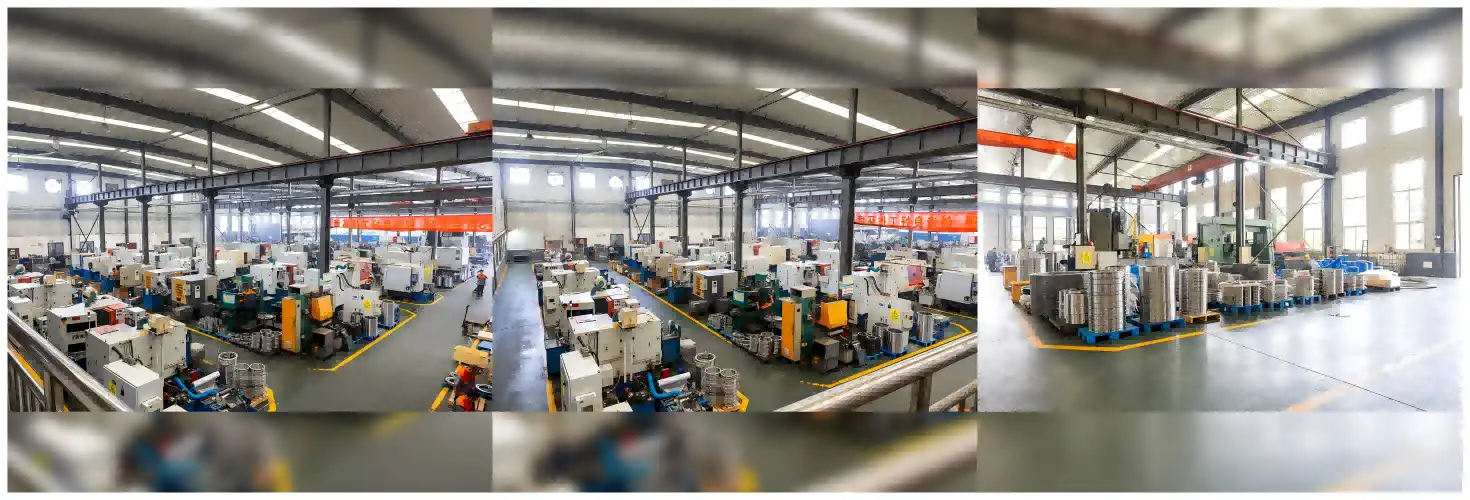
ISO 9001 certification represents baseline quality management system implementation, while IATF 16949 certification demonstrates automotive-grade process control applicable to precision bearing manufacturing. At ATLYC, we maintain both certifications across our six manufacturing workshops, reflecting our commitment to systematic quality throughout our 15-year evolution from a single workshop operation to our current comprehensive bearing manufacturing enterprise.
Manufacturing capacity assessment should examine production scale, equipment sophistication, and engineering support capabilities. Our facility employs 120 skilled personnel across production, research and development, quality inspection, and assembly functions. This integrated capability ensures responsive technical support and customization services that distributed supply chains cannot match.
Lead Times and International Logistics Considerations
Standard product lead times for crossed roller bearings typically span 3-6 weeks from order placement to factory departure, depending on accuracy grade and customization requirements. This timeline encompasses material procurement, heat treatment cycles, precision grinding operations, and final inspection procedures that cannot be compressed without compromising quality.
For United States-based buyers, international shipping adds 2-4 weeks transit time via ocean freight or 5-7 days via air freight. Total landed costs must account for freight, customs duties under HTS classification 8482.10.50, and potential tariff considerations. Working with suppliers experienced in export procedures to North American markets streamlines customs clearance and reduces delivery uncertainty.
OEM customization orders involving modified dimensions, special seal materials, or non-standard accuracy requirements extend lead times to 8-12 weeks. Early engagement with engineering teams during equipment design phases allows bearing specifications to be optimized for manufacturability while meeting application requirements, avoiding costly redesigns during production ramp phases.
Why RU42UU Cross Roller Bearings Are the Preferred Choice
Precision Engineering Advantages for Semiconductor Manufacturing
The semiconductor industry's relentless progression toward smaller feature sizes and larger wafer diameters intensifies precision requirements throughout fabrication equipment. Wafer handling systems must position 300mm wafers weighing 125 grams within micrometers while cycling thousands of times daily. The RU42UU Cross roller bearing crossed roller bearing configuration provides the positional repeatability this environment demands through its inherent structural advantages.
Rotational accuracy specifications achievable with P4 and P2 grade bearings—measuring runout in single-digit micrometers—enable direct-drive motor implementations without additional mechanical reduction stages. This simplification reduces system backlash and improves dynamic response, allowing faster wafer transfer cycles that directly impact fabrication facility throughput.
Durability Under Continuous Operation Conditions
Semiconductor fabrication operates continuously with equipment utilization targets exceeding 90%. Bearings in this environment accumulate operating hours rapidly, making service life a critical selection criterion. The line contact geometry of cylindrical rollers distributes loads across substantially larger contact areas than point-contact alternatives, reducing contact stresses and extending fatigue life.
Heat treatment protocols achieving 58-64 HRC raceway hardness provide the wear resistance necessary for multi-year service intervals typical in semiconductor capital equipment. Proper lubrication and contamination control allow these bearings to exceed 30,000 operating hours before requiring replacement—a service interval that aligns with major equipment refurbishment cycles rather than forcing interim maintenance disruptions.
Future Developments Supporting Industry Evolution
Semiconductor equipment manufacturers continue pushing performance boundaries as device manufacturers transition to 450mm wafers and expand into advanced packaging technologies requiring even greater precision. Bearing development roadmaps address these evolving requirements through materials innovation and design refinement.
Advanced bearing steels incorporating vacuum-remelting processes reduce non-metallic inclusion content that initiates fatigue cracks. Ceramic hybrid designs substituting silicon nitride rolling elements for steel rollers offer reduced density, higher stiffness, and improved thermal stability—attributes valuable in high-speed applications and temperature-varying environments.
Surface engineering techniques, including super-finishing processes, reduce surface roughness to nanometer scales, decreasing friction and wear rates. These refinements extend service intervals and reduce particle generation, critical in cleanroom environments where bearing-generated contamination can impact production yields.
Conclusion
The RU42UU Cross roller bearing delivers a compelling combination of compact design, multi-directional load capacity, and precision performance essential for IC wafer handling equipment. Its integrated mounting configuration simplifies installation, while the crossed roller arrangement provides the moment rigidity required in robotic applications. Material selection and heat treatment processes ensure durability under continuous semiconductor manufacturing conditions. When comparing alternatives, the bearing's functional integration and lifecycle economics justify its position in precision automation equipment. Procurement success depends on supplier evaluation encompassing quality certifications, manufacturing scale, and engineering support capabilities alongside competitive pricing and reliable delivery performance.
FAQ
1. What accuracy grade should we specify for wafer handling robots?
Accuracy grade selection depends on positioning requirements and motor control capabilities. Standard wafer transfer robots handling 300mm wafers typically specify P5 grade bearings providing rotational accuracy within 10-15 micrometers runout. Metrology equipment and lithography alignment systems requiring sub-5-micrometer positioning accuracy benefit from P4 or P2 grades. Higher precision grades increase bearing cost approximately 20-30% per accuracy class improvement.
2. How does seal design affect cleanroom compatibility?
The dual contact seals designated by 'UU' suffix provide particle containment and lubricant retention essential for cleanroom operation. Seal materials utilize low-outgassing compounds that meet ISO Class 3-5 cleanroom requirements. Alternative non-contact seal designs reduce friction but offer lower contamination protection. Application environments should be evaluated to balance sealing effectiveness against friction considerations affecting motor sizing and heat generation.
3. Can these bearings operate in vacuum environments?
Standard sealed versions function in atmospheric load-lock chambers but require seal removal for sustained vacuum operation. Special low-outgassing greases and open bearing configurations support high-vacuum applications below 10^-6 Torr. Vacuum-compatible versions require specification during procurement as lubrication and material selections differ from standard configurations.
Partner with ATLYC for Precision Cross Roller Bearing Solutions
ATLYC has served semiconductor equipment manufacturers and industrial automation OEMs throughout our 15-year evolution into a comprehensive bearing manufacturer holding ISO 9001 and IATF 16949 certifications. Our engineering team provides technical support for RU42UU Cross roller bearing applications, helping you optimize designs for IC wafer handling equipment performance and reliability. We maintain competitive pricing structures for volume procurement while ensuring consistent quality across production runs from our six specialized manufacturing workshops. Our export experience serving markets across the United States, Germany, and South Korea ensures smooth logistics and documentation for international shipments. Contact our technical team at auto@lyautobearing.com to discuss your specific requirements with an experienced RU42UU Cross roller bearing supplier committed to supporting your precision automation applications with responsive engineering consultation and scalable production capacity.
References
1. Harris, T.A. & Kotzalas, M.N. (2006). Rolling Bearing Analysis: Essential Concepts of Bearing Technology. CRC Press, Taylor & Francis Group.
2. Semiconductor Equipment and Materials International (SEMI). (2019). SEMI E63-0706: Guide for Determination of Particle Contribution from Semiconductor Manufacturing Equipment.
3. ISO 492:2014. Rolling bearings — Radial bearings — Geometrical product specifications (GPS) and tolerance values. International Organization for Standardization.
4. Khonsari, M.M. & Booser, E.R. (2017). Applied Tribology: Bearing Design and Lubrication. John Wiley & Sons, Third Edition.
5. Toshiba Machine Co. Research Division. (2018). Design Guidelines for Precision Crossed Roller Bearings in Semiconductor Wafer Handling Robots. Internal Technical Publication.
6. NSK Ltd. Technical Research Center. (2020). Evolution of Precision Bearing Technology for Next-Generation Semiconductor Manufacturing Equipment. Motion & Control Journal, Vol. 28, pp. 12-24.
Learn about our latest products and discounts through SMS or email