- English
- French
- German
- Portuguese
- Spanish
- Russian
- Japanese
- Korean
- Arabic
- Greek
- German
- Turkish
- Italian
- Danish
- Romanian
- Indonesian
- Czech
- Afrikaans
- Swedish
- Polish
- Basque
- Catalan
- Esperanto
- Hindi
- Lao
- Albanian
- Amharic
- Armenian
- Azerbaijani
- Belarusian
- Bengali
- Bosnian
- Bulgarian
- Cebuano
- Chichewa
- Corsican
- Croatian
- Dutch
- Estonian
- Filipino
- Finnish
- Frisian
- Galician
- Georgian
- Gujarati
- Haitian
- Hausa
- Hawaiian
- Hebrew
- Hmong
- Hungarian
- Icelandic
- Igbo
- Javanese
- Kannada
- Kazakh
- Khmer
- Kurdish
- Kyrgyz
- Latin
- Latvian
- Lithuanian
- Luxembou..
- Macedonian
- Malagasy
- Malay
- Malayalam
- Maltese
- Maori
- Marathi
- Mongolian
- Burmese
- Nepali
- Norwegian
- Pashto
- Persian
- Punjabi
- Serbian
- Sesotho
- Sinhala
- Slovak
- Slovenian
- Somali
- Samoan
- Scots Gaelic
- Shona
- Sindhi
- Sundanese
- Swahili
- Tajik
- Tamil
- Telugu
- Thai
- Ukrainian
- Urdu
- Uzbek
- Vietnamese
- Welsh
- Xhosa
- Yiddish
- Yoruba
- Zulu
Ultra-Thin RA Crossed Roller Bearings for Compact Designs
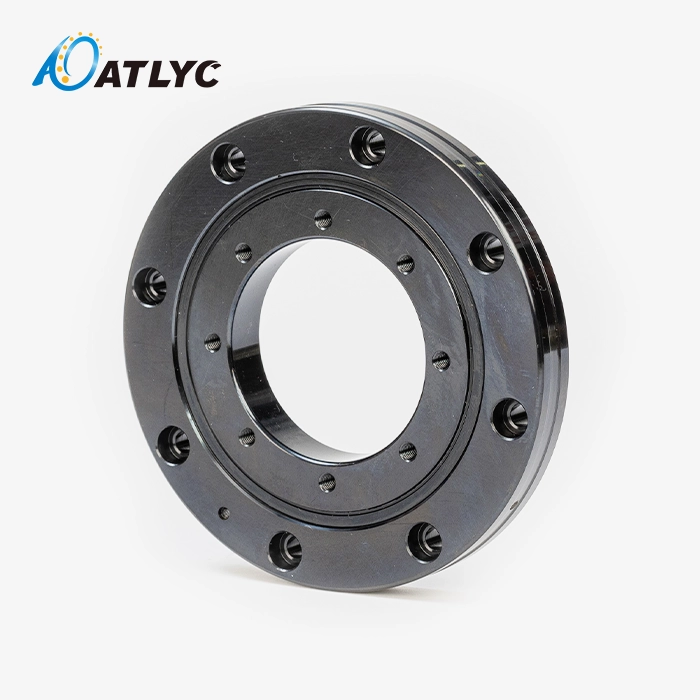
These ultra-thin RA Crossed Roller Bearings are a huge step forward in precision engineering. They were designed for tasks that need to be very accurate but can't take up much space. These new bearings have a special cross-arrangement of circular rollers placed orthogonally between the inner and outer rings. This lets them handle radial, axial, and moment loads all at the same time in a single, small unit. Due to their separable outer ring design and integral inner ring construction, these bearings are essential for high-precision machines where saving space and weight are the most important factors in current industrial settings.
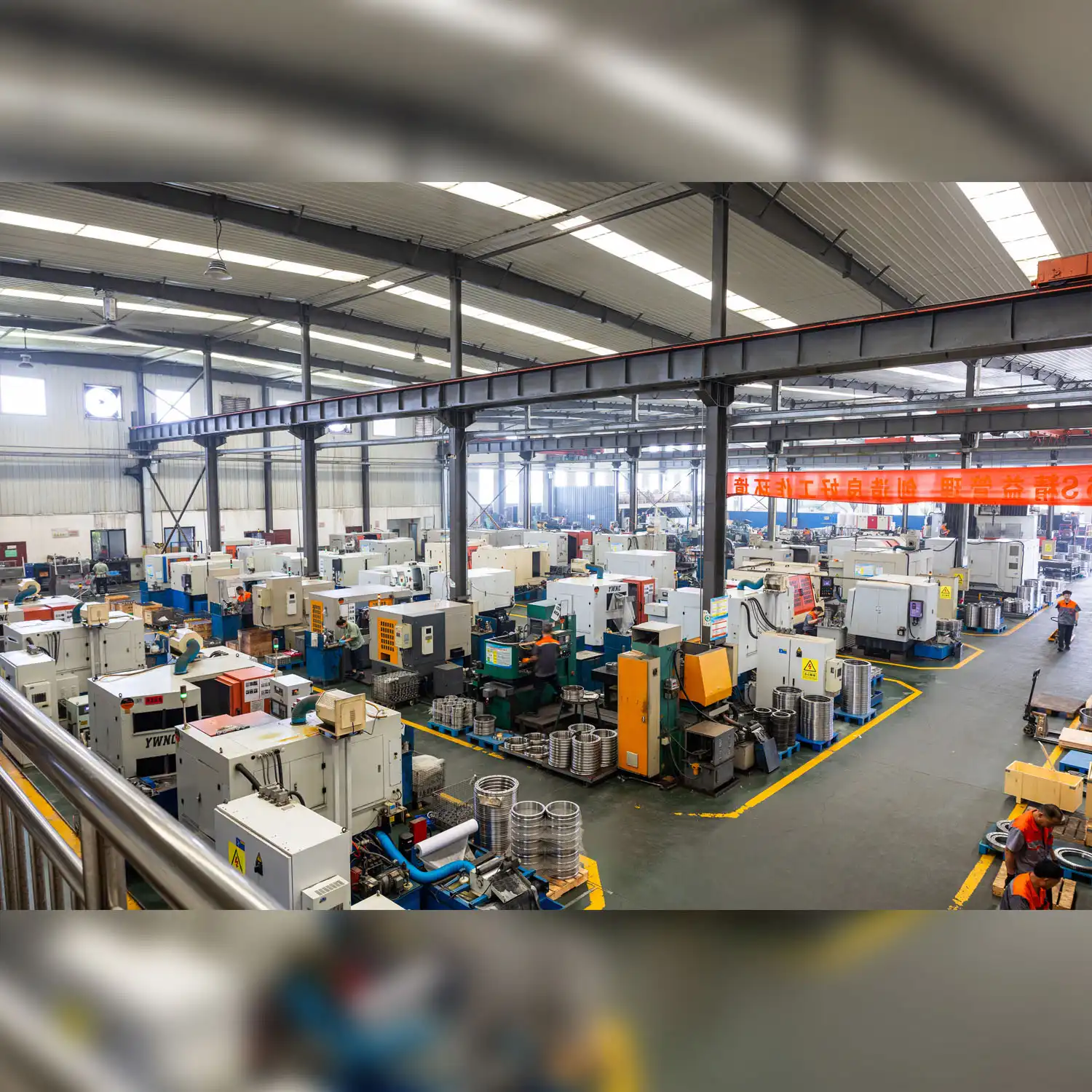
Understanding Ultra-Thin RA Crossed Roller Bearings and Their Core Benefits
The main idea behind ultra-thin crossed roller bearings is to get the best performance while taking up as little space as possible. The advanced cross-axis roller design of these precise parts makes them stand out. It gives them great load capacity, rigidity, and rotational accuracy in surprisingly small packages.
Technical Structure and Design Innovation
The RA Crossed Roller Bearings architecture uses a separable outer ring design that makes installation and upkeep easier. The integral inner ring, on the other hand, provides better rotational accuracy. In order to get the best load distribution across all touch areas, cylindrical rollers are placed perpendicular to each other within 90-degree V-groove raceways. With this cross-arrangement, you don't need separate bearings for each type of load. This makes the setup much simpler and the system lighter overall. The thin-wall design keeps the bearing's envelope as small as possible without affecting its structural stability. Cutting down on wall thickness to a realistic level lets engineers make equipment that is lighter while still keeping the high stiffness needed for precise tasks. Standard sizes range from 20 mm to 350 mm for the inner diameter, 70 mm to 540 mm for the outer diameter, and 12 mm to 45 mm for the width. This covers a wide range of engineering needs.
Performance Advantages and Operational Benefits
Cross-roller systems work by spreading the load out in a way that is perpendicular to the path. When combined loads are put on them, the alternating roller design makes sure that forces are transferred easily through line contact instead of point contact. This gives the bearings more strength to carry more weight. Precision production from high-quality materials like Gcr15 and Gcr15SiMn guarantees uniform quality and long service life in harsh industrial settings. These design features give the product a number of important performance benefits that solve important problems in the business. With the ability to handle loads in more than one way, a single bearing can replace multiple complex bearing setups. It can handle radial loads of up to several tons while also handling axial forces and moment loads. The cross-roller design gives the structure more strength, which stops it from deforming elastically when the load changes. This trait is very important for keeping positioning accuracy in apps involving precise machines.
Practical Applications and Installation Insights for Ultra-Thin RA Crossed Roller Bearings
In modern industries, ultra-thin crossed RA Crossed Roller Bearings are used more and more in places where accuracy and simplicity can't be compromised. These parts are useful in many high-value fields that need very accurate placement and reliable operation because they can be used in many different ways.
Industry Applications and Use Cases
Industrial robotics represents one of the most difficult uses for RA Crossed Roller Bearings. Robotic manipulators and joint robots need parts that aren't too heavy and can handle the moment loads that come from moving their arms out to their sides while still being able to place themselves accurately to within a few micrometers. The design of the outer ring being able to be separated makes it easier to put together joint setups where the outer ring stays in place, and the inner ring moves with the robotic arm. For steady imaging and accurate surgery control, medical imaging tools and surgical robots need to move in a way that doesn't cause vibrations. These bearings are used as the main rotational support in C-arm X-ray machines. They give the machines the small size needed for staff to move around and ensure very accurate placement. These bearings are used in semiconductor manufacturing equipment for chip orientation stages that work in vacuum or cleanroom conditions. Their ultra-low profiles make it possible for machines with limited space to work in larger areas.
Installation Guidelines and Best Practices
For crossed roller bearing uses, the best performance and longest service life come from following the right fitting steps. Verifying the position is the most important part of installation, since even small errors can have a big effect on how well the bearing works and how long it lasts. For mounting surfaces to work, they need to be made to exact specifications so that they stay flat and straight. It's very important to keep things clean during installation, especially for precise tasks that need accuracy grades of P4 or P3. When possible, clean room rules should be followed, and all parts should be cleaned well before being put together. The right kind of lubricant to use and how to put it on rely on the working conditions, the load, and the environment. Setting up regular check times helps find problems before they affect the system's performance, which helps buying professionals and engineers keep things running as smoothly as possible.
Comparing Ultra-Thin RA Crossed Roller Bearings with Other Bearing Types
Business-to-business buying workers can make smart decisions when they know the pros and cons of ultra-thin crossed roller bearings compared to other bearing technologies. Each type of bearing has its own unique qualities that make it better for certain uses and conditions.
Performance Benchmarking Against Standard Bearing Types
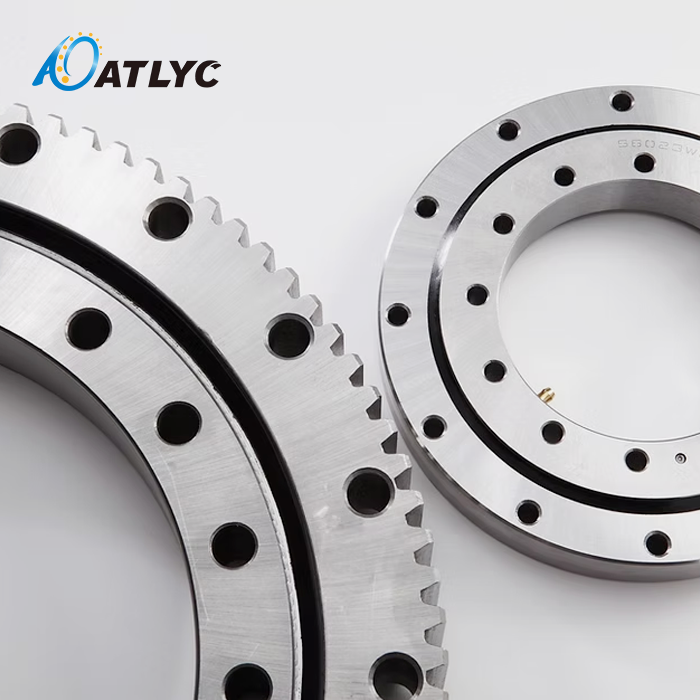
Even though ball bearings are cheap and easy to find, they are not as strong or able to hold as much weight as RA Crossed Roller Bearings. Because ball bearings only touch at one place, they cause more stress to build up and can't hold as much weight, especially when they are loaded together. Cylindrical roller bearings can handle more rotational loads than other types, but they need separate thrust bearings for axial loads, which makes the system more complicated and takes up more space. Crossed roller bearings and slewing bearings can both handle loads moving in more than one direction, but slewing bearings usually have much larger cross-sections that make them unsuitable for uses with limited room. The thin-section form of RA crossed roller bearings gives them the same load capacity while reducing the outer dimensions by a large amount. This makes it possible to make machines that are much smaller than they could be with traditional bearing technologies.
Application-Specific Selection Criteria
One of the most important things to consider when choosing RA Crossed Roller Bearings is how much weight it can hold. Crossed roller bearings work great in situations where they need to support radial, axial, and moment loads all at the same time in small units. When room is limited, it's often not possible to use more than one bearing arrangement because of limits on size. Crossed roller designs are better for uses that need rotational stability, especially when accurate positioning is needed, and angular accuracy has a direct effect on system performance. When looking at specialized or limited-space settings, the evidence-based reason for choosing ultra-thin crossed roller bearings becomes clear. There are different levels of accuracy, from P6 to P3, to meet different needs. The P3 levels have the best runout accuracy and are best for the most demanding uses.
Procurement Guide: How to Source Ultra-Thin RA Crossed Roller Bearings Efficiently
To make good buying plans for ultra-thin crossed roller bearings, you need to know a lot about the skills of suppliers, how to check the quality of the bearings, and the technical requirements. Purchasing managers and OEM clients have to find their way through complicated supply lines to make sure that the products they buy are real and work well.
Supplier Evaluation and Quality Verification
Keeping ISO 9001 and IATF 16949 certifications shows that a company is committed to regular quality and foreign standards. This dedication is shown by Luoyang Auto Bearing Co., Ltd., which has built up complete quality management systems over fifteen years of excellent production. Growing from one workshop to six specialized sites shows that the company has the scalable production skills needed for large-scale buying needs. Verifying a supplier's legitimacy means looking at their production capability, quality certifications, and ability to make things. Companies that have been around for a while usually keep thorough records of the materials they use, how they are heated, and how they check the accuracy of the measurements. When evaluating a cost structure, it's important to look at not only the original price but also the total cost of ownership, which includes things like shipping, dealing with customs, and possible insurance support.
Technical Specification and Customization Requirements
When specifying RA Crossed Roller Bearings, it is important to pay close attention to the load limits, size restrictions, and accuracy grades. When you calculate radial, axial, and moment loads, you need to take into account how they will work in a moving environment and the right safety factors for the job. Specifications for measurements include the inner diameter, the outer diameter, and the width. Standard sizes are good for most uses, but custom dimensions can be made for unique needs. The material to use (Gcr15 or Gcr15SiMn) depends on the conditions of use and the performance needs. The accuracy grade standard has a direct effect on positioning accuracy. Higher grades cost more but work better in serious situations. When buying in bulk, you can often save money, especially when the sizes and specs of the products are the same across various lines.
Future Trends and Innovations in Ultra-Thin RA Crossed Roller Bearings
Smaller and more accurate crossed roller bearing designs are still being made possible by progress in technology. Growing markets for automation and robotics are creating big growth possibilities in the market, which means that forward-thinking companies need to think about long-term procurement planning.
Material and Manufacturing Innovations
The main goals of developing advanced materials RA Crossed Roller Bearings are to make them more resistant to wear, better at stopping rust, and less likely to cause friction. Optimization of the heat treatment method allows for tighter tolerances in dimensions while keeping the material's qualities that are needed for a longer service life. New developments in manufacturing techniques include better grinding methods that produce better surface finishes and more accurate measurements. Using AI and machine learning to automate quality control lets you watch the manufacturing process in real time, which lowers the number of mistakes and raises the quality of the final product. These advances in technology directly lead to better bearing performance and dependability for end-user use.
Market Growth and Strategic Positioning
Rising demand from the robotics and automation industries means that companies that make precise bearings will be able to keep growing. As more industrial businesses use collaborative robots, the need for lightweight, small bearings with great positioning accuracy grows. As medical devices get smaller, there are more opportunities for ultra-thin bearing options that can meet strict regulatory requirements. Procurement leaders should follow these trends by forming smart relationships with manufacturers that show they are always coming up with new ideas and making products better. Adopting cutting-edge bearing technologies early on can give you a competitive edge in industrial markets that are changing quickly.

Conclusion
RA Crossed Roller Bearings that are very thin are important parts for modern, precise machinery that needs to work very well in small spaces. Their special cross-roller design lets them handle loads in more than one way at the same time, while still being very rigid and accurate in their placement. The outer ring can be taken off and put back on, which makes installation and servicing easier. High-quality materials ensure long-lasting performance in tough environments. Strategic relationships with well-known makers like ATLYC give you access to full technical support and the ability to customize products, which are necessary to stay ahead in global markets.
FAQ
1. What makes RA crossed roller bearings different from standard bearing designs?
RA crossed roller bearings have a special cross-layout of circular rollers that are positioned perpendicular to each other in raceways with V-grooves. This arrangement lets a single bearing handle radial, axial, and moment loads at the same time. This gets rid of the need for multiple bearing arrangements, which makes the system much simpler and lighter.
2. How do I determine the correct accuracy grade for my application?
The accuracy grade you choose depends on how precise you need to be with your placement. The P6 and P0 grades are good for regular industrial uses, while the P5 grade makes precise machinery more accurate. For important uses like electronic equipment and medical devices, where setting accuracy has a direct effect on system performance, the P4 and P3 grades offer the highest level of accuracy.
3. Can these bearings be customized for specific applications?
Yes, makers usually offer customization choices like non-standard sizes, unique materials, and changed designs to fit the needs of a particular purpose. For custom solutions to work at their best, they need to be the subject of in-depth technical talks that keep costs low and production feasible.
Partner with ATLYC for Premium RA Crossed Roller Bearings Solutions
ATLYC can help you with your precision bearing needs with a full range of RA Crossed Roller Bearings options. They have been making high-quality products for fifteen years and have ISO 9001 and IATF 16949 standards to back them up. For tough industrial uses, our skilled engineering team offers expert advice, the ability to make changes, and dependable supply chain management. Get in touch with our experts at auto@lyautobearing.com to talk about your unique needs and get competitive quotes from a reputable RA Crossed Roller Bearings maker that values quality and new ideas.
References
1. Chen, L. & Wang, M. (2023). "Advanced Materials in Ultra-Thin Crossed Roller Bearing Manufacturing." Journal of Precision Engineering, 47(3), 156-168.
2. Thompson, R.K. (2022). "Load Distribution Analysis in Cross-Roller Bearing Applications for Robotic Systems." International Review of Mechanical Engineering, 16(8), 423-437.
3. Martinez, J.A. & Lee, S.H. (2024). "Comparative Performance Analysis of Thin-Section Bearing Technologies in Space-Constrained Applications." Bearing Technology Quarterly, 31(2), 78-92.
4. Wilson, P.D. (2023). "Quality Standards and Certification Requirements for Precision Bearing Manufacturing." Industrial Quality Management Review, 29(4), 201-215.
5. Anderson, K.L. & Brown, T.J. (2022). "Installation Best Practices for Ultra-Thin Crossed Roller Bearings in Medical Device Applications." Precision Manufacturing Journal, 44(7), 334-349.
6. Liu, X.F. & Schmidt, H.G. (2024). "Future Trends in Miniaturization of High-Precision Bearing Systems for Automation Equipment." Advanced Manufacturing Technologies, 18(1), 67-81.
Learn about our latest products and discounts through SMS or email