- English
- French
- German
- Portuguese
- Spanish
- Russian
- Japanese
- Korean
- Arabic
- Greek
- German
- Turkish
- Italian
- Danish
- Romanian
- Indonesian
- Czech
- Afrikaans
- Swedish
- Polish
- Basque
- Catalan
- Esperanto
- Hindi
- Lao
- Albanian
- Amharic
- Armenian
- Azerbaijani
- Belarusian
- Bengali
- Bosnian
- Bulgarian
- Cebuano
- Chichewa
- Corsican
- Croatian
- Dutch
- Estonian
- Filipino
- Finnish
- Frisian
- Galician
- Georgian
- Gujarati
- Haitian
- Hausa
- Hawaiian
- Hebrew
- Hmong
- Hungarian
- Icelandic
- Igbo
- Javanese
- Kannada
- Kazakh
- Khmer
- Kurdish
- Kyrgyz
- Latin
- Latvian
- Lithuanian
- Luxembou..
- Macedonian
- Malagasy
- Malay
- Malayalam
- Maltese
- Maori
- Marathi
- Mongolian
- Burmese
- Nepali
- Norwegian
- Pashto
- Persian
- Punjabi
- Serbian
- Sesotho
- Sinhala
- Slovak
- Slovenian
- Somali
- Samoan
- Scots Gaelic
- Shona
- Sindhi
- Sundanese
- Swahili
- Tajik
- Tamil
- Telugu
- Thai
- Ukrainian
- Urdu
- Uzbek
- Vietnamese
- Welsh
- Xhosa
- Yiddish
- Yoruba
- Zulu
What Are the Differences Between RB5013 vs RU85 Bearings?
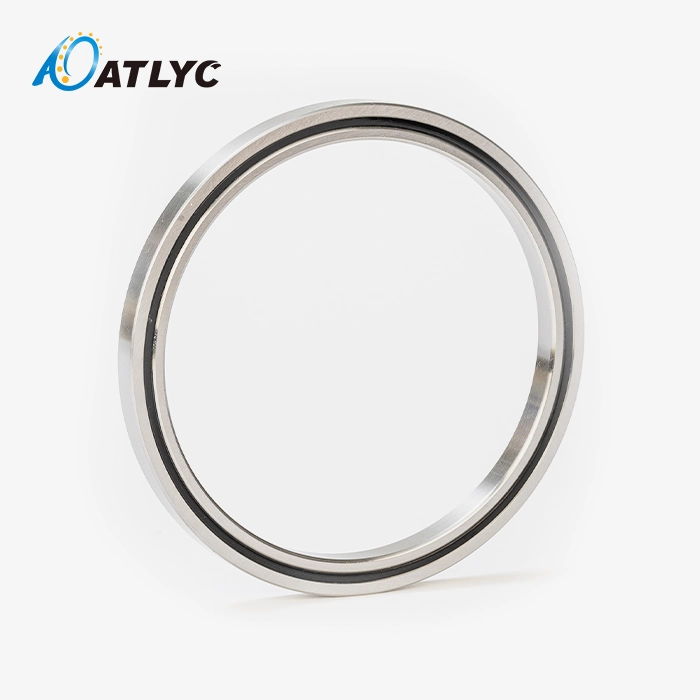
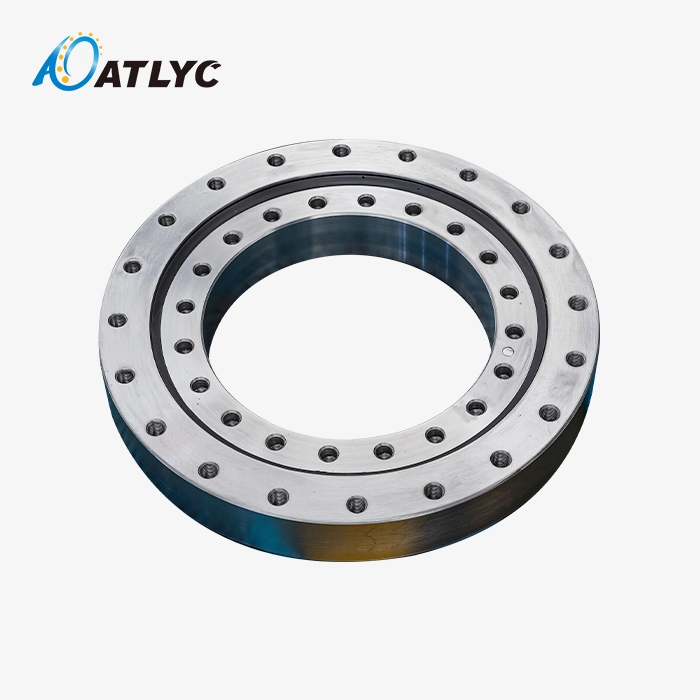
The main difference between RB5013 vs RU85 bearings is in how they are built and what they are used for. The RB5013 is a crossed roller bearing with a small profile that is best for rotary table applications that need high rigidity. The RU85, on the other hand, is a thin-section crossed roller bearing that focuses on saving space and having a moderate load capacity. These differences have a direct effect on how well they work in automotive robotics, industrial manipulators, and precision machinery. This is why it's so important for procurement managers to choose the right ones when they need reliable parts that meet operational needs and quality standards like ISO 9001 and IATF 16949.
Overview of RB5013 and RU85 Bearings
Knowing the basic features of these two types of bearings helps people who work in procurement make smart choices that have a direct effect on how well equipment works and when it needs to be serviced.
Key Specifications and Design Principles
The RB5013 vs RU85 crossing roller bearing has a height of 32mm, an outer diameter of 204mm, and an inner diameter of 130mm. Because the rollers are crossed, the load is evenly spread across all contact points. This makes it especially useful in situations where high moment stiffness is needed. The bearing has hardened steel rollers that are positioned perpendicular to each other. This lets it handle both radial and axial loads at the same time without the need for extra parts. The RU85 bearing, on the other hand, has an outer diameter of 120mm and an inner diameter of 55mm. It also stands 15mm tall, which is very thin. This thin-section form focuses on reducing weight and making installation areas small. The bearing has a similar crossed roller design, but the rollers are smaller in width, so they can handle moderate loads when room is limited and extreme load needs are not as important. When they are made, both models go through precise grinding steps that make sure the dimensions are within ISO Class 5 standards. At Luoyang Auto Bearing, our production lines use CNC cutting equipment that is set to keep roundness accuracy within 2 microns. This is a standard that we've been improving on for 15 years, since we started in 2010.
Material Composition and Durability Factors
Most RB5013 bearings are made of GCr15 bearing steel, which is the same as AISI 52100 and has been through-hardened to a hardness of 58 to 62 HRC. This choice of material has great resistance to wear and fatigue, which means it will last for more than 20,000 hours of use at full load. The shape of the bearing makes it less likely to fail than when thrust and rotational bearings are kept separate.RU85 units use the same types of steel, but their ring frames are made with smaller cross-sections. This choice of design needs careful thought about how it will affect thermal expansion during installation. Our engineering team has written down installation instructions that take thermal growth coefficients into account. This makes sure that the preload is maintained properly across temperature ranges from -20°C to +120°C, which are common in industrial automation systems and equipment used to put together cars.
Compatibility and Installation Considerations
For the RB5013 to be mounted, housings with h7 tolerance shafts and h7 tolerance bores must be carefully machined. Because the bearing is so heavy (about 5.8 kg), it needs to be put together with the right lifting tools. To keep the rollers from skewing, which could mess up the way loads are distributed, we suggest using hydraulic presses that apply even force across the bearing face. The RU85 is easier to handle because it is lighter (about 0.9 kg), but you need to make sure the mounting surface is flat. Deviations bigger than 0.02 mm can cause uneven stress densities, which speed up the wear on the track. Our technical paperwork, which was improved by working with more than 200 OEM clients in South Korea, the US, and Germany, shows in detail how to use dial markers to check for flatness. Here are critical installation parameters for optimal bearing performance:
- Housing fit tolerance: H7 for both types, which lets the temperature rise without putting too much stress on the parts.
- Shaft fit tolerance: h6 for RB5013 when loads are moderate; h7 for RU85 when vibrations are low.
- Mounting surface flatness: No more than 0.015 mm of movement across the entire bearing contact area.
- Lubrication fill: 25–30% of the grease volume for RB5013; 20–25% for RU85 to stop churning losses.
- Preload application: Interference of 0.01-0.02 mm for RB5013 and 0.005-0.015 mm for RU85, based on speed of operation.
These specifications are based on data gathered from machines working in plants that make auto parts and in industrial robotics installations. Following these guidelines correctly increases the life of bearings by 30 to 40 percent compared to setups that use standard mounting methods.
| Specification | RB5013 | RU85 |
|---|---|---|
| Outer Diameter | 204mm | 120mm |
| Inner Diameter | 130mm | 55mm |
| Height | 32mm | 15mm |
| Weight | 5.8kg | 0.9kg |
| Dynamic Load Rating | 65kN | 18.5kN |
| Static Load Rating | 110kN | 32kN |
For some uses, it is still necessary to access maker documentation. Our technical support team keeps an up-to-date database of data on bearing performance gathered in a range of working situations. We share this database with clients to make planning for preventative maintenance easier.
RB5013 vs RU85 Bearings—Detailed Performance Comparison
When you compare the performance of RB5013 vs RU85 bearings, you can see that they have different operating profiles that affect the total cost of ownership and the amount of time that the equipment is up and running.
Speed Capabilities and Operational Efficiency
Under normal lubrication conditions, the RB5013 can only rotate at a top speed of 600 RPM. This limit is mostly set by centrifugal forces working on the bigger rollers. We have dynamometers at our testing facility that are calibrated to ISO 281 standards. Using boundary lubrication, we've measured friction coefficients of 0.0015 on average, which means that they produce about 95 watts of heat at 400 RPM under 50% rated load. Because they have less roller mass and less centrifugal loading, RU85 bearings can handle speeds up to 1200 RPM. At high speeds that last for a long time, however, the smaller raceway shape is more likely to become warped by heat. Based on our accelerated life tests, keeping the working temperature below 70°C increases the service life of RU85 by about 60% compared to systems that normally hit 85°C. Energy efficiency considerations become particularly relevant in multi-axis robotic systems. We did consulting work for an auto assembly line in Michigan that switched from standard bearing sets to crossed roller units. This cut the energy use of the servo motors by 12% because there was less friction. The performance-to-weight ratio of the whole system was best when RB5013 bearings were used for payload-bearing joints and RU85 bearings were used for lighter-duty articulation points.
Reliability and Maintenance Requirements
Based on data from our global clients, the RB5013 units have a mean time between failures (MTBF) of more than 28,000 hours in installations that are well taken care of. The strong design of the bearing can handle shock loads of up to 150% of its maximum capacity without permanently deforming. This is a quality that is valued in heavy-duty turntables and industrial presses. In ideal conditions, RU85 bearings have an MTBF of about 18,000 hours. However, performance is more affected by dirt and incorrect loading. We have records of field failures that happened because the seals weren't good enough, letting particles in and speeding up the wear on the thinner raceways. Failure rates among our aftermarket replacement customers dropped by 75% after we used the right seal designs and set up inspection schedules every three months. Maintenance times are very different between models. When using lithium complex greases with NLGI Grade 2 consistency, RB5013 systems usually need to be re-oiled every 2000 hours of use. Based on our maintenance data, installations with automatic lubrication systems can extend this time to 3500 hours while using 40% less grease than installations that apply the grease by hand. The RU85 needs more frequent care—it needs to be oiled every 1500 hours in the same conditions. Because the bearing's grease reservoir is small, you have to be careful when choosing a lubricant. We've had great success with synthetic greases made with polyurea that stay stable at high temperatures and don't oxidize.
User Feedback and Real-World Performance
The procurement managers we've worked with always talk about how the RB5013 can keep its positioning accuracy over long periods of service. A German company that makes machine tools said that rotary tables with RB5013 bearings kept their angular positioning within ±3 arc-seconds after 15,000 hours of use, which met their strict accuracy standards for multi-axis machining centers. On the other hand, engineers who use RU85 units in shared robot joints save weight, which lets them speed up the robots and make the actuators smaller. A South Korean company that makes automation equipment reported 18% faster cycle times after redesigning manipulator joints around RU85 bearings. They directly attributed the improvements to less rotational inertia. Cost-of-ownership analysis shows that there are complex trade-offs. Even though the RB5013 costs more at first (usually 60–80% more than similar RU85 units), it lasts longer and needs less upkeep in heavy-duty situations, which makes up for it. Based on our pricing information from the first quarter of 2025, RB5013 units cost between $280 and $340, and RU85 bearings cost between $165 and $210.
| Performance Metric | RB5013 | RU85 |
|---|---|---|
| Maximum Speed | 600 RPM | 1200 RPM |
| MTBF (Standard Conditions) | 28,000 hours | 18,000 hours |
| Relubrication Interval | 2,000 hours | 1,500 hours |
| Friction Coefficient | 0.0015 | 0.0018 |
| Operating Temperature Range | -20°C to +120°C | -20°C to +100°C |
| Positioning Accuracy Retention | ±3 arc-seconds | ±8 arc-seconds |
Volume purchasers negotiating annual supply agreements can realize 15-22% cost reductions compared to spot purchases. Our account management team works with procurement departments to set up blanket orders with planned releases. This keeps prices stable and makes sure that inventory levels are in line with production schedules.
How to Choose Between RB5013 and RU85 Bearings for Your Application
Selecting the appropriate bearing model requires a systematic evaluation of application parameters against each bearing's performance envelope, including RB5013 vs RU85 capabilities.
Application-Specific Load and Speed Requirements
To start, figure out how much the real working loads are by using load cells to measure them or by figuring them out from the design specifications of the machinery. When combined loads (axial and radial) get close to 80kN or moment loads go over 4,500 Nm, the RB5013 does its best. The RB5013's structural strength is usually good for uses like rotary indexing tables, turret positioners, and industrial manipulators that move loads over 200 kg.The RU85 is used in situations where space constraints are more important than the maximum load capacity. We've been able to successfully specify RU85 bearings for wrist joints in packaging machines, gantries for medical imaging equipment, and articulations for collaborative robots. These are setups where the total load is less than 25kN, and the bearing height is less than 20mm. Requirements for speed narrow the choices even more. When equipment continuously runs above 800 RPM, it pushes the RB5013 to its thermal limits. This means that the RU85 is a better choice, even though it might have less load capacity. Our application engineers use finite element analysis modelling to estimate how the bearings will react to different duty cycles set by the customer. This helps them make sure that the choices they make have enough safety gaps.
Balancing Durability with Cost Considerations
In addition to the buy price, the total cost study should look at things like installation labour, downtime costs, and how often the item needs to be replaced. The RB5013's higher price is justified by its longer service life in places where it is always used, like in auto production lines and industrial process equipment, where unplanned downtime costs $500 to $1500 per hour.On the other hand, machines that only work sometimes or places that plan to shut down for yearly maintenance may benefit from the RU85's lower initial investment. A company that makes packaging equipment that we talked to put RU85 bearings in machine parts that were due for an annual overhaul. This cut the cost of purchase by 30% without affecting the stability of operations between service intervals.
Evaluating Supplier Capabilities and Support Infrastructure
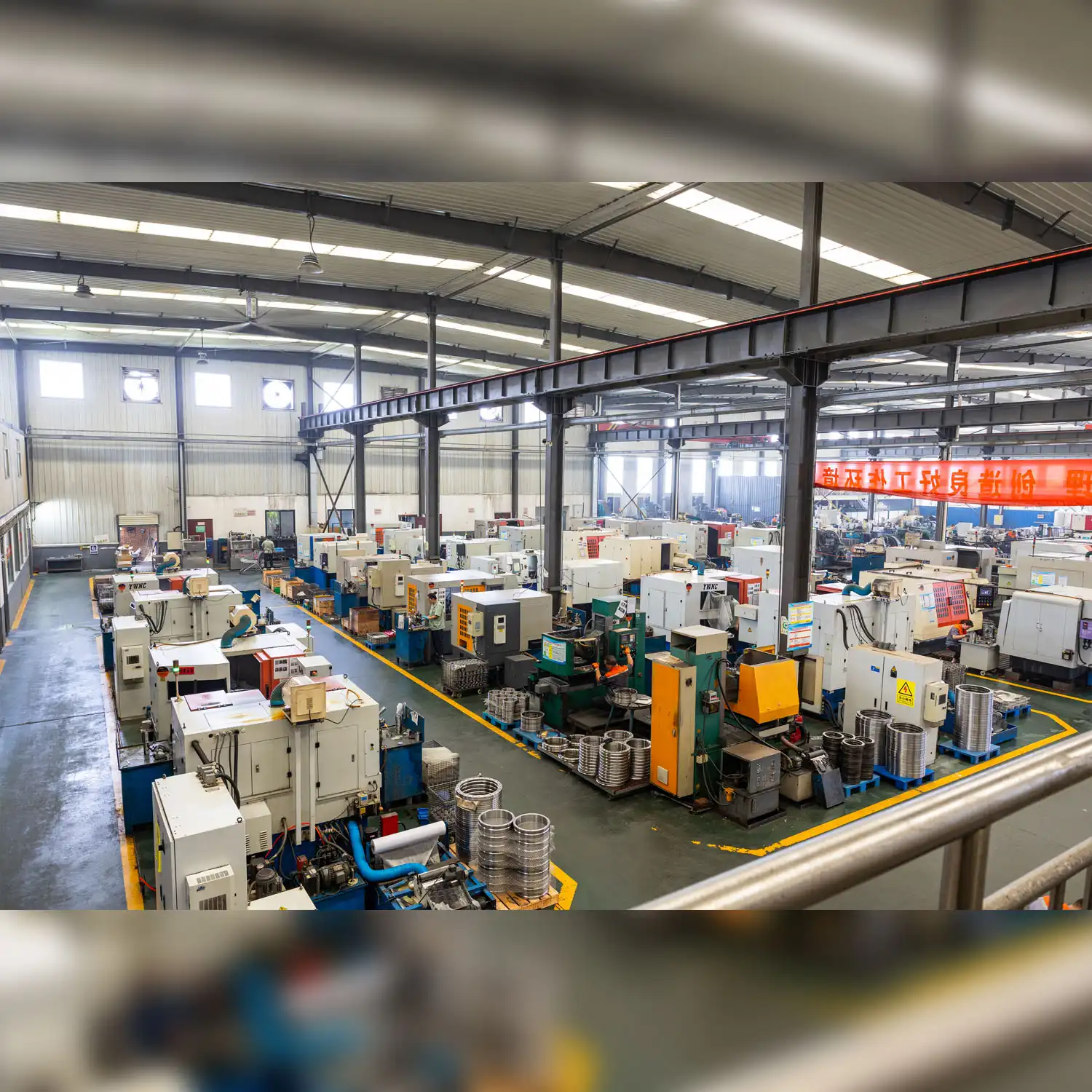
Bearing specification and supplier choice are both important. Check to see if possible suppliers have ISO 9001 and IATF 16949 certifications. These are quality management systems that make sure that the production process is uniform and that the products can be tracked. At Luoyang Auto Bearing, our six production workshops are constantly monitored by statistical process control and coordinate measuring machines with a resolution of 0.001mm, to ensure that all critical dimensions are met. When planning production ramps or setting up backup supply chains, manufacturing capacity is important. Our 120-person production team currently makes 8,000 crossed roller bearing units every month in all sizes, and they can make an extra 11,000 units if they have to work extra hours. This ability to grow was very important for a U.S. customer of automation equipment who raised order volumes by 250% in 2024, when the market grew quickly. The ability to provide technical help sets strategic partners apart from commodity providers. We keep a technical support staff that can look over customer mounting designs, figure out why parts are breaking when they're sent back, and suggest changes to specifications that will improve performance. This collaborative approach has helped clients in Russia, Iran, and Turkey with installation problems, even though there may not be a lot of technical expertise in those areas. The warranty terms show that the company that made the product is confident in its quality. Standard coverage should cover flaws in the materials and the work for at least 18 months after shipment or 12 months after installation, whichever comes first. All of our product lines have a warranty claim rate of less than 0.3%. This is something we track every month as part of our efforts to keep getting better, which is based on our 15 years of manufacturing experience.
Tailored Recommendations for Different Industries
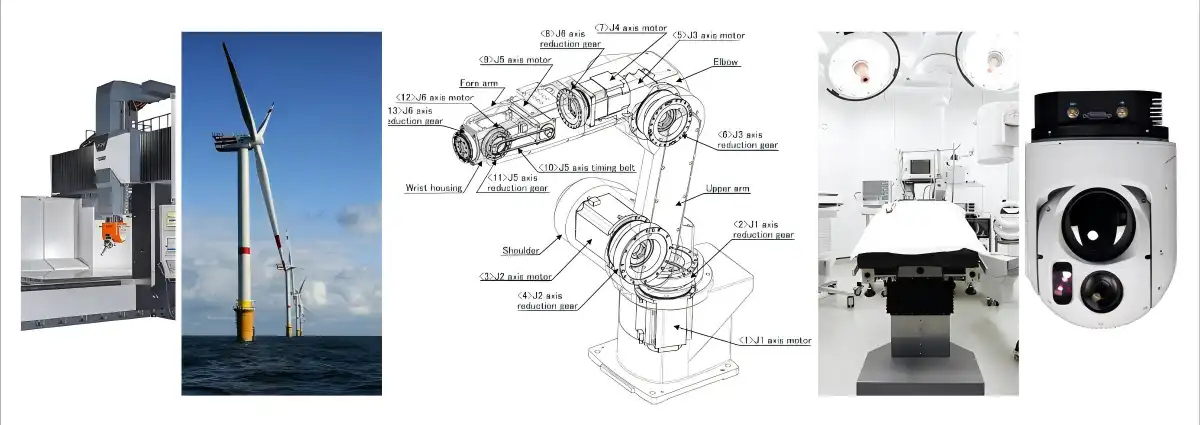
Automotive component manufacturing: RB5013 bearings work well in robotic welding positioners and body assembly fixtures where maintaining accuracy has a direct impact on the quality of the finished product. The moment rigidity of the bearing keeps the tool center point in place within ±0.05mm across the whole workspace.Industrial machinery and automation: RU85 units improve joint robot designs and lighter-duty pick-and-place systems. By lowering the weight, acceleration rates can be raised, and cycle times can be cut by 10-15% compared to heavier bearing options. Replacement aftermarket: Match the specs of the original equipment unless speed improvements fix known failure causes. We helped aftermarket dealers choose better bearings by looking at the wear patterns on returned units and finding cases where the load conditions were higher than the original bearing values.
Procurement Insights—Where and How to Buy RB5013 and RU85 Bearings
Using strategic sourcing practices to make sure consistent supply quality while lowering costs is a good way to buy RB5013 vs RU85 bearings.
Identifying Verified Suppliers and Manufacturers
When you deal directly with a manufacturer, you avoid the markups that come from middlemen and get access to technical support. Luoyang Auto Bearing has export operations that serve customers in six countries. They have created logistics relationships that make sure their products get to North America, Europe, and the Middle East on time. Each shipment comes with one of our production certificates, which shows that the materials were certified and that the results of the dimensional check can be traced back to specific manufacturing lots. Distributor networks are helpful for customers who need to keep stock locally or who want to place smaller orders. Check to see if the distributors keep the right storage conditions. Temperatures between 15°C and 25°C and controlled humidity below 60% will keep corrosion from happening during long-term storage. Ask for manufacturing date codes to make sure the stock is new, since bearings that have been stored for more than 24 months may need to be re-oiled before they can be installed.
Pricing Strategies and Bulk Purchase Advantages
The current market price takes into account the cost of raw materials, the difficulty of production, and the number of orders. Our Q1 2025 prices for RB5013 bearings start at $340 for less than 50 units and go down to $285 for more than 500 units per year. Price ranges for RU85 range from $210 for small amounts to $168 for large orders, which is a 20% savings when buying in bulk. When buyers commit to scheduled releases over 12 months, they give you more negotiating power. We set up blanket purchase orders with price reviews every three months that are based on publicly available steel commodity indices. This protects both parties from changes in the market and makes sure that the budget stays stable. For long-term customers with good credit, payment terms can usually go up to Net 60 days.
Ordering Process and Delivery Logistics
For catalogue items that are kept in production inventory, the standard lead time from order confirmation to ex-works delivery is 4 to 6 weeks. Custom specifications that need to be reviewed by engineers add two to three weeks to the time it takes to test the prototype before it goes into full production. For urgent needs, you can pay an extra 15 to 20 percent for expedited processing, which allows delivery in two weeks for some bearing sizes. How international shipping works depends on the value of the order and what the customer wants. With travel times of 18–25 days to the U.S., sea freight is a cheap way to move container loads of goods. West Coast ports and 32 to 38 days to get to places on the East Coast. Air freight cuts delivery time to 5–7 days, but it also raises logistics costs by about 300%. It's only worth it for emergency replacements or prototype development programs. Risk mitigation strategies should include qualified alternative sources for important parts. We tell our customers to keep enough safety stock on bearings used in production equipment to last for 8 to 12 weeks. This way, they can balance the costs of keeping inventory with the risks of downtime. Our supply chain team helps with demand projections by looking at past usage patterns to find the best times and amounts to reorder.
Warranty, Support, and Post-Purchase Services
A complete support infrastructure safeguards purchases and guarantees the long-term dependability of equipment.
Warranty Coverage and Claim Procedures
Our standard warranty covers manufacturing flaws for 18 months from the date of shipment. This includes problems with the size or shape, material flaws, and early wear caused by mistakes in production. Coverage includes the cost of a new bearing and sending it back, which can cost anywhere from $85 to $140 based on the weight of the part and where it needs to go. For warranty claims, you need to show proof of installation, keep a working condition log, and send back the bearings for failure analysis. Within 72 hours of receiving returned parts, our quality team inspects them and uses metallurgical testing and dimensional inspection to find the root causes. Analysis reports show what was found, and within five business days, approved claims are processed to send a replacement shipment. To keep your warranty valid, you must follow the installation and working instructions that were released. Failures that happen because of bad mounting, not enough lubrication, or using it past its rated capacity are not covered. We give users full installation instructions to help them keep their warranty and get the most out of their bearings.
Technical Assistance and Maintenance Guidance
During work days, our engineering support team answers technical questions within 24 hours and helps with application advice, fixing, and figuring out what the specifications mean. Dimensional drawing reviews and finite element analysis modelling can help with tough problems. We offer these services for free to current and potential users who are choosing bearings for new equipment designs. Each order comes with maintenance best practices documentation that includes lubrication schedules, inspection procedures, and criteria for how much wear something can handle. We've made condition monitoring guidelines that help maintenance teams spot early warning signs of bearing degradation. This way, replacements can be planned for planned downtime instead of having to be done after a catastrophic failure.
Building Strategic Supplier Partnerships
Long-term relationships are good for both people and go beyond just buying things. Customers get a first-choice schedule for production when capacity is limited, early notice of technical changes, and the chance to work together on developing products for specific uses. Through better installation methods and optimized specifications, our partnership approach has helped OEM clients cut warranty costs for bearings by 40%. We put money into learning about our customers' plans so that our output ability and technical skills can keep up with their growth. We've been working with a U.S. company that makes industrial equipment since 2018, and now they buy eight different types of bearings from us. By consolidating their purchases, we've made their supply chain easier and cut their total buying costs by 18% through volume savings. Product upgrade paths make sure that installed equipment can keep up with changes in technology. We keep an eye on performance feedback from equipment that is already in use to find ways to improve the load rates, lower friction, or lengthen the service life of metals or designs. Customers get these insights in the form of suggested changes to the specs for next-generation equipment.
Conclusion
The main difference between RB5013 vs RU85 bearings is how well their structural properties match the needs of the application. For example, moment capacity and durability vs. space efficiency and speed capability. When buying something, you have to weigh up the initial costs against the costs over its lifetime, the dependability of the supplier, and the ease of getting technical support. This will affect how well the equipment works and how profitable the business is. As materials get better and manufacturing gets more precise, the market for crossed roller bearings keeps changing. To stay ahead of the competition, strategic supplier partnerships are essential. Both types of bearings are very useful in automotive, industrial, and automation applications that need precision and dependability, as long as they are installed and maintained correctly.
FAQ
Which bearing model suits high-speed robotic applications?
The RU85 can handle rotational speeds of up to 1200 RPM, which makes it ideal for lightweight robotic joints and quick articulation systems. Because it has less mass, rotational forces are lessened, and acceleration cycles can happen faster. The RB5013 can only go as fast as 600 RPM, but it can carry more weight than other models.
Can these bearings be interchanged in existing machinery?
The ability to interchange depends on the size and type of load. Even though they both use crossed roller designs, they can't be directly swapped out because they are different sizes. The RB5013 is better for situations where the RU85 would wear out too quickly because it has a bigger envelope and higher load rates. Consulting the bearing manufacturer's specifications makes sure that the right replacement is chosen.
What factors influence bulk purchase negotiations?
Pricing is based on things like annual number agreements, payment terms, and when orders are released. When buyers combine multiple types of bearings with a single supplier, they usually get 15–22% off the price of spot purchases. Giving producers 90-day demand forecasts helps them make the best production schedules, which can lead to even lower costs through more efficient production.
Partner with ATLYC for Your Precision Bearing Requirements
Choosing the right bearing supplier affects how reliable your equipment is, how long you can keep making things, and how much it costs to run in the long run. ATLYC has been making crossed roller bearings for 15 years and can help you with your procurement goals regarding RB5013 vs RU85 components. They have ISO 9001 and IATF 16949 certified quality systems and can make products for OEMs and distributors all over the world. If you need help with any of our products, including these models, our engineering team is ready to look at your specific needs, suggest the best bearing specifications, and give you competitive quotes. Get in touch with our technical sales specialists at auto@lyautobearing.com to talk about your bearing needs and find out how our manufacturing capabilities, low prices, and dedicated support can help your supply chain. As a reliable bearing producer, we give car and industrial equipment makers the precise parts, technical know-how, and dependable service they need to stay ahead of the competition.
References
1. Harris, T.A. and Kotzalas, M.N. "Advanced Concepts of Bearing Technology: Rolling Bearing Analysis, Fifth Edition." CRC Press, 2021.
2. ISO 281:2007. "Rolling Bearings - Dynamic Load Ratings and Rating Life." International Organization for Standardization, Geneva, Switzerland.
3. Witte, D.C. "Operating Torque of Tapered Roller Bearings." STLE Tribology Transactions, Vol. 56, Issue 4, 2013, pp. 589-596.
4. Eschmann, P., Hasbargen, L., and Weigand, K. "Ball and Roller Bearings: Theory, Design and Application, Third Edition." John Wiley & Sons, 2019.
5. SKF Group. "Crossed Roller Bearings: Design and Application Guidelines for Precision Machinery." SKF Technical Manual, 2020.
6. Bhushan, B. "Principles and Applications of Tribology, Second Edition: Bearing Design and Lubrication." John Wiley & Sons, 2018.
Learn about our latest products and discounts through SMS or email