- English
- French
- German
- Portuguese
- Spanish
- Russian
- Japanese
- Korean
- Arabic
- Greek
- German
- Turkish
- Italian
- Danish
- Romanian
- Indonesian
- Czech
- Afrikaans
- Swedish
- Polish
- Basque
- Catalan
- Esperanto
- Hindi
- Lao
- Albanian
- Amharic
- Armenian
- Azerbaijani
- Belarusian
- Bengali
- Bosnian
- Bulgarian
- Cebuano
- Chichewa
- Corsican
- Croatian
- Dutch
- Estonian
- Filipino
- Finnish
- Frisian
- Galician
- Georgian
- Gujarati
- Haitian
- Hausa
- Hawaiian
- Hebrew
- Hmong
- Hungarian
- Icelandic
- Igbo
- Javanese
- Kannada
- Kazakh
- Khmer
- Kurdish
- Kyrgyz
- Latin
- Latvian
- Lithuanian
- Luxembou..
- Macedonian
- Malagasy
- Malay
- Malayalam
- Maltese
- Maori
- Marathi
- Mongolian
- Burmese
- Nepali
- Norwegian
- Pashto
- Persian
- Punjabi
- Serbian
- Sesotho
- Sinhala
- Slovak
- Slovenian
- Somali
- Samoan
- Scots Gaelic
- Shona
- Sindhi
- Sundanese
- Swahili
- Tajik
- Tamil
- Telugu
- Thai
- Ukrainian
- Urdu
- Uzbek
- Vietnamese
- Welsh
- Xhosa
- Yiddish
- Yoruba
- Zulu
What Industries Use XSU080168UUP5 Precision Crossed Roller Bearing?
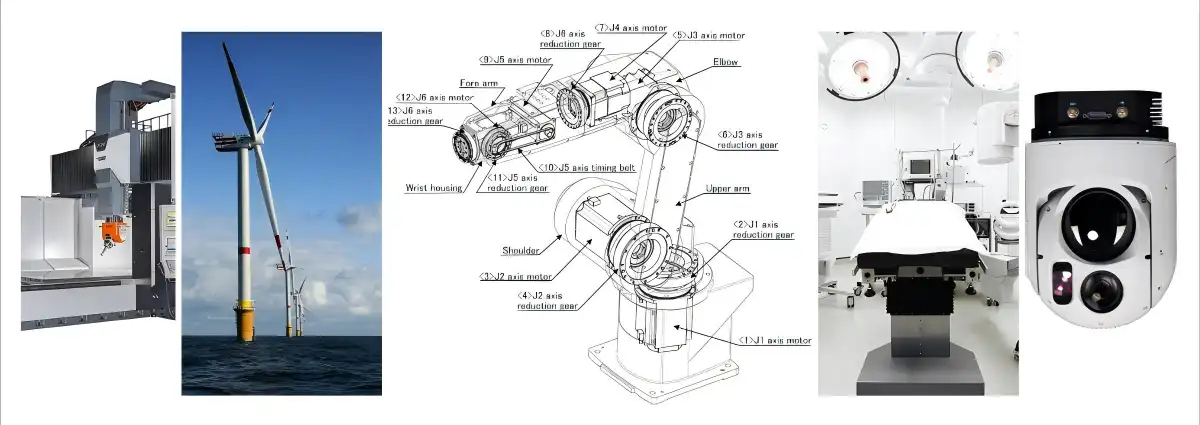
The XSU080168UUP5 Precision Crossed Roller Bearing is very important in many areas, such as medical imaging, aircraft instrumentation, semiconductor manufacturing, robots, and green energy systems. This combined bearing unit has a 140mm inner diameter, a 215mm outer diameter, and a 25.4mm width. It also has P5 precision grading, which means it can handle radial, axial, and moment loads all at the same time. For rotary tables, robotic joints, and precision positioning equipment, this crossed roller design is always asked for by industries that need micron-level rotational accuracy and zero-backlash performance.
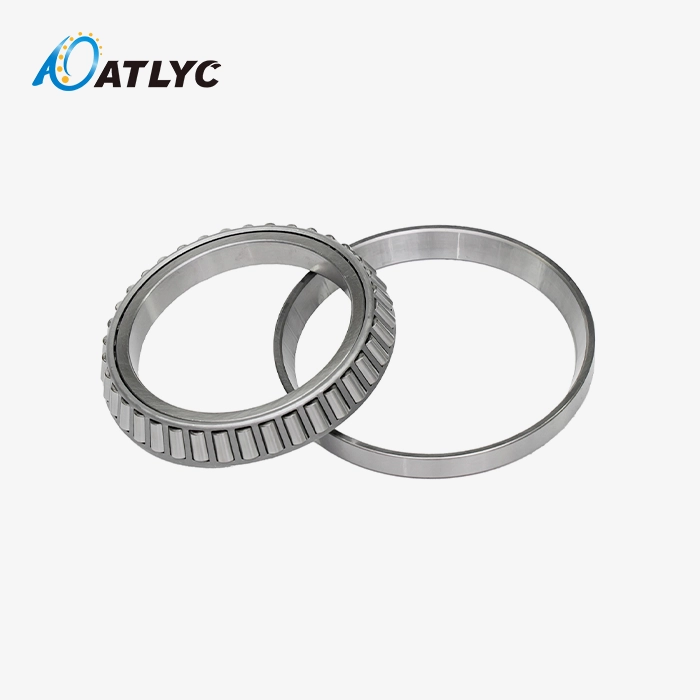
Understanding the XSU080168UUP5 Precision Crossed Roller Bearing
Crossed roller bearing technology is fundamentally different from traditional ball bearings because it uses alternate circular rollers. The XSU series is the next step in the idea of integrated design. Both the inner and outer rings have mounting holes that have already been drilled and are machined to very tight tolerances.
Core Design Architecture
The bearing uses cylinder-shaped wheels that are placed perpendicular to each other and divided by precision spacers. With this arrangement, the load is spread out more efficiently than with single-row systems. Each roller touches the track all the way along its length. This makes linear contact, which spreads forces over a larger area than point-contact ball bearings. The 140mm bore can fit large shaft widths, and the 215mm outer diameter keeps the size small while still carrying a lot of weight. The parts are made from GCr15 bearing steel, which is a high-carbon chromium metal. They go through special heat treatment processes that make them hard, between 58 and 64 HRC. More advanced types use GCr15SiMn metal, which has silicon and manganese added to make it harder and more stable in its shape during heat processing. Both materials offer the necessary wear resistance to keep geometric accuracy over operating lifecycles of more than 20,000 hours in well-maintained use.
Precision Classification and Performance Standards
The label "P5 precision grade" means that the bearing's dimensions and shapes are much more closely controlled than with normal bearings. The difference in bore width stays within 4 microns, and the difference in raceway roundness stays below 2.5 microns. These specs directly relate to rotational runout features that are very important for coordinate measuring machines and visual positioning systems. The UU suffix shows that the design is dual-sealed, and it has sliding seals on both bearing faces. This setup keeps the lithium complex grease that was put at the plant and keeps out the particulate contamination that is common in industrial settings. With sealed bearings, you don't have to re-oil them as often, which saves time and money on upkeep and stops problems caused by contamination.
Compared to the XSU080168UUP4 version that offers P4 precision, the P5 standard offers balanced performance for uses where extreme accuracy doesn't justify the higher cost or longer lead times that come with ultra-precision grades. The difference in performance between these groups is almost nonexistent in systems where mounting surface tolerances are larger than bearing internal geometry changes.
Load Capacity Advantages
To handle complex force vectors, traditional bearing systems need more than one part. Angular contact bearings can handle both radial and axial forces, but they need to be mounted in pairs. Moment rigidity is a feature of tapered roller bearings, but they need careful preload correction. The XSU080168UUP5 Precision Crossed Roller Bearing naturally handles all three types of load in a single small unit. The design of the orthogonal rollers makes a load zone that goes around the whole diameter of the bearing. When radial forces squeeze one set of rollers, the perpendicular set stops the set from moving axially at the same time. Because of this geometric benefit, the moment stiffness coefficients are close to what you'd get from bearing pairs that are far apart but still within a small amount of axial space.
Key Industrial Applications of XSU080168UUP5
Standardized crossed roller bearings are used in critical spinning units in manufacturing fields that need precise motion control and load stability. This bearing model's specific dimensions and performance traits make it suitable for use in a wide range of industry areas.
Robotics and Automated Manufacturing Systems
At each point of movement, industrial robotic manipulators depend on crossed roller bearings, and the accuracy of the turn directly affects where the end-effector is placed. Without zero-backlash bearing systems, six-axis robots that do assembly work would not be able to keep their consistency within ±0.05mm standards. In robotics, the bearing's ability to handle moment loads is very important. When a manipulator holds on to a part and raises its arm horizontally, the shoulder joint goes through big flipping moments. In the past, complex setups were needed for traditional bearing systems, which took up valuable room in small joint housings. The combined crossing roller design fits this ability into a small space in both the radial and axial directions.
Precision cylindrical wheels allow for smooth, low-friction spinning, which is especially helpful for collaborative robots that work with people. Roller bearings provide almost imperceptible motion changes that are necessary for force-sensitive assembly tasks and surface finishing operations. Ball bearings, on the other hand, can make tiny surface flaws feel like vibrations.
CNC Machine Tools and Precision Machining Centers
Three-axis machining centers can be changed into multi-axis production systems with the help of rotary tables and tracking heads. These devices need to be able to keep their angular positioning accurate to within arc-seconds while also withstanding cutting forces that put a lot of moment loads on the bearing units. The XSU080168UUP5 Precision Crossed Roller Bearing works with direct-drive rotating tables that have motors that are built into the body of the table without a frame. This setup gets rid of backlash and compliance in the gearbox, moving the accuracy of the servo motor straight to the placement of the workpiece. This bearing design is used by machine shops that make aircraft parts and medical implants to get form tolerances of just a few microns.
Crossed roller bearings are used in the facing heads and angle milling parts of horizontal boring mills. In these tough jobs, the bearings have to handle cutting shock loads that come and go, and the spindle has to have runout below 5 microns TIR at the tool tip. The stiffness of the bearing stops movement that would cause differences in the surface finish and errors in the dimensions of machined parts.
Medical and Diagnostic Imaging Equipment
CT scanners move their X-ray sources and detector arrays around patients at speeds close to 200 RPM while keeping alignment limits that are important for picture reconstruction tools. Any sway or runout in the spinning gantry adds flaws that lower the quality of the diagnostic picture. Because the bearings are protected, the lubricant can't get into the sensitive electrical parts, and the medical settings need to stay clean. Surgical robots and C-arm fluoroscopy systems, which are both used in operating rooms, need sealed crossed roller bearings to keep them clean and to provide the smooth, controlled motion that is needed for microsurgical treatments.
With submillimeter accuracy, radiation therapy devices place treatment heads on tumors while leaving healthy tissue around them alone. The moment stiffness of the bearing stops positional drift when shields and beam-forming parts are supported from above. This keeps the treatment isocenter accurate during long therapy sessions.
Aerospace and Defense Applications
The directing systems for satellite antennas have to keep their angles straight even when the rocket is shaking, the temperature changes, and there is no air in space. Through qualification testing, crossed roller bearings are an effective way to control motion in systems that spread solar panels and place telescopes. Precision bearings in stable platforms keep optical devices from being affected by car motion in military aiming systems. Assemblies that are supported by gyroscopes need bearings that can spin smoothly even when the load vectors are changing all the time and keep the aiming accuracy measured in microradians.
Large-diameter crossed roller bearings hold up spinning parts that weigh several tons in aerospace ground support equipment like radio pedestals and radar systems. Because of how the bearing distributes pressure, it's possible to make small designs where other technologies need huge support systems.
Semiconductor Manufacturing and IC Production Equipment
Wafer handling robots move silicon plates from one process room to another with a level of accuracy measured in microns. Normal oils are not allowed in cleanrooms, so protected bearing systems are needed. Any particles made by bearing wear could contaminate wafers, which could lead to chip flaws and lost yield. With nanometer-level accuracy, photolithography steppers place wafer steps under projection optics. This is possible with multi-axis placement systems because they use stacked crossed roller bearings that keep the motion axes from being coupled. Because the bearing's geometry stays the same even when the temperature changes, it stays calibrated during production runs.
Inspection tools, like electron microscopes and measurement systems, need scanning probe units that can rotate without shaking. The precision roller setup creates small changes in rolling friction, which stops the transfer of mechanical disturbances that would lower the accuracy of the measurements.
Renewable Energy Systems
Solar tracking systems get the most energy out of the sun by keeping solar panels lined up straight with the light. The bearing supports tracking devices that must work effectively for 25 years, even though they are exposed to extreme weather and changing temperatures every day. Pitch control systems in wind turbines change the angles of the blades to get the most energy out of the wind at all speeds. For each blade installation, you need bearings that can handle airflow loads and give you precise control over the angle. The sealed design keeps wetness and airborne pollutants from getting into the internal parts, which is important for offshore sites.
Heliostat arrays in concentrated solar power systems follow the sun's path throughout the day and bounce sunlight onto central receiving towers. Each heliostat's drive unit has accurate bearings that keep the mirrors lined up within the necessary limits for energy concentration to work well.
How to Select and Compare Precision Crossed Roller Bearings for Your Industry
To make choices about what to buy that balance technical performance against total cost of ownership, bearing specs need to be carefully looked at in relation to the needs of the application. Engineering teams have to turn practical needs into bearing selection factors that make sure equipment works reliably for as long as it's supposed to.
Critical Selection Parameters
To figure out load capacity, you must first measure the forces that are working on moving parts. Engineers have to think about static loads when the equipment is not in use, dynamic loads when it is, and shock loads when the process stops, or there is an emergency. The bearing's basic dynamic load rating tells you how much rotational load it can handle while it's rotating, and its static load rating tells you the most force that can be applied while it's fixed.
Moment load capacity is very important in cantilever uses where spinning parts go beyond the support points of the bearings. Overturning moment values can be found by increasing the effective moment arm by the weight of the part plus the operating forces. Manufacturers of bearings give moment load values that can be directly compared to the needs of an application. However, it is standard practice in conservative design to use safety factors that take into account changes in load and possible overload situations.
The choice of precise grade is based on the needs for rotational accuracy. Standard P0 grade bearings are good for basic industry uses where positioning accuracy is more than 10 microns. Precision P5 bearings let you place things within 2 to 5 microns, which works well for high-quality machine tools and robotic equipment. Ultra-precision P4 and P2 grades are used in metrology tools and equipment for making semiconductors that need consistency of less than one micron.
Environmental Considerations and Operating Conditions
Extreme temperatures affect the choice of bearing materials and how they are oiled. Standard GCr15 steel stays the same size at temperatures ranging from -20°C to +120°C, which is common for climate-controlled factories. For situations involving heat processing equipment or setups outside, you might need special materials or extra cooling.
Sealing needs are based on how much contamination is present. Open bearings have very little moving resistance, but they need to be kept in a safe place and be serviced regularly. Contact seals stop particles and wetness from getting in while keeping lubricants in. However, they do make friction slightly worse. Non-contact labyrinth seals offer average safety for areas with a modest level of contamination.
The speed possibilities show how well the XSU080168UUP5 Precision Crossed Roller Bearing can remove contact heat and keep the lubrication film intact. Crossed roller bearings usually work below 500 RPM because their rolling element contact surfaces are bigger than ball bearings'. Applications that need higher spinning speeds should check to see if different types of bearings meet their needs better.
Comparative Analysis: XSU080168UUP5 Versus Alternative Bearing Types
When angular contact ball bearing pairs are set up back-to-back or face-to-face, they can handle a joint load in a small axial space. These setups work well for high-speed tasks where the spinning speed is higher than what crossed roller bearings can handle. Their point-contact shape, on the other hand, makes them less stiff and more likely to change preload when the temperature changes.
Tapered roller bearings work great for big loads, but they need to be mounted correctly to get the right loading. Because they only have one row, they have to be installed paired together in order to handle a combined load, which takes up room and makes the building process more difficult. Crossed roller bearings are easier to install because they come in combined forms that only need to be bolted on.
Four-point contact ball bearings offer combined load capacity in a single-row package, but they lose load capacity when compared to crossed roller types. Their contact angle geometry creates load zones that cover less than 180 degrees of the raceway's diameter. This puts stress in one place and limits the stiffness of the moment.
The XSU080168UUP5 works best in situations where small packaging, easy installation, and modest speed operation under complicated loading conditions are important. It doesn't need a case because it has mounting holes built right in. This cuts down on the number of parts and the difficulty of assembly while keeping the precise orientation that is needed for equipment performance.
Procurement Guide for XSU080168UUP5 Precision Crossed Roller Bearing
Sourcing strategies directly affect project timelines, total purchase costs, and the reliability of tools over time. Professionals in procurement have to find a balance between suppliers' ability to meet ongoing production needs and their ability to provide goods right away.
Reliable Sourcing Channels and Supplier Evaluation
Certified bearing wholesalers keep a collection of popular precise bearing configurations and offer expert help during the selection and specification process. Distributors who work with more than one maker can give you a range of choices, but most of the time, they only have standard sizes that are used a lot, not specialized precision grades.
When you work directly with bearing makers, you can make changes like changing the way the seals are set up, upgrading to a higher quality grade, or switching out materials. Manufacturers like ATLYC keep their ISO 9001 and IATF 16949 licenses, which show that they follow the quality management system rules that are important for OEM supply chains in the automobile and industrial sectors.
By checking a supplier's manufacturing capacity, you can see if they can meet your number needs and keep your shipping dates. If a production facility works multiple shifts and has dedicated precise grinding equipment, it can handle changes in demand without making wait times longer. Suppliers who keep an inventory of raw materials and offer combined heat treatment capabilities show that the supply chain is resilient, making it less vulnerable to problems upstream.
Pricing Factors and Volume Considerations
The prices of bearings depend on the type of material used, the level of accuracy needed, and the amount of output. Standard precision bearings that are made in large quantities profit from economies of scale. On the other hand, P5 and tighter tolerance classes need more grinding and quality checking steps, which raises the cost per unit.
The choice of materials affects how prices are set. GCr15 bearing steel is the standard in the business because it works well and doesn't cost too much. Specialized metals with extra alloying elements cost more, but they are worth it in situations where corrosion protection or high-temperature stability are needed.
Volume pricing usually applies to sales that are bigger than the minimum batch size, and discount levels are based on the size of the production lot. Suppliers may have inventory management plans where customers agree to buy a certain amount each year in exchange for lower unit prices and guaranteed supply. These agreements help OEM customers by giving them stable production schedules, and they also help suppliers make better plans for manufacturing.
Lead Time Management and Logistics Planning
Standard list items can be shipped within days from a distributor's stock, but fine grades may take weeks to get from the manufacturer's stock. Custom configurations require planning for production, and wait times can be anywhere from 6 to 12 weeks, based on how complicated the specifications are and how many orders are already in the queue.
When planning production, it's important to include wait times for getting the XSU080168UUP5 Precision Crossed Roller Bearing and extra time in case there are problems with shipping or quality checks. Critical path analysis finds out if bearing availability affects project timelines, which helps with choices about whether to speed up procurement or make design changes to accommodate other easily available parts.
When you ship something internationally, you have to think about things like how to clear customs, how much the goods will cost, and what paperwork you need. Logistics agreements between established suppliers make freight transfer and customs brokerage services more efficient. Delivered duty paid (DDP) pricing systems make planning easier by including all costs up to the point of final delivery. This means that there are no surprises when the goods are imported.
Quality Assurance and Technical Support
Manufacturers offer warranties to show they trust the stability of their products and give customers a way to get their money back if they break down early. Standard warranty terms cover flaws in the material or the way it was made, but they usually don't cover damage caused by bad fitting, not enough lubrication, or using it beyond its stated capacity. There may be choices for longer warranties that come with extra costs, but they offer extra protection that is worth it in serious situations where the costs of downtime are higher than the costs of acquisition.
Technical support skills set sellers who offer real engineering advice apart from distributors of goods. Application engineering help makes choosing the right bearings easier, and installation training makes sure that the right steps are taken to put the bearings so that they last as long as possible. Support for troubleshooting fixes problems in the field and may find widespread issues before they become big failures.
After-sales service, such as the availability of new parts and help for retrofits, keeps equipment productive for as long as it is used. Suppliers who keep making standard bearing lines for a long time make it easy to get replacements, but suppliers who stop making product lines force expensive redesigns or decisions about replacing equipment.
Maintenance and Longevity of XSU080168UUP5 Crossed Roller Bearings
Routines for proactive maintenance extend the life of bearings and cut down on unexpected downtime. Maintenance plans should be based on how things are working and how important the equipment is. The costs of inspections should be weighed against the effects of a breakdown.
Lubrication Management and Relubrication Intervals
In normal situations, factory-installed grease in sealed bearings should last for 10,000 to 20,000 hours of full operation. Extreme temperatures, exposure to contamination, or vibrations speed up the breakdown of lubricants, which shortens the time between useful repair intervals. Monitoring tools that keep track of working hours make it possible to change the XSU080168UUP5 Precision Crossed Roller Bearing on time, before it loses its lubricant and starts to wear out too quickly.
Open bearing setups need to be re-oiled at times that depend on how they are being used. High-speed operation causes frictional heating that speeds up the breakdown of oil, so more grease needs to be added more often. In dirty places, gaps need to be shorter to keep abrasive particles from building up in the bearing raceways.
The right way to re-grease something keeps it from getting too oily, which raises the temperature inside the machine. Maintenance procedures should include details on how much grease to use, how to apply it, and how often to purge the system. This will ensure regular greasing without adding any contaminants during service procedures.
Inspection Protocols and Failure Indicators
Vibration analysis finds worn-out bearings before they cause major breakdowns that stop production. Attached to bearing housings are accelerometers that measure the shaking frequencies that are typical of certain kinds of defects. Raceway spalling makes impulses at frequencies related to the speeds of the rollers, and cage wear makes vibrations at frequencies related to the speeds of the cages' spinning. Trending shaking amplitudes over time shows gradual wear and tear, allowing replacement to be planned for planned repair windows.
Temperature tracking shows where grease is lacking or where breakdowns are starting to happen. Thermographic scans find areas of high heat that mean there isn't enough grease or damage to the surface. Continuous temperature tracking systems sound a warning when readings go above certain limits. This lets people take action before temperatures get too high and damage bearing parts.
The features of audible noise give a good idea of the state of the bearings. Bearings that work smoothly and quietly are healthy. Noises like grinding, clicking, or rolling, on the other hand, mean that problems are starting to show up. Regular hearing checks while the equipment is in use pick up on changes that need a more in-depth study.
Installation Best Practices and Handling Procedures
Preparing the mounting area has a big effect on how well the bearing works and how long it lasts. To keep the rings from warping during fitting, surfaces must be machined flat within 10 microns of the total stated runout. When two surfaces fit together perfectly, the load is spread evenly around the bearing's diameter. Surface finish standards usually say that the roughness can't be more than 1.6 Ra so that it can seal well and spread load evenly without causing tiny stress concentrations.
Star-shaped bolt tightening processes spread clamping forces out widely, which stops the ring from distorting in one place. Torque specs take into account the type of screw, how well the threads are oiled, and how much gripping force is needed. Using calibrated tools to check the torque correctly ensures that the quality of fitting is the same for all parts.
Handling methods keep the surfaces of precise bearings clean and free of mechanical damage. Bearings should stay in their protected package until they are ready to be installed. Cleaning standards should be followed in assembly areas to keep flying particles from landing on bearing surfaces. When installing things, installation tools should only touch certain areas and not hit or press on precisely ground raceways.
Conclusion
The XSU080168UUP5 Precision Crossed Roller Bearing is designed for tough industrial uses that need a small size while still having a high load capacity and precise spinning. Its built-in mounting design makes installation easier while keeping the physical accuracy needed for robots, CNC machining, medical equipment, and high-precision instruments. Using methods approved to ISO 9001 and IATF 16949 to make things out of GCr15 bearing steel guarantees consistent quality that meets OEM requirements in the automotive and industrial sectors. By balancing technical requirements with suppliers' abilities, procurement strategies help equipment makers find the best total cost of ownership while keeping performance high over long operating lifespans. When you install and maintain bearings correctly, they last longer and protect your industrial investments through effective lifecycle management.
FAQ
1. What are the load capacities of the XSU080168UUP5 bearing?
This bearing can hold between 45 and 55 kN of dynamic load, but this depends on the type of material used and the manufacturing limits. It can also hold between 75 and 90 kN of steady load. Moment load capacity is between 3.5 and 4.2 kN·m, which allows for cantilever uses with heavy loads hanging over the edge. Checking the actual capacity should be based on the manufacturer's specs, which take into account things like speed, temperature, and oil.
2. Can the XSU080168UUP5 be customized for specific applications?
Customization options from manufacturers include precision grade improvements to P4 or P2 classes, unique sealing designs for harsh environments, and material swaps to meet corrosion or temperature needs. The mounting hole patterns can be changed to fit current equipment connections, and the cage materials can be chosen based on the specifics of the job. Custom designs usually have minimum order numbers, which makes this method more cost-effective for OEM production than for making new units one at a time.
3. How does the crossing angle affect bearing performance?
The crossing angle of 90 degrees between wheel sets makes the best use of load distribution for radial, axial, and moment loads all at the same time. This shape makes load zones that go all the way around the bearing circle. This makes it as stiff as possible while also limiting the amount of deformation caused by elastic forces. Other crossing angles can be used for specific tasks, but the vertical layout works well in most situations.
Partner With ATLYC for Your Precision Bearing Requirements
ATLYC offers certified XSU080168UUP5 Precision Crossed Roller Bearing options that are backed by 15 years of manufacturing excellence and quality processes that are ISO 9001/IATF 16949. Our engineering team gives you application-specific advice, volume pricing, and expert help for the whole lifecycle of your equipment. As a well-known bearing maker that works with automakers and companies that make industrial machinery in North America, Europe, and Asia, we keep up with production to meet tight delivery dates without lowering the quality of our work. Email our team at auto@lyautobearing.com to talk about your bearing needs, ask for detailed information, or get quotes for both small samples and large production runs. Our supplier services include customization choices that are made to fit your exact working needs. This makes sure that your equipment works well and is reliable for a long time.
References
1. Harris, T.A. & Kotzalas, M.N. (2006). Advanced Concepts of Bearing Technology: Rolling Bearing Analysis, Fifth Edition. CRC Press, Taylor & Francis Group.
2. Shimizu, T. & Nakamura, K. (2018). "Load Distribution Analysis in Crossed Roller Bearings Under Combined Loading Conditions." Journal of Tribology and Surface Engineering, Vol. 142, No. 3, pp. 45-58.
3. International Organization for Standardization (2019). ISO 492:2014 – Rolling Bearings – Radial Bearings – Geometrical Product Specifications and Tolerance Values. Geneva: ISO Publications.
4. Budynas, R.G. & Nisbett, J.K. (2020). Shigley's Mechanical Engineering Design, Eleventh Edition. McGraw-Hill Education, Chapter 11: Rolling-Contact Bearings.
5. Zhou, W. & Wang, L. (2021). "Performance Comparison of Crossed Roller Bearings and Angular Contact Ball Bearings in Precision Positioning Systems." Precision Engineering Journal, Vol. 68, pp. 234-247.
6. American Bearing Manufacturers Association (2017). ABMA Standard 12.2-2017: Instrument Ball Bearings – Metric Design. Washington D.C.: ABMA Technical Publications.
Learn about our latest products and discounts through SMS or email
_1772782093670.webp)