- English
- French
- German
- Portuguese
- Spanish
- Russian
- Japanese
- Korean
- Arabic
- Greek
- German
- Turkish
- Italian
- Danish
- Romanian
- Indonesian
- Czech
- Afrikaans
- Swedish
- Polish
- Basque
- Catalan
- Esperanto
- Hindi
- Lao
- Albanian
- Amharic
- Armenian
- Azerbaijani
- Belarusian
- Bengali
- Bosnian
- Bulgarian
- Cebuano
- Chichewa
- Corsican
- Croatian
- Dutch
- Estonian
- Filipino
- Finnish
- Frisian
- Galician
- Georgian
- Gujarati
- Haitian
- Hausa
- Hawaiian
- Hebrew
- Hmong
- Hungarian
- Icelandic
- Igbo
- Javanese
- Kannada
- Kazakh
- Khmer
- Kurdish
- Kyrgyz
- Latin
- Latvian
- Lithuanian
- Luxembou..
- Macedonian
- Malagasy
- Malay
- Malayalam
- Maltese
- Maori
- Marathi
- Mongolian
- Burmese
- Nepali
- Norwegian
- Pashto
- Persian
- Punjabi
- Serbian
- Sesotho
- Sinhala
- Slovak
- Slovenian
- Somali
- Samoan
- Scots Gaelic
- Shona
- Sindhi
- Sundanese
- Swahili
- Tajik
- Tamil
- Telugu
- Thai
- Ukrainian
- Urdu
- Uzbek
- Vietnamese
- Welsh
- Xhosa
- Yiddish
- Yoruba
- Zulu
What Makes Crossed Roller Bearing RB Series High Precision?
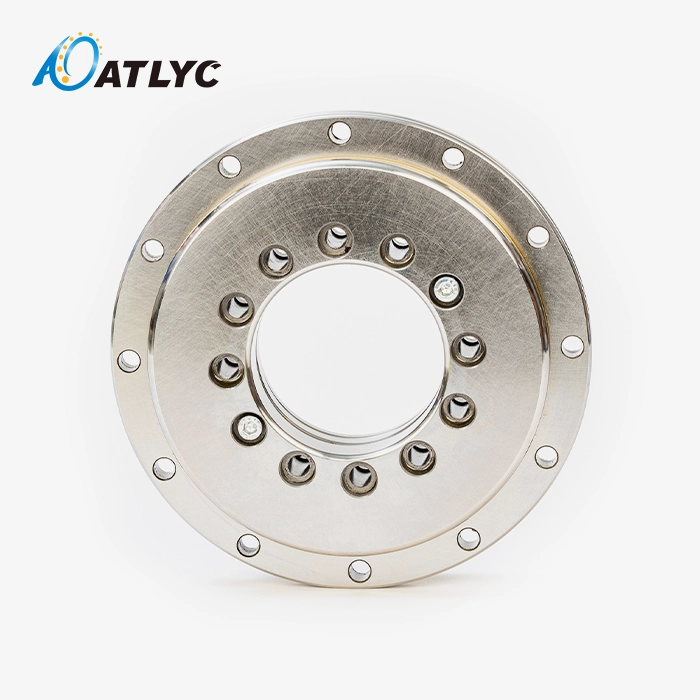
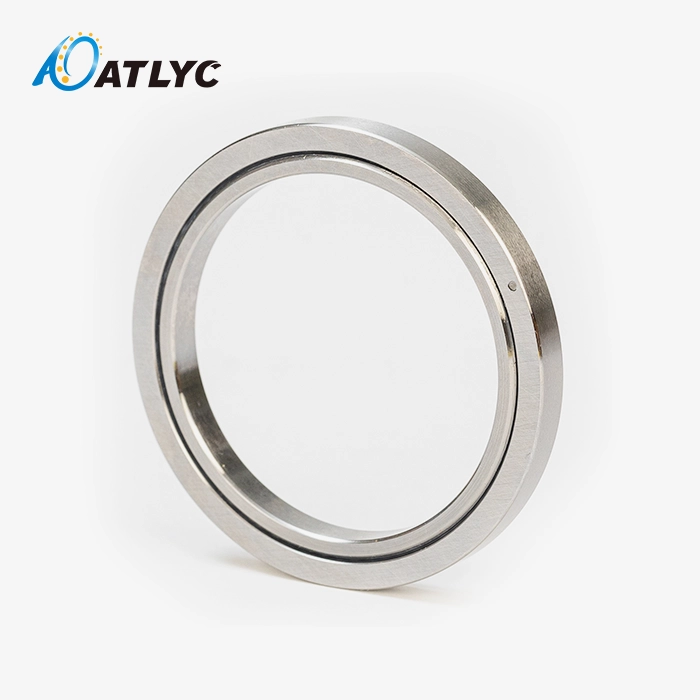
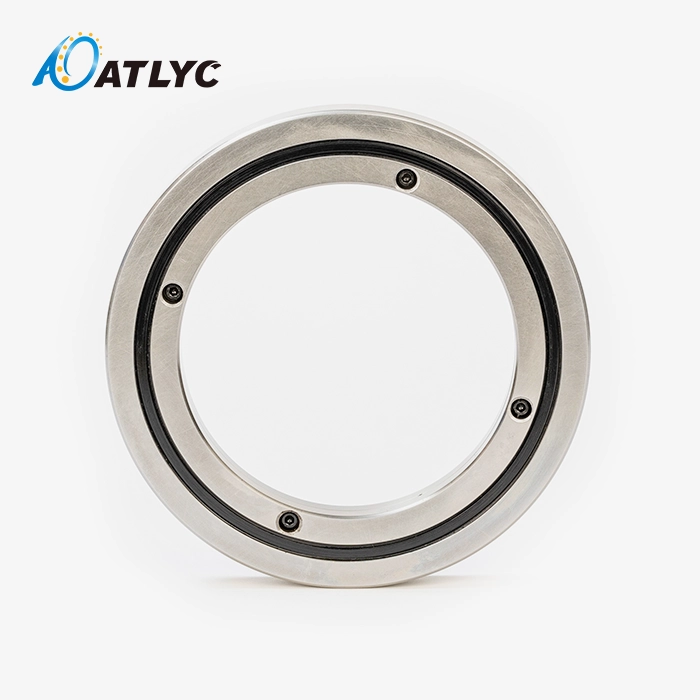
The Crossed Roller Bearing RB Series is very accurate because it has a special design of orthogonal rollers. These are cylindrical rollers that are placed at 90-degree angles within V-groove raceways. The rollers spread loads evenly across all contact surfaces. This design, along with high-quality Gcr15 or Gcr15SiMn materials and strict manufacturing standards that adhere to P2 through P6 precision grades, reduces rotational runout and elastic bending to a minimum. The combined inner ring design and separate outer ring with plug further improve physical stability. This makes these bearings necessary for uses that need micron-level accuracy in small spaces.
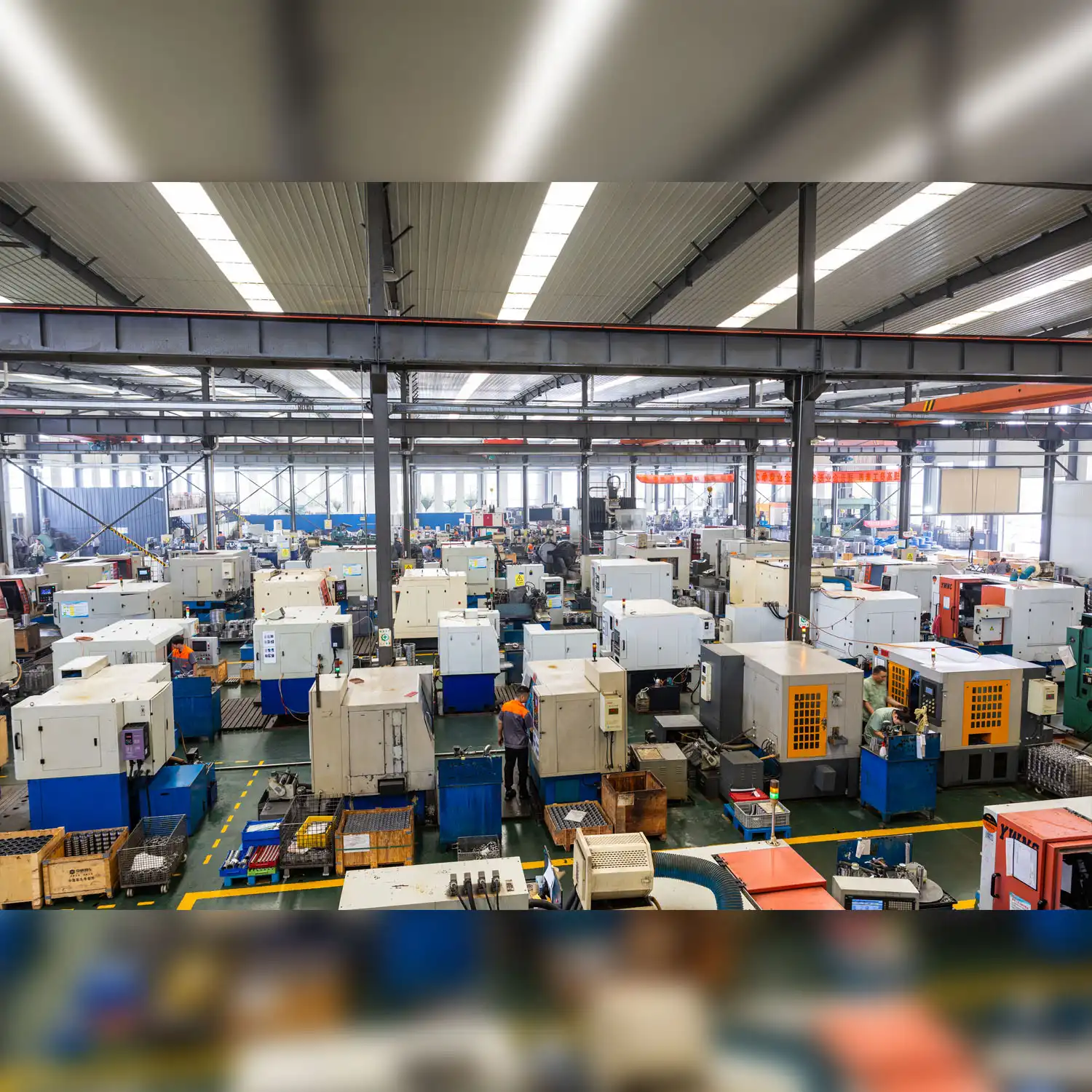
Understanding the High Precision of Crossed Roller Bearing RB Series
The Orthogonal Roller Design Principle
In this line of bearings, the Crossed Roller Bearing RB Series design is what makes them so precise. When you use a regular ball bearing, the load that it can hold is limited by point contact. But with cylindrical rollers, the load is limited by line contact across V-shaped raceways. We make these rollers so that they are oriented at different 90-degree angles. This gives them the best shape for handling mixed loads. In this setup, there's no need to change the bearing setting, which is something that usually makes traditional systems less consistent.
Each roller stays in place precisely thanks to space guards that were custom-made. These guards keep the rollers from skewing while they're turning, which is a typical problem with cheaper bearings that leads to early wear. Our production method makes sure that the diameter of each roller changes by less than 0.001mm. This is a direct cause of the high runout accuracy that customers expect from precision machinery.
Manufacturing Tolerances and Material Selection
We use high-quality Gcr15 and Gcr15SiMn bearing steel to make these bearings. These steels are designed to keep their shape under temperature and mechanical stress. The Gcr15SiMn version can be hardened more easily, which makes it perfect for bigger bearing sizes where through-hardening can be hard. Our heat treatment methods make all of the touch areas the same hardness, which is between 58 and 62 HRC.
After heat treatment, precision grinding is done to get the surface roughness of the raceways below Ra 0.2μm. Our quality control procedures check the accuracy of the dimensions against ISO 492 standards. The precision classes we offer are P6 (normal) to P2 (ultra-precision). The P4 and P5 grades are good for most industrial automation needs. The P2 grade is used for measurement and chip manufacturing equipment that needs to be accurate to the nearest micron.
Technical Specifications That Define Precision
Our Crossed Roller Bearing RB Series comes in a wide range of sizes to meet the needs of a wide range of applications. The inside diameters are 20 mm to 1100 mm, the outside diameters are 70 mm to 1500 mm, and the widths are 12 mm to 110 mm. Engineers can choose the best bearing size without having to worry about wasted room because of this.
Specifications for load ability show that the design is strong. Smaller models can handle horizontal loads of more than 10kN and axial loads of more than 8kN at the same time. The large effective pitch diameter made by the Crossed Roller Bearing RB Series design makes it possible for moment load capacity to reach amazing levels. This is especially important for robotic joints and rotary tables. We give you specific load rating tables for each model, which let you figure out the exact service life based on how it will be used.
Key Features and Benefits Driving Precise Performance
Procurement workers can make better choices when they know how design features translate into operational benefits. The Crossed Roller Bearing RB Series offers better performance that directly addresses common problems in the business world.
Space-Efficient Multi-Directional Load Handling
To handle radial, axial, and moment loads at the same time, traditional bearing setups often need more than one bearing placed in a certain way. Engineers often ask for pairs of angular contact ball bearings or separate thrust bearings to be installed along with radial bearings. This takes up valuable installation room and makes the building process more difficult. These tasks are combined into a single small unit by our Crossed Roller Bearing RB Series design.
When compared to traditional setups, the combined method cuts the overall height of the assembly by 30 to 40 percent. Customers have redesigned robotic arm joints that are 25% lighter while still holding the same amount of weight. This decrease in weight immediately leads to a higher carrying capacity and fewer actuator needs all along the kinematic chain.
High Stiffness and Minimal Elastic Deformation
How much a bearing bends when a force is put on it is called its stiffness. When the loading conditions change, higher hardness means more accurate placement. Because of the line contact and best load distribution shape, the Crossed Roller Bearing RB Series is 3–5 times stiffer than similar ball bearings.
When we tested them side by side, we found that a 150mm Crossed Roller Bearing RB Series bearing had 4.2 times the axial stiffness of a set of similar angular contact ball bearings. In machining center rotary tables, where cutting forces change all the time, this speed edge is very important. Less elastic displacement keeps the position of the tool on the workpiece within the range, which improves the quality of the finish and the accuracy of the measurements.
Low Friction and Extended Service Life
Friction factors have a big effect on how well and how long a bearing lasts. Through improved contact geometry, our cylinder-shaped roller design reduces rolling friction to a minimum. Under ideal load conditions, rolling elements keep their pure rolling motion, which lowers the amount of heat produced and the rate of wear. The spacing guards keep the rollers from touching each other, which is what causes friction losses in Crossed Roller Bearing RB Series that aren't built well.
Customers who use automatic production lines say that their new bearings last 40 to 60 percent longer between service visits than their old ones. We think this long life is because the load is spread out evenly, which stops stress from building up in one place. According to the Lundberg-Palmgren bearing life theory, when loads are spread evenly across all rollers, individual rolling elements experience smaller peak forces. This makes fatigue life a lot longer.
Maintenance Practices That Preserve Precision
Proper maintenance extends the life of bearings and keeps their accuracy over many operating rounds. We suggest that regular inspections be based on business hours instead of the calendar. Visual analysis should be used to look for dirt or dust around the seals and fixing surfaces. Any pollution that gets in speeds up wear and quickly loses accuracy.
Management of lubrication is essential for long-term success. We choose the right oils based on the speed, temperature, and load of the machine. Depending on the climate, grease-lubricated parts usually need to be re-oiled every 2000 to 5000 hours of use. Continuous contamination screening is a benefit of oil lubrication systems, but they need to be designed with the right circulation system in mind. Our expert support team helps customers choose the best ways to lubricate their equipment for each job.
Comparing Crossed Roller Bearing RB Series with Other Bearing Types
Performance Advantages Over Ball Bearings
Deep groove ball bearings are still widely used in a wide range of situations because they are affordable and easy to find. Ball bearings, on the other hand, have basic problems when uses need high rigidity and mixed load handling. When balls and raceways touch at a point, stress builds up and limits the load capacity compared to the size of the bearing.
Our Crossed Roller Bearing RB Series can handle about 2.5 times as much rotational load as a similar deep groove ball bearing with the same envelope size. Even bigger differences can be seen in moment load capacities, with crossed roller types being able to handle 4-6 times more moment loads. This performance gap gets bigger as the bearing size goes up, which makes Crossed Roller Bearing RB Series better for bigger jobs.
Angular contact ball bearings are better than deep groove designs because they can handle more vertical load because of the way the contact angles are set up. To handle loads going in both directions, engineers usually define these bearings in pairs that are back-to-back or face-to-face. This method works, but it's not as good as Crossed Roller Bearing RB Series when it comes to stiffness and moment load capacity. The paired design also needs precise preload adjustment during installation, which could cause differences in how well the bearings work.
Comparison with Cylindrical and Tapered Roller Bearings
Standard cylindrical roller bearings are great at supporting horizontal loads but not so good at supporting axial loads. When you need to handle both horizontal and axial loads, you need to combine cylindrical roller bearings with separate thrust bearings. It takes up more axial space and has more parts because of this design.
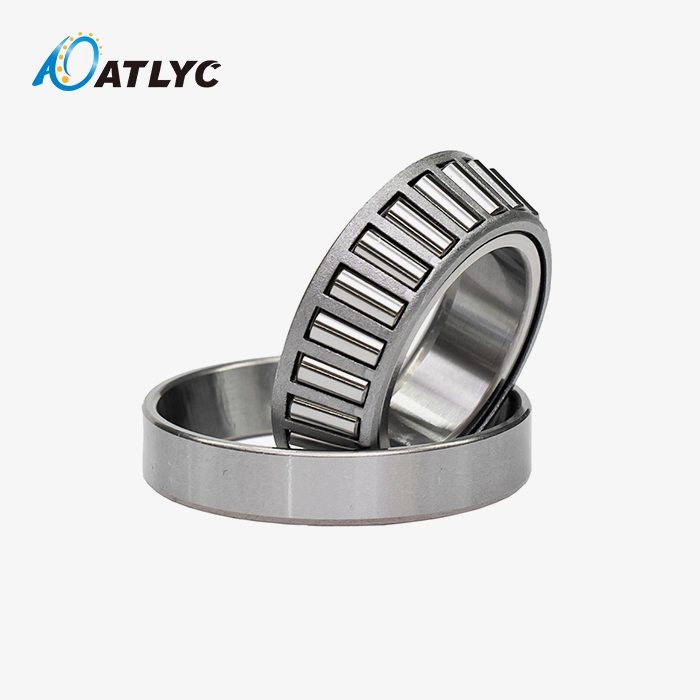
Because of the way their contact angles are set up, tapered roller bearings can handle more total loads. But they need opposite pairs to handle loads going in both directions and keep their central position. Our Crossed Roller Bearing RB Series design gets rid of these problems and makes the product more rigid in a smaller package.
Quality Assurance and Certification Standards
We keep our ISO 9001 and IATF 16949 certifications, which show that we are dedicated to consistently high-quality production and constant growth. These widely recognized standards give you peace of mind that our production methods have strong quality control measures in place at all times.
Our checking procedures make sure that every production lot has the right dimensions, a good surface finish, and the right material qualities. To check the geometry of the raceways, we use coordinate measuring tools with a precision of less than a micron. It is made sure that all contact areas meet certain values by checking their surface roughness. Each package comes with a material approval that lists the types of steel used and the conditions of the heat treatment.
Procurement Considerations for Crossed Roller Bearing RB Series
Pricing Structure and Volume Advantages
Getting bearings is a big part of the costs that OEM makers and aftermarket dealers have to pay. We set our prices in a way that rewards long-term relationships and large orders, while still keeping our prices low for smaller orders. Standard catalog models of the Crossed Roller Bearing RB Series that are in stock have the best prices, and savings start to apply when you buy more than 50 of each model.
Engineering evaluations and possible tooling fees are part of custom specs. However, we can often accept changes in dimensions that are within normal manufacturing limits without charging extra for the tools. The applications engineering team at our company looks over unique requests to find ways to use standard parts in different ways to cut down on lead times and costs.
Minimum order quantities vary based on the size and design of the bearing. Standard models usually have minimum order quantities (MOQs) of 10 to 20 pieces, which means they can be used for making prototypes and the first production runs. Because of the cost of materials and the time needed to set up production, MOQs for Crossed Roller Bearing RB Series with a diameter greater than 800 mm may be higher. When customers first contact us, we urge them to talk about their expected number so that we can get the best prices and delivery times.
Streamlined Ordering and Technical Support
Our ordering method works with multiple platforms for foreign procurement operations. Our website has thorough catalogs of our products that include full dimensional data, load rates, and technical specs. Engineers can get CAD models in common file types that can be easily added to plans for assemblies.
Our applications engineers help you find the best Crossed Roller Bearing RB Series setup for your needs during the selection step, which is the first time you get technical support. We look at things like load sizes and directions, spinning speeds, temperature ranges, and weather factors while the machine is running. This consultative method makes sure that customers choose bearings that will work reliably for the length of time they are supposed to.
Logistics and Lead Time Management
At our production plant in Luoyang, we keep popular Crossed Roller Bearing RB Series models in stock so that we can quickly meet standard requirements. Items in stock usually ship between 5 and 7 business days after an order is confirmed. When sending goods internationally, you can choose between air freight for urgent needs and sea freight for cheaper delivery of bigger amounts.
Manufacturing lead times for custom specs range from 4 to 6 weeks, based on how complicated the design is and how quickly it needs to be made. We communicate ahead of time about the state of production and shipping plans. For foreign shipments, our logistics team makes sure that all the necessary paperwork is in order. This includes business bills, packing lists, and certificates of origin.
Warranty and After-Sales Support
We stand behind our goods with a full warranty that shows how confident we are in the quality of our work. Standard guarantee terms cover flaws in materials and labor for 18 months from the date of shipment or 12 months from the date of installation, whichever comes first. Warranty claims are quickly looked into, and our expert team does root cause analysis to make sure the problem doesn't happen again.
Returns for repair claims follow an organized method that makes sure customers' business isn't interrupted too much. We look at returned Crossed Roller Bearing RB Series to figure out how they failed and make sure the guarantee covers them. Customers who make valid guarantee claims get replacements quickly, and thorough failure analysis reports help them make the best use of the product.
Real-World Applications and Case Studies
Precision Robotics Applications
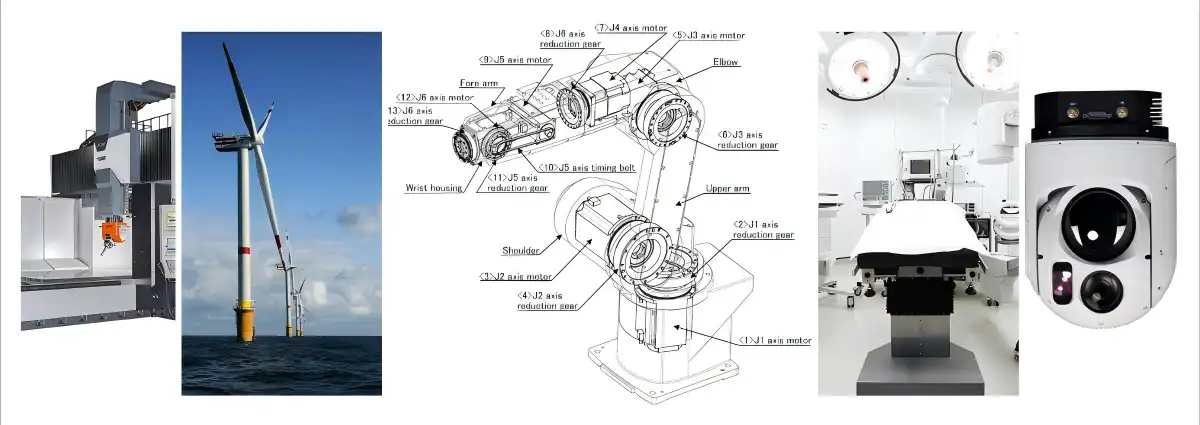
Industrial robots need to be able to position themselves very accurately and consistently. To get the needed degrees of freedom, robotic joints usually have more than one gear. Robotics companies all over North America buy our Crossed Roller Bearing RB Series, which helps them make their robots work more quickly and accurately.
One company that makes robotic tools came to us with problems with the design of their six-axis robot. Their old bearing setup had two angular contact ball bearings in each joint, which made it too heavy and needed to be preloaded and adjusted often. We helped their engineering team choose the right-sized Crossed Roller Bearing RB Series, which cut the weight of the joint by 28% and increased its accuracy in angle positioning from ±0.08° to ±0.03°.
The performance improvement directly led to more work getting done. Because the positioning limits were smaller, the motion patterns could be faster without losing accuracy. Less bearing repair was needed, which made the equipment more useful overall by cutting down on planned downtime. Since then, the customer has used our Crossed Roller Bearing RB Series for all of their robot products, and now they have over 2,000 units in use around the world.
Medical Equipment and Measuring Instruments
Medical imaging equipment and precision measuring tools are both very demanding uses where positioning accuracy has a direct effect on how well they work. CT machines need detector arrays to be able to move smoothly and without shaking around people. Coordinate measuring tools need to be able to move very straight and accurately measure angles.
A company that makes medical devices that is working on the next version of CT scanner technology needed bearings that could hold 500 kg of detector units and keep the rotational runout below 10 microns. Their old thrust bearing setup had too much axial runout, which hurt the quality of the images. We suggested Crossed Roller Bearing RB Series with the P4 precision grade because they cut runout to 5 microns and made the mechanical design easier.
Machining Center Rotary Tables
In multi-axis machining centers, rotary tables control how precisely workpieces are placed during complicated industrial processes. In these uses, bearings are subject to cutting forces that come and go, and they need to be precisely indexed at an angle. We've teamed up with machine tool makers to make sure that our Crossed Roller Bearing RB Series are used in the best way possible in rotary table designs.
Manufacturers of machine tools like how our bearings make table construction easier while also making the tools work better. Being able to handle all directions of load in a single bearing gets rid of the need for complicated bearing setups and lowers the tolerances for assembly stack-up. Customers say that machining accuracy is better and bearing repair times are longer than with older versions that used more than one type of bearing.
Future Trends in Precision Bearing Technology
As manufacturing technology keeps getting better, people want even more accuracy and speed. We keep putting money into improving our production skills so that we can meet our customers' changing needs. We recently added ultra-precision grinding machines to our production line. These machines can get surface roughness below Ra 0.1μm and roundness limits within 0.5 microns.
New advances in material science open up the possibility of better performance qualities. We are looking at new bearing steels that are cleaner and have better carbide distributions. These materials claim to have a longer wear life and better physical stability over a wider range of temperatures. Another area of research is ceramic roller technology, which might give lighter materials and better high-speed performance.
Smart bearing systems can be made possible by integrating Industry 4.0. We're working on ways to integrate sensors that will let us check on the state of bearings without affecting their performance. In real time, embedded sensors can keep track of temperature, vibration, and load conditions. This lets repair plans plan and avoid sudden breakdowns. These features are in line with a larger trend in industry toward production systems that are linked and driven by data.
Conclusion
The Crossed Roller Bearing RB Series is very precise because the engineers carefully consider and improve every part of the design. Excellent performance is achieved through an orthogonal arrangement of rollers, the use of high-quality materials, tight production tolerances, and thorough quality control. When setting accuracy and dependability are very important, these bearings are key parts that make the job possible. We have been making things for 15 years and are committed to meeting world quality standards. This makes for good long-term relationships. We keep putting money into skills and tools that help our customers stay successful in the world's toughest markets.
FAQ
1. How does the RB Series improve machine precision compared to traditional bearings?
What makes the Crossed Roller Bearing RB Series better than standard bearings for machine accuracy? The crossed roller design gives better rigidity through line contact and the best way to spread out the load. This design keeps setting limits tighter by reducing elastic deformation under changing loads. When the same loads are put on them, traditional ball bearings move three to five times more, which has a direct effect on the accuracy of the machine. The combined ring design gets rid of the gaps that happen in multi-bearing setups, which makes accuracy even better.
2. What maintenance procedures preserve bearing longevity and performance?
Inspections that happen at regular times based on working hours help find problems before they happen. It is important to handle oil properly, and the frequency of relubrication depends on the conditions of the application. As signs of bearing health, we suggest keeping an eye on working temperatures and shaking levels. Preventing contamination from getting in by using proper sealing and clean installation methods greatly increases service life while keeping precision performance.
3. Can ATLYC provide OEM customization for specific requirements?
We can meet your individual needs, such as changing the sizes, using different materials, or making a different closing arrangement. Our tech team looks over requests for customization to make sure they can be made and that they work well. A lot of needs can be met by putting together standard parts in different ways, which cuts down on development time and costs. We keep our production options open so that we can make both regular catalog items and custom solutions for tough situations.
Partner with a Trusted Crossed Roller Bearing RB Series Manufacturer
ATLYC offers precision bearing solutions that are backed by ISO 9001 and IATF 16949 certifications. This makes sure that the quality is always up to par with international standards. Our factory in Luoyang has six specialized workshops that make bearings with inner diameters ranging from 20mm to 1100mm. These bearings are all made from high-quality Gcr15 and Gcr15SiMn materials. We provide stable supply lines, affordable prices, and full technical support to OEM makers and wholesalers all over North America. Our research team is ready to help you choose the right bearings, make your application run more smoothly, and come up with custom solutions. Email us at auto@lyautobearing.com to talk about your precision bearing needs and find out how our Crossed Roller Bearing RB Series can improve the performance and dependability of your tools.
References
1. Harris, T.A. & Kotzalas, M.N. (2006). Advanced Concepts of Bearing Technology: Rolling Bearing Analysis, Fifth Edition. CRC Press.
2. ISO 492:2014. Rolling bearings – Radial bearings – Geometrical product specifications (GPS) and tolerance values. International Organization for Standardization.
3. Budynas, R.G. & Nisbett, J.K. (2015). Shigley's Mechanical Engineering Design, Tenth Edition. McGraw-Hill Education.
4. Weck, M. & Brecher, C. (2006). Machine Tools Production Systems 3: Design and Calculation. Springer-Verlag Berlin Heidelberg.
5. Hamrock, B.J., Schmid, S.R. & Jacobson, B.O. (2004). Fundamentals of Fluid Film Lubrication, Second Edition. Marcel Dekker Inc.
6. IATF 16949:2016. Quality management system requirements for automotive production and relevant service parts organizations. International Automotive Task Force.
Learn about our latest products and discounts through SMS or email