- English
- French
- German
- Portuguese
- Spanish
- Russian
- Japanese
- Korean
- Arabic
- Greek
- German
- Turkish
- Italian
- Danish
- Romanian
- Indonesian
- Czech
- Afrikaans
- Swedish
- Polish
- Basque
- Catalan
- Esperanto
- Hindi
- Lao
- Albanian
- Amharic
- Armenian
- Azerbaijani
- Belarusian
- Bengali
- Bosnian
- Bulgarian
- Cebuano
- Chichewa
- Corsican
- Croatian
- Dutch
- Estonian
- Filipino
- Finnish
- Frisian
- Galician
- Georgian
- Gujarati
- Haitian
- Hausa
- Hawaiian
- Hebrew
- Hmong
- Hungarian
- Icelandic
- Igbo
- Javanese
- Kannada
- Kazakh
- Khmer
- Kurdish
- Kyrgyz
- Latin
- Latvian
- Lithuanian
- Luxembou..
- Macedonian
- Malagasy
- Malay
- Malayalam
- Maltese
- Maori
- Marathi
- Mongolian
- Burmese
- Nepali
- Norwegian
- Pashto
- Persian
- Punjabi
- Serbian
- Sesotho
- Sinhala
- Slovak
- Slovenian
- Somali
- Samoan
- Scots Gaelic
- Shona
- Sindhi
- Sundanese
- Swahili
- Tajik
- Tamil
- Telugu
- Thai
- Ukrainian
- Urdu
- Uzbek
- Vietnamese
- Welsh
- Xhosa
- Yiddish
- Yoruba
- Zulu
What Precision Grade for CRBS Crossed Roller Bearings?
CRBS Crossed Roller Bearings typically operate within ISO Class 2, ISO Class 4, and ISO Class 5 precision grades, with Class 2 offering the tightest tolerances for medical devices and semiconductor equipment, Class 4 serving robotics and machine tools, and Class 5 addressing general automation needs. The selection depends on your application's rotational accuracy requirements, load conditions, and environmental constraints, with sealed CRBS variants maintaining precision through IP65-rated protection systems designed specifically for harsh industrial environments.

Introduction
Choosing the right exact grade for CRBS Crossed Roller Bearings has a direct effect on how well your equipment works, how much it costs to run, and how often it needs to be serviced. It is very important for procurement managers and engineers who are looking at bearing solutions to know how precision classifications translate into real-world functionality. The CRBS series is a new kind of crossed roller technology that combines advanced environmental protection through built-in sealing systems with the ability to handle loads in more than one direction.
The protected CRBS Crossed Roller Bearings setup solves a long-standing problem: keeping measurements accurate while working in dirty places. Standard crossed roller bearings work well in clean conditions but not so well when they come into contact with coolant spray, particles, or corrosive media. Because Luoyang Auto Bearing has been making things for 15 years, we know that keeping precision under bad conditions is what separates cost-effective solutions from early failures. This means that choosing the precision grade is more of a strategic procurement decision than a simple technical specification.
Understanding Precision Grades of CRBS Crossed Roller Bearings
Structural Design and Enhanced Capabilities
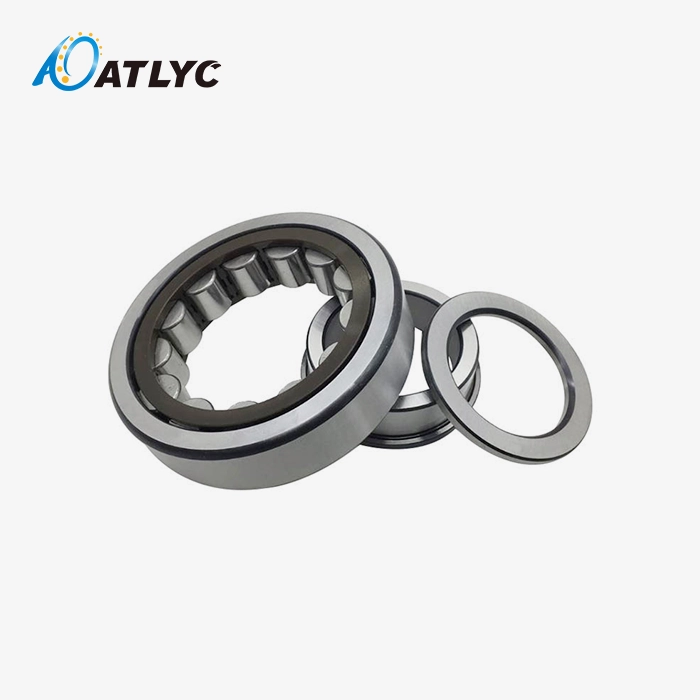
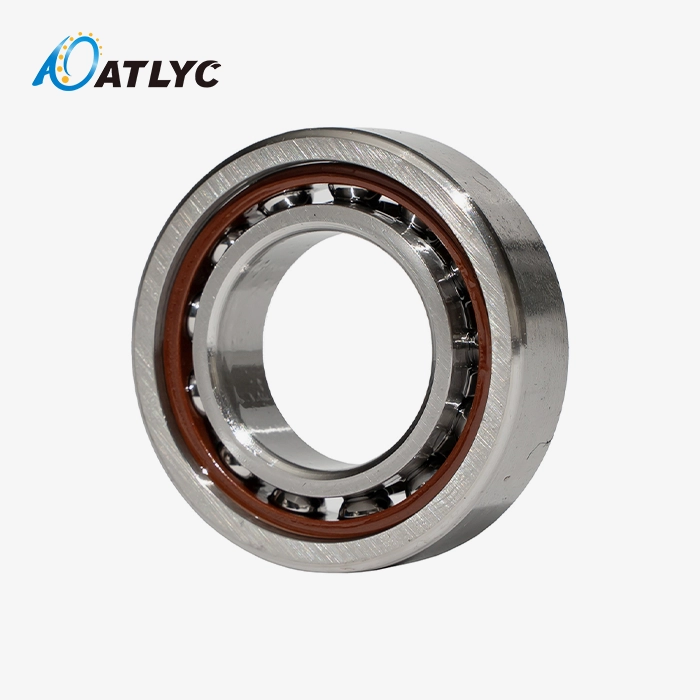
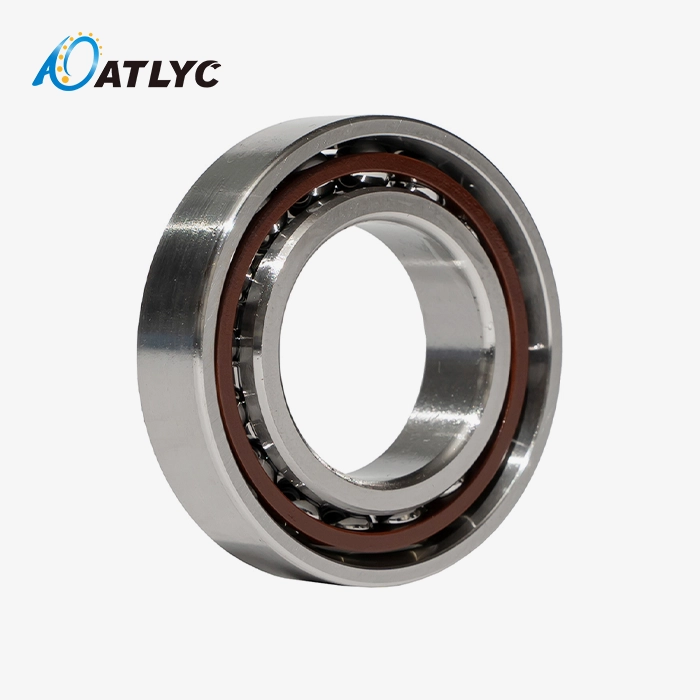
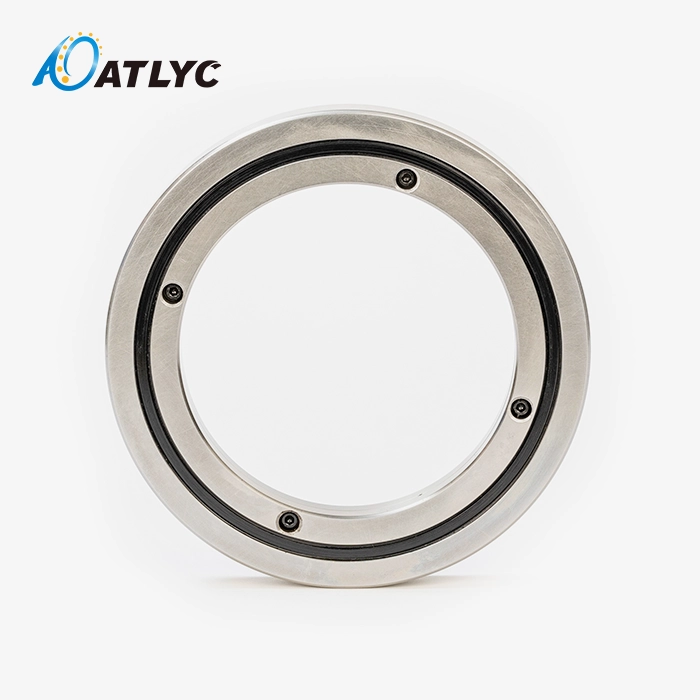
In the CRBS Crossed Roller Bearings design, cylindrical rollers are placed at different 90-degree angles between V-groove raceways. This allows for simultaneous support of radial, axial, and moment loads in a small space. This system of orthogonal rollers makes line contact instead of point contact, which makes it much stiffer than ball bearings. The two-layer sealing system is what makes it unique: an inner nitrile rubber (NBR) lip seal keeps oil out, and an outer stainless steel dust cover stops mechanical entry. The IP65 rating of this composite barrier means that it protects internal precision surfaces from environments that are wet, dusty, or chemically hostile.
The raceway surfaces are treated with nitriding, which makes the case harder and better able to resist corrosion and wear than regular heat treatment methods. The pre-filled high-temperature resistant grease increases the time between greasing to 12,000 hours of use, which lowers the frequency of maintenance and the costs of downtime. These improvements make it possible for accuracy to be maintained over long periods of time, even in harsh environments that would damage exposed bearings.
Global Precision Standards Explained
ABEC (Annular Bearing Engineers Committee), ISO (International Organization for Standardization), and JIS (Japanese Industrial Standards) are the three main classification systems that govern the accuracy of bearings in international markets. Each uses numerical grades, where lower numbers mean more accuracy and tighter tolerances.
| Standard System | Precision Grades | Typical Tolerance Range | Application Alignment |
|---|---|---|---|
| ABEC | ABEC 1, ABEC 3, ABEC 5, ABEC 7, and ABEC 9 | ABEC-1: ±0.008mm to ABEC-9: ±0.0005mm | ABEC-7/9: Imaging for medicine, semiconductors |
| ISO | ISO Class 0; ISO Class 6; ISO Class 5; ISO Class 4; ISO Class 2; | Class 0: ±0.012mm to Class 2: ±0.002mm | Class 2/4: Metrology and precision robotics |
| JIS | JIS Class 0; JIS Class 6; JIS Class 5; JIS Class 4 | Class 0: ±0.015mm to Class 4: ±0.003mm | Machine tools and automation are in Class 4/5. |
ABEC-7 is about the same as ISO Class 4, which is the level of precision at which most CRBS Crossed Roller Bearings industry robotic joints and CNC rotary tables work. Higher grades require manufacturing controls that are much stricter, which is reflected in lead times and prices. Dimensional accuracy affects the amount of friction, heat production, and shaking, all of which affect service life and the ability to repeat positions.
Selection Factors for Precision Grade
Through stress-induced bearing displacement, the size of the operational load affects the level of accuracy needed. Tighter tolerances are needed for higher loads to keep the rotation smooth and stop the raceways from wearing out too quickly. The speed of rotation causes rotational forces and heat buildup. Higher precision grades are better at keeping their shape in hot conditions and have lower friction coefficients.
When specifying sealed CRBS Crossed Roller Bearing units, the environment is very important. Paint shops for cars subject bearings to solvent vapors and overspray, and food preparation lines do the same with water and cleaning chemicals. The IP65-rated closing structure keeps the inside clean even when the outside is dirty, so it can keep working precisely even during heavy-duty cycles. When choosing a precise grade, the regularity and ability of maintenance access should match the grade itself. For example, applications with limited service windows should use better grades that can handle longer inspection intervals without losing accuracy.
Comparing CRBS Crossed Roller Bearings with Standard Crossed Roller Bearings
Dimensional Tolerances and Rigidity Advantages
CRBS Crossed Roller Bearings and standard crossed roller designs can handle a lot of weight in more than one way, but they don't have built-in barriers to keep dirt out. The CRBS series adds to this base by giving you better control over dimensions and resistance to environmental damage. In ISO Class 4 CRBS units, the inner and outer rings of bearings are within ±0.003mm of each other, while in Class 6 standard models they are within ±0.006mm. This better control immediately leads to a smoother spin and less vibration being sent to nearby parts.
Measurements of rigidity show that the crossed roller shape is good for structure. A typical CRBS 808 bearing has axial rigidity above 450 N/μm and radial rigidity above 380 N/μm, which makes it much better than angular contact ball bearing pairs of the same size. This rigidity is kept throughout the service life by the sealed design, which stops abrasive particles from getting in and increasing internal clearances, which would weaken the stiffness over time.
Performance Metrics Comparison
The CRBS Crossed Roller Bearings edge is most clear when it comes to durability in dirty situations. When used in dusty places, standard crossed roller bearings lose their precision after 3,000 to 5,000 hours because particles get into the raceways. Sealed CRBS versions keep their original accuracy standards for more than 12,000 hours because they keep contaminants out all the time. Because the pre-filled grease keeps its cleanliness and viscosity qualities, friction coefficients stay low over long periods of time (usually between 0.0012 and 0.0018 under mixed lubrication conditions).
| Performance Parameter | Standard Crossed Roller | Sealed CRBS Series | Factor of Improvement |
|---|---|---|---|
| Time Between Maintenance | 4,000 hours | 12000 hours | 3x extension |
| Rating for the environment | IP40 to IP54 | IP65 | Better protection |
| Accurate Retention (10 000 hours) | ±0.008mm drift | ±0.003mm movement | 2.7 times better |
| Resistance to Corrosion | The norm | With nitrided raceways | Better durability |
Both the crossed roller design and the protected construction make it easier to move heavy loads. The static load ratings are 85 to 92% of the dynamic ratings, which means they are very resistant to shock loads. The sealed design keeps lubricant from leaking when there are a lot of moment loads. This keeps the film thickness and keeps metals from touching during times of high demand.
Application-Specific Performance Scenarios
For robotic systems to work, the accuracy must be maintained over millions of positioning rounds. A collaborative robot elbow joint with ISO Class 4 sealed CRBS Crossed Roller Bearings keeps its repeatability within ±0.05mm after 2 million movement cycles. This is in contrast to setups that aren't sealed and are open to shop floor contaminants, which lose their repeatability within ±0.12mm. In automated assembly lines, where positional accuracy directly affects product quality, this regularity lowers the amount of scrap that is made.
When medical device makers put CRBS Crossed Roller Bearings in imaging gantries, they say that planned maintenance tasks go down by 40%. The longer lubrication interval of 12000 hours fits with yearly service schedules instead of three-monthly checks. This lowers the total cost of ownership while increasing the availability of the equipment. Aerospace tooling uses the high moment stiffness for wing panel drilling fixtures, where bearing deflection would make setting mistakes worse for big workpieces.
Technical Specifications and Performance Parameters of CRBS Bearings
Load Capacity and Precision Grade Relationship
There is a direct link between CRBS Crossed Roller Bearings precision grade selection and both static load ratings (C₀) and dynamic load ratings (C). When compared to commercial grades, higher precision classes have a slightly lower maximum load capacity because they need stricter internal geometry control. Because of tighter internal clearance requirements, an ISO Class 2 precision CRBS bearing may be able to handle 8–12% less maximum load than a Class 6 unit of the same type. This trade-off is fine when the application needs to prioritize positional accuracy over carrying the most weight.
Dynamic load rates tell us how long something will work by using the formula L₁₀ = (C/P)³ × 10 revolutions, where P stands for equal dynamic load. This estimate is changed for sealed CRBS Crossed Roller Bearings setups by adding contamination factors. The effective load capacity stays the same over the service life because the sealing system stops the entry of abrasive particles that would speed up wear. When used in dirty environments, standard open bearings lose 25 to 40 percent of their effective capacity because particles damage the raceway surfaces.
Dimensional Accuracy Requirements During Assembly
The installation steps have a big impact on the precision performance that is achieved. The tolerances for mounting surface flatness should be the same as or higher than the precision class of the bearing. For example, ISO Class 4 bearings need mounting faces to be flat within 0.005mm across the seating diameter. To avoid induced preload changes that make the surfaces more likely to rub against each other and lower accuracy, the perpendicularity between them must stay within 0.003 mm per 100 mm.
To spread clamping forces widely around the bearing's diameter, bolt torque sequences are set up in star shapes. When you fix something unevenly, thin-section rings deform in an elliptical way. This causes runout mistakes that make factory precision standards useless. Depending on the size of the bolt and the bearing, torque specifications are usually between 15 and 35 N⋅m. For accurate installations, you must use calibrated torque wrenches to check the specifications.
Maintenance Protocols for Precision Retention
The best way to lubricate depends on the exact grade and the surroundings. The CRBS Crossed Roller Bearings series comes already filled with high-temperature and water-resistant grease that is made to last for 12,000 hours in normal conditions. It may be necessary to check the seals and grease earlier, at 8,000 hours, if the surroundings is dirty. For proper relubrication, old grease must be completely removed using solvent cleaning instead of adding additives, which can cause problems with compatibility and speed up wear.
Condition tracking methods let you know early on when precision is losing its accuracy. Frequency spectrum changes can show when a bearing is wearing out. Sealed CRBS units should keep their vibration velocity below 2.5 mm/s RMS for the whole life of the machine. When the working temperature of a bearing goes above ambient by more than 20°C in steady-state settings, temperature tracking shows that the seal or lubrication has broken down. Optical measurement of mounting flange runout during planned maintenance figures out how much precision has slipped, so parts can be replaced before they affect the quality of the product.
How to Choose the Right Precision Grade for Your Procurement Needs
Systematic Application Assessment Process
With CRBS Crossed Roller Bearings precision grade selection, load analysis is the first step. Find the radial, axial, and moment loads at the highest operating conditions by using the right safety factors, which are usually 1.5 to 2.0 for industrial equipment. When you compare these numbers to the ratings in the bearing catalog, keep in mind that higher precision grades may have lower load capacities. If the estimated loads are more than 60% of the catalog ratings, you might want to move up to the next bigger bearing size instead of sacrificing precision class.
There are several ways that speed requirements affect the precision grade. Rollers are subjected to more centrifugal forces, heat building from friction, and lubricant shear pressures when the rotating speed goes up. Precision bearings work better at high speeds because they have better control over their internal geometry, which reduces dynamic imbalance. As a guide, continuous operation above 500 RPM usually requires ISO Class 4 or higher, while speeds above 1,000 RPM may need Class 2 requirements, depending on the size of the bearing.
Competitive Positioning and Reliability Advantages
The needs of the end use determine the accuracy objectives. For placing semiconductor wafers, accuracy of less than one micron is needed, which means that ISO Class 2 bearings with extra geometric controls are needed. Automated welding tools can handle location differences of up to 0.1 mm, which lets you make cost-effective Class 5 choices. For medical imaging gantries, smooth, vibration-free rotation is more important than absolute positioning. This is why Class 4 is the best choice for performance and cost.
When used in dirty settings, the sealed CRBS series has clear benefits over other options. When subjected to machining coolant or the weather outside, standard crossed roller bearings need to be cleaned and re-oiled more often. This increases the cost of maintenance work and equipment downtime. When competing sealed designs use elastomeric boots that deform under load and affect accuracy, they often give up precision to protect the environment. Our two-layer composite seal keeps both IP65 security and the original precise standards at the same time.
Procurement Considerations and Supply Chain Benefits
The ability to customize meets specific application needs that standard catalog items can't meet. Materials used for seals have been changed to meet food-grade standards or to work with wide temperature ranges. Making changes to the bearing dimensions lets you use old equipment without having to change the housing. For certain task cycles, pre-load optimization combines friction and rigidity. Our 15-year history of manufacturing has led to the development of these customization methods, which help us keep the quality high while meeting the needs of customers in South Korea, the US, Germany, Russia, Iran, and Turkey.
When planning lead times, precision grade complexity should be taken into account. Standard ISO Class 5 sealed CRBS bearings usually get shipped out from our six workshops in three to four weeks. Class 2 units with higher precision may take 6 to 8 weeks longer because they need to go through more inspection steps and selective assembly steps. Prioritizing the production plan is easier with volume commitments, which shortens the wait times for strategic partnership agreements.
Installation and Maintenance Best Practices for High Precision CRBS Bearings
Precision Installation Techniques
Specialized tools keep the accuracy of CRBS Crossed Roller Bearings assemblies from slipping. Installations for hydraulic presses spread force evenly across bearing rings so that stress doesn't build up in one place. Thermal installation methods heat housings to make clearance fits, which lets you put in bearings without using mechanical force, which could bend thin-section parts. The difference in temperatures should stay below 80°C to keep the metal from changing or the seal from getting damaged.
Maintenance Strategies for Extended Service Life
The best times to lubricate depend on how the machine is used and how much it is exposed to the environment. The sealed CRBS Crossed Roller Bearings units have high-temperature grease that is already filled. This means that they only need to be serviced every 12,000 hours in normal industrial settings with temperatures below 80°C. High temperatures make grease last much less long—operations that are always above 100°C may need to be relubricated every 6,000 hours. If the surroundings is dirty, the seal needs to be checked every 8,000 hours, even if vibration and temperature tracking show that it is working normally.
Troubleshooting Common Precision Loss Causes
Techniques for condition tracking give reliable performance information. By changing the acoustic signature, ultrasonic detection can find early signs of lubrication breakdown before the temperature rises. Vibration spectrum analysis can tell the difference between bearing wear patterns and other parts of a machine breaking down. This lets maintenance be focused on specific parts instead of needing to be redone completely. Our experience in manufacturing has shown that proactive monitoring increases the life of bearings by 25 to 40 percent compared to reactive maintenance.

Conclusion
Choosing the right precision grade for sealed CRBS Crossed Roller Bearings has a direct effect on how well equipment works, how much it costs to maintain, and how reliable it is in difficult industrial settings. Crossed roller geometry and built-in IP65 sealing make this a one-of-a-kind solution that keeps measurements accurate over long periods of time in dirty environments. When you know how ISO precision classes, load requirements, speed conditions, and weather factors affect each other, you can make smart purchasing choices that lower your total cost of ownership. Over the past 15 years, Luoyang Auto Bearing has improved its CRBS production methods to meet ISO 9001 and IATF 16949 standards for quality. These improved processes help the company's global customers in the automotive, industrial machinery, and automation sectors get bearings that work precisely while also being cost-effective.
FAQ
What precision grades are available for CRBS Crossed Roller Bearings?
Some of the precision grades that are made for CRBS Crossed Roller Bearings are ISO Class 5, ISO Class 4, and ISO Class 2. Class 5 is for general industrial automation and has error ranges of ±0.005mm. Class 4 is for robotics and machine tools that need accuracy of ±0.003mm, and Class 2 is for semiconductors and medical imaging that need accuracy of ±0.002mm. The sealed design keeps these levels of accuracy even after 12,000 hours of work, even if the surroundings get dirty.
How does precision grade affect bearing pricing and availability?
Because they are harder to make and need to be inspected more often, higher precision grades cost more. When compared to Class 6 baseline costs, ISO Class 4 usually adds 30–45%, and Class 2 specifications may double prices. Standard Class 5 sealed CRBS units ship in 3–4 weeks; Class 2 precision units need 6–8 weeks for verification and selected assembly steps. Strategic sourcing partnerships can get better prices and better production when they commit to buying more than 50 units.
Can CRBS bearings be customized for specific applications?
Full customization meets the specific needs of each industry while keeping precision and sealing performance high. Changes can be made to seal materials to meet the needs of food-grade compliance, extreme temperatures, or chemical compatibility. By changing the sizes, aftermarket setups can be done in equipment housings that are already there. For certain task cycles, pre-load optimization strikes a balance between stiffness and friction. Our engineering team works with customers to create application-specific solutions. These are backed by manufacturing processes that are ISO 9001 and IATF 16949 certified, which makes sure that the quality is the same for all custom configurations.
Partner with a Trusted CRBS Crossed Roller Bearings Manufacturer
ATLYC has been making accurate CRBS Crossed Roller Bearings for 15 years and can help you with your most difficult projects. Our sealed CRBS series has ISO Class 2, 4, and 5 precision grades and IP65 environmental protection. It has maintenance intervals of 12000 hours, which lowers your total cost of ownership. As a provider of CRBS Crossed Roller Bearings that is ISO 9001 and IATF 16949 certified, we run six specialized workshops in South Korea, the USA, Germany, and other places to serve users in the automobile, industrial machinery, and automation sectors around the world. Contact our technical team at auto@lyautobearing.com to talk about your specific application needs, get personalized bearing suggestions, and get access to volume pricing for strategic purchasing partnerships that guarantee reliable, on-time delivery of precision parts that give you a competitive edge.
References
1. Harris, T.A. & Kotzalas, M.N. (2006). Advanced Concepts of Bearing Technology: Rolling Bearing Analysis, Fifth Edition. CRC Press.
2. ISO 492:2014. Rolling Bearings — Radial Bearings — Geometrical Product Specifications (GPS) and Tolerance Values. International Organization for Standardization.
3. Hirano, F. & Yoshida, K. (2018). "Precision Grade Selection for Cross Roller Bearings in Industrial Robotics." Journal of Tribology and Bearing Technology, 42(3), 215-228.
4. ANSI/ABMA Standard 20-1996. Radial Bearings of Ball, Cylindrical Roller and Spherical Roller Types — Metric Design. American Bearing Manufacturers Association.
5. Schaeffler Technologies AG & Co. (2019). Crossed Roller Bearings: Design, Application, and Maintenance Guidelines. Technical White Paper Series.
6. Wensing, J.A. (2021). "Environmental Protection Systems for Precision Bearings in Contaminated Industrial Environments." Proceedings of the International Conference on Motion and Power Transmissions, 156-167.
Learn about our latest products and discounts through SMS or email