- English
- French
- German
- Portuguese
- Spanish
- Russian
- Japanese
- Korean
- Arabic
- Greek
- German
- Turkish
- Italian
- Danish
- Romanian
- Indonesian
- Czech
- Afrikaans
- Swedish
- Polish
- Basque
- Catalan
- Esperanto
- Hindi
- Lao
- Albanian
- Amharic
- Armenian
- Azerbaijani
- Belarusian
- Bengali
- Bosnian
- Bulgarian
- Cebuano
- Chichewa
- Corsican
- Croatian
- Dutch
- Estonian
- Filipino
- Finnish
- Frisian
- Galician
- Georgian
- Gujarati
- Haitian
- Hausa
- Hawaiian
- Hebrew
- Hmong
- Hungarian
- Icelandic
- Igbo
- Javanese
- Kannada
- Kazakh
- Khmer
- Kurdish
- Kyrgyz
- Latin
- Latvian
- Lithuanian
- Luxembou..
- Macedonian
- Malagasy
- Malay
- Malayalam
- Maltese
- Maori
- Marathi
- Mongolian
- Burmese
- Nepali
- Norwegian
- Pashto
- Persian
- Punjabi
- Serbian
- Sesotho
- Sinhala
- Slovak
- Slovenian
- Somali
- Samoan
- Scots Gaelic
- Shona
- Sindhi
- Sundanese
- Swahili
- Tajik
- Tamil
- Telugu
- Thai
- Ukrainian
- Urdu
- Uzbek
- Vietnamese
- Welsh
- Xhosa
- Yiddish
- Yoruba
- Zulu
Are CRBH Cross roller bearing Sealed?
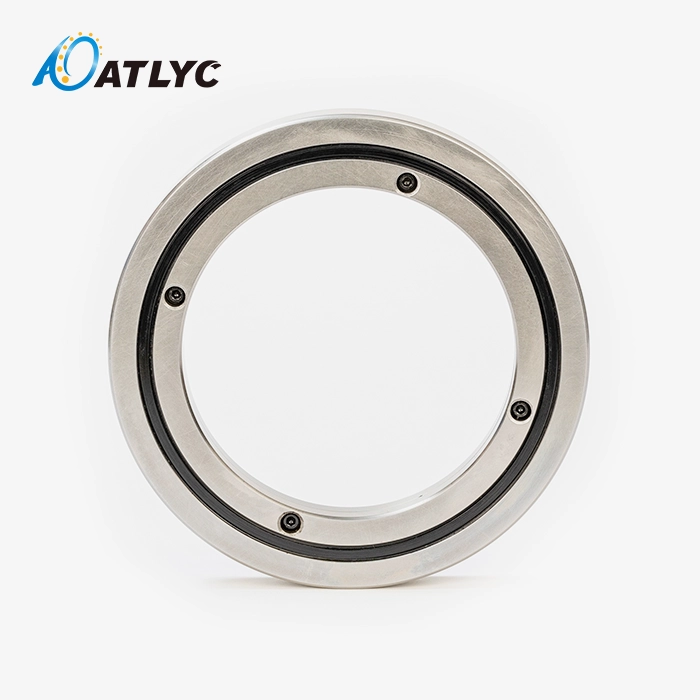
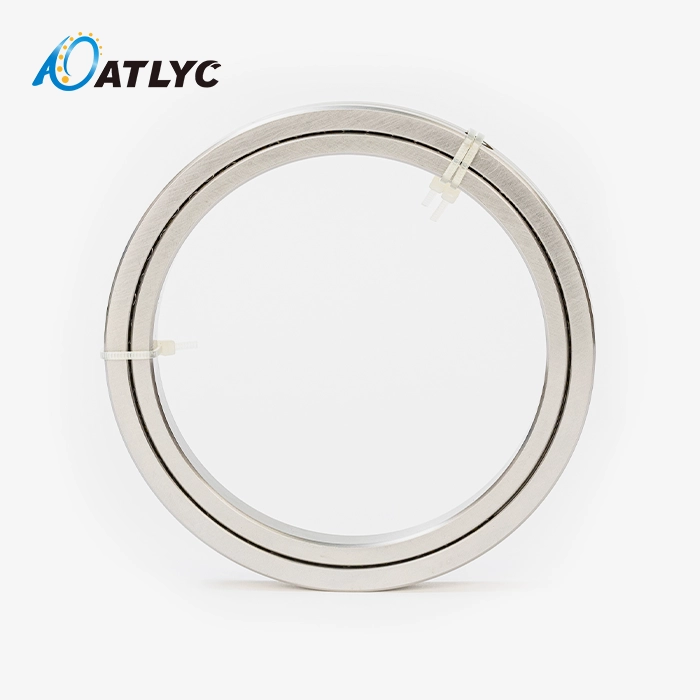
CRBH Cross roller bearings represent a specialized category of precision rotary components that address critical operational challenges in modern industrial machinery. The question of whether these bearings come sealed depends entirely on the specific model configuration you specify during procurement. Standard CRBH crossed roller bearings typically feature an open design without integrated seals, allowing for easy inspection and re-lubrication in controlled environments. However, manufacturers including ATLYC offer sealed variants equipped with thin rubber lip seals that provide basic protection against contaminant ingress while maintaining the ultra-compact profile that makes this bearing series distinctive. Your sealing selection impacts maintenance intervals, environmental suitability, and long-term operational costs—making it essential to understand how sealing mechanisms function within the unique architecture of cross roller bearing systems.

Design Features and Technical Specifications Related to Sealing
Seal Material Selection and Performance Characteristics
The materials used to make the sealing parts used in CRBH Cross roller bearing applications are carefully chosen to meet many performance needs. Nitrile rubber (NBR) compounds are a cheap way to seal things up in temperatures from -30°C to +100°C. They also work well with mineral oils and greases that are often used to grease bearings. These seals keep their flexibility even when the temperature changes, which happens a lot when industrial equipment goes from being idle to being in use.
The following table shows how the performance of popular seal materials used in crossed roller bearing applications compares in terms of key performance parameters:
| Seal Material | Temperature Range | Chemical Strength | Coefficient of Friction | Relative Cost | Typical Lifespan |
|---|---|---|---|---|---|
| Nitrile (NBR) | -30°C to +100°C | Moderate | 0.15 to 0.25 | 1.0x | 5,000 to 8,000 hours |
| FKM (Viton) | -20°C to +200°C | Very good | 0.18 to 0.28 | 3.5x | 8,000 to 12,000 hours |
| PTFE | -200°C to +260°C | Great Work | 0.04-0.08 | 5.5x | 10,000 to 15,000 hours |
| Silicone | -60°C to +180°C | good | 0.20 to 0.30 | 2.0x | 6,000 to 9,000 hours |
Ingress Protection Standards and Real-World Performance
Ingress Protection (IP) ratings for sealed CRBH Cross roller bearings can range from IP54 to IP65, depending on how the seal is designed and how the housing is integrated. An IP54 rating means that the device is protected against dust buildups big enough to stop it from working and water splashes from any direction. This is enough for many industrial machinery uses where cleaning is necessary every so often.
Configurations with an IP65 rating completely seal out dust and protect against water jets. These are good for equipment used in food processing, making medicines, or outdoor installations that are exposed to the weather. To get better IP ratings, you need to pay close attention to how the housing is designed, how the seals are compressed, and how the sealing surfaces are finished. The V-groove raceway design of cross roller bearings makes it harder to integrate seals than deep groove ball bearings because the load-bearing surfaces are closer to the bearing's edges.
Comparing Sealed and Non-Sealed Maintenance Requirements
The changes in maintenance intervals between setups have a direct effect on how to figure out the total cost of ownership. In dirty settings, unsealed CRBH Cross roller bearings might need to be re-oiled every 500 to 1,000 hours of use to get rid of contaminants and recover the thickness of the lubricant film. This maintenance schedule requires planned downtime and a lot of technician work, which is a big problem in places where production is continuous and unplanned stops cost a lot.
When conditions are mild, sealed versions increase the time between re-lubrication intervals to 3,000 to 5,000 hours, which lowers the frequency of upkeep by 70 to 80%. The sealed case keeps the grease inside the bearing and keeps out outside contaminants, so the lube works much longer. This benefit is even greater in multi-axis robotic systems, where each joint may have six to eight crossed roller bearings. Sealed configurations make maintenance much easier in these cases.
Advantages of Sealed CRBH Cross Roller Bearings in Industrial Applications
Extended Service Life Through Contamination Control
Analysis of premature bearing failure repeatedly shows that contamination is the main reason for sudden failures, which makes up about 43% of all bearing-related breakdowns in industrial machinery. When rollers touch the raceway surfaces, tiny stress concentrations are caused by particles of contaminants floating in lubricating films. These stress points start beneath fatigue cracks that spread over time and eventually lead to spalling, a failure mode in which the top material flakes off, making noise and vibrations that make the bearing useless.
Operational Cost Reduction Through Maintenance Optimization
Having longer maintenance intervals has a financial effect that goes beyond just saving money on labor. Unplanned repair throws off production plans, which causes delays in all parts of the manufacturing process. When auto assembly lines that make 60 units per hour have unplanned downtime, they lose more than $15,000 per hour in opportunity costs, which is a lot more than the cost of direct repair work.
Industry-Specific Performance Examples
Many companies that make collaborative robots use sealed CRBH Cross roller bearings in their joint systems. People and robots work together in shared offices, and the robots' internal parts are often not protected by covers that would keep them clean. Over 25,000 hours of use, sealed bearings keep the precision positioning accuracy within ±0.01mm, meeting the strict repeatability needs for assembly jobs involving electrical components with a 0.5mm lead pitch.
CRBH Sealed Bearings Versus Other Crossed Roller Bearing Types
Comparative Analysis With Established Competitors
NSK and THK are well-known companies that make crossed roller bearings that are similar in technical specs to CRBH Cross roller bearings series bearings. NSK's RA series uses similar orthogonal roller layouts inside ring frames, which achieves rigidity levels that are within 10% of CRBH versions. Their sealed versions have dual-lip rubber seals that are said to offer IP64 protection, which is good enough for most commercial uses but not as good as the IP65 standards that can be met with CRBH sealed designs.
The RB series from THK has split outer rings that make installation easier in some mounting situations. However, this reduction in structure design lowers the rigidity that can be reached by 15–25% compared to systems that use integrated rings. The split rings make it possible for contaminants to get in at the parting line. This problem stays even after extra seals are added. Because of this basic design difference, THK bearings are more affected by mounting surface flatness errors, so they need precisely made housings to keep working as expected.
Performance Distinctions Between Bearing Architectures
When installing traditional angular contact ball bearing pairs that are set up back-to-back or face-to-face, the preload needs to be carefully adjusted. When there isn't enough preload, there is internal space that lets moment loads cause deflection, which lowers the accuracy of placement. Too much loading causes friction and heat that aren't needed, which speeds up wear and shortens the service life. Getting the right preload requires special tools and skilled technicians, which makes installation more difficult and introduces variation in performance as fitted.
The table below shows how the most important specs for different types of bearings that are often used for applications with loads going in more than one direction compare:
| Type of Bearing | How much space is used (mm/kN) | Strength (N/µm) | Sensitivity to Preload | How Hard It Is to Seal | Needs Installation Skills |
|---|---|---|---|---|---|
| CRBH Sealed | 0.85 | 450 to 650 | Not at all | Low | Moderate |
| Pair of Angled Contacts | 1.40 | 380–520 | High | Moderate | High |
| Pair of Tapered Rollers | 1.65 | 420–580 | Moderate | High | High |
| Four-Point Touch | 1.10 | 280–400 | Low | Moderate | Moderate |
| THK RB Sealed | 0.90 | 380–550 | Low | Moderate | Moderate |
Large Slewing Ring Challenges Versus Compact CRBH Solutions
Due to their big diameters—often 1 to 4 meters—slewing bearings used in turntables, cranes, and wind turbine yaw systems have a hard time closing. The longer edge of the seal makes it easier for damage to happen in one place during installation or operation. A single weak spot in a 3-meter-diameter seal lets dirt and other things get into the whole bearing, so the seal doesn't do its job of protecting.
When slewing, the large spinning masses create strong centrifugal forces that can pull seal lips off of sealing surfaces at very high rotational speeds. When this happens, there are gaps in the seal that let contaminants in during operation. This is especially a problem in situations where the motion is reversing, and the seal lip orientation changes from good to bad.
Procurement Considerations for Sealed CRBH Cross Roller Bearings
Supplier Selection and Authentication
You should always be careful when buying precision bearings online, especially if you get them from sources that aren't authorized. Real sealed CRBH Cross roller bearings go through a lot of quality control checks, such as checking the raceway roughness, measuring the accuracy of the dimensions, and testing the starting torque. These quality assurance steps make sure that written standards are followed. These are the parameters that have a direct effect on how well and reliably equipment works.
Pricing Dynamics and Lead Time Management
Prices for sealed CRBH Cross roller bearings range from $85 to $650 per unit, based on the size, quality grade, and seal type. The price difference between sealed and unsealed versions is usually only 18 to 25 percent. This is a small increase when you consider that sealed designs last longer and cost less to maintain. When you buy more than 100 units a year, you can get discounts ranging from 12 to 18% off the list price thanks to volume pricing structures.
Warranty Coverage and After-Sales Support Structure
Comprehensive warranty plans that cover production flaws are an important way to lower the risk of buying sealed CRBH Cross roller bearings. Standard guarantee terms say that bearings that fail early because of flaws in the material or the way they were made must be replaced within 12 to 18 months of installation or 24 months of shipment. There are options for extended warranties that last up to 36 months for harsh environments where the extra peace of mind is worth the 4-6% premium.
Maintenance Best Practices and Common Challenges With Sealed CRBH Bearings
Establishing Effective Inspection Protocols
Sealed CRBH Cross roller bearings cut down on upkeep needs but don't get rid of them completely. Periodic condition tracking finds problems as they form before they become major problems. This extends the useful life of the system and stops unplanned downtime. Vibration analysis is the most useful non-invasive tracking method. Portable data collectors measure acceleration patterns that show signs of bearing health.
During commissioning, when the bearings are known to be in good condition, baseline vibration signatures should be set. After that, measurements are taken to see how the overall vibration amplitude and frequency spectrum change. When sealed CRBH Cross roller bearings are working properly, they produce broad vibrations with a speed of less than 2.5 mm/sec RMS in the 10–1000 Hz range. Increases in amplitude greater than 50% from average levels show wear that needs to be looked into, while discrete frequency peaks relating to roller pass frequencies show specific problems.
Addressing Seal-Related Performance Issues
For sealed CRBH Cross roller bearings, seal wear is the main upkeep issue because worn seals make it harder to keep out contaminants and may let oil leak out. When seal lips slide against sealing surfaces, they wear down the elastomeric material and lower the contact pressure. Wear rates go up in situations where the direction of movement is regular, the temperature is high, or the seal compound is exposed to harsh chemicals that break down seal compounds.
The state of the seal is checked visually at regular repair times. Surface cracks, stiffening, or wear lines that can be seen are all signs that the seal needs to be replaced soon. A little oil seeping out at the seal surfaces means that the sealing isn't working as well as it should. If this is found early, it's usually easy to fix by cleaning and retightening the mounting hardware. When a lot of lubricant is lost, the seal needs to be replaced to get it back to working properly and stop contaminants from getting in through the broken seal.
Troubleshooting Common Installation Errors
A big reason why sealed CRBH Cross roller bearings fail early is that they were not installed correctly. Defects in the flatness of the mounting surface that are greater than 0.02 mm per 100 mm diameter cause localized stress concentrations that bend bearing rings, making internal friction higher and wear happen faster. Precision-machined mounting surfaces that meet IT6 tolerance grades make sure that the bearing is supported evenly around its entire circumference, keeping the internal geometry that was set.
Another common problem is damage to the seal during installation. Seal lips can tear or cut when they go over sharp housing edges, threaded holes, or keyways in mounting surfaces. Installation damage can be avoided by carefully handling the parts and using chamfered lead-ins on housing bores and protective sleeves over shaft protrusions. Visual inspection of the seals right after installation makes sure they are intact before the equipment is used.

Conclusion
For industrial equipment that needs high-precision rotating motion in small spaces, sealed CRBH Cross roller bearings provide measured performance benefits. The built-in sealing options increase the time between service visits, lower the cost of maintenance, and make the system more reliable in dirty environments. Instead of just looking at the lowest price, you should think about how the product will be used, how easy it is to maintain, and the total cost of ownership when deciding between sealed and open designs. When you combine the thin-wall design with the orthogonal roller layout and solid ring construction, you get unique space-saving options for designs that would normally need more than one standard bearing. As seal makers keep improving seal materials and designs, the difference in performance between sealed and unsealed versions gets smaller. This makes sealed setups more appealing for a wider range of uses. Strategic partnerships with qualified suppliers give you access to original products, technical support, and help after the sale that make your equipment work better.
FAQ
Do CRBH crossed roller bearings come sealed as standard?
Standard CRBH Cross roller bearing setups usually come as open (not sealed) bearings, which gives you the most options for managing lubricant and making changes that fit your application. You can choose sealed versions when you place your order, and the seal materials and patterns are chosen based on the working conditions. To make sure the right configuration is delivered, your procurement specifications should make it clear what kind of sealing is needed.
How do sealed versions perform in high-temperature applications?
The choice of cover material does not affect performance at all. FKM rubber seals can work at temperatures up to +200°C, while standard NBR seals stay effective up to +100°C. Applications that work continuously above +150°C should specify FKM or PTFE seal materials to keep the seals from breaking down too quickly. For high-temperature operation, you also need lubricants that work well with the machinery and have the right viscosity across the temperature range.
What impact does sealing have on CRBH bearing service life?
Sealed CRBH Cross roller bearings operating in contaminated environments typically achieve 2-3 times longer service life compared to unsealed equivalents through contamination exclusion. The exact multiplier depends on contaminant concentration and particle size distribution in the ambient environment. Cleanroom applications see minimal benefit, while heavy industrial settings show dramatic improvements. Seal friction does impose modest heat generation that slightly reduces ultimate L10 life by 5-8%, but contamination protection benefits far exceed this minor reduction in most real-world applications.
Can seals be added to unsealed CRBH bearings after installation?
Retrofit sealing proves impractical for integrated-ring CRBH Cross roller bearings due to the precision required for proper seal groove machining and the difficulty of accessing internal bearing areas after installation. Application-specific sealing needs should be addressed during the initial design phase to ensure that the correct sealed bearing configuration is selected and installed properly.
Partner with a Trusted CRBS Crossed Roller Bearings Manufacturer
ATLYC has been making accurate CRBS Crossed Roller Bearings for 15 years and can help you with your most difficult projects. Our sealed CRBS series has ISO Class 2, 4, and 5 precision grades and IP65 environmental protection. It has maintenance intervals of 12000 hours, which lowers your total cost of ownership. As a provider of CRBS Crossed Roller Bearings that is ISO 9001 and IATF 16949 certified, we run six specialized workshops in South Korea, the USA, Germany, and other places to serve users in the automobile, industrial machinery, and automation sectors around the world. Contact our technical team at auto@lyautobearing.com to talk about your specific application needs, get personalized bearing suggestions, and get access to volume pricing for strategic purchasing partnerships that guarantee reliable, on-time delivery of precision parts that give you a competitive edge.
References
1. Harris, T.A. & Kotzalas, M.N. (2006). Advanced Concepts of Bearing Technology: Rolling Bearing Analysis, Fifth Edition. CRC Press.
2. ISO 492:2014. Rolling Bearings — Radial Bearings — Geometrical Product Specifications (GPS) and Tolerance Values. International Organization for Standardization.
3. Hirano, F. & Yoshida, K. (2018). "Precision Grade Selection for Cross Roller Bearings in Industrial Robotics." Journal of Tribology and Bearing Technology, 42(3), 215-228.
4. ANSI/ABMA Standard 20-1996. Radial Bearings of Ball, Cylindrical Roller and Spherical Roller Types — Metric Design. American Bearing Manufacturers Association.
5. Schaeffler Technologies AG & Co. (2019). Crossed Roller Bearings: Design, Application, and Maintenance Guidelines. Technical White Paper Series.
6. Wensing, J.A. (2021). "Environmental Protection Systems for Precision Bearings in Contaminated Industrial Environments." Proceedings of the International Conference on Motion and Power Transmissions, 156-167.
Learn about our latest products and discounts through SMS or email