- English
- French
- German
- Portuguese
- Spanish
- Russian
- Japanese
- Korean
- Arabic
- Greek
- German
- Turkish
- Italian
- Danish
- Romanian
- Indonesian
- Czech
- Afrikaans
- Swedish
- Polish
- Basque
- Catalan
- Esperanto
- Hindi
- Lao
- Albanian
- Amharic
- Armenian
- Azerbaijani
- Belarusian
- Bengali
- Bosnian
- Bulgarian
- Cebuano
- Chichewa
- Corsican
- Croatian
- Dutch
- Estonian
- Filipino
- Finnish
- Frisian
- Galician
- Georgian
- Gujarati
- Haitian
- Hausa
- Hawaiian
- Hebrew
- Hmong
- Hungarian
- Icelandic
- Igbo
- Javanese
- Kannada
- Kazakh
- Khmer
- Kurdish
- Kyrgyz
- Latin
- Latvian
- Lithuanian
- Luxembou..
- Macedonian
- Malagasy
- Malay
- Malayalam
- Maltese
- Maori
- Marathi
- Mongolian
- Burmese
- Nepali
- Norwegian
- Pashto
- Persian
- Punjabi
- Serbian
- Sesotho
- Sinhala
- Slovak
- Slovenian
- Somali
- Samoan
- Scots Gaelic
- Shona
- Sindhi
- Sundanese
- Swahili
- Tajik
- Tamil
- Telugu
- Thai
- Ukrainian
- Urdu
- Uzbek
- Vietnamese
- Welsh
- Xhosa
- Yiddish
- Yoruba
- Zulu
Why Choose RB5013 Crossed Roller Bearing for Robotics?
Modern robotics demand precision components that can deliver consistent performance under extreme operating conditions. The RB5013 Crossed Roller Bearing has emerged as a critical solution for high-precision robotic applications, offering unmatched rigidity, compact design, and exceptional load-handling capabilities. Unlike conventional bearings that compromise on space or performance, this specialized bearing integrates advanced engineering to support simultaneous axial, radial, and moment loads—all within a remarkably thin profile. With crossed roller technology providing superior rotational accuracy and structural integrity, the RB5013 has become indispensable in industrial robotic joints, precision positioning systems, and automated manufacturing equipment where reliability directly impacts production efficiency.

Understanding the RB5013 Crossed Roller Bearing
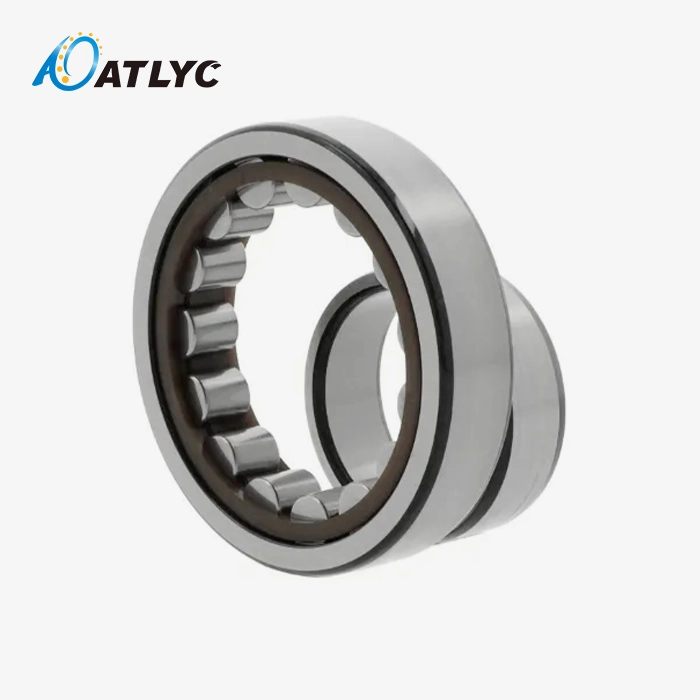
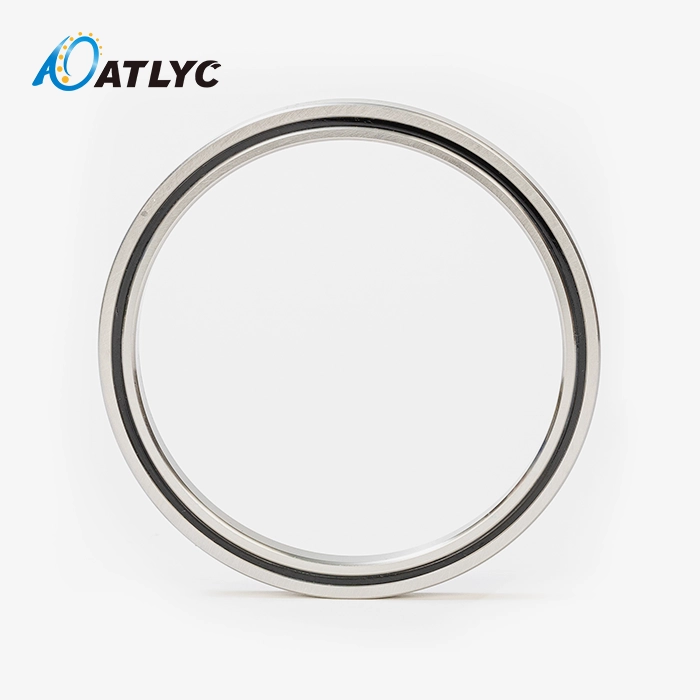
There is a sophisticated design behind the RB5013 Crossed Roller Bearing, which was made for uses that need high precision and small installation spaces. This bearing has a crossed roller configuration at its core. Cylindrical rollers are arranged perpendicular to each other between the inner and outer rings, with spacer retainers between them.
Structural Design and Engineering Principles
The crossed roller design spreads the load over a bigger surface area by making line contact instead of point contact. Because of this basic change in design, the RB5013 Crossed Roller Bearing is three to four times more rigid than similar ball bearings. The raceways are made from high-quality bearing steels like 42CrMo and are hardened by induction to a surface hardness of 58 to 64 HRC. This hardness depth profile is carefully controlled during production to keep the material from breaking down too quickly under repeated loads. This is a typical way for bearings to fail in robotic applications where they are used millions of times.
Material Specifications and Quality Standards
When we make the RB5013 Crossed Roller Bearing, we use high-quality steel that has been treated on the outside to make it more resistant to rust. The bearing's geometric accuracy meets ISO and DIN standards, with tight limits on the inner diameter, outer diameter, and height sizes. During quality control, both radial and axial runout tolerances are checked to make sure the machine runs smoothly and without vibrations. Our ISO 9001 and IATF 16949 certifications at ATLYC make sure that every RB5013 Crossed Roller Bearing goes through strict checks for size accuracy and non-destructive testing before it is shipped.
Load Capacity and Operational Parameters
Because it can handle combined loads, the RB5013 Crossed Roller Bearing is very useful in artificial joints where forces are acting in more than one way at the same time. When robotic arms stretch with big packages, they create large moment loads. The bearing can handle these loads and maintain exact accuracy without deflection or hysteresis. Precise preload control keeps the starting torque constant, so performance can be predicted even when the operational speed changes.
Performance Advantages of RB5013 Crossed Roller Bearing in Robotics
To choose the right RB5013 Crossed Roller Bearing, you need to know how certain design features translate into benefits for operation. The RB5013 Crossed Roller Bearing makes performance improvements that can be measured and directly address common problems in designing robotic systems.
Superior Rigidity and Load Distribution
The crossed roller design makes the effective bearing width larger, which makes it much stiffer than other types of bearings. In precision robots, small moves that add up to positioning mistakes are stopped by this increased rigidity. When robotic arms move parts that need to be accurate to within a millimeter, the RB5013 Crossed Roller Bearing's structure keeps it in the same place across the entire work envelope. Spreading the load evenly across the roller elements makes the bearing last longer by preventing stress buildup in one area, which speeds up wear.
Exceptional Rotational Accuracy
When used in precision robots, bearings must be able to keep their tight tolerance bands while they're working. Depending on the needs of the application, the RB5013 Crossed Roller Bearing can achieve rotational accuracy grades of P5, P4, or P2. Negative clearance settings get rid of backlash, which means that no motion is lost when the direction of motion changes. This is very important for tasks like handling semiconductor wafers, where mistakes in placement measured in microns can lead to expensive production flaws.
Comparative Analysis: RB5013 vs. Alternative Bearing Solutions
Knowing how the RB5013 Crossed Roller Bearing stacks up against other options helps procurement teams make smart choices. The following table lists the most important success differentiators:
| Bearing Type | Space Efficiency | Moment Load Capacity | Rotational Accuracy | Service Life | Installation Complexity |
|---|---|---|---|---|---|
| RB5013 Crossed Roller Bearing | Very good | Very High | Smaller than a micron | 10+ years | Moderate |
| Angular Contact Ball | good | Moderate | Moderate | 5 to 8 years | High (must be paired) |
| Cylindrical Roller | Moderate | Low | Low | 6 to 10 years | Low |
| RB5012 Crossed Roller Bearing | Very good | High | Smaller than a micron | 10+ years | Moderate |
The RB5013 Crossed Roller Bearing stands out because it can handle more moment loads while still having the small profile that is needed for modern robotic joint design. Unlike angular contact bearings, which need complicated pairing arrangements, the RB5013 Crossed Roller Bearing can handle loads in more than one direction in a single integrated unit. This makes assembly easier and lowers the overall weight of the system.
Real-World Application Performance
When RB5013 Crossed Roller Bearings are put in the waist and elbow joints of industrial articulated robots, they show significantly better performance metrics. The bearings allow the arm to fully extend with heavy loads without deflection, which is important for automatic assembly processes that need to meet repeatability standards. When RB5013 Crossed Roller Bearings are used in CNC turning tables, they allow for high-speed spinning with little runout. This supports cutting forces that go in multiple directions without affecting the accuracy of the workpiece's placement.
Selecting the Right RB5013 Crossed Roller Bearing for Your Robotics Project
When making procurement choices, you have to balance technical requirements with supply chain issues. Knowing the important decision factors will help you get the best RB5013 Crossed Roller Bearing performance for your project.
Critical Specification Parameters
Accuracy in measurements is the basis for choosing the right bearing. The inner diameter, outer diameter, and width of the RB5013 Crossed Roller Bearing must all match how robotic joints are mounted. Load rates, such as dynamic load capacity and static load rating, must be higher than what is needed for operation, with the right safety factors being used. The maximum speed that a robot can go should be able to handle both steady rotation speeds and different levels of acceleration during motion cycles.
Manufacturer Reputation and Quality Assurance
Leading bearing makers like IKO, NSK, SKF, KOYO, and Nachi have built their names over many years of making high-quality products. But buying teams should look at more than just how well known a name is. They should also look at how quality control is actually done. Over the past 15 years, ATLYC has grown from a single workshop to six specialized production centers. This shows that output capacity can be increased or decreased as needed, and processes are always getting better. Our quality control system uses ultrasonic testing and magnetic particle screening to find flaws in the metal below the surface before assembly. This makes sure that every RB5013 Crossed Roller Bearing can last millions of cycles of operation without breaking down completely.
Procurement Strategy Considerations
When you order in bulk, you can get better prices, but the total cost of ownership is higher than the unit price. Because lead time dependability affects project plans, supply chain security is an important factor to consider. Customization options let bearings be optimized for specific uses, whether that means changing how they are mounted, adding special greasing systems, or adding sensor provisions. The table below shows the most important criteria for evaluating a procurement:
| Evaluation Factor | High Priority Indicators | Risk Signals |
|---|---|---|
| Quality Certification | ISO 9001, IATF 16949 | Don't have or provide enough documentation |
| Manufacturing Capacity | Multiple production lines, output that can be changed | Limitations on capacity and a single facility |
| Lead Time Reliability | Recorded history of on-time deliveries | Often being late or breaking promises |
| Technical Support | In-house engineering team, customization capability | Not enough expert tools |
| Price Competitiveness | Clear prices and savings for buying in bulk | The lowest price that doesn't justify the quality |
Strategic Partnership Value
Long-term relationships with suppliers have benefits that go beyond single transactions. Manufacturers who have worked in other countries know what the area rules are for compliance and how to handle operations. Costly delays can be avoided by having technical support during installation and commissioning. After-sales service networks make sure that problems with operations are fixed quickly. These parts of the partnership are very important to the success of the whole project.
Maintenance and Longevity Best Practices for RB5013 Bearings
To get the most out of your bearings' life, you need to use structured maintenance protocols that are designed for robotic operating environments. With the right care, you can protect your initial investment and keep the system running smoothly. The RB5013 Crossed Roller Bearing requires specific attention to maintain its high performance.
Routine Inspection and Lubrication Protocols
When lubricating crossed roller bearings, you need to use different methods than when lubricating ball bearings. The RB5013 Crossed Roller Bearing usually works with grease that is chosen based on the temperature ranges and spinning speeds that it can handle. Regular inspections should check the uniformity of the starting force, which shows if the preload stays within the specifications. Unusual changes in torque are a sign of possible pollution or deteriorating oil that needs immediate attention.
Preventative Maintenance Strategies
Finding wear signs early on stops them from getting worse and leading to catastrophic failure modes. Vibration analysis finds surface flaws before they get in the way of rotational accuracy. Temperature monitoring shows when there is too much friction because of poor lubrication or misalignment. We suggest setting baseline performance metrics during commissioning and then keeping an eye on any changes during regular maintenance. This method, which is based on data, lets you plan repairs in advance, which cuts down on unplanned downtime.
Installation Best Practices
Proper installation has a direct effect on how well and how long a bearing lasts. To keep bearings from warping when bolts are preloaded, mounting surfaces must meet certain flatness requirements. Controlling contamination during installation stops particles from getting in and speeding up wear. To make sure that the design parameters are met, measurements of the starting torque must be used to confirm the preload settings. Many bearing failures that are thot to be caused by flaws in the manufacturing process are actually caused by mistakes in the fitting process. Following the right steps is important for getting the expected design life.
Troubleshooting Common Issues
Noise during operation is usually caused by dirt or not enough oil, not by problems with the bearings themselves. More starting torque could mean that the lubricant is getting harder or that the seals are interfering. Less accurate circular movement is a sign of wear that needs a new bearing. Writing down the history of operations helps find patterns that help improve maintenance. Technical support teams from suppliers are very helpful for fixing, especially when the application is complicated.
Why RB5013 Crossed Roller Bearing is the Preferred Choice in Robotics
Because of how well its technical features match up with its practical needs, the RB5013 Crossed Roller Bearing has become a standard in advanced robotic systems.
Addressing Core Robotic Design Challenges
Modern robotics has to deal with a lot of different challenges, such as increasing payload capacity while lowering system weight, going faster while keeping accuracy, and operating in harsh environments for longer periods of time between service visits. The RB5013 Crossed Roller Bearing's combined design solves all of these problems at the same time. Its thin section profile makes it possible to build robotic arms that are lighter, which lowers their inertia and makes them use less energy. A large moment capacity allows for a longer reach without adding extra support to the structure. Proven dependability cuts down on the amount of maintenance that needs to be done, which can delay output plans.
Adaptation to Emerging Robotics Trends
When working with people, collaborative robots need to be able to move in a smooth, reliable way. The RB5013 Crossed Roller Bearing is great at this. The bearing's low friction coefficient and steady starting torque make it possible to precisely control speed, which is necessary for safe interaction between humans and robots. Its whisper-quiet operation and reliable performance in cleanrooms make the RB5013 Crossed Roller Bearing a top choice as robotics moves into new fields like medical imaging and surgical assistance. The bearing can be rebuilt and used for a longer time, which will help future progress in renewable materials and circular economy ideas.
Supply Chain Reliability and Technical Partnership
Product quality isn't enough to guarantee project success; a stable supply chain and expert help are also necessary. When manufacturers show that they can produce large quantities, have experience shipping goods internationally, and provide good customer service, specification decisions can be made with confidence. Our 120-person ATLYC team works on production, research and development, quality control, and putting things together. With this integrated capability, procurement managers can work directly with engineers who know what the application needs and can suggest ways to make it better. We are present in South Korea, the US, Germany, Russia, Iran, and Turkey, among other markets. This is because we have built transport networks and regional support infrastructure.
Long-Term Advantages in the Market
Choosing the RB5013 Crossed Roller Bearing has benefits later on in the product's existence. Standardizing designs makes it easier to keep track of extra parts. Proven reliability in the field lowers the risk of a warranty claim. Building partnerships with suppliers based on successful projects speeds up the development of next-generation products. Because of these combined benefits, top automation companies keep approved partner lists that focus on makers who have shown they can do the job.

Conclusion
The RB5013 Crossed Roller Bearing provides engineering solutions that are perfectly matched to the needs of robotic applications. Because of its unique crossed roller design, it is very rigid, easy to place, and reliable, even in small installation areas. The RB5013 Crossed Roller Bearing has a higher moment load capacity, a longer service life, and is easier to install than other bearing designs. These features have a direct effect on the total cost of ownership. To be successful at procurement, you need to look at more than just the specs of the parts. You also need to look at the supplier's quality standards, production capacity, expert support, and the stability of the supply chain. When you work with experienced manufacturers, you can get access to tried-and-true products and ongoing engineering collaboration that makes robotic system performance better all the time.
FAQ
How does the RB5013 compare to angular contact bearings for precision applications?
Angular contact bearings need complicated pair arrangements to handle combined loads. The RB5013 Crossed Roller Bearing, on the other hand, can handle loads in more than one way in a single unit. The crossed roller design is three to four times more rigid and takes up less axial space, which are both very important benefits in small robotic joints where installation space limits design choices.
Can RB5013 bearings be customized for specific robotic applications?
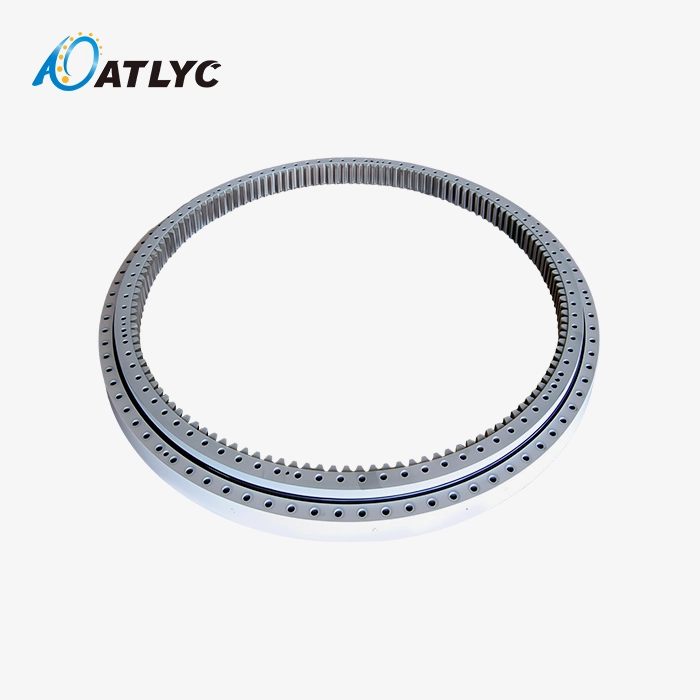
Customization options from experienced manufacturers include changed mounting hole patterns, built-in gear teeth for direct drive systems, and unique seal configurations for dirty environments. For high temperatures or corrosive situations, the choice of material can be made to work best. We work together with engineering teams to create solution-specific options that improve system performance while keeping the main benefits of crossed roller technology.
What quality control measures ensure RB5013 bearing reliability?
Comprehensive quality protocols include using coordinate measuring machines to check the accuracy of the dimensions, hardness depth profiling of induction-hardened raceways, starting torque testing to make sure the preload is always the same, and non-destructive testing with ultrasonic and magnetic particle inspection methods. These steps find possible flaws before they are put together, making sure that only bearings that meet strict requirements get to customers.
Partner with ATLYC for Your RB5013 Crossed Roller Bearing Requirements
Finding the right RB5013 Crossed Roller Bearing provider has effects on the job that go far beyond the cost of the parts. ATLYC has been making things for 15 years and has quality systems that are ISO 9001 and IATF 16949 certified. This gives your robotic applications the accuracy and dependability they need. Our six specialized production facilities and 120-person technical team make sure that we can increase our capacity as needed, keep the quality high, and provide quick support for customization. Whether you're making the next generation of industrial robots or improving the performance of automation equipment you already have, our engineering team can help you with application-specific advice backed by the stability of a global supply chain. Get in touch with us right away at auto@lyautobearing.com to talk about your RB5013 Crossed Roller Bearing needs. We'll help you choose the best bearing option from a reputable maker by giving you full specs, competitive bulk pricing, and expert advice that is unique to your project.
References
1. Harris, T.A. & Kotzalas, M.N. (2006). "Rolling Bearing Analysis: Essential Concepts of Bearing Technology." CRC Press, Fifth Edition.
2. Schaeffler Technologies AG & Co. (2019). "Crossed Roller Bearings: Design and Application in Precision Machinery." Technical White Paper Series.
3. ISO 492:2014. "Rolling bearings – Radial bearings – Geometrical product specifications (GPS) and tolerance values." International Organization for Standardization.
4. Budynas, R.G. & Nisbett, J.K. (2020). "Shigley's Mechanical Engineering Design," McGraw-Hill Education, Eleventh Edition, Chapter 11: Rolling-Contact Bearings.
5. NSK Ltd. (2021). "Precision Bearings for Industrial Robots: Selection Guide and Technical Reference." NSK Technical Report No. 78.
6. IATF 16949:2016. "Quality Management System Requirements for Automotive Production and Relevant Service Parts Organizations." International Automotive Task Force.
Learn about our latest products and discounts through SMS or email