- English
- French
- German
- Portuguese
- Spanish
- Russian
- Japanese
- Korean
- Arabic
- Greek
- German
- Turkish
- Italian
- Danish
- Romanian
- Indonesian
- Czech
- Afrikaans
- Swedish
- Polish
- Basque
- Catalan
- Esperanto
- Hindi
- Lao
- Albanian
- Amharic
- Armenian
- Azerbaijani
- Belarusian
- Bengali
- Bosnian
- Bulgarian
- Cebuano
- Chichewa
- Corsican
- Croatian
- Dutch
- Estonian
- Filipino
- Finnish
- Frisian
- Galician
- Georgian
- Gujarati
- Haitian
- Hausa
- Hawaiian
- Hebrew
- Hmong
- Hungarian
- Icelandic
- Igbo
- Javanese
- Kannada
- Kazakh
- Khmer
- Kurdish
- Kyrgyz
- Latin
- Latvian
- Lithuanian
- Luxembou..
- Macedonian
- Malagasy
- Malay
- Malayalam
- Maltese
- Maori
- Marathi
- Mongolian
- Burmese
- Nepali
- Norwegian
- Pashto
- Persian
- Punjabi
- Serbian
- Sesotho
- Sinhala
- Slovak
- Slovenian
- Somali
- Samoan
- Scots Gaelic
- Shona
- Sindhi
- Sundanese
- Swahili
- Tajik
- Tamil
- Telugu
- Thai
- Ukrainian
- Urdu
- Uzbek
- Vietnamese
- Welsh
- Xhosa
- Yiddish
- Yoruba
- Zulu
Why Choose Cup Tapered Roller Bearing 30313 for OEM Repairs?
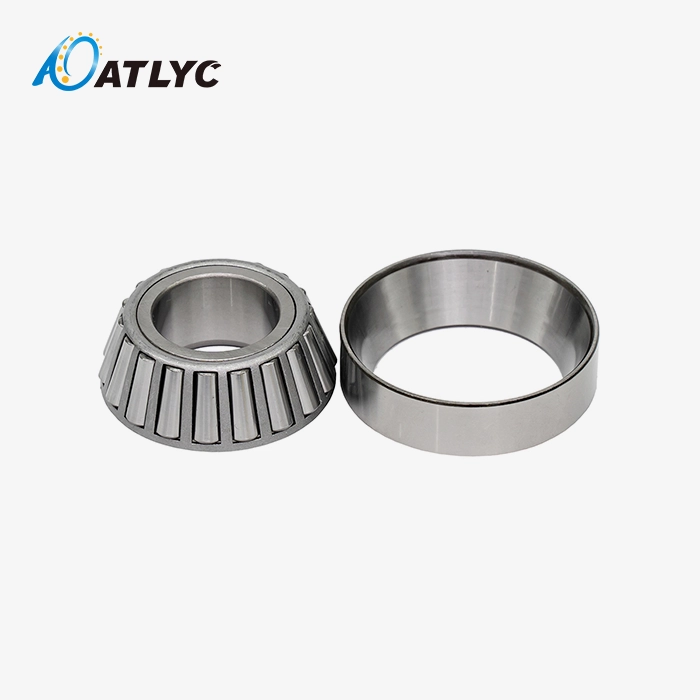
The Cup Tapered Roller Bearing 30313 may assist you with a particular repair issue. This metric tapered bearing has a 65 mm bore, 140 mm outer diameter, and a breadth of 33 mm. Single row does the trick. It is designed to support axial and radial loads in one direction in hubs, reducers, gearboxes, and machine tool spindles. The outer cup may be removed so that a technician can push the outer ring into a housing while the cone assembly is still on the shaft. This reduces the time that heavy, hard-to-move equipment requires to be serviced. Buyers still have to inspect the OEM design to ensure the load ratings, tolerance class, and cup and cone match before the order is released.

Why the 30313 Cup Tapered Roller Bearing Fits OEM Repair Work
Tapered Geometry and Combined Loads
There are cone-shaped raceways on top of tapered rollers, and the tips of these raceways meet at one point on the shaft plane. This shape makes line contact along the whole length of the roller at contact angles between 10° and 30°. This means the bearing can deal with thrust in one direction and radial force at the same time. There aren't as many bearing positions inside the housing, so a repair engineer can save time and money. Some types of shafts, like a differential pinion shaft or a reducer intermediate shaft, don't need their own thrust bearing. The load is not concentrated in one spot but is spread out over the whole roller. This wears faster than a ball bearing of the same envelope size, even when the duty cycle changes.
Separable Cup, Cone, and Repair Scope
The Cup Tapered Roller Bearing 30313 can be bought in two ways: as a single, perfectly matched piece, or as two separate pieces. The cup is the outside ring, and the cone assembly with rollers and a cage is the inside ring. For making plans, that split is important. A new cup is often pressed into a housing that is already attached to a frame while the cone is on the bench on a shaft. Catalogs list both the full name and the name of the part, so buyers should be sure they know which one they need. For instance, it doesn't help to run a new cup against an old cone.
Substitution Risk Without Engineering Approval
Tapered bearings may seem identical but vary in diameter, breadth, contact angle, and internal geometry. A trade is not safe since it's huge. The kind of cup you run will affect the preload, the quantity of heat generated, and the location of the gear mesh. Disassemble and measure before ordering. Write down the OEM component number, shaft seat diameter, and housing bore. If there is no drawing, you may only defend yourself with a documented cross-reference from the supplier. Don’t put the Cup Tapered Roller Bearing 30313 on a maintenance schedule simply because it appears like it will fit a specific ISO 355 envelope.
Dimensions, Fits, and Specifications
The 65 × 140 × 33 mm Envelope
The Cup Tapered Roller Bearing 30313 product data sheet shows it is 32 mm broad, 140 mm diameter, and 65 mm deep. The matching set of cups and cones is said to have a 36 mm assembly width in certain catalogues. The quotation was accompanied by an artwork called “The Ghost of the Old Order.” Need to alter the freight maths for the number of pallets. It’s near 2.45 kg. The size of the packaging is also essential. One machine sends bearings out of totes, and it requires the box footprint so the box may go into the magazine without being wrapped.
Fits, Tolerances, and Internal Clearance
The amount of capacity that gets to the rollers depends on how well the shaft and housing fit together. If the housing is too loose, the cup can move. If it's too tight, there is less room inside, which makes the running temperature go up. Do not look at the price list to choose the class. Instead, use the ISO 492 tolerance values for precision classes P0, P6, and P5. The class should be right for the job. Since the internal clearance is set during installation and not at the factory, the preload procedure used by the equipment builder determines how the machine will run in the end. An air gage and a coordinate measuring machine check the outside diameter of the bore and cup before the part is sent to the store.
Series Neighbours: 30312 and 30314
People want to make a quick swap when the designations are close by. When it comes to contact angles, the 30312 and 30314 are both in the same family. The 30312 is one step less than the 30314 in the series, and the 30314 is one step more. There are different boundary sizes for the Cup Tapered Roller Bearing 30313 and the other one. It's not possible for a 30312 cup to fit a 65 mm shaft or a 30314 cup to fit a 140 mm housing bore. Please use the table below as a guide before putting anything on the shop floor. Then, compare it to the manufacturer's drawing.
| Parameter | Cup Tapered Roller Bearing 30313 |
|---|---|
| Series and standard | 303 series, ISO 355 boundary dimensions |
| Structure | Single row, tapered raceway, separable outer cup, open type with optional dust cover |
| Contact angle | 10°–30° |
| Rings and rollers | GCr15, GCr15SiMn, or 20Cr2Ni4A |
| Cage | Stamped steel or brass |
| Precision classes | P0, P6, P5 |
| Typical weight | about 2.45 kg |
| Typical dynamic and static ratings | roughly 209 kN and 240 kN; confirm on the maker's data sheet |
| Limiting speed | about 3,400 r/min greased, 4,500 r/min oiled |
| Key inspection items | taper surface fitting, radial and axial capacity, dimensional accuracy |
Load Ratings, Materials, and Operating Performance
Reading Dynamic and Static Ratings
Dynamic rating describes fatigue life under rotation; static rating describes permissible load at rest or very slow turning. As a general rule, a 30313 has a number between 209 kN and 240 kN. However, the number on the supplier's data sheet is the one that matters because different brands have different internal designs. Compare those numbers to the radial load, thrust load, speed, shock profile, and duty cycle of the repair. If you only look at a bearing's bore size, it could get too hot or break before it's time when real thrust is needed. Sometimes this problem shows up weeks after the bearing was first used.
Steel Grade and Heat Treatment
It is possible to fill most orders with GCr15 high-carbon chromium steel, GCr15SiMn for bigger or heavier pieces, or 20Cr2Ni4A steel that hardens quickly. Once the heat treatment is done, the rings and rollers reach HRC 60–64 at the raceway. On the other hand, the core stays bendy enough to handle shock. People who are buying something should ask for hardness profiles and magnetic particle inspection reports. This is because cracks and inclusions below the surface cause fatigue spalling that shows up months after the product was installed. Different quotes for the same nominal part have different prices. This is mostly because the steel grade and heat treatment are different.
Cage Options and Lubrication
When making a lot of cars, stamped steel cages work well. In industrial drives, brass cages can handle higher temperatures and more shock. The choice changes the price, weight, and lead time, so you should write it on the order. The Cup Tapered Roller Bearing 30313 will run for as long as it is well oiled after that. Hubs that are sealed and low-speed reducers work best with grease. Oil works best in gearboxes that can move oil around. The base oil's viscosity should match the speed and temperature of operation. Refilling shouldn't happen at set times; instead, it should happen slowly over time.
Alternatives, Interchangeability, and Cross-Reference Review
Dimensional Equivalence Versus Functional Fit
Two bearings may not work the same even if their inside and outside diameters are the same. How much weight and heat it can hold depends on the contact angle, the number of rollers, the crown of the raceway, the type of cage, and the range of clearance. It's possible that a size match would work for the housing but not for the duty. A plant engineer needs to check three things before they can say for sure if a 30313 can replace a nearby designation. These are the boundary dimensions, the rated capacity, and the way the mounting is set up in the housing. There is no way to know for sure if that is true if it is less than that.
Comparing Branded and Aftermarket Supply
A lot of information and stock can be found all over the world from well-known brands like SKF, FAG, TIMKEN, and NSK. As long as they follow the same ISO 355 guidelines, all qualified aftermarket makers are able to compete on price and lead time. When OEMs buy something, I tell them to look at the quality of the documentation instead of how well-known the brand is. It's better to have a data sheet with ratings, tolerance class, cage material, and heat treatment records than a listing with only a name. When maintenance needs to be done at set times, it's often more important that shipments match what's written on the box.
Cross-Reference Review Before Approval
Cross-referencing jobs must be done in a certain order. Look at the part number and name that came with it, then map it to ISO 355 boundary dimensions. Finally, look at the supplier's tolerance class and internal clearance and see if they match what the equipment builder needs. When numbers in the inch range are mentioned, carefully change them and pay attention to any rounding. It should be engineering, not purchasing, who gives the OK. The order didn't go through because no one checked the width of the cup against the shoulder of the housing. The fix cost a great deal more than the wheels.
| Reference point | 30313 Cup Tapered Roller Bearing | 30312 / 30314 neighbours | Double-row or other series |
|---|---|---|---|
| Boundary dimensions | 65 × 140 × 33 mm | Different bore, OD, or width | Usually wider or different OD |
| Load direction | Radial plus one-direction axial | Same family, different capacity | Often both axial directions |
| Mounting | Separable cup, independent cone | Separable | Single unit, wider housing |
| Typical use | Hubs, reducers, gearbox shafts | Adjacent shaft sizes | Where axial load reverses |
| Approval route | OEM drawing or engineering sign-off | Same | Same, plus housing check |
Applications, Installation, and Preload Practice
Wheel Hubs, Axles, and Differentials
A lot of thrust is made by the differentials and rear axle assemblies when commercial trucks speed up or turn. A pair of Cup Tapered Roller Bearings 30313 that are the same size and shape hold the pinion or differential shaft in place. They are set up so that they face each other. It's just right for the gear mesh to be quiet. Too little play makes it hot, and too much play makes it noisy. Teams should write down the turning torque and the thickness of the shim stack before taking something apart to fix it. This will save a lot of time when putting the new set back together.
Gearboxes, Reducers, and Conveyors
You can use this bearing to hold up the middle part of shafts in heavy reducers, rock crushers, and mining conveyors. There is a steady load that makes it last longer, but contamination and shock loads make it last less long. This is when the grease and seals you choose are just as important as the bearing itself. When heavy tools are turned and are exposed to water and slurry, the ends of tractors' wheels and harvesters' spindles add side force. In every case, the conditions of the job, not the catalog page, help us decide whether a standard open bearing or a protected arrangement is better.
Mounting Direction, Tooling, and Preload
Clean the housing, the cup seat, the shaft, and any other parts that are close by. After that, check for cracks, burrs, fretting, and heat marks. Do not press through the rollers or the cage. Instead, press through the ring that needs to be changed. When you put in a tapered bearing, the cup and cone go in together, and arrangements that are at right angles to each other need to be facing the other way. The builder will tell you how to set the preload or endplay and give you the torque, shims, or locknut. Now that the Cup Tapered Roller Bearing 30313 is running, write down what you hear, feel, and the temperature of the housing.
Failure Symptoms and Troubleshooting
Warning Signs Worth Logging
Noise, shaking, and heat are common signs that someone is about to have a seizure. Maintenance teams should write down the temperature of the housing, the sound it makes, how much play there is in the shaft, and the color of the oil every time they check it. A shiny metal look on the grease means it is dirty and worn down. A dark or milky grease means it is too hot or too wet. The damage will stay in the bearing if these signs are found early. It won't spread to the shafts, gears, or seals. It's easier to use a simple trend sheet to prove a claim than to try to remember that "it sounded strange last week." This gives the supplier real operating data as well.
Reading Raceway and Roller Damage
When you spherize, pit, score, Brinell, or roller skid, you leave behind different marks. If a raceway has wide, even spalling, it means that it is wearing out under load. If it has evenly spaced dents, it means that it is brinelling from shock or bad mounting, and if it has scoring, it means that it is not getting enough oil. Before you clean the Cup Tapered Roller Bearing 30313, make sure it works. Getting rid of the proof changes the story. Picture the cup raceway, roller ends, and cage pockets when there is enough light. Note which side had the load on it. This paper tells the difference between a mistake in installation and a real problem with the part.
Root Cause Versus Material Fault
It's not steel that's broken that fails most of the time; it's dirt, the wrong lubricant, the wrong preload, misalignment, bad fits, or too much speed. Before you blame the part, look at how it was mounted, the specs of the lubricant, and the state of the housing. There must be hardness data, inspection reports, and a way to trace back to the supplier's batch in order to make a material claim. People talk quickly when those records are at hand, but when they're not, they guess. One reason I see paperwork as part of the deal and not as something that comes up later is because of this.
Supplier Selection, Pricing, and Bulk Procurement
Quality Credentials and Process Control
IATF 16949 adds to ISO 9001 the controls that OEM programs want for auto parts, like being able to track them and checking the manufacturing process. Make sure you get more than just the logo. Ask for up-to-date certificates and a scope statement as well. Then, find out how the supplier makes sure that each batch meets the standards for accurate measurements, taper surface fitting, and radial and axial load capacity. Two different awards have been given to ATLYC since it set up its quality system across six workshops. This system helps buyers in the US, Germany, and Turkey get work all the time.
What Shapes the Unit Price
The unit price depends on the type of steel, the level of accuracy, the type of cage material, the certification, the order quantity, the packaging, and whether the line item is a cup, a cone, or a set. It's not a deal when someone gives you a low-price quote for a part that you haven't talked about. Compare the total cost of ownership, which takes into account the chance of downtime and the work that needs to be done for inspections. One good way for a distributor to compare quotes is to first see if the specs are the same. Then, they should look for differences in the lead time, paperwork, and warranty terms.
Decision Checklist Before Release
A choice has to be made three times, and each time needs a written answer before the purchase order can be sent.
Dimensional checks confirm cup outside diameter, cup width, cone bore, cone width, and complete assembly width against the OEM drawing, then compare shaft seat and housing bore measurements taken from the actual machine so that a worn housing does not quietly undermine the fit.
Performance checks align radial load, axial load, speed, temperature, lubricant, contamination level, duty cycle, clearance, preload, tolerance class, cage, and material requirement with the application, and where duty sits near the rating limit they should rest on a supplier calculation rather than an estimate.
Commercial checks put price, quantity, packaging, delivery, warranty, payment terms, and future availability into one written comparison, and the approval route ends with an engineering signature confirming that the Cup Tapered Roller Bearing 30313 matches the original design or has been accepted as a verified alternative.
Just because two things look alike doesn't mean anything. These checks only take an afternoon, but they save work that would have had to be redone for a whole week.

Conclusion
The Cup Tapered Roller Bearing 30313 bearing, with its open envelope, tapered line contact, and easily installed cup that could be disassembled, became a staple in OEM service programs. It is composed of GCr15 steel and is 65 mm long, 140 mm broad, and 33 mm thick. It is good for hubs, reducers, gearboxes, and agricultural equipment. This can go on for quite a long period, but it is contingent upon the load ratings, the cage choice, and the lubrication. Sizes 30312 and 30314 need to be certified by the engineers, not merely guessed at. The quality of the item is crucial, but so is the manner it's attached, the preload setting, and how clean it is. If a repair is required to endure for the whole duty cycle, unit price is not the primary factor. Documentation from the supplier and the ability to trace batches is also extremely significant.
FAQ
Is the Cup Tapered Roller Bearing 30313 sold as a cup only or as a complete bearing?
There are two kinds. The name is used for both the cup and cone and the whole set when it is put together in some catalogs. Make sure you know what the quote means.
Can I replace just the cup and keep the old cone?
The answer is yes, but it's not a good idea to carry it out. An old cone will wear out the same way an old cup does, and putting them together will stress them out and make them last less long. Change the set as a group.
Is a 30312 or 30314 a direct substitute?
They are both in the same series, but their bore, outside diameter, and width are different. Once you know the width and housing dimensions, you can decide if you want to make the swap.
What information does a supplier need for a bulk quotation?
Send the machinery model, the part number, the cup or cone scope, the annual quantity, the location, the delivery date, the type of packaging you would like, and any inspection forms you need.
Send Your Cup Tapered Roller Bearing 30313 Inquiry to ATLYC
Precision bearings are what ATLYC has been making since 2010. It now has six workshops with 120 workers who use methods that are approved by ISO 9001 and IATF 16949. Please tell us what kind of equipment you have, the part number, the quantity, where it's going, and when it needs to be delivered. After that, our engineers will look over the cup-and-cone shape and send you a quote. Email auto@lyautobearing.com or visit https://aotezhoucheng.aixdb.cn/ to get in touch with a Cup Tapered Roller Bearing 30313 supplier who keeps track of each batch.
References
1. ISO 355:2007, Rolling Bearings — Tapered Roller Bearings — Boundary Dimensions and Designation System (International Organization for Standardization, 2007).
2. ISO 492:2014, Rolling Bearings — Radial Bearings — Geometrical Product Specifications (GPS) and Tolerance Values (International Organization for Standardization, 2014).
3. DIN 720:2011-07, Rolling Bearings — Tapered Roller Bearings (Deutsches Institut für Normung, 2011).
4. AIAG, IATF 16949:2016 — Quality Management System Requirements for Automotive Production and Relevant Service Parts Organizations (Automotive Industry Action Group, 2016).
5. Harris, T. A., and Kotzalas, M. N., Rolling Bearing Analysis, 5th edition (CRC Press, 2007).
6. GB/T 18254:2016, High-Carbon Chromium Bearing Steel (Standardization Administration of China, 2016).
Learn about our latest products and discounts through SMS or email