- English
- French
- German
- Portuguese
- Spanish
- Russian
- Japanese
- Korean
- Arabic
- Greek
- German
- Turkish
- Italian
- Danish
- Romanian
- Indonesian
- Czech
- Afrikaans
- Swedish
- Polish
- Basque
- Catalan
- Esperanto
- Hindi
- Lao
- Albanian
- Amharic
- Armenian
- Azerbaijani
- Belarusian
- Bengali
- Bosnian
- Bulgarian
- Cebuano
- Chichewa
- Corsican
- Croatian
- Dutch
- Estonian
- Filipino
- Finnish
- Frisian
- Galician
- Georgian
- Gujarati
- Haitian
- Hausa
- Hawaiian
- Hebrew
- Hmong
- Hungarian
- Icelandic
- Igbo
- Javanese
- Kannada
- Kazakh
- Khmer
- Kurdish
- Kyrgyz
- Latin
- Latvian
- Lithuanian
- Luxembou..
- Macedonian
- Malagasy
- Malay
- Malayalam
- Maltese
- Maori
- Marathi
- Mongolian
- Burmese
- Nepali
- Norwegian
- Pashto
- Persian
- Punjabi
- Serbian
- Sesotho
- Sinhala
- Slovak
- Slovenian
- Somali
- Samoan
- Scots Gaelic
- Shona
- Sindhi
- Sundanese
- Swahili
- Tajik
- Tamil
- Telugu
- Thai
- Ukrainian
- Urdu
- Uzbek
- Vietnamese
- Welsh
- Xhosa
- Yiddish
- Yoruba
- Zulu
Why Choose SX011824 Precision Cross Roller Bearing?
If your engineering team wants a bearing that can take radial, axial, and moment loads concurrently without eating up important space, then you need to seriously consider the SX011824 Precision Cross Roller Bearing. This bearing has an ultra-thin cross roller structure with an integrated inner ring and a split outer ring fastened by three fastening rings, with P2-P6 accuracy grades and GCr15 steel construction inside a 120×150×16mm envelope. It combines what would normally be two angular contact ball bearings into one accurate and compact package – a handy solution for robotics joints, precision rotary tables and IC fabrication equipment.
Understanding the SX011824 Precision Cross Roller Bearing
Structural Design and Core Specifications
SX011824 is an SX series cross roller bearing. The SX series is an ultra-thin profile series without mounting holes in either ring. The mating housing design is important for rotational precision since fixation is based only on flanges and bearing seats. The integrated inner ring offers structural continuity, and the split outer ring – secured by three fastening rings – enables adjustable preload during installation. The rollers are cylindrical and are placed alternately at 90° within V-groove raceways. Plastic spacers prevent the rollers from touching each other.
| Specification | Value |
|---|---|
| Inner Diameter (d) | 120 mm |
| Outer Diameter (D) | 150 mm |
| Width (B) | 16 mm |
| Material | GCr15, GCr15SiMn |
| Accuracy Grades | P6, P0, P5, P4, P2 |
| Surface Hardness | HRC 58–64 |
This line-contact geometry between rollers and raceways generates substantially higher load capacity per unit size than conventional point-contact ball bearings. According to ISO 492, P4 and P2 tolerance classes constrain radial runout to levels well below 5 µm, which is why this bearing appears repeatedly in semiconductor fabrication equipment and coordinate measuring machines.
Maintenance Practices That Extend Service Life
The choice of lubrication is of great importance for this kind of bearing. The most common suggestion is high-quality lithium soap grease with EP (Extreme Pressure) additives, especially for oscillating applications such as robotic joints where there is a greater danger of fretting corrosion. Visual or magnetic particle examination of the surface condition of raceways should be included in routine inspections. Hardness tests should be used to ensure that the integrity of the heat treatment is maintained over service cycles. Store horizontally in low humidity conditions below 65% RH. Avoid shock during transport. The split outer ring is vulnerable to distortion, which will rapidly impair runout accuracy.
Comparing SX011824 with Other Bearings – Making the Right Choice
Selecting between SX011824 Precision Cross Roller Bearing types involves weighing load profile, available space, and precision requirements against cost. The SX011824 occupies a distinct position in this decision matrix.
Here is a direct performance comparison across the most commonly evaluated alternatives:
| Bearing Type | Multi-Direction Load | Moment Rigidity | Compactness | Typical Accuracy |
|---|---|---|---|---|
| SX011824 Cross Roller | ✓ All directions | Very High | Ultra-thin | P2–P6 |
| Angular Contact Ball (pair) | ✓ Axial + Radial | Moderate | Requires more axial space | P4–P5 |
| Crossed Roller Slewing Ring | ✓ All directions | High | Large diameter | P6–P0 |
| Standard Cylindrical Roller | Radial only | Low | Moderate | P6–P0 |
These distinctions translate directly into engineering decisions. When robotic arm joints require sub-micron positioning and axial compactness, the SX011824's consolidated load handling eliminates an entire bearing position from the assembly. A single-precision cross-roller unit replaces a back-to-back angular contact arrangement, saving axial length and reducing assembly complexity.
That said, crossed roller slewing rings remain appropriate when ring diameter exceeds 300 mm or when mounting-hole accessibility is mandatory. Standard cylindrical bearings suit purely radial applications where moment loads are absent. Understanding these boundaries helps procurement engineers avoid over-specifying or under-specifying bearing arrangements.
Procurement Insights for SX011824 Precision Cross Roller Bearing
Sourcing a high-precision bearing from a credible SX011824 Precision Cross Roller Bearing manufacturer involves more than comparing catalog prices. Several factors warrant careful evaluation before committing to a supplier relationship.
Certification status is a non-negotiable baseline. Suppliers holding both ISO 9001 and IATF 16949 certifications operate under documented quality management systems that govern dimensional inspection, heat treatment traceability, and defect rate monitoring. IATF 16949 specifically addresses automotive-grade manufacturing controls, which transfer directly to the rigorous requirements of industrial robotics and precision machinery sectors.
Quality control checkpoints for this SX011824 Precision Cross Roller Bearing class include:
- Dimensional Integrity via CMM: Verifying inner diameter, outer diameter, and width against tolerance limits using Coordinate Measuring Machines eliminates dimensional drift across production batches.
- Rotational Runout Testing: Radial and axial runout of the inner ring must meet the stated accuracy grade — P4 permits no more than 4 µm radial runout per ISO 492.
- Preload and Clearance Verification: Radial clearance, often negative in preloaded configurations, must balance rigidity against starting torque. Excessive preload accelerates fatigue; insufficient preload reduces moment stiffness.
- Microstructure and Surface Finish: Raceway grinding burns or chatter marks are primary initiators of premature spalling. Surface roughness below Ra 0.2 µm is the accepted standard for extended fatigue life.
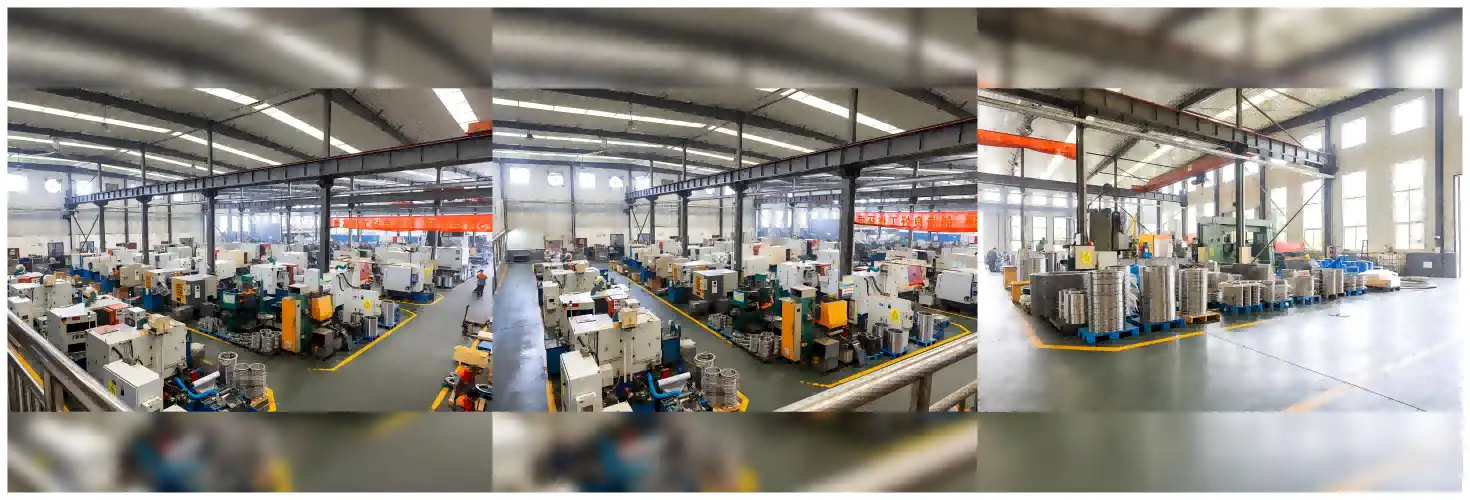
Luoyang Auto Bearing Co., Ltd. (ATLYC), established in 2010 and now operating across six specialized workshops with 120 skilled personnel, holds ISO 9001 and IATF 16949 certifications. With 15 years of continuous manufacturing evolution and active export to the US, Germany, South Korea, Russia, Iran, and Turkey, the company offers OEM customization, verified lead times, and technical support for high-precision bearing applications.
Real-World Applications and Benefits of SX011824 Bearing
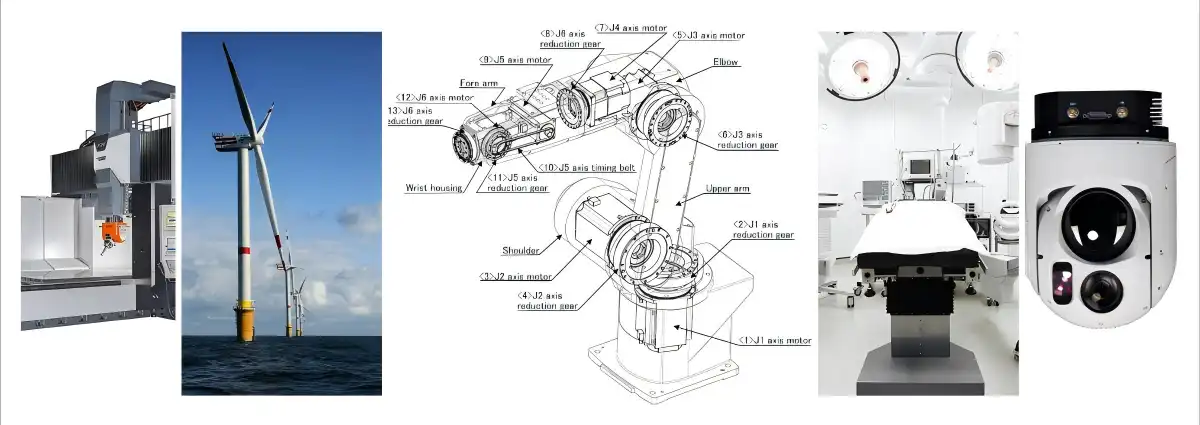
The SX011824 cross roller bearing is ideal when sub-millimeter precision and compactness are engineering necessities, not choices. The most frequent use of this kind of bearing is in the joints of industrial robots, particularly 6-axis articulated arms in which each joint must support simultaneous radial and tilting loads in a limited cross-section. The low coefficient of friction of the bearing permits smooth, energy-efficient rotation that maintains positional precision over millions of cycles.
This bearing supports the weight of workpieces and absorbs cutting-force moments in machining center rotary tables, ensuring that table runout remains within tolerance for the whole machining operation. Medical imaging equipment and IC production devices need the same level of accuracy; a placement mistake of only a few microns in semiconductor lithography stages means yield loss. The SX011824 with P4 and P2 accuracy ratings is a clear answer to these needs.
Also, the low vibration properties of the bearing are beneficial to precision measurement devices, so that the collection of data does not have measurement noise.
Installation and Handling Guide for SX011824 Precision Cross Roller Bearing
Because the outer ring is split, the mating housing or precision flange must be rigid and machined to close tolerances. Any deformation introduced during clamping transfers directly into the raceway geometry, destroying rotational accuracy. Pre-installation checks should confirm housing bore roundness, face squareness, and surface finish before the bearing is positioned.
The preload application works through controlled torque on the flange bolts that compress the split outer ring halves. Use a calibrated torque wrench and follow a cross-pattern tightening sequence to ensure uniform clamping. After assembly, verify starting torque and runout with a dial indicator before committing the unit to service.
During transit and storage, keep bearings in original packaging with desiccant. Avoid stacking units vertically — horizontal storage prevents raceway deformation from prolonged static loading under gravity. If abnormal noise or elevated torque appears during initial operation, inspect the housing bore and flange contact faces before attributing the issue to the bearing itself.
Conclusion
The SX011824 Precision Cross Roller Bearing consolidates multi-directional load capacity, ultra-thin geometry, and ISO-grade rotational accuracy into a single engineered component. Its GCr15 steel construction, split outer ring design, and P2–P6 accuracy options make it a technically sound choice for robotics, precision rotary tables, medical equipment, and IC manufacturing devices. For procurement teams evaluating cross roller bearing suppliers, validating certifications, quality control protocols, and manufacturing scale remains essential. ATLYC's 15-year track record and certified production infrastructure position the company as a reliable long-term supply partner for demanding global applications.
FAQ
1. Can the SX011824 replace two angular contact ball bearings?
Yes. This is one of its primary engineering use cases. The crossed-roller arrangement handles loads in all directions with higher moment rigidity than a back-to-back ball bearing pair, while saving significant axial length. For tight-space designs in robotics or precision machinery, this substitution also simplifies assembly and reduces parts inventory.
2. What accuracy grade should I specify for robotic applications?
P5 is adequate for most industrial robot joints. P4 suits high-precision positioning arms or rotary tables where runout tolerance is below 5 µm. P2 targets semiconductor and optical equipment where sub-micron runout is required.
3. What is the recommended operating temperature range?
Standard models operate between -20°C and +80°C. High-temperature applications require stabilization heat treatment and Viton/FKM seal materials to preserve dimensional stability.
4. How is preload adjusted during installation?
Preload is set by clamping the split outer ring halves through a precision flange. The torque applied to flange bolts determines the final internal preload state. Verify with a torque check after assembly.
5. Does ATLYC offer OEM customization for this bearing?
Yes. Luoyang Auto Bearing supports custom accuracy grades, material variants, and modified dimensional tolerances for OEM clients with specific application requirements.
Partner with ATLYC for Reliable SX011824 Precision Cross Roller Bearing Supply
ATLYC combines 15 years of precision manufacturing experience, ISO 9001 and IATF 16949 certifications, and six specialized production workshops to deliver the SX011824 Precision Cross Roller Bearing at competitive pricing with dependable lead times. Whether you need a qualified SX011824 Precision Cross Roller Bearing supplier for bulk OEM procurement or technical consultation on application fit, our engineering team is ready to support your sourcing decision. Contact us at auto@lyautobearing.com to request a quote today.
References
1. International Organization for Standardization. (2014). ISO 492: Rolling bearings — Radial bearings — Dimensional and geometrical tolerances. ISO.
2. American Bearing Manufacturers Association. (2020). ABMA Standard 20: Radial Bearings of Ball, Cylindrical Roller, and Spherical Roller Types — Metric Design.
3. Hamrock, B. J., Schmid, S. R., & Jacobson, B. O. (2004). Fundamentals of Fluid Film Lubrication (2nd ed.). Marcel Dekker.
4. International Automotive Task Force. (2016). IATF 16949:2016 — Quality Management System Requirements for Automotive Production and Relevant Service Parts Organizations.
5. Harris, T. A., & Kotzalas, M. N. (2006). Rolling Bearing Analysis: Essential Concepts of Bearing Technology (5th ed.). CRC Press.
6. NSK Ltd. (2022). Crossed Roller Bearings Technical Report: Design and Application Guidelines. NSK Technical Review.
Learn about our latest products and discounts through SMS or email