- English
- French
- German
- Portuguese
- Spanish
- Russian
- Japanese
- Korean
- Arabic
- Greek
- German
- Turkish
- Italian
- Danish
- Romanian
- Indonesian
- Czech
- Afrikaans
- Swedish
- Polish
- Basque
- Catalan
- Esperanto
- Hindi
- Lao
- Albanian
- Amharic
- Armenian
- Azerbaijani
- Belarusian
- Bengali
- Bosnian
- Bulgarian
- Cebuano
- Chichewa
- Corsican
- Croatian
- Dutch
- Estonian
- Filipino
- Finnish
- Frisian
- Galician
- Georgian
- Gujarati
- Haitian
- Hausa
- Hawaiian
- Hebrew
- Hmong
- Hungarian
- Icelandic
- Igbo
- Javanese
- Kannada
- Kazakh
- Khmer
- Kurdish
- Kyrgyz
- Latin
- Latvian
- Lithuanian
- Luxembou..
- Macedonian
- Malagasy
- Malay
- Malayalam
- Maltese
- Maori
- Marathi
- Mongolian
- Burmese
- Nepali
- Norwegian
- Pashto
- Persian
- Punjabi
- Serbian
- Sesotho
- Sinhala
- Slovak
- Slovenian
- Somali
- Samoan
- Scots Gaelic
- Shona
- Sindhi
- Sundanese
- Swahili
- Tajik
- Tamil
- Telugu
- Thai
- Ukrainian
- Urdu
- Uzbek
- Vietnamese
- Welsh
- Xhosa
- Yiddish
- Yoruba
- Zulu
Why Do Semiconductor Tools Rely on RU28UU Cross Roller Bearing Precision?
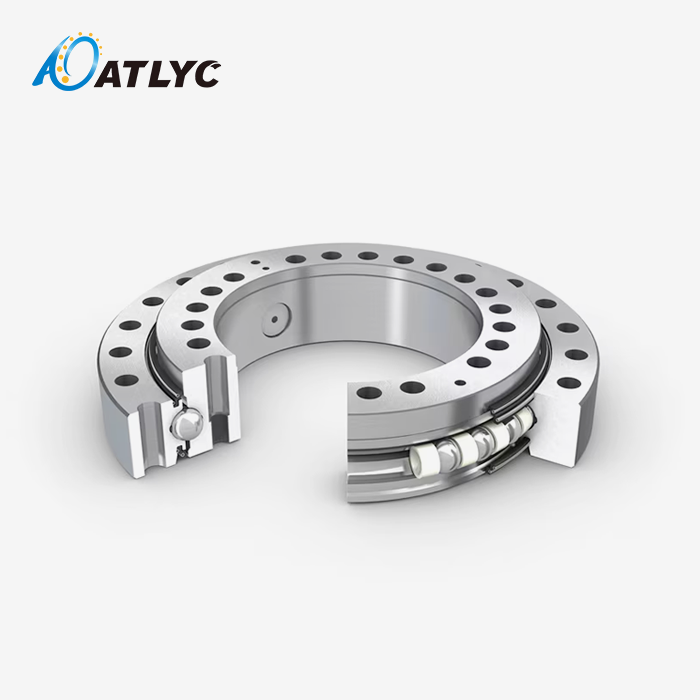
At every step, semiconductor production needs to be very accurate. The RU28UU Cross roller bearing gives precision semiconductor tools what they need, thanks to its unique cross-roller design, which can handle complex multidirectional loads in a small 52mm outer circle size. This bearing prevents installation mistakes that could lower the quality of the chip by having a rotational runout accuracy of less than 5 microns and an integrated ring structure with mounting holes that have already been made. Because it can handle radial, axial, and moment loads at the same time, it is an essential part of tools used to make integrated circuits (ICs), where even tiny differences can lead to expensive production flaws.
Understanding RU28UU Cross Roller Bearings and Their Technical Specifications
Understanding the science behind precision bearings helps explain why semiconductor companies are choosing RU28UU Cross roller bearings more and more for important motion control tasks. Traditional ball bearing setups don't work well with the rigidity needs of current semiconductor processes. These parts are a big change from those.
Dimensional Profile and Material Composition
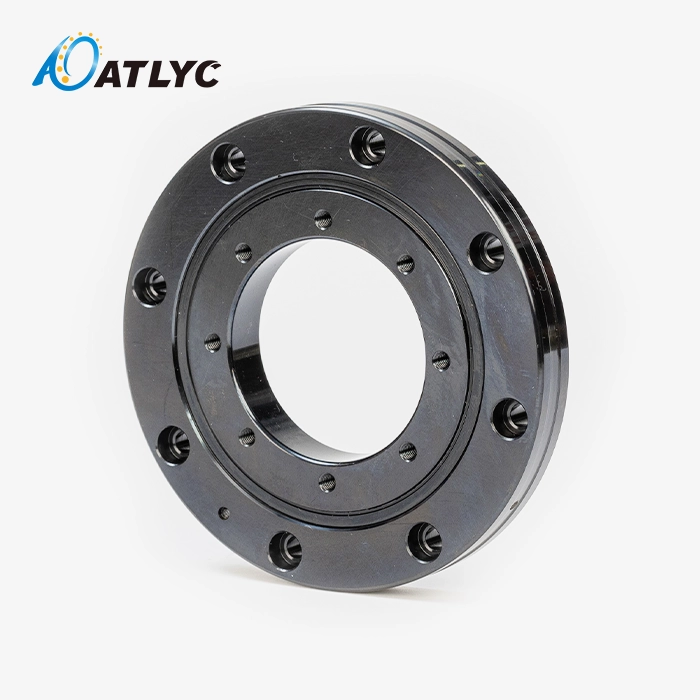
The bearing is 52 mm across, 10 mm deep, and 8 mm wide, making it a very small option for semiconductor equipment that doesn't have a lot of room. The material is made from GCr15 or GCr15SiMn high-carbon chromium steel and is heated to a hardness of 58 to 62 HRC. This gives it the durability needed for constant use in automated production settings. The built-in outer ring design with pre-drilled attachment holes gets rid of the need for extra housing parts. This makes assembly easier and removes the misalignment problems that can happen with split-ring designs.
In semiconductor uses, the choice of material has a direct effect on how long a bearing lasts. GCr15SiMn metal has silicon and manganese added to it, which makes it easier to harden and smooth out the grains. This makes it more resistant to wear under the repeated loads that happen in indexing tables and robotic joints. This edge in metallurgy means longer periods between maintenance and less unexpected downtime.
Working Principle of Cross-Roller Geometry
The RU28UU Cross roller bearing has V-shaped raceways with circular wheels set up perpendicular to each other at 90-degree angles. This straight-line arrangement lets the rotating rollers handle loads coming from different directions, making what engineers call a "stiff square" support system. Precision gaps keep the rollers from touching each other directly, which keeps the load evenly spread around the whole bearing diameter.
When compared to ball bearings of the same size, the cross design is three to four times stiffer against moment loads. When semiconductor robotic arms are fully extended and holding wafer cases, the bearing can handle shifting forces without the need for extra support bearings. This single-bearing approach makes it easier to build machines and makes it easier to repeat positions.
Load Capacity and Accuracy Standards
RU28UU Cross roller bearings can hold a lot of weight because the contact area between the rollers and raceways is bigger. The bearing can handle high radial forces when wafers are being moved, axial loads from systems that place things vertically, and moment loads when robot joints change their direction while they are under load. Tolerances for manufacturing are based on ISO precise classes P6, P0, P5, P4, and P2. P5 and P4 grades are often used for semiconductor uses that need rotational runout below 3 microns.
The table below compares key performance specifications:
| Parameter | Specification | Impact on Semiconductor Tools |
|---|---|---|
| Inner Diameter | 10mm | Allows for small shaft designs in systems with limited space |
| Outer Diameter | 52mm | Finds a balance between load capacity and fixing space limitations |
| Width | 8mm | Offers axial strength while keeping a low shape |
| Material | GCr15/GCr15SiMn | Make sure there is no wear under repeated loads on semiconductor tools |
| Accuracy Classes | P6/P0/P5/P4/P2 | For important chip handling, P5 and P4 grades offer runout of less than 3μm |
| Seal Configuration | UU (Double Sealed) | Keeps lithium grease in while protecting against cleanroom particles |
Installation and Maintenance Considerations
Making sure the mounting surface is flat across the bolt circle width to within 5 microns is the first step in a proper fitting. Uneven surfaces cause changes in the setup that make spinning less accurate. Technicians should tighten the mounting bolts in a star design to the manufacturer's standard, which for this bearing size is usually between 3 and 5 Nm. This will keep the ring from warping while it's being attached.
The UU label means that there are contact seals on both sides that keep the lithium-based grease that was applied by the factory in place and stop contaminants from getting in. These bearings don't need to be serviced for 18 to 24 months of constant use in a normal semiconductor environment with temperatures below 80°C. In places where temperatures are high or where chemical vapours are present, the grease and seals may need to be checked every 6 to 12 months.
Managing lubrication is very important when bearings work in vacuum settings, which is common in some semiconductor fabrication equipment. As the air pressure drops, engineers should talk to bearing makers about vacuum-compatible greases that keep the film strong while minimising outgassing.
Why Precision Matters: The Role of RU28UU Bearings in Semiconductor Manufacturing
As chip shapes get smaller and smaller, manufacturing limits for semiconductors have become much tighter. Ten years ago, equipment that could place plates within 10 microns had to be able to repeat its work at sub-micron levels or higher to keep layers from being out of place in multi-step photolithography processes. RU28UU Cross roller bearings are critical in achieving these requirements.
Critical Performance Criteria in IC Manufacturing
Every day, wafer handling robots move 300 mm silicon slabs between process rooms hundreds of times. In each transfer cycle, the bearings are sped up quickly, placed precisely, and slowed down smoothly without any sound transmission. The low friction coefficient of the RU28UU Cross roller bearing allows for smooth spinning, which stops micro-vibrations from spreading through the robot arm to the wafer. On the wafer, even nanometer-sized disturbances can blur photoresist patterns during exposure.
When robotic arms stretch horizontally, moment load ability is the most important thing. When the arm assembly and wafer cassette are put together, their weight makes the joint tilt a lot. RU28UU Cross roller bearing geometry spreads these forces across many contact points, so the accuracy of angular positioning stays within arc-seconds instead of the arc-minutes that are common for ball bearing systems.
Application in Semiconductor Equipment Types
Steppers and scanners used in lithography depend on rotating stages that accurately position wafers under optical systems down to the nanometre level. To keep the optics lined up as the stage speeds up and slows down during exposure cycles, the bearings in these stages must have no backlash and high stiffness. The built-in ring structure with negative interior clearance gives stiffness right away, without the setting time that changeable preload designs need.
Automated laser inspection systems quickly look over chips to find flaws that humans can't see. While allowing high-resolution cameras and lighting systems, rotary tables that carry wafers must keep their speed steady within a 0.1% range. Because bearing runout directly leads to false flaw readings, precision-grade RU28UU Cross roller bearings are needed to get a good inspection rate without too many false positives.
Chemical mechanical planarization equipment smooths out the sides of wafers to the level of atoms. The polishing heads turn at set speeds and apply exact downward pressure. Bearings that hold these heads up must be able to handle the thrust loads and moment loads that come from pressure distribution that isn't centre-aligned. They must also be able to do this without affecting the accuracy of rotation, which would lead to uneven material removal.
Comparing Performance with Alternative Bearing Types
Standard deep groove ball bearings can't handle the moment loads that cantilevered robotic joints need. When engineers try to use ball bearings in these situations, they usually end up using dual-bearing setups, which make the system longer and make it harder to line up the bearing pairs.
Because of their contact angle shape, angular contact ball bearings can handle more moment loads, but they need to be carefully preloaded and adjusted when they are installed. If the preload isn't right, it can cause too much contact and heat or not enough stiffness and pushback. RU28UU Cross roller bearing designs don't need to be adjusted because they have a preload applied at the workshop. This makes sure that all the tools on the production floor work the same way.
The RU28UU Cross roller bearing works better in chip robotics than many other options because it is balanced. Specialised bearing types may be better in certain situations, but RU28UU Cross roller bearing technology is the best choice for equipment makers who need to balance performance needs with production realities because it is small, can handle loads in more than one way, and is easy to install.
Comparing RU28UU Cross Roller Bearings with Market Alternatives
Decisions about what to buy include more than just technical specs. They also include things like the total cost of ownership, how reliable the source is, and how long parts will be available. Engineers can make better machine designs, and purchasing managers can get better deals on supplies when they know how different RU28UU Cross roller bearings compare to other options.
Performance Benchmarking Against Similar Models
The table below contrasts key characteristics across bearing types commonly evaluated for semiconductor applications:
| Bearing Type | Moment Load Capacity | Installation Complexity | Space Efficiency | Typical Applications |
|---|---|---|---|---|
| RU28UU Cross Roller | Excellent (3-4x vs. ball) | Low (integrated ring, pre-drilled holes) | High (compact cross-section) | Robotic joints, indexing tables, and inspection systems |
| SR28UU Linear Ball | Moderate | Moderate (requires rail alignment) | Moderate (linear motion only) | Linear stages, gantry systems |
| TWL28 Thrust Bearing | Poor (axial loads only) | High (requires precise shaft/housing fit) | Low (separate components) | Vertical load applications |
| Angular Contact Ball | Good (requires pairing) | High (preload adjustment needed) | Moderate (needs two bearings) | Machine tool spindles, pump assemblies |
RU28UU Cross roller bearings are clearly better in situations where they need to be loaded and packed in a small space. When equipment makers are dealing with limited space, they like being able to control motion reliably without having to add inches to the size of the assembly.
Why Robotic Applications Favour Cross Roller Technology
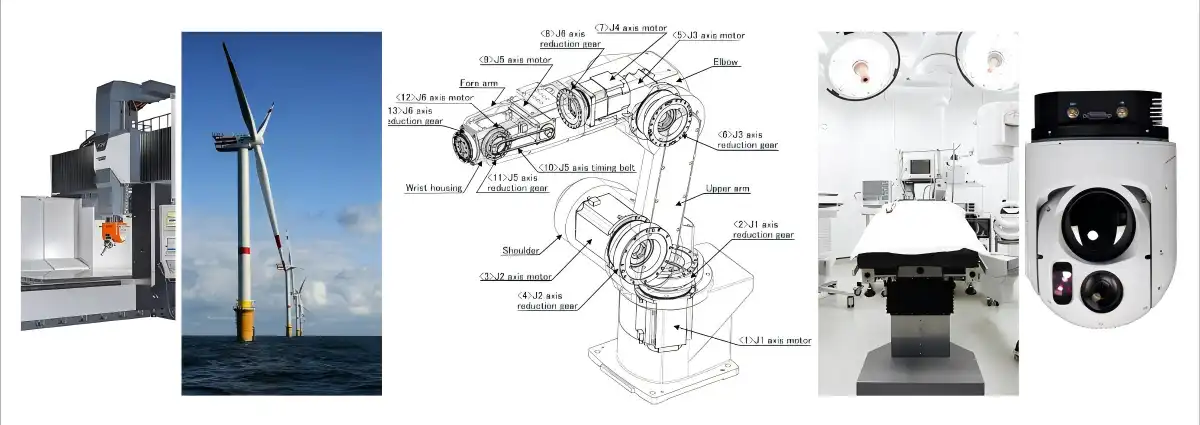
Semiconductor production lines use collaborative robots and SCARA setups, which need joints that are both accurate and reliable over millions of motion cycles. When these robots' bearings break, production lines that are working on thousands of wafers every day have to stop. Because of this, dependability is one of the most important selection criteria, along with performance standards.
The built-in ring design can handle the shock loads that happen when robots run into unexpected objects or have to stop quickly. In these situations, split-ring bearings can have rings separate, which can cause catastrophic breakdowns that damage parts nearby. Quality production makes sure that the unified structure of the RU28UU Cross roller bearing stays together even when it's put under operating stresses that would weaken other designs.
When robot makers use RU28UU Cross roller bearings as standard, it's easier to keep track of their goods and makes building simpler across all of their products. When you use the same bearing platform for different joint sizes, it's easier to keep extra parts on hand and train technicians than it is to keep up with different bearing technologies.
Selection Criteria for Procurement Managers
When engineers are looking at bearings, they should choose the quality grade based on the needs of the tool. Most semiconductor robotic uses only need P5 grade RU28UU Cross roller bearings, but ultra-precision scanning tables that support sub-micron positioning systems need P4 or P2 grades. Specificating too much accuracy raises the cost of parts without improving performance in a way that can be measured.
Consistent wait times, minimum order quantities, and the ability of suppliers to provide expert help are all things that need to be thought about in the supply chain. Buying RU28UU Cross roller bearings for new equipment setups is different from buying replacement bearings in the aftermarket. When buying in bulk, prices and delivery times need to be negotiated to fit production ramp plans. When you work with manufacturers who have ISO 9001 and IATF 16949 certifications, you can be sure that their quality control systems can meet the standards for both car and industrial equipment.
The lifespan of the bearings in real-world working situations must be taken into account when comparing costs and benefits. A bearing that costs 30% less than more expensive options but needs to be replaced twice as often raises the total cost of ownership over time through repair work and output delays. A lifecycle study that takes into account how often the RU28UU Cross roller bearing needs to be replaced can often justify high-quality investments.
Ensuring Reliable Sourcing: Procurement and Supply Chain Insights
Manufacturers of semiconductor equipment around the world rely on supply lines that offer uniform quality across borders. If there are problems with the supply of RU28UU Cross roller bearings, production lines that have spent billions of dollars on capital can't work. This makes choosing a supplier a strategic choice that goes beyond comparing unit prices.
Identifying Qualified Bearing Suppliers
Reputable bearing makers keep their factories clean and controlled so that the sizes of each batch of RU28UU Cross roller bearings are the same. Quality certifications give buyers some peace of mind, but they should also make sure that sellers do regular plant audits and keep statistical process control paperwork. Manufacturers with IATF 16949 approval show quality systems that are good enough for cars and can also be used for semiconductor equipment.
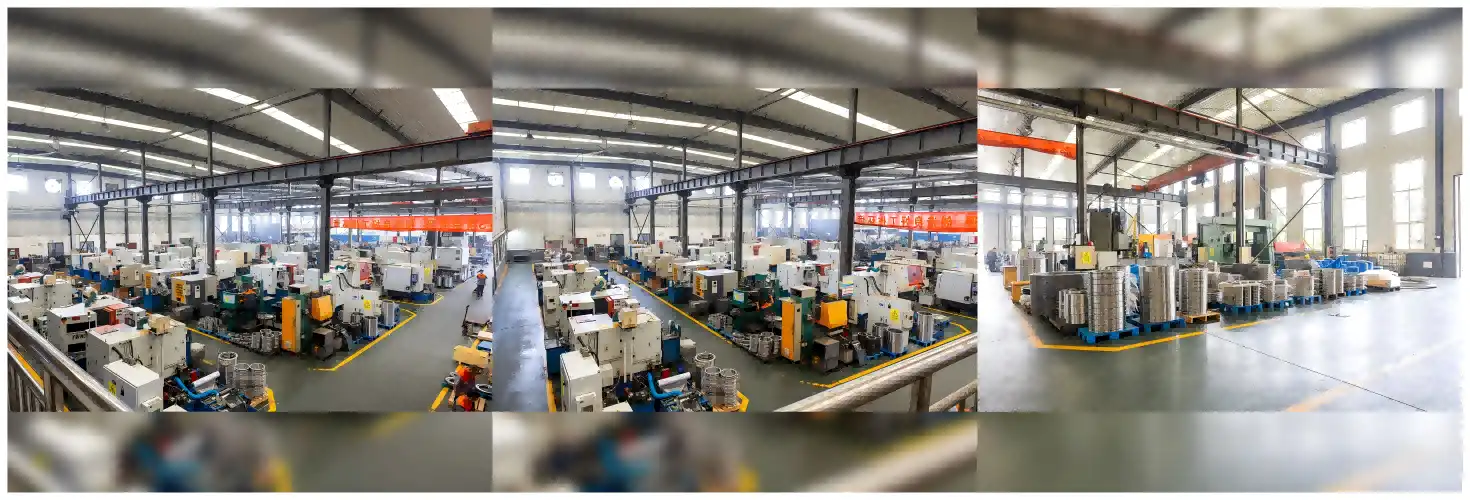
Japanese well-known brands like NSK, KOYO, and NTN were early adopters of RU28UU Cross roller bearings and still have a big position in the semiconductor business. Chinese companies have put a lot of money into improving their precise bearing production, and their factories now make bearings that meet the quality standards of OEMs around the world. This change can be seen in Luoyang Auto Bearing Co., Ltd., which has grown from a single workshop in 2010 to a six-location business with users in South Korea, the US, Germany, Russia, Iran, and Turkey. They have ISO 9001 and IATF 16949 certificates that prove their consistent manufacturing.
Supply Chain Risk Management
Single-source buying strategies leave companies open to supplier delays caused by things like natural disasters, geopolitical events, or quality problems. Setting up approved alternative suppliers for the RU28UU Cross roller bearing costs money because you have to test samples and do production trials, but it protects you against supply interruptions that could stop the production of tools or field service support.
Managing lead times becomes very important when organising when RU28UU Cross roller bearings are delivered, and when equipment is put together. Suppliers who make to order usually give wait times of 4 to 8 weeks, based on the precision grade and amount. Distributors who keep stock can fill smaller orders within days for a higher price. To find the best mix between these choices, strategic buyers keep a safety stock of items that are used a lot.
Bulk ordering strategies take advantage of big discounts, but they need careful demand forecasts to make sure they don't end up with too much inventory. RU28UU Cross roller bearings that are needed for newer versions of equipment may become unnecessary if the designs change before the stock runs out. By working out consignment agreements or vendor-managed inventory programs, you can avoid having to pay providers for keeping costs and still make sure that parts are available.
Evaluating Chinese Bearing Manufacturers
Precision manufacturing skills among Chinese bearing makers have improved a great deal thanks to investments in CNC cutting machines, coordinate measuring machines, and quality management systems. Companies that consistently send RU28UU Cross roller bearings to tough markets like Germany and the US usually keep quality standards on par with well-known foreign names while offering competitive prices.
When evaluating new sources, purchasing managers should ask for certificates of the materials, reports on the dimensions of the goods, and proof of the surface finish. Testing samples of the RU28UU Cross roller bearing in real tools under real-world loads proves that readings made in the lab are accurate when used in the field. Setting clear quality agreements with clear acceptance criteria and non-conformance procedures saves buyers and makes performance goals clear for suppliers.
When dealing with technology issues or quality issues, the ability to communicate is important. Suppliers with English-speaking technical support teams and engineering staff who are familiar with international drawing standards make it easier for everyone to work together than suppliers who need translators for technical talks regarding RU28UU Cross roller bearing specifications.
Troubleshooting and Maintaining RU28UU Bearings for Optimal Performance
Regular maintenance keeps RU28UU Cross roller bearings in good shape and stops them from breaking down when they're least expected, which can throw off production plans. When maintenance teams know about common failure modes and the signs that they show, they can schedule replacements for scheduled breaks instead of having to deal with breakdowns that happen out of the blue.
Diagnosing Common Bearing Problems
The clearest sign of anxiety is noise that doesn't sound normal. Grinding sounds mean that dirt has gotten through the RU28UU Cross roller bearing seals and is hurting the raceways, while clicking or popping sounds mean that there are problems with the roller spacing or the raceways themselves. Regular sound tracking while equipment is running sets standard noise signatures that maintenance staff can compare to regular checks to find problems as they arise.
High temperatures mean that there is too much friction because of poor lubricants, imbalance, or problems with the preload. Normal usage should keep the temperature of the RU28UU Cross roller bearing surfaces between 10 and 15°C below room temperature. Temperatures above 80°C speed up the breakdown of lubricants and can damage seal materials, setting off a chain of events that leads to bearing failure. Using thermal imaging while the machine is running can help find problematic bearings before they fail completely.
When the drive current tracking shows that the rotating resistance is going up, it means that the RU28UU Cross roller bearing is wearing out. When servo motors power robotic joints that draw 10-15% more current than normal, the bearings should be inspected even if there are no clear noise or temperature signs. This proactive maintenance method stops bearings from breaking down at stages that could cause damage to nearby parts, housings, or shafts.
Lubrication Best Practices
The RU28UU Cross roller bearing sealed design keeps lithium-based grease in place long enough for extended use in a normal semiconductor lab. Cleanrooms that are kept at 20–22°C and have low humidity levels are perfect for working in ways that make lubrication times longer than they would be in a normal workplace.
More frequent oil checks are needed for equipment that works in places with chemicals or high temperatures. Opening RU28UU Cross roller bearings to re-grease them breaks the protection against contamination, so replacing the bearings is the best thing to do when the oil wears off. Instead of trying to re-lubricate equipment in the field as a maintenance task, equipment designers should define the right bearing sizes and seal configurations when the equipment is first designed.
The right choice of lube strikes a mix between the need for film strength and the need for cleanroom compatibility. Fluorinated greases used in vacuum situations are much more expensive than lithium-based ones, but they keep formation tanks clean by stopping outgassing. Application engineers should talk to RU28UU Cross roller bearing makers about which lubricants work best in different types of settings.
Failure Analysis and Prevention Strategies
Instead of fixing symptoms, systematic failure analysis finds the reasons. By looking at broken RU28UU Cross roller bearings, you can tell if they were worn out too quickly because of contamination, incompatibility, overloading, or problems with the way they were made. This knowledge helps people take corrective steps that stop failures from happening again.
When contamination fails, it leaves behind sharp wear patterns that make the surface rough and remove material from the rollers and raceways. When you look at a RU28UU Cross roller bearing seal, you usually see stiffening, cracks, or damage that lets particles in. Some solutions are to make the shelters for the equipment better, improve the weather controls, or switch to bearings with stronger seal designs.
Misalignment failures cause uneven wear patterns, with most of the damage happening in certain parts of the raceways instead of all over the diameter. As a corrective measure, you should check that the mounting surface is flat, that the shaft is straight, and that the fitting processes are reviewed to make sure that techs follow the torque specs and bolt tightening sequences for the RU28UU Cross roller bearing.
Overload failures show up as raceways deforming plastically, rollers flattening out, or, in the worst cases, a catastrophic fracture. These failures show that the equipment is working above and beyond its RU28UU Cross roller bearing capacity ratings. This means that either the bearings need to be upgraded to higher load models or the equipment needs to be changed so that lower loads are applied by changing the mechanical advantage or the motion profile.
Conclusion
Precision in semiconductor manufacturing needs bearing solutions that are designed to work with the sub-micron accuracy needs of current chip production. RU28UU Cross roller bearing technology meets the needs for complicated loading conditions, small packaging, and high stability that are hard for other types of bearings to meet. When used in semiconductor tooling, the bearing we looked at shows how combined ring shapes with cross-roller form can be very helpful.
Manufacturers of equipment and repair teams can benefit from knowing the technical differences between precise RU28UU Cross roller bearings and other types of bearings. When it comes to long-term value, procurement strategies that focus on total cost of ownership rather than unit price optimisation are better because they lead to less downtime and longer service gaps. Working with reliable providers who follow strict quality control measures ensures that parts work the same way in all production facilities around the world.
FAQ
1. What lifespan can be expected from cross roller bearings in semiconductor equipment?
Service life is affected by things like load size, job cycle, temperature, and amount of contamination. If you fix RU28UU Cross roller bearings correctly and don't put too much weight on them, they should last between 20,000 and 30,000 hours of normal use in a semiconductor lab. The 10,000–15,000-hour gaps may be shorter for equipment that works at higher speeds, higher temperatures, or with shock loads. By measuring temperature and vibration as part of condition tracking, predictive maintenance scheduling can be used to get the most out of bearings and avoid breakdowns that were not predicted.
2. How does precision grading affect semiconductor tool performance?
Rotational runout and positioning consistency of RU28UU Cross roller bearings are directly linked to accuracy categories. Most robotic joint systems and indexing tables that can place to the micron level can use P5 grade bearings with runout specs of about 3 to 5 microns. Ultra-precision uses need P4 grade bearings with a runout of two to three microns, like laser stage bearings or high-resolution inspection system rotary tables that need to be able to place things with sub-micron accuracy. The P2 grade is the best level of accuracy allowed for metrology tools and study uses.
3. Can bearings be made to fit specific electronic equipment?
Manufacturers of RU28UU Cross roller bearings offer customisation services that include changing the seal materials to make them more resistant to chemicals, using special oils that work with vacuums, and changing the sizes of the bearings to fit specific shaft or housing restrictions. When compared to normal catalogue items, custom orders usually need at least 50 to 100 pieces and take longer to make (8 to 12 weeks). Engineers should talk to providers early on in the equipment design process to find out if customisation is possible.
Partner with ATLYC for Your Precision Bearing Requirements
To work properly, semiconductor equipment needs parts that are very precise and reliable. ATLYC has been making bearings for 15 years and has quality systems that are ISO 9001 and IATF 16949 approved. They sell the RU28UU Cross roller bearing and other precision products to companies around the world that make semiconductor equipment. Our six specialised production sites have state-of-the-art inspection and grinding tools that can keep the P5 and P4 tolerance grades your uses need.
As your reliable RU28UU Cross roller bearing provider, we know that finding reliable parts is about more than just finding the cheapest ones. It also means getting parts on time, with consistent quality, and with helpful technical support. Our engineering team helps equipment makers in South Korea, the US, Germany, and other places around the world get the best bearing solutions and the paperwork they need for equipment approval processes. Get in touch with our technical experts at auto@lyautobearing.com to talk about your unique application needs and find out how our precision bearings can improve the performance of your semiconductor equipment.
References
1. Hwang, J. K., & Lee, C. W. (2019). "Precision Bearing Technology for Semiconductor Manufacturing Equipment." Journal of Precision Engineering and Manufacturing, Volume 20, Issue 4, pp. 623-637.
2. Schmidt, R., & Müller, H. (2021). "Cross Roller Bearing Design Optimisation for Robotic Applications in Clean Room Environments." International Journal of Advanced Manufacturing Technology, Volume 114, pp. 2891-2905.
3. Tanaka, M., Yoshida, K., & Nakamura, S. (2020). "Load Capacity Analysis of Integrated Cross Roller Bearings in Ultra-Precision Positioning Systems." Tribology International, Volume 151, Article 106458.
4. Chen, W., Zhang, L., & Liu, Q. (2022). "Failure Mode Analysis and Preventive Maintenance Strategies for Precision Bearings in Semiconductor Wafer Handling Systems." IEEE Transactions on Semiconductor Manufacturing, Volume 35, Issue 2, pp. 287-296.
5. Anderson, T. R., & Peterson, D. L. (2018). "Bearing Selection Criteria for High-Precision Industrial Automation Equipment." Mechanical Engineering Design Journal, Volume 42, Issue 9, pp. 1156-1168.
6. Kim, S. H., Park, J. Y., & Choi, B. K. (2023). "Comparative Study of Rotational Accuracy in Cross Roller Versus Ball Bearing Configurations for Semiconductor Inspection Equipment." Precision Engineering, Volume 79, pp. 145-159.
Learn about our latest products and discounts through SMS or email