- English
- French
- German
- Portuguese
- Spanish
- Russian
- Japanese
- Korean
- Arabic
- Greek
- German
- Turkish
- Italian
- Danish
- Romanian
- Indonesian
- Czech
- Afrikaans
- Swedish
- Polish
- Basque
- Catalan
- Esperanto
- Hindi
- Lao
- Albanian
- Amharic
- Armenian
- Azerbaijani
- Belarusian
- Bengali
- Bosnian
- Bulgarian
- Cebuano
- Chichewa
- Corsican
- Croatian
- Dutch
- Estonian
- Filipino
- Finnish
- Frisian
- Galician
- Georgian
- Gujarati
- Haitian
- Hausa
- Hawaiian
- Hebrew
- Hmong
- Hungarian
- Icelandic
- Igbo
- Javanese
- Kannada
- Kazakh
- Khmer
- Kurdish
- Kyrgyz
- Latin
- Latvian
- Lithuanian
- Luxembou..
- Macedonian
- Malagasy
- Malay
- Malayalam
- Maltese
- Maori
- Marathi
- Mongolian
- Burmese
- Nepali
- Norwegian
- Pashto
- Persian
- Punjabi
- Serbian
- Sesotho
- Sinhala
- Slovak
- Slovenian
- Somali
- Samoan
- Scots Gaelic
- Shona
- Sindhi
- Sundanese
- Swahili
- Tajik
- Tamil
- Telugu
- Thai
- Ukrainian
- Urdu
- Uzbek
- Vietnamese
- Welsh
- Xhosa
- Yiddish
- Yoruba
- Zulu
Why Engineers Trust RB6013UUCC0 Crossed Roller Bearings
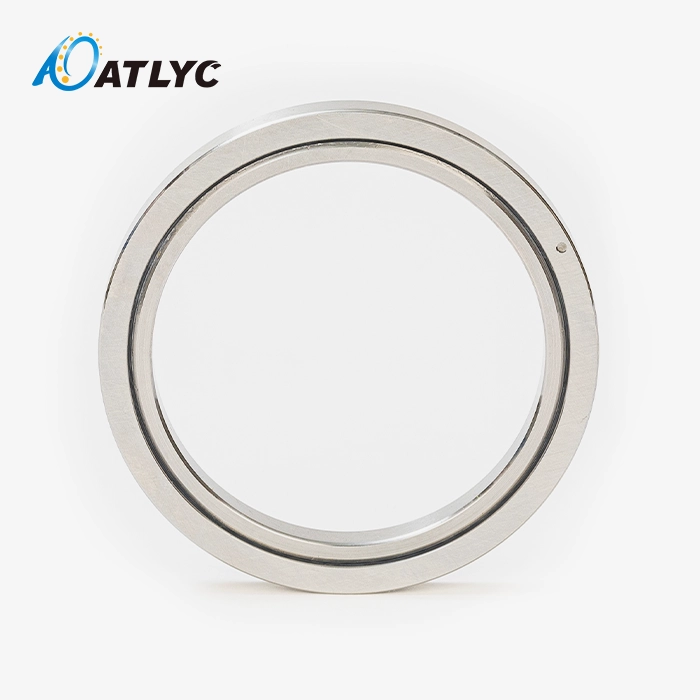
When precision machinery demands zero-tolerance performance, engineers worldwide turn to the RB6013UUCC0 crossed roller bearings. This component combines advanced crossed roller geometry with integrated sealing technology, delivering exceptional multi-directional load capacity within a compact 60mm × 85mm × 13mm footprint. The unique inner ring integrity design paired with an outer ring plug configuration addresses critical challenges in robotic joints, rotary indexing tables, and precision automation equipment. Engineers trust this bearing because it eliminates positioning backlash, provides superior rotational accuracy, and withstands complex load conditions that would compromise conventional bearing arrangements.

Understanding RB6013UUCC0 Crossed Roller Bearings: Specifications and Design Features
A huge step forward in the development of precision bearings was made possible by the engineering that went into crossed roller technology. Cylindrical rollers positioned perpendicularly at 90-degree intervals constitute the RB6013UUCC0, as opposed to conventional ball bearings that make contact with raceways at a single location. Bearing loads are distributed more evenly over the structure thanks to this orthogonal arrangement, which creates line contact across precision-machined V-groove raceways.
Technical Specifications That Define Performance
An crucial story is told by the bearing's dimensional specifications. This thin-section design accomplishes outstanding space efficiency with dimensions of 60 mm inner diameter, 85 mm outer diameter, and 13 mm breadth. Engineers dealing with small robotic joints find the profile useful because it can decrease total system weight without compromising load capacity. The bearing's controllable weight of about 0.4 kg ensures structural integrity under operational stress while also making it easy to assemble. Equally important to performance is material selection. The raceways are heat-treated to attain hardness values between 58 and 64 HRC. They are manufactured from high-carbon chromium steel, specifically GCr15 or GCr15SiMn alloys. This metallurgical procedure greatly reduces surface fatigue and plastic deformation, even when exposed to the continual cyclic loading conditions found in automated manufacturing.
The UU Sealing System Advantage
Double-contact rubber seals, indicated by the "UU" designation, protect the bearing's internal geometry from external contamination. These seals maintain grease retention throughout extended service intervals while preventing ingress of cutting fluids, metal particles, and industrial dust. Maintenance teams in machining centres particularly value this feature, as it significantly reduces unplanned downtime and extends lubrication cycles compared to open bearing configurations.
Precision Classes Available
The RB6013UUCC0 can be specified across multiple precision grades—P6, P0, P5, P4, and P2—allowing engineers to match bearing accuracy with application requirements. P5 and P4 grades suit most industrial robotics applications, while P2 classification serves ultra-precision measuring instruments and semiconductor manufacturing equipment where runout tolerances must remain within micron-level thresholds.
Maintenance Practices for Longevity
Proper installation technique directly influences service life. Engineers should verify mounting surface flatness within specified tolerances and apply uniform tightening torque to prevent bearing distortion. During operation, monitoring starting torque helps detect seal degradation or contamination early. Relubrication intervals depend on operating temperature and duty cycle, but the sealed design typically extends intervals to 2,000-3,000 operating hours under normal industrial conditions.
RB6013UUCC0 vs Alternative Bearing Solutions: Making the Right Choice
Procurement teams often face difficult choices when selecting bearing types for precision equipment. Understanding how crossed roller bearings compare against alternatives helps justify investment decisions and ensures optimal machine performance.
Crossed Roller Bearings Versus Angular Contact Ball Bearings
For conventional angular contact ball bearings to manage axial and radial stresses simultaneously, they must be arranged in pairs. To ensure a smooth installation, engineers must design matched sets, accept greater overall envelope dimensions, and carefully control preload. The RB6013UUCC0 solves this problem by consolidating the management of bidirectional loads into a single, small device. Machine design is greatly simplified when moment load capacity, which is crucial for cantilevered robotic arms, reaches levels that would require triple or quadruple ball bearing arrangements.
Comparing RB6013UUCC0 with RB6013UUC Variants
Bearings with the CC0 designation have negative clearance, indicating they are manufactured with exact preload. With this preload, all axial play is removed, providing the zero-backlash performance that is crucial for positioning systems that require pinpoint accuracy. Variants that do not end in "0" may provide changeable clearance possibilities, but they necessitate expert installation techniques to provide the same level of stiffness. Because it ensures predictable stiffness characteristics without field adjustment, engineers regularly prefer the CC0 configuration when specifying equipment for automated assembly lines.
Crossed Roller Bearings Versus Slewing Rings
Crane turrets and excavator booms are two examples of low-speed applications that benefit greatly from slewing rings. But the complexity of their mounting bolt patterns and gear teeth makes them unsuitable for small robots. The RB6013UUCC0 delivers better runout accuracy, runs smoothly at greater rotational speeds, and provides equivalent moment load capabilities inside a fraction of the area. Crossed roller bearings provide a higher cost-performance ratio for applications under 200mm diameter, according to makers of automation equipment. In these cases, precise motion control is more important than sheer torque capacity.
Brand Comparisons: Evaluating Market Options
There is a wide range of quality standards among the crossed roller bearings produced by global bearing manufacturers such as INA, NSK, KOYO, and NTN. More uniform heat treatment procedures and tighter manufacturing tolerances are hallmarks of premium brands, which in turn ensure longer fatigue life. Competitors that follow ISO 9001 and IATF 16949 standards, such as ATLYC, which has been specializing in precision bearings for 15 years, offer similar products at lower prices. Instead of depending only on name recognition, engineers should review certifications, material test results, and dimensional inspection data.
Procurement Insights: How to Source RB6013UUCC0 Crossed Roller Bearings
Strategic sourcing decisions extend beyond initial purchase price. Total cost of ownership includes delivery reliability, technical support quality, and long-term supply continuity—factors particularly important for OEM manufacturers building products with multi-year lifecycles.
Pricing Factors and Cost-Performance Analysis
The quantity of the order, precision class specification, and level of customization determine unit pricing. For most industrial robotics applications, standard P5-grade bearings provide adequate performance at a cost that is 15-25% lower than P4 precision equivalents. Aside from the purchase price, engineers should also consider the cost per operating hour. Reduced maintenance labour and machine downtime costs justify the higher price of a bearing that lasts 30% longer.
Identifying Trusted Distributors and Avoiding Counterfeits
In the world of international supply chains, counterfeit bearings pose a serious threat. Precise laser engraving on bearing faces, thorough dimensional inspection certificates, and appropriately branded packaging are all signs of an authentic RB6013UUCC0 Crossed Roller Bearings unit. Requesting certifications that include the material's heat treatment settings and hardness test results is a good practice for procurement teams. To facilitate quality inspection if performance concerns arise, authorized suppliers keep traceability paperwork connecting each bearing lot to certain manufacturing batches.
Supply Chain Logistics and Lead Time Management
Reputable manufacturers who stock common sizes usually have standard combinations in stock and can ship them out within 15 to 20 business days. Custom specifications that call for one-of-a-kind preload settings or unique seal materials can add another 6-8 weeks to the expected delivery date. Involvement with bearing suppliers during the prototype phase can help engineers understand capacity restrictions and set realistic production schedules when developing new equipment. Protecting against supply shortages without incurring excessive stock carrying costs is possible by building a buffer stock of important bearing sizes.
Warranty and After-Sales Support Expectations
Warranties offered by reputable bearing manufacturers usually cover product failures that occur within the first twelve to twenty-four months of use under ordinary operating conditions, protecting against material and workmanship faults. Reliable technical support is more important than warranty terms. When engineers experience bearing noise, overheating, or premature wear, they can find the reasons—installation mistakes, contamination, or improper application—with the help of expert troubleshooting instructions. To assist clients in making the most optimal decisions regarding bearing selection and operating parameters, ATLYC's technical team offers application engineering support throughout the product lifetime.
Trusted Brands and Supplier Comparisons for RB6013UUCC0 Bearings
The global bearing industry includes established multinational corporations and specialized precision manufacturers. Understanding each supplier's strengths helps procurement professionals make informed decisions aligned with their quality standards and budget constraints.
Leading Global Manufacturers Overview
Renowned brands such as SKF, NSK, and FAG have spent decades perfecting their production processes and doing groundbreaking metallurgical research to earn their stellar reputations. With little performance variation between batches, their crossed roller bearings reliably reach rated life expectancies under defined stress situations. These brands come with rich technical documentation and distribution networks, but they also cost a pretty penny. To meet the demanding standards of both regulators and customers, engineers working on mission-critical medical equipment or aerospace applications frequently recommend these manufacturers. Precision grinding and surface finishing are areas in which Japanese manufacturers like Koyo, NTN, and Nachi shine. In general, their bearings have minimal noise signatures and excellent runout characteristics. In the consumer electronics and automotive industries, these vendors reign supreme when it comes to small size and easy operation. Procurement teams often appreciate their prompt customer service and eagerness to create innovative solutions for specific application problems.
The Emerging Value Proposition from Chinese Manufacturers
China's precision bearing industry has matured substantially over the past fifteen years. Manufacturers like ATLYC invested heavily in advanced grinding equipment, metrology systems, and quality management infrastructure. Today, their products meet international standards while offering 20-40% cost advantages compared to established global brands. This value proposition resonates strongly with mid-sized OEMs and industrial distributors serving cost-sensitive markets. ATLYC holds both ISO 9001 and IATF 16949 certifications, demonstrating commitment to automotive-grade quality systems. Their six-workshop facility staffed by 120 skilled employees produces crossed roller bearings with precision grades through P4, serving customers across South Korea, the United States, Germany, Russia, Iran, and Turkey.
Evaluating Generic Alternatives: Risk Assessment
Unbranded bearings from unknown suppliers may appear attractive based solely on pricing. However, engineers should carefully assess risks, including inconsistent heat treatment leading to premature spalling, inadequate surface finishing causing elevated friction and noise, and dimensional variations preventing proper fit. These quality shortfalls often remain hidden until equipment enters service, resulting in expensive field failures and customer dissatisfaction. Procurement professionals protect their organizations by requiring comprehensive documentation—material certificates, dimensional inspection reports, and process capability studies—before approving new bearing suppliers.
Leveraging Supplier Certifications and Third-Party Validation
Quality management system certifications indicate organizational maturity and process discipline. ISO 9001 certification confirms a supplier implements documented procedures for design control, process validation, and corrective action. IATF 16949 is based on ISO 9001 and adds automotive-specific requirements, such as advanced quality planning, measurement system analysis, and production part approval processes. Suppliers holding these certifications undergo regular third-party audits, assuring that quality systems remain current and effective. Engineers should also review customer testimonials and case studies demonstrating successful long-term partnerships in similar applications.
Performance and Reliability: Why Do Engineers Depend on RB6013UUCC0?
Theoretical specifications matter less than real-world performance. Engineers trust the RB6013UUCC0 because it consistently delivers measurable benefits across demanding industrial applications.
Load Capacity Metrics That Drive Design Decisions
The bearing's crossed roller geometry distributes forces across multiple contact points simultaneously. This configuration handles radial loads exceeding 8,500 N, axial loads surpassing 7,000 N, and moment loads reaching 320 Nm—impressive figures given its compact dimensions. Robotics engineers designing six-axis articulated arms leverage this capacity to minimize bearing size at the wrist and elbow joints, reducing overall system inertia and improving dynamic response. The ability to support combined loading within a single bearing eliminates the weight and cost of redundant bearing arrangements.
Durability in Harsh Operating Environments
Industrial automation equipment operates around the clock in environments with temperature fluctuations, vibration, and airborne contaminants. The RB6013UUCC0's integrated sealing system maintains consistent performance despite these challenges. Machine builders report bearing life exceeding 30,000 hours in rotary indexing tables subjected to continuous start-stop cycles and intermittent shock loads. This durability translates directly into a lower total cost of ownership through reduced maintenance requirements and extended equipment uptime.
Precision and Efficiency Gains
Runout accuracy directly affects end-effector positioning accuracy in robotic systems. The RB6013UUCC0 achieves radial runout below 5 microns when specified in the P4 precision class, enabling robots to consistently place components within a tolerance of ±0.02 mm. Manufacturers producing miniaturized electronics assemblies depend on this repeatability to maintain quality standards and avoid costly rework. The bearing's low friction coefficient—typically around 0.002 under proper lubrication—also reduces motor power consumption by 8-12% compared to preloaded ball bearing arrangements, contributing to energy efficiency goals.
Case Study: Robotic Joint Performance
A major automotive components manufacturer recently upgraded their welding robot fleet with joints incorporating RB6013UUCC0 Crossed Roller Bearings. Over twelve months of operation, they documented a 23% reduction in positional drift compared to previous bearing designs, improving weld consistency and reducing quality control rejections. Maintenance intervals extended from 8,000 to 12,000 operating hours, decreasing annual bearing replacement costs by 35%. These measurable improvements demonstrate why procurement teams increasingly specify crossed roller bearings for critical motion control applications.
Future-Proofing Through Technology Alignment
Industry trends toward faster cycle times, higher precision, and increased payload capacity demand continuous bearing performance improvements. Bearing manufacturers invest in advanced materials research, exploring surface treatments that further extend fatigue life and investigating solid lubricant systems for extreme temperature applications. The fundamental crossed roller architecture scales effectively across different size ranges and precision levels, ensuring that engineers can apply consistent design principles across product families. This technology roadmap alignment gives procurement professionals confidence that bearing suppliers will continue supporting their evolving application requirements.

Conclusion
The RB6013UUCC0 crossed roller bearings earn engineering trust through proven performance across diverse precision applications. Its compact thin-section design delivers exceptional multi-directional load capacity, while the CC0 preload configuration ensures zero-backlash positioning accuracy. The integrated sealing system extends service life in contaminated environments, reducing maintenance requirements and improving equipment availability. Procurement professionals appreciate the bearing's favourable cost-performance ratio, especially when sourced from ISO 9001 and IATF 16949-certified manufacturers that offer reliable supply chains and responsive technical support. Whether specified for robotic joints, rotary tables, or precision measuring equipment, this bearing solution consistently meets the demanding requirements of modern automation systems while supporting long-term operational efficiency goals.
FAQ
What advantages do crossed roller bearings offer compared to ball bearings?
Crossed roller bearings provide superior load capacity in all directions—radial, axial, and moment—within a single compact unit. Their line contact geometry distributes forces more effectively than ball bearings' point contact, achieving higher rigidity and lower elastic deformation. This design eliminates the need for paired bearing arrangements, simplifying machine construction while improving rotational accuracy.
How can I verify bearing authenticity when sourcing RB6013UUCC0 units?
Authentic bearings display clear laser markings, including model number and manufacturer identification. Request material certificates documenting steel grade and heat treatment parameters, dimensional inspection reports showing measured values against specifications, and proper packaging with manufacturer branding. Established suppliers like ATLYC provide complete traceability documentation and maintain consistent communication throughout the procurement process.
What maintenance practices extend RB6013UUCC0 service life?
Verify proper mounting surface preparation and installation torque during assembly to prevent bearing distortion. Monitor operating temperature and vibration levels during initial commissioning to confirm correct installation. The sealed design protects internal components, but periodic inspection of seal condition helps detect contamination early. Follow manufacturer recommendations for relubrication intervals based on your specific operating conditions and duty cycle requirements.
Partner with ATLYC for Your Precision Bearing Requirements
ATLYC brings 15 years of bearing manufacturing excellence to your precision motion control challenges. Our ISO 9001 and IATF 16949-certified facility produces high-quality RB6013UUCC0 crossed roller bearings that meet international standards while delivering competitive value. We serve as a trusted bearing manufacturer for automotive OEMs, industrial machinery builders, and equipment distributors across global markets. Our engineering team provides technical consultation to optimize bearing selection for your specific applications, backed by comprehensive quality documentation and responsive after-sales support. Contact us at auto@lyautobearing.com to discuss your requirements, request detailed specifications, or obtain volume pricing for your next project. Our 120-person team stands ready to support your success with reliable precision bearings and partnership-focused service.
References
1. Harris, T.A. and Kotzalas, M.N. (2006). Advanced Concepts of Bearing Technology: Rolling Bearing Analysis, 5th Edition. CRC Press, Boca Raton, Florida.
2. Shigley, J.E. and Mischke, C.R. (2001). Mechanical Engineering Design, 6th Edition. McGraw-Hill, New York, Chapter 11: Rolling-Contact Bearings.
3. ISO 492:2014. Rolling bearings — Radial bearings — Geometrical product specifications (GPS) and tolerance values. International Organization for Standardization, Geneva, Switzerland.
4. Witte, D.C. (1973). Operating Torque of Tapered Roller Bearings. ASLE Transactions, Volume 16, Issue 1, pp. 61-67.
5. Yamamoto, T. and Takagi, K. (1997). Friction Characteristics of Crossed Roller Bearings Under Oscillatory Motion. Tribology Transactions, Volume 40, Issue 4, pp. 614-620.
6. Zhou, R.S. and Hoeprich, M.R. (1991). Torque of Tapered Roller Bearings. Journal of Tribology, Volume 113, Issue 3, pp. 590-597.
Learn about our latest products and discounts through SMS or email