- English
- French
- German
- Portuguese
- Spanish
- Russian
- Japanese
- Korean
- Arabic
- Greek
- German
- Turkish
- Italian
- Danish
- Romanian
- Indonesian
- Czech
- Afrikaans
- Swedish
- Polish
- Basque
- Catalan
- Esperanto
- Hindi
- Lao
- Albanian
- Amharic
- Armenian
- Azerbaijani
- Belarusian
- Bengali
- Bosnian
- Bulgarian
- Cebuano
- Chichewa
- Corsican
- Croatian
- Dutch
- Estonian
- Filipino
- Finnish
- Frisian
- Galician
- Georgian
- Gujarati
- Haitian
- Hausa
- Hawaiian
- Hebrew
- Hmong
- Hungarian
- Icelandic
- Igbo
- Javanese
- Kannada
- Kazakh
- Khmer
- Kurdish
- Kyrgyz
- Latin
- Latvian
- Lithuanian
- Luxembou..
- Macedonian
- Malagasy
- Malay
- Malayalam
- Maltese
- Maori
- Marathi
- Mongolian
- Burmese
- Nepali
- Norwegian
- Pashto
- Persian
- Punjabi
- Serbian
- Sesotho
- Sinhala
- Slovak
- Slovenian
- Somali
- Samoan
- Scots Gaelic
- Shona
- Sindhi
- Sundanese
- Swahili
- Tajik
- Tamil
- Telugu
- Thai
- Ukrainian
- Urdu
- Uzbek
- Vietnamese
- Welsh
- Xhosa
- Yiddish
- Yoruba
- Zulu
XSU080168UUP5 Precision Crossed Roller Bearing Maintenance Guide
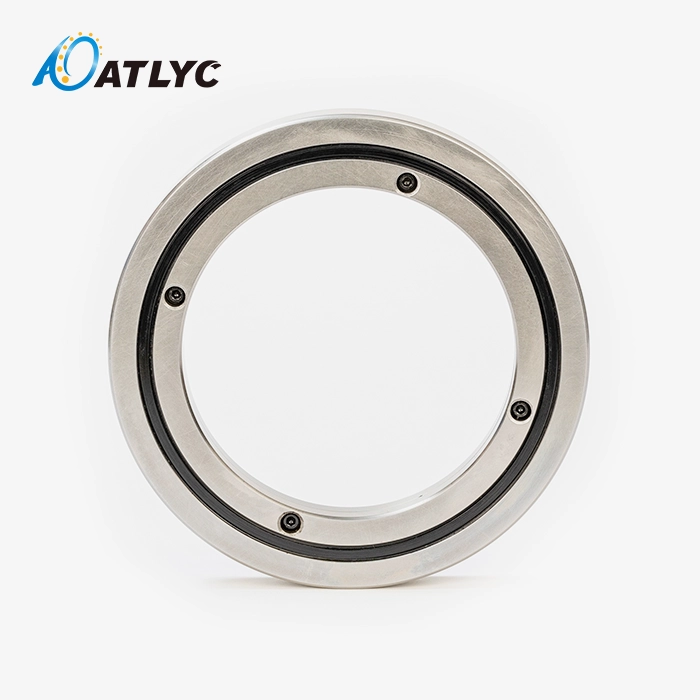
Taking care of the XSU080168UUP5 Precision Crossed Roller Bearing requires special skills that go beyond normal ways of taking care of bearings. This built-in unit has pre-drilled mounting holes and an orthogonal roller design. It has a high load capacity and a P5 precision tolerance in a small shape that measures 140 mm ID x 215 mm OD x 25.4 mm wide. In robots, CNC machining centers, and precision measurement, good care has a direct effect on the accuracy of rotation, the life of the equipment, and the amount of time it can be used. Knowing what makes this bearing design special helps engineers and maintenance teams come up with proactive maintenance plans that keep performance strong through demanding industrial cycles and avoid costly breakdowns.
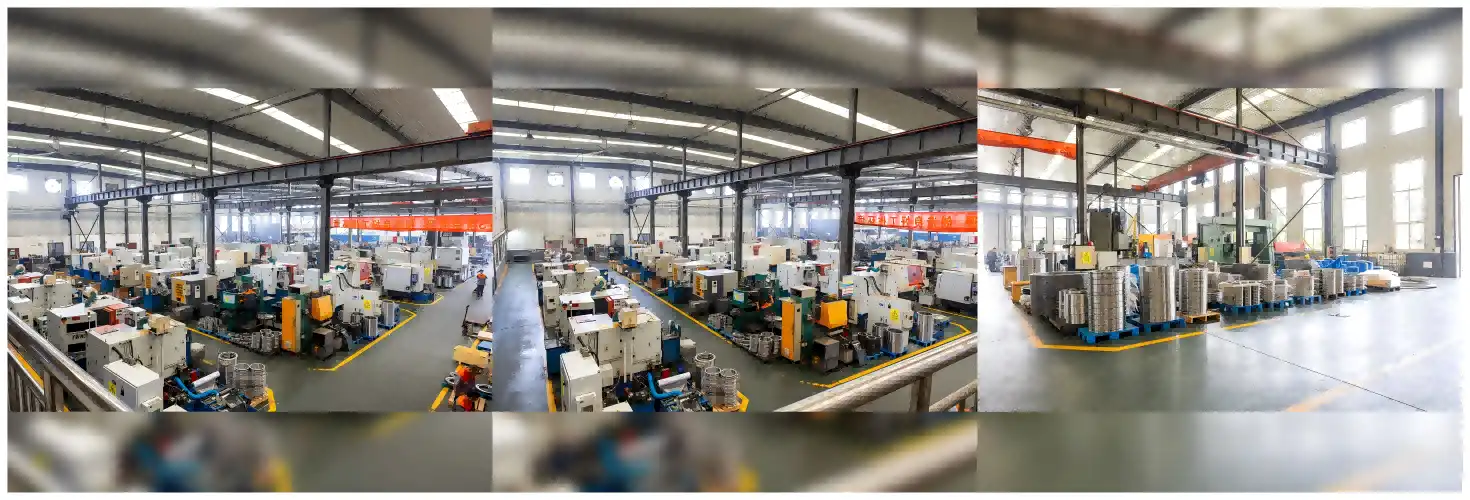
Understanding the XSU080168UUP5 Precision Crossed Roller Bearing
Design Architecture and Material Composition
The XSU080168UUP5 Precision Crossed Roller Bearing is an example of modern bearing technology because its outer and inner rings are made from GCr15 or GCr15SiMn bearing steel and are joined together. Crossed roller designs put cylindrical rollers at right angles to each other, providing line contact that spreads loads over larger surface areas. This is different from traditional ball bearings, which rely on point contact. The two-sided sealing setup (UU designation) keeps the factory-installed lithium-based grease in place and covers the internal parts. This lowers the risk of pollution in industrial settings where dust, metal particles, and moisture are always a problem.
Load Capacity and Precision Characteristics
XSU080168UUP5 Precision Crossed Roller Bearings are different from other types because they can handle radial, axial, and moment loads all at once within a single bearing unit. The XSU080168UUP5 Precision Crossed Roller Bearing gets rid of the need for paired bearing setups. This makes the mechanical design simpler while still keeping the rigidity needed for precise uses. The P5 accuracy rating allows for control of rotational runout within micron-level tolerances. This helps with situations where positioning mistakes hurt the quality of the product. This level of accuracy is somewhere between normal industrial grade (P6/P0) and ultra-precision specifications (P4/P2). It provides good performance for making most car parts and using machinery in factories.
Critical Application Environments
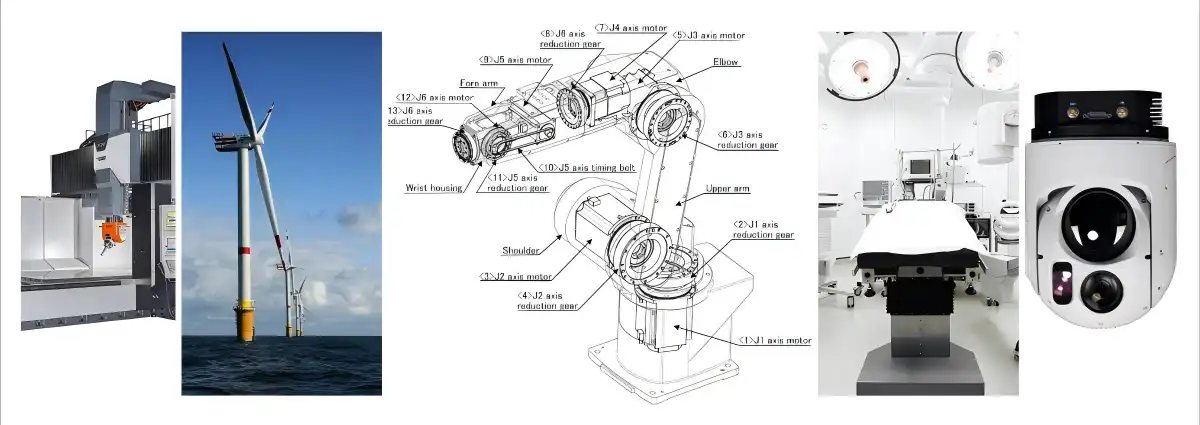
The XSU080168UUP5 Precision Crossed Roller Bearing's fixed roller setup makes it possible for its industrial robot joints to work with no backlash. In automatic welding systems, articulated arms experience complex load patterns when they speed up and change directions. This means that they need bearings that can keep their position accuracy within micrometers. A low friction coefficient makes indexing motions smooth on CNC rotary tables, and medical imaging equipment needs spinning that doesn't vibrate to be accurate for diagnosis. The highest level of precision is needed for measuring tools and devices used to make integrated circuits (ICs). The sealed, grease-lubricated design keeps out contaminants that could affect measurement accuracy or semiconductor production standards.
Common Maintenance Challenges and Problem-Solving for XSU080168UUP5
Premature Wear Patterns and Root Causes
Failures of bearings rarely happen without any signs. Increasing working noise is often a sign that the lubricant is breaking down or that contamination is getting past the sealing barriers. High working temperatures can mean that there isn't enough greasing or that there is too much preload, both of which speed up wear. Misaligned mounting surfaces cause uneven load distribution across rollers, which starts wear cracks that spread through raceway surfaces. This is a common problem that procurement managers have to deal with. We have seen cases where surface level differences of 0.02 mm cut the life of bearings by 40%. This shows how important it is to put things correctly.
Contamination Control in Industrial Settings
Even though the XSU080168UUP5 Precision Crossed Roller Bearing has a dual-sealed design, contamination is still the main reason why bearings wear out. Metal chips from cutting, coarse dust from grinding, and water getting into equipment during cleaning all reduce the lubricant's effectiveness. The sealed design offers basic protection, but how clean the mounting area is during installation decides how resistant it is to contamination over time. Setting up clean assembly procedures, such as using solvents to clean the mounting surfaces and filtered compressed air to dry the parts, stops particles from getting into the bearings at the most vulnerable point in their life.
Lubrication Management Complexities
In normal settings, the factory-installed grease in sealed XSU080168UUP5 Precision Crossed Roller Bearings lasts for 15,000 to 20,000 hours of use. Extreme temperatures, high speeds, or dirty surroundings all speed up the breakdown of lubricants. Open bearing designs can be re-oiled, but sealed versions need to have the whole bearing replaced when the grease runs out. Tracking shaking patterns with accelerometer-based condition tracking systems lets you know early on when lubrication is wearing out. This way, you can replace it when it's time for planned maintenance instead of having to shut down in an emergency, which throws off your production schedule.
Comprehensive Maintenance Guide for XSU080168UUP5 Bearings
Routine Inspection Protocols
Structured inspection processes help find problems early on, which stretches the life of bearings. During three-month maintenance breaks, mounting bolt torque retention should be checked visually. Loosening that shows structural movement or poor initial tightening should be looked for. Using infrared thermometers to take baseline temperatures during normal operation sets points for analyzing trends. Gradual temperature rises show that lubrication problems are starting to show up before a major failure happens. When you test the rotational smoothness of equipment by hand while it is stopped, you can see roughness or binding that shows how the wear is progressing inside.
Optimal Handling and Storage Practices
When XSU080168UUP5 Precision Crossed Roller Bearings are shipped from the factory, they come with protective coatings and sealed boxes that keep them clean until they are installed. To keep condensation from forming and rust from starting, storage places should keep the temperature between 15°C and 25°C and the relative humidity between 40 and 60%. When bearings are placed vertically, their own weight can bend the integrated ring structure. Placing them horizontally on padded surfaces, on the other hand, keeps the geometry correct. The XSU080168UUP5 Precision Crossed Roller Bearing should stay in its original box until it is time to put it. This will keep it from being exposed to air, which can damage protective coatings.
Installation Best Practices
How well the XSU080168UUP5 Precision Crossed Roller Bearing is mounted determines whether it lasts as long as it's supposed to or breaks before its time. To make sure the load is spread evenly, mounting surfaces must be as flat as 0.01 mm across the bolt circle width. This can be done by using precision ground surfaces or made pockets. Tightening a bolt is done in a star pattern, with three stages of rising torque until it reaches the desired value, which is usually between 25 and 35 Nm based on the size of the bolt. Too much torque causes the bearing ring to deform, which raises the internal stress and shortens the wear life. Not enough torque, on the other hand, lets fretting rust happen between the mounting surfaces.
Condition Monitoring Technologies
Predictive technologies that find decline trends before they happen are used in advanced maintenance strategies. Vibration analysis tools find frequency patterns that are typical of damage to rollers, raceways, or contamination. Baseline vibration signatures recorded during launching are used for comparison; variations greater than 25% set off probe procedures. Thermal imaging during operation finds localized heating patterns that can't be seen with touch thermometers. This shows problems with uneven loads or lubrication distribution. These technologies make condition-based maintenance schedules possible, which find the best time to change bearings so that they don't have to be thrown away too soon or fail catastrophically.
Comparison and Procurement Insights for XSU080168UUP5 Bearings
Performance Benchmarking Against Market Alternatives
In the market for XSU080168UUP5 Precision Crossed Roller Bearings, there are both well-known Japanese companies and new Chinese companies that are making precision bearings. Compared to similar NSK or THK models, the XSU080168UUP5 Precision Crossed Roller Bearing offers similar performance at a price that is more affordable, which is good for buying funds. When you buy from ISO 9001 and IATF 16949-approved companies like ATLYC, the load capacity specs, dimensional limits, and material quality all meet international standards. The combined fixing hole design makes installation easier than press-fit options, which need special tools and climate-controlled places to put them together.
Sourcing Strategy Considerations
Global bearing wholesalers make things easier by having them available right away, but they charge extra for distribution, which raises the total cost of purchase. When you buy directly from a maker, the price per unit goes down, especially when you order more than 50 units, but the wait time for standard specs is longer at 4 to 6 weeks. Different companies have different minimum order amounts. For example, distributors usually only sell single units, while makers may need at least 10 pieces of stock items. To get custom precision levels (P4 or P2) or special materials, you need to work directly with production sites that can do heat treatment and cutting in a certain way.
Quality Verification Parameters
Receiving checking routines keep fake or low-quality bearings from getting into important production equipment. Dimensional checking makes sure that the specs for the bore, outer diameter, and thickness are within acceptable ranges. Rotational smoothness testing finds flaws in the manufacturing process that can't be seen by the naked eye. For example, too much drag or occasional resistance can be a sign of incorrect roller spacing or uneven raceway surfaces. Reviewing the documentation makes sure that the goods can be tracked by using material approvals, dimensional inspection reports, and ISO compliance certificates that show that the production process is controlled.
Ensuring Long-Term Reliability and Maximizing Lifespan
Performance Optimization Through Operating Condition Management
Calculations of a bearing's lifetime are based on certain working conditions; going beyond the design limits speeds up the wear process. The XSU080168UUP5 Precision Crossed Roller Bearing can handle rotational loads up to its stated capacity, but running it near its maximum specifications all the time shortens its service life by making the contacts more stressed. Managing temperature is also very important; temperatures above 80°C speed up the oxidation of lubricants, which starts the acidic wear processes. Applications that start and stop more often put more stress on the bearings than ones that spin continuously at a steady speed, which changes how often they should be replaced.
Installation Precision Impact on Service Life
Studies done in several factories show that the quality of the placement affects 60% of the differences in how well bearings work. Preparing the mounting surface, making sure the bolt torque is regular, and checking the perpendicularity during fitting are all things that can lead to longer service life. Before you tighten the last bolt, you should use a gauge block to check that the mounting surface is flat and a number indicator to check for runout. These extra steps take 20 minutes longer, but they stop 70% of early failures that are caused by mistakes in the startup.
Industry 4.0 Integration for Predictive Maintenance
IoT-enabled sensors change maintenance from being reactive to being predicted by constantly checking the state of bearings instead of just when they are inspected. Attaching wireless sound sensors next to the XSU080168UUP5 Precision Crossed Roller Bearing sends data to cloud-based analytics platforms that use machine learning algorithms to look for trends that don't make sense. Mounting structures with temperature sensors built in provides real-time thermal monitoring that sends alerts when limits go beyond usual working ranges. These technologies cut unplanned downtime by 45% and increase bearing life by replacing them at the best time, so they don't lose any leftover service life or fail catastrophically.
Conclusion
Understanding the XSU080168UUP5 Precision Crossed Roller Bearing's unique design features, following structured check routines, and using precise installation methods are all necessary for keeping it in good shape. The integrated mounting hole design, along with P5 accuracy and sealed lubricant, ensures stable performance in tough industrial settings as long as the right servicing procedures are followed. Long-term business success depends on purchasing choices that balance cost, quality certification, and the ability of the seller. Advanced technologies for tracking conditions allow for planned repair plans that extend the life of bearings and cut down on unplanned downtime. When engineers and repair workers use these specialized areas of knowledge, they make equipment more reliable, which helps them meet production goals and saves their capital equipment investments.
FAQ
1. What maintenance intervals should we follow for the XSU080168UUP5?
Visual checks should be done every three months to make sure that the fixing bolts are tight and to look for any strange noises or changes in temperature. Vibration analysis done every six months collects trend data that is used for condition-based repair planning. The protected lubrication usually lasts between 15,000 and 20,000 hours of use before it needs to be replaced. However, harsh conditions or high-temperature use may cut this time by 30 to 40 percent.
2. How can we tell when the bearing requires replacement?
Key signs include temperature rises that last longer than 15°C above baseline, vibration amplitudes that get bigger than 25% of their commissioning values, changes in audible noise that mean the surface is breaking down, and higher rotational resistances found during hand rotation tests. Any one of the indicators alone is reason enough to look into it, but multiple symptoms at the same time prove that replacement is needed.
3. Can the XSU080168UUP5 function in extreme temperatures or contaminated environments?
The sealed design keeps out light contamination and works in temperatures ranging from -20°C to +100°C. Applications that go beyond these limits need extra care, like extra covering on the outside for heavy dirt or better oils for high temperatures. Talking to bearing engineers makes sure that the specifications are right for the real working conditions.
Partner with ATLYC for Superior Crossed Roller Bearing Solutions
ATLYC has been making precision bearings for 15 years and has quality systems that are ISO 9001 and IATF 16949 approved. This lets them offer reliable crossed roller bearing options. Our engineering team helps with choosing the right specifications, designing the right application, and planning upkeep for the XSU080168UUP5 Precision Crossed Roller Bearing and other similar precision bearings. We are a well-known company that makes XSU080168UUP5 Precision Crossed Roller Bearings. We keep our production capacity full so that we can serve mid- to large OEMs in the car parts, industrial machinery, and automation equipment industries. Contact our experts at auto@lyautobearing.com to talk about your specific application needs, get detailed technical paperwork, or get personalized quotes that show how committed we are to offering reasonable prices and on-time deliveries.
References
1. Harris, T.A., and Kotzalas, M.N. (2006). Advanced Concepts of Bearing Technology: Rolling Bearing Analysis, Fifth Edition. CRC Press.
2. ISO 5753-1:2009. Rolling Bearings – Internal Clearance – Part 1: Radial Internal Clearance for Radial Bearings. International Organization for Standardization.
3. Wensing, J.A. (1998). On the Dynamics of Ball Bearings. Doctoral Dissertation, University of Twente, Netherlands.
4. SKF Group. (2018). Rolling Bearings Catalogue: Bearing Maintenance and Lubrication. SKF Technical Documentation.
5. Budynas, R.G., and Nisbett, J.K. (2015). Shigley's Mechanical Engineering Design, Tenth Edition. McGraw-Hill Education.
6. Eschmann, P., Hasbargen, L., and Weigand, K. (1985). Ball and Roller Bearings: Theory, Design and Application, Second Edition. John Wiley & Sons.
Learn about our latest products and discounts through SMS or email