- English
- French
- German
- Portuguese
- Spanish
- Russian
- Japanese
- Korean
- Arabic
- Greek
- German
- Turkish
- Italian
- Danish
- Romanian
- Indonesian
- Czech
- Afrikaans
- Swedish
- Polish
- Basque
- Catalan
- Esperanto
- Hindi
- Lao
- Albanian
- Amharic
- Armenian
- Azerbaijani
- Belarusian
- Bengali
- Bosnian
- Bulgarian
- Cebuano
- Chichewa
- Corsican
- Croatian
- Dutch
- Estonian
- Filipino
- Finnish
- Frisian
- Galician
- Georgian
- Gujarati
- Haitian
- Hausa
- Hawaiian
- Hebrew
- Hmong
- Hungarian
- Icelandic
- Igbo
- Javanese
- Kannada
- Kazakh
- Khmer
- Kurdish
- Kyrgyz
- Latin
- Latvian
- Lithuanian
- Luxembou..
- Macedonian
- Malagasy
- Malay
- Malayalam
- Maltese
- Maori
- Marathi
- Mongolian
- Burmese
- Nepali
- Norwegian
- Pashto
- Persian
- Punjabi
- Serbian
- Sesotho
- Sinhala
- Slovak
- Slovenian
- Somali
- Samoan
- Scots Gaelic
- Shona
- Sindhi
- Sundanese
- Swahili
- Tajik
- Tamil
- Telugu
- Thai
- Ukrainian
- Urdu
- Uzbek
- Vietnamese
- Welsh
- Xhosa
- Yiddish
- Yoruba
- Zulu
How Does a Crossed Roller Bearing Guide Improve Accuracy?
The Crossed Roller Bearing Guide is a key answer for modern industry, where accuracy is key to making money. The unique perpendicular roller arrangement in this specialised part makes it more mechanically accurate by spreading loads across multiple contact points at the same time. Crossed Roller Bearing Guides set up line contact patterns that almost eliminate play and micro-movements. This is different from traditional ball bearings, which have point contact and will always deflect under load. The alternate 90-degree roller design makes the stiffness-to-size ratios very high, which lets OEMs keep tolerances within microns even when the system is working in a dynamic way. This basic design advantage directly leads to better positional repeatability, less operational vibration, and longer service intervals, all of which have a big effect on the total cost of ownership for precision machinery.
Understanding Crossed Roller Bearing Guides and Their Role in Accuracy
Crossed Roller Bearing Guides are unique in challenging industrial settings because of how well they are engineered. We've seen that the way they're built completely changes how mechanical systems react to different types of loading.
The Structural Foundation of Precision
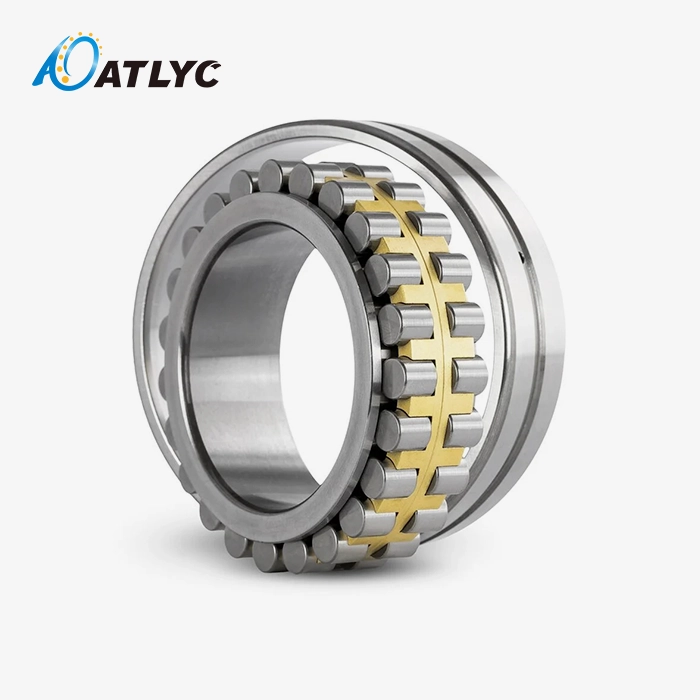
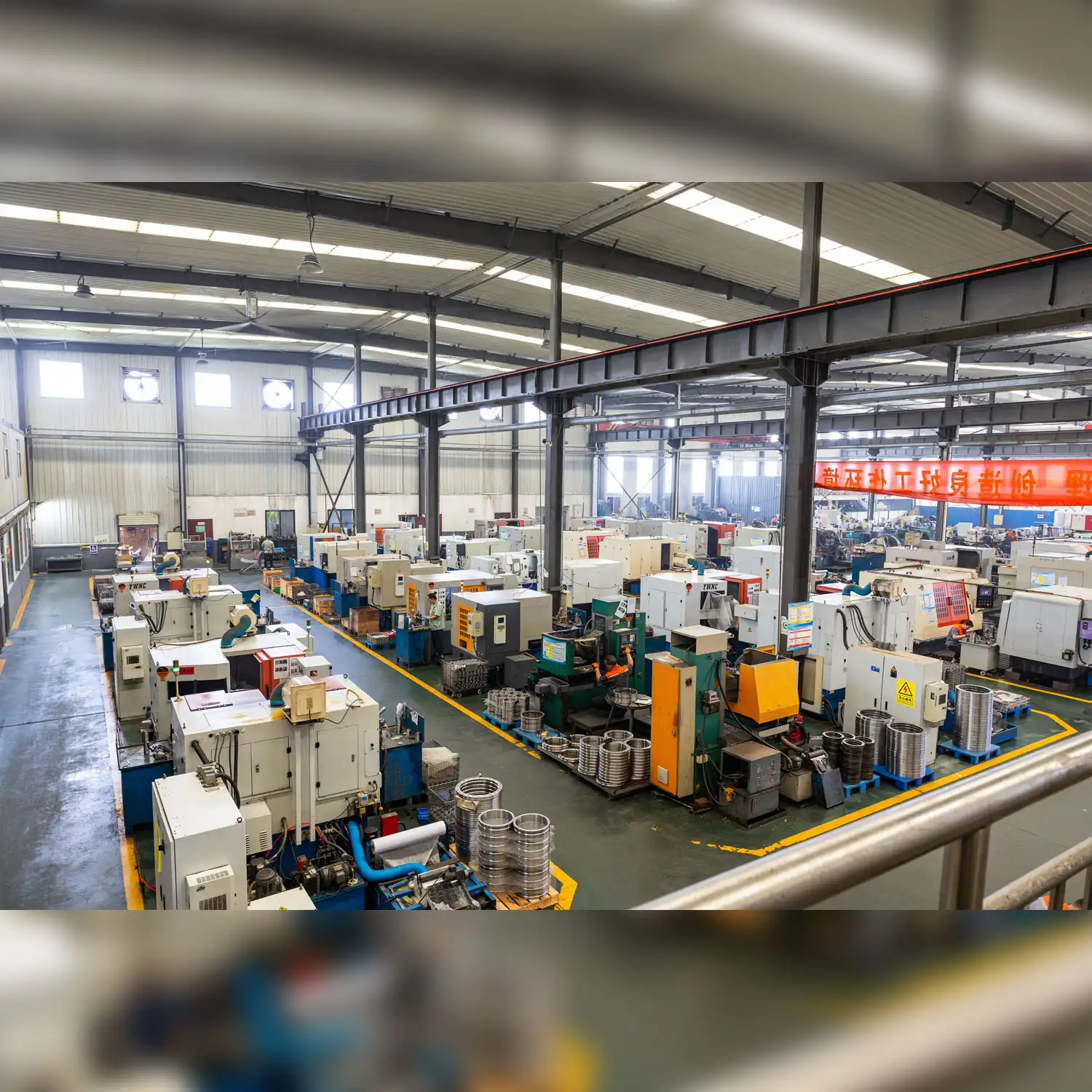
Crossed Roller Bearing Guides have cylinder-shaped rolling elements that are arranged at right angles to each other inside a single raceway. With this shape, the bearing can handle radial, axial, and moment loads without the need for extra bearing assemblies. This is known as "four-directional load capacity" under engineering terms. The way the contacts work is very different from ball bearings. Rollers make line contact along their entire length, while spherical elements make Hertzian point contact. This bigger contact area lowers contact stress by about 40–60% compared to similar ball bearing designs. This directly helps keep the dimensions stable when the bearing is loaded. Specialised skills are needed to make these components. The surfaces of the raceways need to be rough, usually less than Ra 0.2µm. This can only be done by grinding them very precisely. At ATLYC, our six production workshops use high-tech CNC grinding centres that keep the raceways straight within two micrometres across the width of the bearing. This is an important requirement for getting rid of runout mistakes that lower accuracy.
Material Science Meets Manufacturing Excellence
The types of materials used to make Crossed Roller Bearing Guides have a big effect on how accurate they stay over time. The usual material is high-carbon chromium-bearing steel with the name GCr15/SUJ2. This steel is through-hardened or induction hardened to a surface hardness of 58 to 64 HRC. The hardening depth profile needs to be carefully managed; too little depth causes early subsurface fatigue, and too much hardening makes the material brittle. These worries are taken care of by our quality control methods, which include thorough checking procedures. We check the correctness of the dimensions against ISO and DIN standards by testing the tolerances for inner diameter, outer diameter, and height, which are usually within the IT5 grade range. Runout tolerances, both radial and vertical, are very important because they have a direct effect on how accurate fixed parts are. Measurements of the starting torque prove that the right amount of preload was applied, which ensures that the bearing works within the clearance limits that were planned for it.
| Parameter | Standard Ball Bearing | Crossed Roller Bearing Guide |
|---|---|---|
| Contact Type | Point Contact | Line Contact |
| Load Capacity (Radial) | Baseline | 3-4x Higher |
| Rigidity | Baseline | 3-5x Higher |
| Runout Tolerance | IT6-IT7 | IT4-IT5 |
| Typical Preload Options | Light/Medium/Heavy | CC0 to CC3 (Negative Clearance) |
These technical characteristics explain why Crossed Roller Bearing Guides have become indispensable in applications where positional accuracy directly correlates with product quality and operational efficiency.
How Crossed Roller Bearing Guides Improve Mechanical Accuracy
The higher accuracy that Crossed Roller Bearing Guides offer comes from several interconnected design features that work together during operation.
Load Distribution and Stiffness Characteristics
When the rollers are crossed over each other, they make a bearing span that is wider than the assembly itself. This geometric advantage raises the moment of resistance, which makes the stiffness 300–500% better than with single-row angular contact ball bearings that have the same envelope dimensions. When a rotary table is loaded off-centre, which happens a lot in machining, this extra stiffness stops the angular deflection that would otherwise lead to mistakes in positioning the workpiece. To figure out how big these gains are, we use finite element analysis on customer apps. In a recent project involving a precision indexing table, it was shown that using Crossed Roller Bearing Guides instead of traditional ball bearings cut angular deflection from 15 arc-seconds to just 3 arc-seconds while keeping the same loading conditions. For our client, this improvement directly led to tighter machining tolerances and lower scrap rates.
Preload Application and Clearance Control
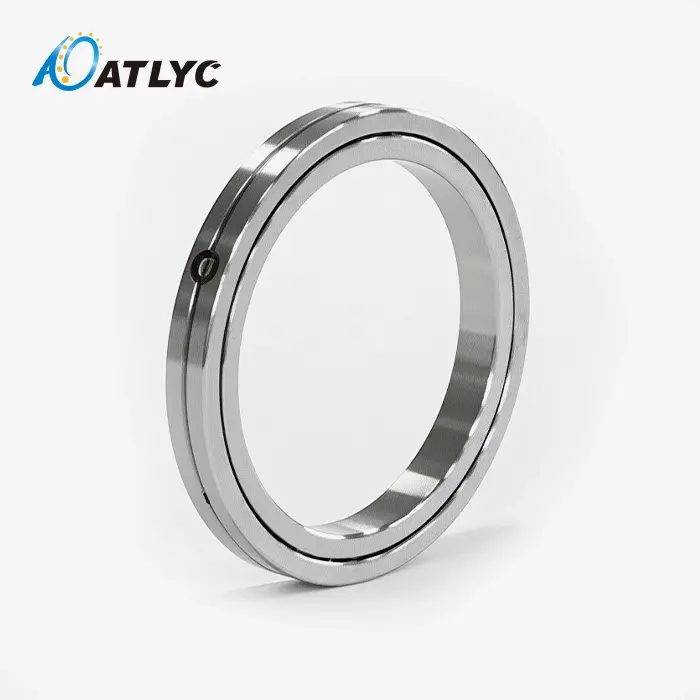
A key part of improving precision is the idea of preload, which means using controlled interruption to get rid of internal clearing. Crossed Roller Bearing Guides usually have negative clearance requirements of -2 to -5 micrometres, which are shown by numbers like CC0, CC1, or CC2. This preload does several things: it stops backlash when the direction changes, makes the contact stiffer, and helps make sure that the load is evenly spread across all rolling elements. This idea is shown by the RA8008UUCC0 Crossed Roller Bearing Guide. This small bearing meets ISO P5/P4 runout standards with its CC0 preload specification. Its inner diameter is 80mm, its outer diameter is 96mm, and its width is 8mm. The built-in UU contact seals keep lithium-soap-based grease in while keeping out contaminants as small as microns. This keeps the preload properties throughout the service life.
Vibration Damping and Noise Reduction
The accuracy of measuring and positioning in precision equipment is directly related to how smoothly the equipment works. Because they have a bigger contact area and better load distribution, Crossed Roller Bearing Guides are better at reducing vibrations. Laboratory tests show that vibration amplitudes are 40–65% lower than with ball bearings when the same speeds and loads are applied. This decrease in tremor is especially helpful in medical imaging equipment and the making of semiconductors, where even small movements can hurt system performance. With its built-in mounting design, the RU series Crossed Roller Bearing Guide makes installation easier while still meeting the low-profile needs of small equipment architectures.
Selecting the Right Crossed Roller Bearing Guide for Your Application
When buying Crossed Roller Bearing Guides, it's important to carefully compare the technical specs to the needs of the application. To help our customers with the selection process, we've come up with a methodical way to guide them through this selection process.
Comparative Analysis of Bearing Technologies
To figure out when crossed roller designs are the best choice, you need to look at them next to other bearing technologies. Ball bearings have less friction and can go faster, but they can't hold as much weight or be as stiff. Angular contact ball bearings can handle more moment loads because they optimise the contact angle, but they still use point contact mechanics. Cylindrical roller bearings can handle radial loads very well, but they need different thrust bearing sets to handle axial loads.In this world, Crossed Roller Bearing Guides stand out especially. They combine several load directions into a single small assembly. This makes machine design easier and increases the stiffness overall. The trade-off is a little more friction and, as a result, slower speeds than ball bearings, though new greasing technologies are continuing to close the gap. When judging suppliers, their technical support skills are very important. Reputable companies like IKO, NSK, THK, and SKF keep a lot of engineering resources that can help with everything from load calculations to application advice. Our engineering team at ATLYC has been working together for 15 years and has a lot of experience helping customers make decisions based on complicated factors like load capacity calculations, expected service life under certain operating conditions, and choosing the best preload.
Critical Technical Parameters
When making the choice, there are a few things that need extra attention:
Load Ratings: The bearing's capacity is based on its dynamic and static load ratings. Dynamic load ratings tell you how long something will last before it breaks down when it's rotating, while static ratings tell you how much weight you can put on it when it's not moving or when it's rotating slowly. To figure out comparable loads that take into account radial, axial, and moment loads together, you need to use ISO 281 calculation procedures or methods that are specific to the maker. Dimensional Details: The choice of bearing is often based on the limitations of the mounting envelope. Crossed Roller Bearing Guides are very small and work well in rotary applications because they build the bearing function right into the structure. Different types of drive mechanisms can be used because they come with internal gears, external gears, or no gears at all. Accuracy Grades: The ISO tolerance classes (P0, P6, P5, P4, P2) show the differences in speed and measure accuracy that are acceptable. Higher precision grades cost more, but they provide proportional improvements in positional accuracy. P4 or P2 grades are usually required for applications that need to do direct measurements or very precise positioning.
| Application Type | Recommended Accuracy Grade | Typical Preload | Key Selection Factor |
|---|---|---|---|
| General Industrial Machinery | P0 - P6 | Light (C2) | Cost-performance balance |
| CNC Machine Tools | P5 | Medium (CC0) | Thermal stability |
| Precision Measurement Equipment | P4 - P2 | Heavy (CC1-CC2) | Runout minimization |
| Medical Imaging | P5 - P4 | Medium (CC0) | Vibration damping |
| Semiconductor Manufacturing | P4 - P2 | Heavy (CC2) | Contamination resistance |
Installation and Maintenance Considerations
The bearing will only work as accurately as it was meant to if it is installed correctly. To keep mounting surfaces from warping when bolts are tightened, they must be flat, usually within 5–10 micrometres across the mounting diameter. To make sure that the clamping force is spread out evenly, the bolt tightening sequences should be in the shape of a star, with multiple passes at higher torque values. Crossed Roller Bearing Guides don't need much maintenance as long as they are properly sealed and oiled. The amount of time between inspections depends on how the machine is being used, but they are usually every 2,000 to 10,000 hours. During inspections, you should listen for strange noises or vibrations, make sure the starting torque stays within the range allowed, and check the integrity of the seals. When to add or replace grease depends on the type of lubricant and the temperature at which it is being used. In normal conditions, the time between visits is usually between 6,000 and 20,000 hours.
Procurement Considerations When Buying Crossed Roller Bearing Guides
The process of choosing the bearing is only one part of the buying process. Both evaluating suppliers and building relationships with them are important for long-term success.
Supplier Qualification and Quality Assurance
Certification qualifications are the basis for judging a seller. The ISO 9001 certification shows that you know how to run a basic quality management system. The IATF 16949 certification, on the other hand, is designed to meet the needs of the car industry and includes things like advanced product quality planning, production part approval processes, and statistical process control. Both certifications are still valid at ATLYC, which shows that we are committed to quality management that is consistent with world norms.In addition to certifications, manufacturing capacity indicators show how well a supplier can meet rising demand and keep up regular delivery performance. Our building has grown from a single workshop in 2010 to six specialised production areas by 2025. This shows that the capacity can be increased or decreased as needed. With an annual production capacity of more than 8 million bearing units across all of our products, this growth lets us serve mid- to large OEMs that need stable supply relationships.
Cost-Performance Optimisation
To find the best balance between the original cost of purchase and the total cost of ownership, you need to look at more than just the unit price. Longer service lives mean that parts don't need to be replaced as often, which saves money on downtime costs. Tighter manufacturing tolerances may be possible with better accuracy, which could lower the amount of waste and raise the quality of the product. The level of technical help affects both the cost of application engineering at the start and how quickly problems can be fixed when they happen. Most of the time, volume agreements open up better price structures. OEM relationships with yearly contracts ensure a steady supply while lowering costs per unit through economies of scale. We set our prices to reward customers who stay with us for a long time. This is because we know that smart partnerships are good for both sides. After all, they lower transaction costs and make contact easier.
Customization Capabilities
Being able to customise something adds another level of value. Standard catalogue items work well in many situations, but sometimes specific needs call for designs to be changed. For custom Crossed Roller Bearing Guide configurations, non-standard sizes, unique seal designs, or cage materials may be needed. At ATLYC, our engineering team works with customers to create unique solutions, with help from our design and testing services.
Lead Times and Supply Chain Reliability
Due to problems in the global supply chain, lead time predictability has become an important factor in purchasing. Suppliers you can trust keep strategic stock levels of high-volume standard products and accurately predict lead times for custom or less common specifications. Our systems for planning production let us see in real time how capacity is being used and how many orders are waiting, so we can confidently stick to delivery dates. Logistics costs and delivery times are affected by how close you are to key markets. Even though ATLYC is made in China, we've built reliable shipping relationships that let us serve users in South Korea, the US, Germany, Russia, Iran, and Turkey. Container consolidation programs help customers with different bearing needs across different types of equipment get the best freight rates.
Real-World Applications Showcasing Accuracy Improvements
By looking at specific examples of applications, we can see how Crossed Roller Bearing Guides improve accuracy in a wide range of fields.
Robotics and Automation Systems
Repeatability in positioning is very important for industrial robots, and is usually set at ±0.02mm to ±0.05mm across their working envelope. The extended arm mass and payload put a lot of moment loads on the joint axes, especially at the waist and shoulder positions. In traditional bearing setups, these moments have to be absorbed by multiple bearings that are spread apart. This makes the joint bigger and increases its rotational inertia. Crossed Roller Bearing Guides pack all of this usefulness into small, portable units. We helped a six-axis articulated robot replace paired angular contact ball bearings with RU series Crossed Roller Bearing Guides. This cut the joint housing diameter by 35mm and increased positioning repeatability from ±0.04mm to ±0.015mm. Cycle times were cut by about 8% because of the lower rotating mass, which had a direct effect on production throughput.
Precision Machining and Measurement Equipment
When it comes to CNC rotating tables, the quality of the item is directly affected by the accuracy of the bearings. The table has to stay in the same place during indexing operations and not bend when cutting is being done. A machine centre that made parts for spacecraft had rejection rates of almost 3% because of positional errors caused by bearing deflection under load. When you upgrade to Crossed Roller Bearing Guides with a P5 accuracy grade and a CC0 preload, the mistakes in indexing go from 12 arc-seconds to 4 arc-seconds. The rejection rate dropped below 0.5% because the stiffness was increased, which limited deflection under cutting forces. The investment in the bearings was paid back in seven months by lower scrap costs and better machine utilisation.
Medical Imaging Technology
CT scanners turn heavy X-ray source and detector assemblies at set speeds while making sure that all of the parts are perfectly lined up. Any wobble or runout adds artefacts to rebuilt pictures, which could make it harder to see diagnostic details. The gantry bearing is one of the most difficult uses for Crossed Roller Bearing Guides because it has to work with a large diameter, very precise measurements, and be completely reliable. Customers who buy medical equipment from us ask for Crossed Roller Bearing Guides that meet P4 accuracy standards and come with full quality paperwork that can be used to track materials back to certified sources. The built-in design of the bearing makes the gantry structure simpler, and its natural vibration-damping properties help keep the machine running quietly, which is important for the patient's comfort during long scan procedures.
Semiconductor Manufacturing Equipment
In semiconductor factories, methods for handling and inspecting wafers work in controlled settings where contamination is a major threat to yield. Crossed Roller Bearing Guides with special seal configurations stop particles from forming and keep the sub-micron positioning accuracy needed for inspection and lithography processes.For a wafer inspection system application, the placement had to be accurate to within 0.3 micrometres over a 300mm sweeping range. We made Crossed Roller Bearing Guides just for you, with ceramic rolling elements and special seals that work in cleanrooms. The ceramic elements got rid of the chance of making metallic particles while keeping the stiffness and accuracy that were needed for the job.

Conclusion
You can tell that Crossed Roller Bearing Guides are more accurate because they have basic design benefits like better stiffness-to-size ratios, line contact mechanics, and the ability to handle loads in multiple directions while still taking up little space. Because they don't change size when loaded in complicated ways, they are essential in robots, precision cutting, medical devices, and advanced manufacturing equipment. To make implementation work, you need to pay close attention to technical details, follow the right installation steps, and choose qualified providers who are good at both making and providing quick technical support. From the point of view of the total cost of ownership, high-quality bearings pay for themselves over time through longer service life, less downtime, and better end-product quality. In demanding industrial settings, these benefits often outweigh the initial cost of purchase.
FAQ
What advantages do crossed roller bearing guides offer compared to ball bearings?
Crossed Roller Bearing Guides are three to five times stiffer than similar ball bearings because their rollers are arranged perpendicularly and in line with each other. The greater stiffness directly leads to less deflection under load, better positioning precision, and a higher moment load capacity. The small design combines radial, axial, and moment load support into a single assembly. This makes the machine architecture easier to understand and reduces the overall size and weight compared to arrangements with multiple bearings.
How often should crossed roller bearing guides receive maintenance?
Maintenance times depend on things like load, speed, temperature, and the amount of pollution in the environment. Typical industrial conditions with good sealing and lubrication mean that inspections should be done every 2,000 to 10,000 hours of use. Inspections should verify smooth operation without odd noise or shaking, confirm starting torque stays within specs, and check seal integrity. Depending on the type of lubricant and the operating temperature, grease should be replaced every 6,000 to 20,000 hours.
Can ATLYC provide customised crossed roller bearing configurations?
Our engineering team works with customers to create custom bearing solutions that meet the needs of specific applications. Customisation options include non-standard sizes, changed seal designs, different materials, certain preload values, and gear configurations that are built right in. Our six production sites and in-house design services allow us to make prototypes and produce full-scale products to specific requirements. Throughout the lifetime of a product, we provide full quality documentation and technical support.
Partner with ATLYC for Precision Bearing Solutions
ATLYC has been making products for 15 years and has quality management systems that are ISO 9001 and IATF 16949 certified. They make Crossed Roller Bearing Guides that meet the exact needs of OEMs and industrial equipment manufacturers around the world. Additionally, our engineering team offers full technical support and can help you choose the best bearing configurations for your specific needs. We offer reasonable pricing for large orders, the ability to customise products for specific needs, and reliable shipping to customers in North America, Europe, and Asia. As the Crossed Roller Bearing Guide supplier you can trust, we're dedicated to helping you reach your accuracy goals through precise production and quick service. Email our team at auto@lyautobearing.com to talk about your bearing needs and find out how ATLYC can improve the performance and dependability of your tools.
References
1. Harris, T.A. and Kotzalas, M.N., "Advanced Concepts of Bearing Technology: Rolling Bearing Analysis," CRC Press, 2006.
2. ISO 281:2007, "Rolling bearings — Dynamic load ratings and rating life," International Organisation for Standardisation.
3. Weck, M. and Brecher, C., "Machine Tools 4: Automation and Control," Springer-Verlag, 2013.
4. Hamrock, B.J., Schmid, S.R., and Jacobson, B.O., "Fundamentals of Fluid Film Lubrication," Marcel Dekker, 2004.
5. SKF Group, "Rolling Bearings Catalogue: Super Precision Bearings," SKF Motion Technologies AB, 2020.
6. Budynas, R.G. and Nisbett, J.K., "Shigley's Mechanical Engineering Design," McGraw-Hill Education, 2015.
Learn about our latest products and discounts through SMS or email