- English
- French
- German
- Portuguese
- Spanish
- Russian
- Japanese
- Korean
- Arabic
- Greek
- German
- Turkish
- Italian
- Danish
- Romanian
- Indonesian
- Czech
- Afrikaans
- Swedish
- Polish
- Basque
- Catalan
- Esperanto
- Hindi
- Lao
- Albanian
- Amharic
- Armenian
- Azerbaijani
- Belarusian
- Bengali
- Bosnian
- Bulgarian
- Cebuano
- Chichewa
- Corsican
- Croatian
- Dutch
- Estonian
- Filipino
- Finnish
- Frisian
- Galician
- Georgian
- Gujarati
- Haitian
- Hausa
- Hawaiian
- Hebrew
- Hmong
- Hungarian
- Icelandic
- Igbo
- Javanese
- Kannada
- Kazakh
- Khmer
- Kurdish
- Kyrgyz
- Latin
- Latvian
- Lithuanian
- Luxembou..
- Macedonian
- Malagasy
- Malay
- Malayalam
- Maltese
- Maori
- Marathi
- Mongolian
- Burmese
- Nepali
- Norwegian
- Pashto
- Persian
- Punjabi
- Serbian
- Sesotho
- Sinhala
- Slovak
- Slovenian
- Somali
- Samoan
- Scots Gaelic
- Shona
- Sindhi
- Sundanese
- Swahili
- Tajik
- Tamil
- Telugu
- Thai
- Ukrainian
- Urdu
- Uzbek
- Vietnamese
- Welsh
- Xhosa
- Yiddish
- Yoruba
- Zulu
How Does Angular Ball Bearing 7014AC Perform in Extreme Conditions?
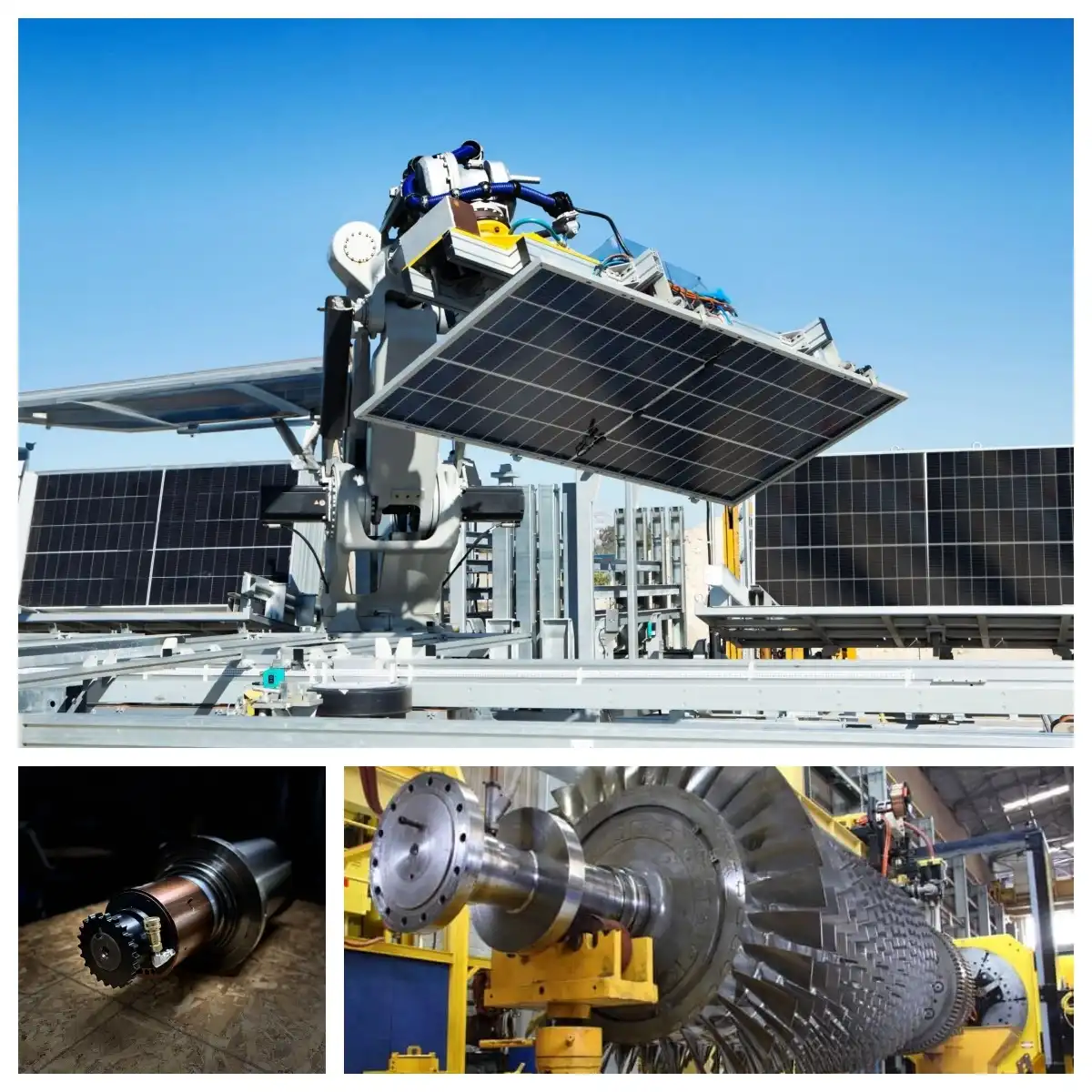
The Angular Ball Bearing 7014AC demonstrates exceptional resilience in extreme conditions through its precision-engineered 25-degree contact angle and robust GCr15 bearing steel construction. This single-row angular contact bearing maintains dimensional stability across wide temperature ranges while managing combined radial and axial loads effectively. With dimensions of 70mm inner diameter, 110mm outer diameter, and 20mm width, this component sustains reliable operation in demanding automotive spindle applications, heavy machinery, and automation equipment where traditional bearings often falter under thermal stress, contamination exposure, and shock loading.
Understanding Angular Ball Bearing 7014AC and Its Core Specifications
When machinery demands precision under challenging conditions, understanding the technical foundation of your bearing selection becomes critical. The 7014AC represents a sophisticated balance between engineering principles and practical industrial requirements.
Dimensional Specifications and Material Composition
The bearing has carefully manufactured dimensions that make it compatible with a wide range of machine configurations. The 70mm bore diameter fits normal shaft sizes found in medium to large industrial equipment, and the 110mm outer diameter makes the housing fit well without taking up too much room. The 20mm width evenly distributes the load across the raceway contact surfaces, which helps the service life last longer, even when it's being used all the time. This angled contact bearing is made from GCr15 bearing steel, which is very hard and doesn't wear down easily. GCr15 steel goes through strict heat treatment methods that make the microstructure of the whole part the same. This makes the performance characteristics consistent. This choice of material is especially useful when working in places where the temperature changes a lot, because it keeps its shape over temperature ranges that would damage cheaper bearing materials.
Precision Grades and Cage Material Options
The 7014AC angular contact bearing comes in P5, P4, and P2 precision grades to meet a wide range of accuracy needs. The P5 grade is good for general industrial uses where middling accuracy is enough, while the P4 grade is better for high-speed spindle uses that need better runout control. P2 is the highest level of precision, and it's only used in serious situations where the accuracy of the dimensions has a direct effect on the quality of the product. The choice of cage material has a big effect on how well the bearings work in all kinds of operating situations. Bakelite cages can survive the high temperatures that are common in continuous-duty machinery, keeping their shape when nylon cages would melt or break down. In normal temperature settings, nylon cages don't rust and don't make noise, which makes them perfect for precision equipment that needs to be quiet. Both choices are available at our manufacturing facility, which lets us make changes based on the specifics of each application.
Performance Challenges of Angular Ball Bearing 7014AC in Extreme Conditions
Operating environments rarely provide ideal conditions, and understanding Angular Ball Bearing 7014AC how external factors affect bearing performance enables proactive management strategies that prevent costly failures.
Thermal Effects on Dimensional Stability
High-temperature environments introduce expansion dynamics that challenge bearing performance. As operating temperatures climb beyond standard ranges, the bearing steel experiences thermal expansion that alters critical internal clearances. This expansion affects the carefully engineered fit between balls and raceways, potentially introducing play that compromises precision or creating interference that increases friction and heat generation. The GCr15 bearing steel composition provides inherent thermal stability superior to alternative materials. Its expansion coefficient remains predictable across temperature ranges, allowing engineers to calculate appropriate clearance specifications during installation. Proper bearing selection accounts for anticipated thermal conditions, ensuring internal geometry remains within optimal parameters even as machinery reaches operating temperature. Our engineering team at ATLYC provides technical consultation to help specify clearance values appropriate for your thermal environment, drawing on 15 years of application experience across global markets.
Shock Load and Vibration Impact
Heavy machinery subjects bearings to sudden impact forces that stress components beyond their static ratings. These shock loads create momentary stress concentrations at ball-to-raceway contact points, inducing material fatigue that accumulates over operational cycles. Vibration introduces cyclic loading that similarly contributes to fatigue progression, particularly when resonant frequencies excite bearing natural frequencies. The 25-degree contact angle geometry provides inherent rigidity that resists deflection under shock loading. The raceway displacement characteristic of angular contact bearings creates load paths that distribute impact forces across multiple contact points rather than concentrating stress at single locations. DB mounting configuration—back-to-back arrangement of paired bearings—further enhances rigidity and shock resistance, making this configuration standard for spindle applications where cutting forces generate variable loading. These design features work together to extend service life in challenging industrial environments, though proper installation remains critical for realizing these benefits.
Comparative Analysis: Angular Ball Bearing 7014AC vs. Alternative Bearings in Extreme Conditions
Selecting the optimal bearing type requires understanding how different designs perform under specific operational stresses. Several bearing categories offer potential solutions, each with distinct characteristics influencing their suitability for extreme conditions.
Performance Comparison with Deep Groove Ball Bearings
Deep groove ball bearings excel in high-speed applications with primarily radial loading. Their symmetrical raceway geometry minimizes friction at elevated speeds, making them suitable for applications prioritizing rotational velocity over axial load capacity. However, their limited axial load handling creates vulnerability when machinery experiences thrust forces or misalignment. The angular contact bearing 7014AC addresses these limitations through its asymmetric raceway design. While deep groove variants might fail prematurely under combined loading, the 7014AC manages both radial and axial forces simultaneously without compromising speed capability. This versatility proves particularly valuable in automotive components where variable loading patterns occur during operation. The tradeoff involves slightly higher friction compared to deep groove bearings under pure radial loading, though this difference diminishes in applications experiencing mixed load directions.
Variant Analysis: 7014AC vs. 7014C and 7014A
Within the 7014 series, suffix designations indicate contact angle variations that significantly Angular Ball Bearing 7014AC impact performance characteristics. The 7014C features a 15-degree contact angle optimized for maximum speed capability, while the 7014A utilizes a 30-degree angle emphasizing axial load capacity. The 7014AC's 25-degree configuration positions it between these extremes. Procurement decisions should weigh application priorities against these design differences. High-speed spindle applications benefit from the 7014C's reduced friction, though axial stiffness suffers compared to the 7014AC. Heavy machinery experiencing substantial thrust forces may justify the 7014A's superior axial capacity despite reduced speed limits. The 7014AC serves as the versatile option accommodating diverse requirements without extreme specialization, making it the preferred specification for applications with variable operating conditions or where flexibility supports equipment adaptability. Our inventory maintains all variants, enabling rapid delivery regardless of specification requirements.
Procurement Strategies for High-Performance Angular Ball Bearing 7014AC
Sourcing decisions directly impact equipment reliability and operational costs. Strategic procurement approaches balance immediate price considerations against long-term performance and supply continuity.
Evaluating Manufacturer Credentials and Certifications
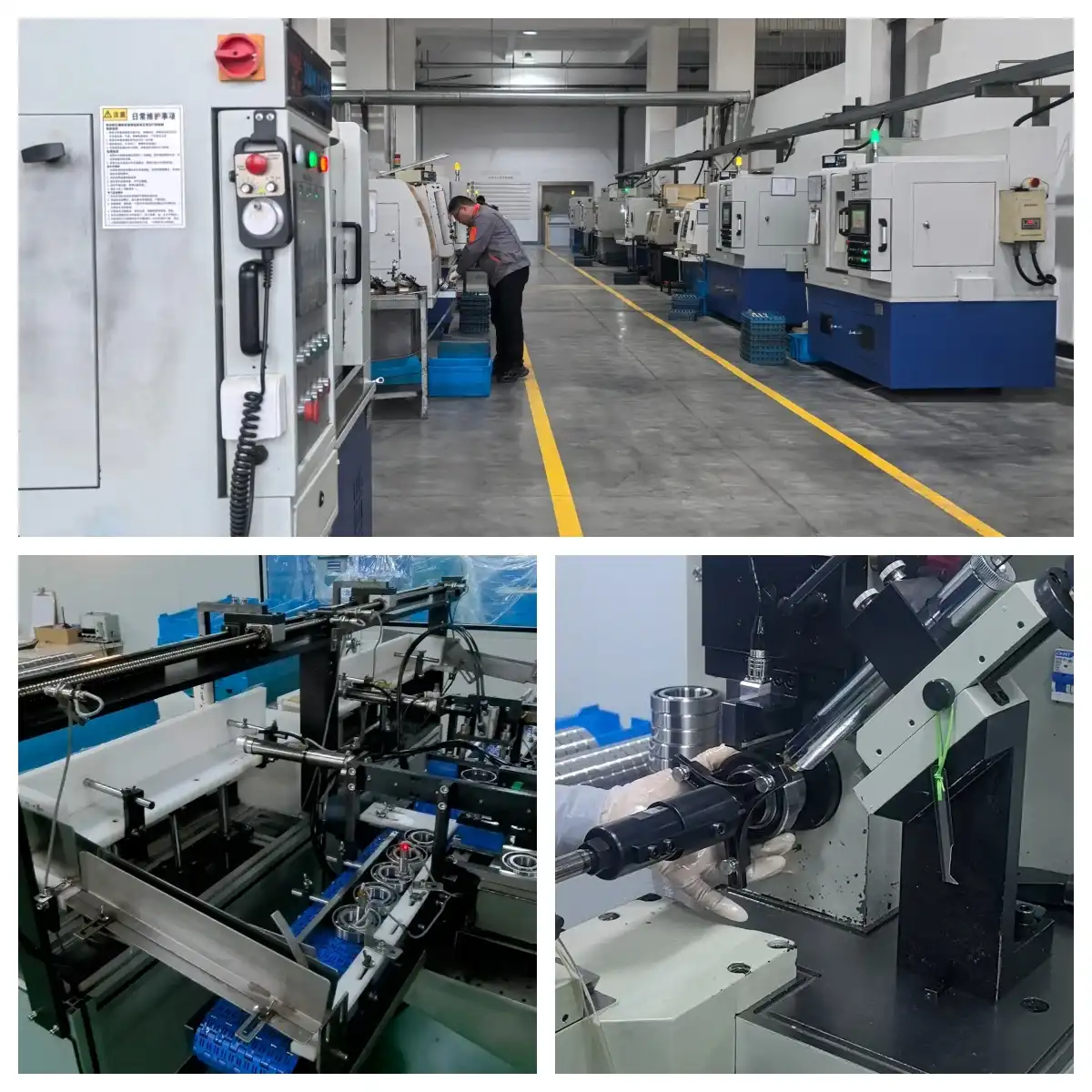
Quality consistency begins with manufacturer selection. ISO 9001 and IATF 16949 certifications demonstrate a commitment to systematic quality management and automotive industry requirements. These certifications require rigorous process controls, traceability systems, and continuous improvement methodologies that translate directly to product consistency. At Luoyang Auto Bearing Co., Ltd., we maintain both certifications through regular auditing by independent bodies. Our 15-year operational history reflects sustained compliance with international standards, not temporary certification efforts abandoned after initial achievement. This commitment ensures every angular contact bearing 7014AC leaving our facility meets documented specifications through verified manufacturing processes. Our 120-person team includes dedicated quality inspection personnel who verify dimensional accuracy, surface finish, and material properties at multiple production stages, providing the consistent quality mid-to-large manufacturers require for their equipment reliability.
Supply Chain Management and Long-Term Partnership
Bearing procurement extends beyond initial purchase to encompass supply reliability, technical support, and continuous improvement collaboration. Single-source dependencies create vulnerability to supply disruptions, while excessive supplier proliferation complicates quality management and increases administrative burdens. Strategic partnerships with manufacturers committed to long-term relationships balance these concerns. Our approach emphasizes supply continuity through scalable production capacity spanning six manufacturing workshops. This infrastructure accommodates growing customer requirements without the supply constraints typical of smaller operations. We maintain inventory buffers of common specifications while supporting make-to-order production for specialized variants, providing flexibility across procurement strategies. Technical support extends throughout the bearing lifecycle, from initial specification assistance through installation guidance and maintenance consultation, positioning us as an extension of your engineering team rather than simply a component vendor.
Case Studies: Angular Ball Bearing 7014AC in Extreme Operating Environments
Real-world application data validates theoretical performance claims and provides Angular Ball Bearing 7014AC practical insights for implementation planning.
High-Speed Spindle Applications in CNC Machining
A major automotive components manufacturer implemented angular contact bearings 7014AC in a DB mounting configuration for precision machining spindles operating at 12,000 RPM. The application demanded exceptional runout control to maintain dimensional tolerances below 0.005mm while withstanding cutting forces generating combined radial and axial loads. Previous bearing selections utilizing standard deep groove bearings experienced premature failure due to inadequate axial stiffness, resulting in unplanned downtime averaging 4.2 hours per incident. After transitioning to P4 grade 7014AC bearings with Bakelite cages, the manufacturer documented operational life extending 180% beyond previous solutions. Runout measurements remained within specification throughout service intervals, eliminating product quality issues related to bearing performance. The operational improvements reduced unplanned downtime by 73% while improving finished part quality metrics, demonstrating how appropriate bearing selection directly impacts manufacturing efficiency.
Automation Equipment Requiring Continuous Operation
A precision automation manufacturer required bearing solutions for robotic assembly equipment operating continuously in three-shift production environments. The application demanded quiet operation to meet workplace noise standards while maintaining positioning accuracy throughout extended service intervals. Standard bearing solutions generated excessive noise as wear progressed, necessitating frequent replacement to maintain acoustic performance. Nylon cage 7014AC bearings addressed this challenge through inherently quiet operation maintained throughout service life. The P5 precision grade provided positioning accuracy sufficient for assembly operations while avoiding the cost premium associated with higher precision classes. Lubrication intervals extended to 5,000 operating hours without performance degradation, reducing maintenance intervention frequency by 40%. The manufacturer reported equipment availability improvements of 3.2% attributable solely to bearing performance enhancements, demonstrating how component selection influences overall system productivity.
Conclusion
Angular contact bearing 7014AC performance in extreme conditions stems from intelligent engineering, balancing multiple design considerations. The 25-degree contact angle, precision GCr15 steel construction, and available customization options create versatile solutions for demanding industrial applications. Procurement success requires understanding these technical characteristics, evaluating manufacturer capabilities, and establishing partnerships supporting long-term supply reliability. Our documented case studies demonstrate measurable performance improvements across diverse extreme operating environments, validating the bearing's suitability for challenging applications. Strategic bearing selection combined with proper installation and maintenance practices delivers the reliability mid-to-large manufacturers require for competitive equipment operation.
FAQ
1. What maximum operating temperature can the 7014AC withstand?
Standard 7014AC bearings with appropriate synthetic lubrication reliably operate at continuous temperatures reaching 120°C, with intermittent capability to 150°C depending on cage material selection. Bakelite cages demonstrate superior thermal stability compared to nylon variants, making them preferable for high-temperature applications. Operating beyond these thresholds requires specialized lubricants and potential material modifications, which we can discuss during technical consultation.
2. How does noise performance compare to deep groove ball bearings?
Angular contact bearings generate slightly higher acoustic signatures than deep groove variants due to their asymmetric raceway geometry. However, proper preload adjustment and quality manufacturing minimize this difference. P4 and P2 precision grades with nylon cages achieve noise levels acceptable for most industrial environments, while the DB mounting configuration provides balanced loading that reduces vibration-induced noise compared to single-bearing arrangements.
3. Can the 7014AC be customized for corrosion resistance?
Customization options include specialized coatings and seal configurations addressing corrosive environments. Zinc-nickel plating provides moderate corrosion protection for damp conditions, while more aggressive chemical exposure may warrant stainless steel construction available as a special order. Our engineering team evaluates specific environmental conditions to recommend appropriate protective measures, balancing cost considerations against required service life.
Partner with ATLYC for Reliable Angular Ball Bearing 7014AC Supply
Machinery reliability starts with component selection backed by manufacturing excellence and responsive technical support. ATLYC brings 15 years of precision bearing manufacturing experience serving global automotive and industrial equipment Angular Ball Bearing 7014AC markets. Our ISO 9001 and IATF 16949 certified production facility employs 120 skilled professionals dedicated to delivering consistent quality across every angular contact bearing 7014AC we manufacture. Whether you need standard P5 grade bearings for general industrial applications or customized P2 precision variants for critical spindle systems, our seven-day delivery commitment and OEM customization capabilities support your operational requirements. Contact our team at auto@lyautobearing.com to discuss your angular ball bearing 7014AC supplier needs and discover how our manufacturing capacity and technical expertise create competitive advantages for your equipment performance.
References
1. Harris, T.A., and Kotzalas, M.N. (2006). Advanced Concepts of Bearing Technology: Rolling Bearing Analysis. CRC Press, Taylor & Francis Group.
2. Eschmann, P., Hasbargen, L., and Weigand, K. (1985). Ball and Roller Bearings: Theory, Design and Application. John Wiley & Sons.
3. Hamrock, B.J., and Dowson, D. (1981). Ball Bearing Lubrication: The Elastohydrodynamics of Elliptical Contacts. Wiley-Interscience Publication.
4. ISO 15-2017. Rolling Bearings – Radial Bearings – Boundary Dimensions, General Plan. International Organization for Standardization.
5. Tallian, T.E. (1999). Failure Atlas for Hertz Contact Machine Elements. ASME Press, American Society of Mechanical Engineers.
6. Budynas, R.G., and Nisbett, J.K. (2015). Shigley's Mechanical Engineering Design. McGraw-Hill Education, Chapter 11: Rolling-Contact Bearings.
Learn about our latest products and discounts through SMS or email