- English
- French
- German
- Portuguese
- Spanish
- Russian
- Japanese
- Korean
- Arabic
- Greek
- German
- Turkish
- Italian
- Danish
- Romanian
- Indonesian
- Czech
- Afrikaans
- Swedish
- Polish
- Basque
- Catalan
- Esperanto
- Hindi
- Lao
- Albanian
- Amharic
- Armenian
- Azerbaijani
- Belarusian
- Bengali
- Bosnian
- Bulgarian
- Cebuano
- Chichewa
- Corsican
- Croatian
- Dutch
- Estonian
- Filipino
- Finnish
- Frisian
- Galician
- Georgian
- Gujarati
- Haitian
- Hausa
- Hawaiian
- Hebrew
- Hmong
- Hungarian
- Icelandic
- Igbo
- Javanese
- Kannada
- Kazakh
- Khmer
- Kurdish
- Kyrgyz
- Latin
- Latvian
- Lithuanian
- Luxembou..
- Macedonian
- Malagasy
- Malay
- Malayalam
- Maltese
- Maori
- Marathi
- Mongolian
- Burmese
- Nepali
- Norwegian
- Pashto
- Persian
- Punjabi
- Serbian
- Sesotho
- Sinhala
- Slovak
- Slovenian
- Somali
- Samoan
- Scots Gaelic
- Shona
- Sindhi
- Sundanese
- Swahili
- Tajik
- Tamil
- Telugu
- Thai
- Ukrainian
- Urdu
- Uzbek
- Vietnamese
- Welsh
- Xhosa
- Yiddish
- Yoruba
- Zulu
How Does Spindle Bearing 71906C Support High-Speed Operation?
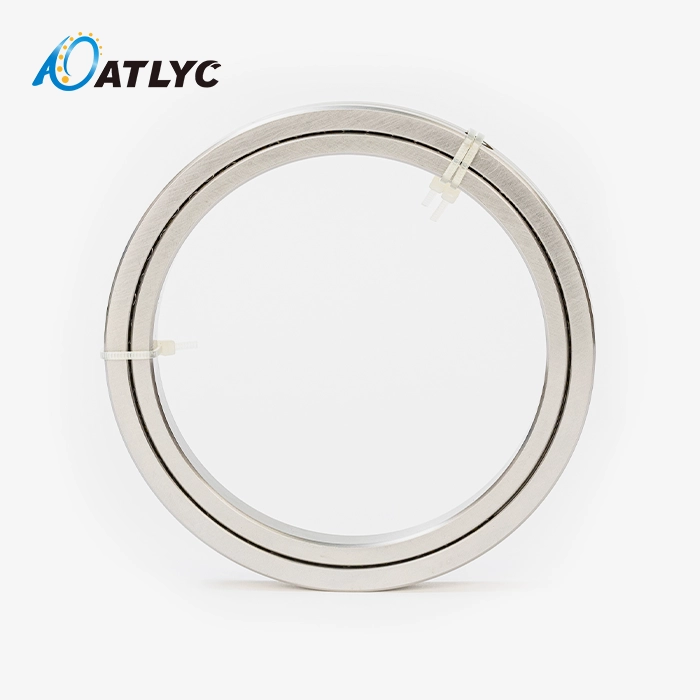
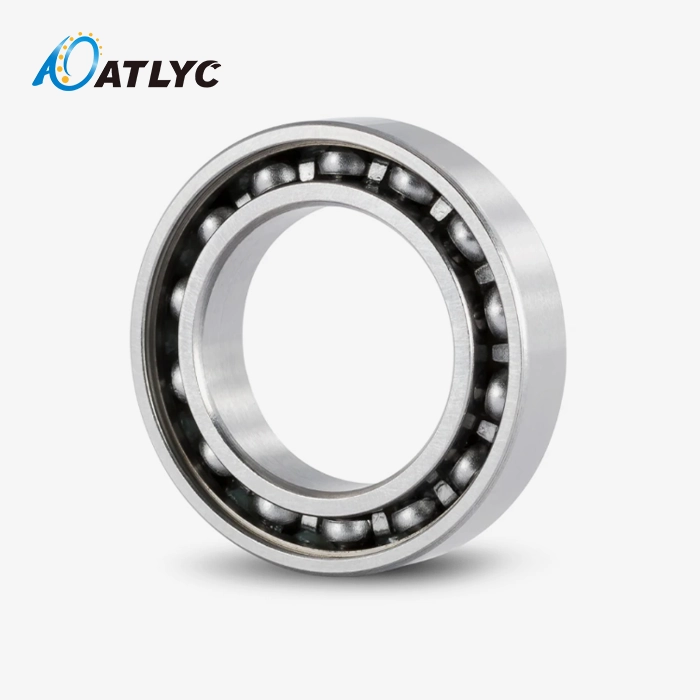
The Spindle Bearing 71906C spindle bearing is a high-speed bearing with a 15-degree contact angle, thin-section geometry (30×47×9mm), and ISO P4/P2 tolerance-class accuracy. The angular contact ball bearing lowers the gyroscopic moment during rotation, reduces the internal heat production, and maintains the radial stiffness at speeds over 30,000 RPM. It maintains low friction with its adjusted raceway curvature under elastohydrodynamic lubrication conditions. Ceramic hybrid versions achieve speed factors (ndm) of up to 2 million. The 71906C offers the thermal stability and dimensional accuracy required for precision spindle applications for OEMs and CNC machine manufacturers.

Understanding Spindle Bearing 71906C: Specifications and Functional Principles
Before sourcing any high-speed bearing, understanding what separates a precision-grade component from a standard one is essential. The 71906C belongs to the ISO Series 19 "super-light" angular contact family, and its dimensional footprint alone tells a meaningful story.
Core Dimensional and Material Specifications
| Parameter | Specification |
|---|---|
| Inner Diameter (Bore) | 30 mm |
| Outer Diameter | 47 mm |
| Width | 9 mm |
| Contact Angle | 15° (Type C) |
| Tolerance Class | ISO P4 (ABEC 7) / P2 (ABEC 9) |
| Ball Material | 100Cr6 Chrome Steel or Si₃N₄ Ceramic (Hybrid) |
| Cage Material | Phenolic Resin (TA) or PEEK (T85) |
| Max Speed Factor (ndm) | Up to 2,000,000 with oil-air lubrication |
The 15-degree contact angle is not coincidental. It is particularly good in finish-grinding and high-speed turning applications because it prefers radial rigidity over axial load capacity. The small cross-section enables shaft designers to increase the bore diameter in tight housing environments without adding mass to the machine structure—a practical victory for CNC spindle builders.
Lubrication and Heat Dissipation Principles
At high rotating speeds, the main adversary of bearing life is the heat generated. The Spindle Bearing 71906C solves this problem by using improved osculation geometry to manage the contact ellipse between balls and raceways under elastohydrodynamic lubrication (EHL). A premium barium-complex spindle grease, such as Klüber Isoflex, is standard at speeds up to about 70% of the limiting speed. Beyond this limit, oil-air lubrication is required in an effort to avoid cage collapse and to maintain the thermal balance. Hybrid versions with silicon nitride (Si₃N₄) ceramic balls create far less centrifugal heat owing to a 60% weight saving compared to steel, and they also double or triple grease service life under similar circumstances.
Performance Comparison: Spindle Bearing 71906C vs. Alternatives
Procurement decisions benefit from direct technical comparison. The 71906C is not the only option on the market, but understanding where it outperforms alternatives clarifies when it is the right choice.
Variant and Type Comparison Table
| Bearing Model | Contact Angle | Speed Suitability | Primary Application |
|---|---|---|---|
| 71906C | 15° | Very High (>30,000 RPM) | High-speed grinding, CNC spindles |
| 71906AC | 25° | Moderate-High | Milling, axial load-heavy operations |
| 71906CE | 15° (Enhanced) | Very High | Precision machining, matched pairs |
| 6206 Deep Groove | N/A | Moderate | General industrial equipment |
The 71906AC has a 25-degree contact angle that handles larger axial stresses, but loses the speed ceiling and radial stiffness. Standard deep groove ball bearings such as the 6206 cannot match the accuracy tolerance grades or the speed capabilities of the 71906C series. On paper, branded counterparts from SKF, NSK and FAG are dimensionally interchangeable – however, internal geometries, osculation values and preload offset grinding are significantly different from manufacturer to manufacturer. If you mix brands in one spindle stack, they will not share the load equally and will fail prematurely.
The 71906C is supplied with universal pairing (DU) grinding, which allows Back-to-Back (DB), Face-to-Face (DF), or Tandem (DT) mounting configurations without shimming, simplifying assembly and decreasing machine setup time on large volume production lines.
Procurement Considerations for Spindle Bearing 71906C
Sourcing precision spindle bearings at scale requires more than comparing catalog prices. Quality verification, delivery reliability, and supplier transparency all carry weight in the total cost of ownership equation.
When evaluating a Spindle Bearing 71906C supplier, procurement managers should request documentation of dimensional deviation (Δdmp), radial runout values for P4-class inner and outer rings (typically within 2.5 microns), and Anderon meter vibration test results. These three metrics reveal whether a bearing will perform or fail within the first thousand hours of operation [³].
Here are the critical supplier evaluation criteria worth validating before placing a bulk order:
- ISO 9001 and IATF 16949 certification: These certifications indicate a structured quality management system aligned with automotive and industrial standards. Without them, traceability and defect rate control are difficult to guarantee.
- Tolerance class documentation: P4 or P2 class bearings require controlled manufacturing environments. Ask for batch-level inspection records, not just general product specifications.
- Preload classification consistency: Light (L), Medium (M), and Heavy (H) preload classes must match the machine's dynamic model. Inconsistent preload in a spindle stack generates vibration and reduces surface finish quality.
- Lead time and stock transparency: For OEM production schedules, suppliers with dedicated inventory buffers and predictable shipping windows reduce line-stoppage risk.
These criteria distinguish a long-term strategic partner from a transactional vendor. For global buyers in the US, Germany, and South Korea, aligning with a 71906C manufacturer that holds dual automotive certification and maintains scalable production capacity reduces sourcing risk considerably.
Application Areas and Industry Use Cases of Spindle Bearing 71906C
The 71906C angular contact bearing finds purpose wherever precision and compactness intersect with demanding speed requirements. Three real-world scenarios illustrate this clearly.
CNC Internal Grinding Spindles
In automotive fuel injector component machining, spindles routinely operate above 35,000 RPM under aggressive coolant mist conditions. Tandem-paired 71906C bearings maintain shaft rigidity and deliver surface finish tolerances (Ra) in the sub-micron range—a standard requirement for hydraulic precision surfaces.
PCB Drilling and Router Spindles
Electronics manufacturing spindles demand rapid acceleration and deceleration cycles, often hundreds of times per hour. The low rolling-element mass of the 71906C minimizes inertia during speed transitions, reducing skidding damage and extending spindle service intervals for micro-via drilling operations.
Robotic and Automation Joint Actuators
In surgical robotic arms and high-precision automation equipment, zero-backlash and low starting torque are non-negotiable. The thin cross-section of the 71906C enables compact joint architectures that combine load-carrying capacity with the smooth motion control required in haptic feedback systems.
Maximizing Lifespan and Reliability of Spindle Bearing 71906C
Even a precisely manufactured 71906C bearing will underperform if installation and maintenance practices fall short. The most common failure modes—misalignment, incorrect interference fit, and lubricant starvation—are all preventable.
Precision installation begins with verifying shaft and housing tolerances match the bearing's dimensional deviation class. Applying force through the rolling elements during press-fit mounting damages raceways immediately. Condition monitoring systems using vibration frequency analysis can detect early-stage raceway defects before they propagate into catastrophic spindle failure, reducing unplanned downtime.
Consistent lubrication intervals, matched to actual operating speed and temperature, extend service life substantially. Oil-air systems provide the most reliable heat removal at ultra-high speeds, while grease-lubricated variants benefit from relubrication schedules calibrated to the specific operating cycle rather than fixed calendar intervals.

Conclusion
The Spindle Bearing 71906C is a precision-engineered angular contact ball bearing that earns its place in high-speed spindle applications through dimensional accuracy, thermal management capability, and mounting flexibility. Its 15-degree contact angle, super-light series geometry, and compatibility with ceramic hybrid configurations make it a dependable solution for CNC machining, electronics manufacturing, and precision automation. Selecting the right bearing—and the right supplier—directly affects machine uptime, surface finish quality, and total operational cost.
FAQ
1. What makes the 71906C better suited for high-speed operation than a standard deep groove ball bearing?
The 71906C is manufactured to P4 or P2 tolerance classes with controlled raceway geometry, a 15-degree contact angle, and thin-section construction. These attributes reduce internal heat generation and maintain radial stiffness at speeds that would cause standard bearings to fail thermally.
2. What is the difference between the 71906C and the 71906AC?
The C suffix denotes a 15-degree contact angle optimized for radial stiffness and maximum speed. The AC suffix indicates a 25-degree angle suited for higher axial loads but with a reduced speed ceiling. Use the 71906C for high-speed finish grinding and the 71906AC for heavy-duty milling.
3. Should I consider hybrid ceramic variants for my spindle application?
If your spindle exceeds 30,000 RPM or requires electrical insulation, hybrid ceramic (Si₃N₄) balls are worth the investment. They run significantly cooler and extend grease life by two to three times compared to all-steel configurations.
4. What are typical bulk order lead times for precision spindle bearings?
Lead times vary by supplier capacity and stock levels. Qualified manufacturers with dedicated production lines typically fulfill standard bulk orders within three to six weeks, with expedited options available for scheduled production contracts.
Partner with ATLYC for Your Spindle Bearing 71906C Requirements
ATLYC, backed by 15 years of precision bearing manufacturing and dual ISO 9001 and IATF 16949 certification, delivers the 71906C spindle bearing with documented tolerance control and scalable production across six specialized workshops. Whether you need a qualified Spindle Bearing 71906C supplier for OEM programs or replacement aftermarket volumes, our engineering team is ready to support your specifications. Contact us at auto@lyautobearing.com to request a quote today.
References
1. Hamrock, B. J., Schmid, S. R., & Jacobson, B. O. (2004). Fundamentals of Fluid Film Lubrication (2nd ed.). Marcel Dekker. https://www.routledge.com/Fundamentals-of-Fluid-Film-Lubrication/Hamrock-Schmid-Jacobson/p/book/9780824753719
2. SKF Group. (2023). SKF Rolling Bearings Catalogue. SKF. https://www.skf.com/group/products/rolling-bearings/principles-of-rolling-bearing-selection/bearing-types-and-designs/angular-contact-ball-bearings
3. ISO 492:2014. Rolling Bearings — Radial Bearings — Dimensional and Geometrical Tolerances. International Organization for Standardization. https://www.iso.org/standard/59750.html
4. Tlusty, J. (2000). Manufacturing Processes and Equipment. Prentice Hall. https://www.pearson.com/en-us/subject-catalog/p/manufacturing-processes-and-equipment/P200000003381
5. Randall, R. B. (2011). Vibration-Based Condition Monitoring: Industrial, Aerospace and Automotive Applications. Wiley. https://www.wiley.com/en-us/Vibration+Based+Condition+Monitoring%3A+Industrial%2C+Aerospace+and+Automotive+Applications-p-9780470747858
6. Weck, M., & Brecher, C. (2006). Werkzeugmaschinen: Konstruktion und Berechnung (8th ed.). Springer. https://link.springer.com/book/9783540225829
Learn about our latest products and discounts through SMS or email