- English
- French
- German
- Portuguese
- Spanish
- Russian
- Japanese
- Korean
- Arabic
- Greek
- German
- Turkish
- Italian
- Danish
- Romanian
- Indonesian
- Czech
- Afrikaans
- Swedish
- Polish
- Basque
- Catalan
- Esperanto
- Hindi
- Lao
- Albanian
- Amharic
- Armenian
- Azerbaijani
- Belarusian
- Bengali
- Bosnian
- Bulgarian
- Cebuano
- Chichewa
- Corsican
- Croatian
- Dutch
- Estonian
- Filipino
- Finnish
- Frisian
- Galician
- Georgian
- Gujarati
- Haitian
- Hausa
- Hawaiian
- Hebrew
- Hmong
- Hungarian
- Icelandic
- Igbo
- Javanese
- Kannada
- Kazakh
- Khmer
- Kurdish
- Kyrgyz
- Latin
- Latvian
- Lithuanian
- Luxembou..
- Macedonian
- Malagasy
- Malay
- Malayalam
- Maltese
- Maori
- Marathi
- Mongolian
- Burmese
- Nepali
- Norwegian
- Pashto
- Persian
- Punjabi
- Serbian
- Sesotho
- Sinhala
- Slovak
- Slovenian
- Somali
- Samoan
- Scots Gaelic
- Shona
- Sindhi
- Sundanese
- Swahili
- Tajik
- Tamil
- Telugu
- Thai
- Ukrainian
- Urdu
- Uzbek
- Vietnamese
- Welsh
- Xhosa
- Yiddish
- Yoruba
- Zulu
RE Series Crossed Roller Bearing for Demanding Automation
In the case when precise margins are in micrometers and downtime is not an option, the bearing you pick sets the ceiling of your machine. The RE Series Crossed Roller Bearing is designed for that level of demand. This single-unit bearing has an integrated outer ring and split inner ring and can take radial, axial, and moment loads concurrently, avoiding complicated multi-bearing set-ups. From structure and maintenance to procurement strategy and real-world applications, this book is a must-read for OEMs, automation engineers, and procurement managers procuring high-precision rotary components.
Understanding RE Series Crossed Roller Bearings
What Makes the RE Series Structurally Distinct
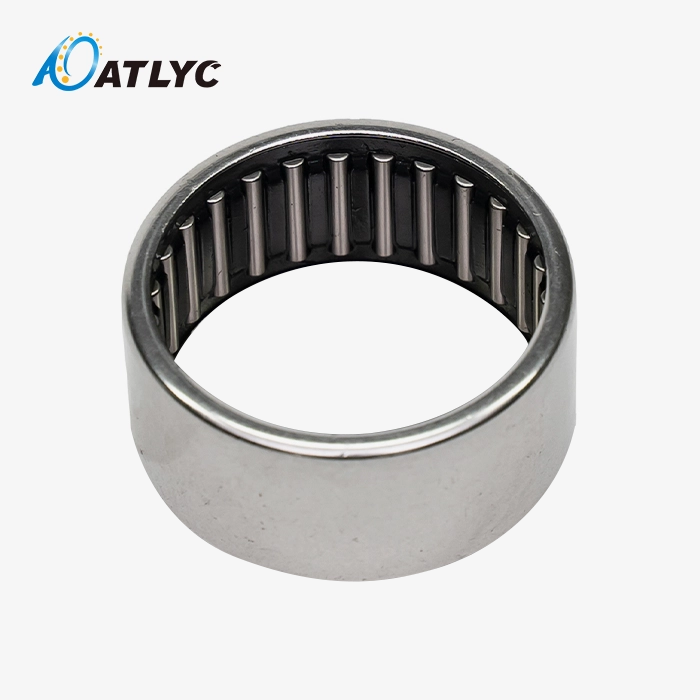
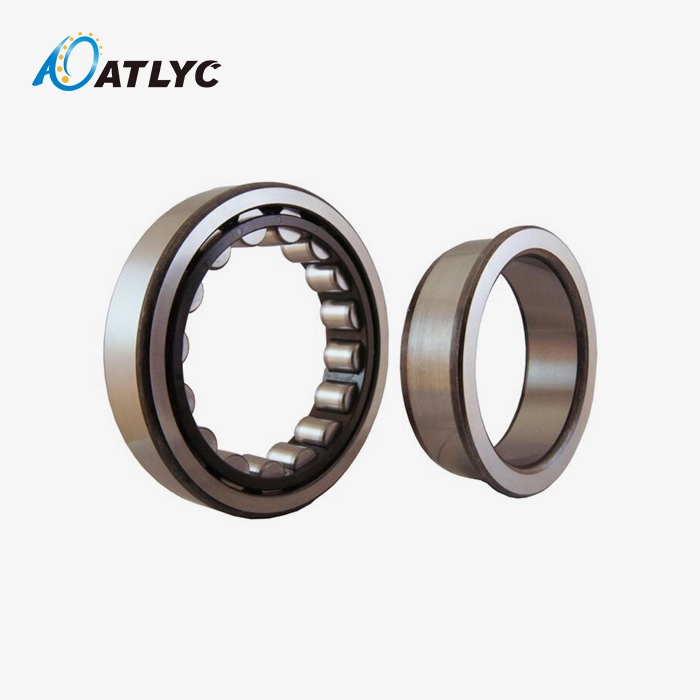
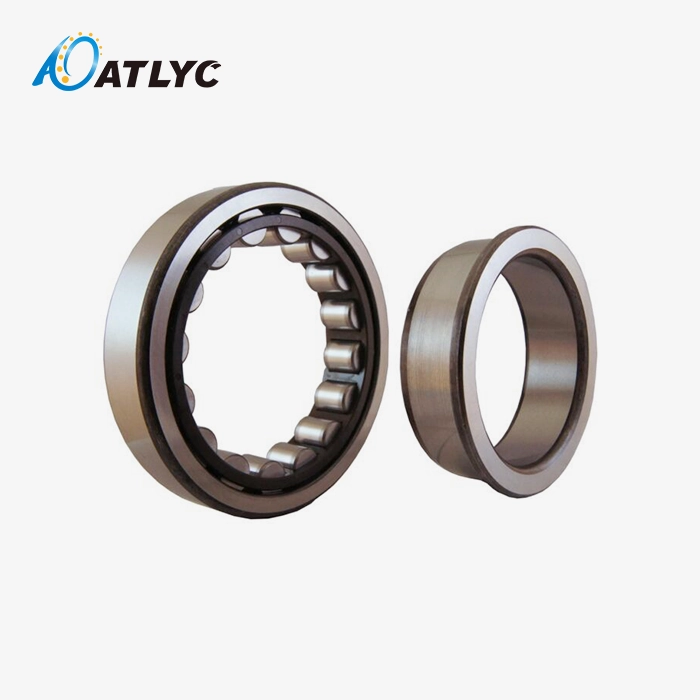
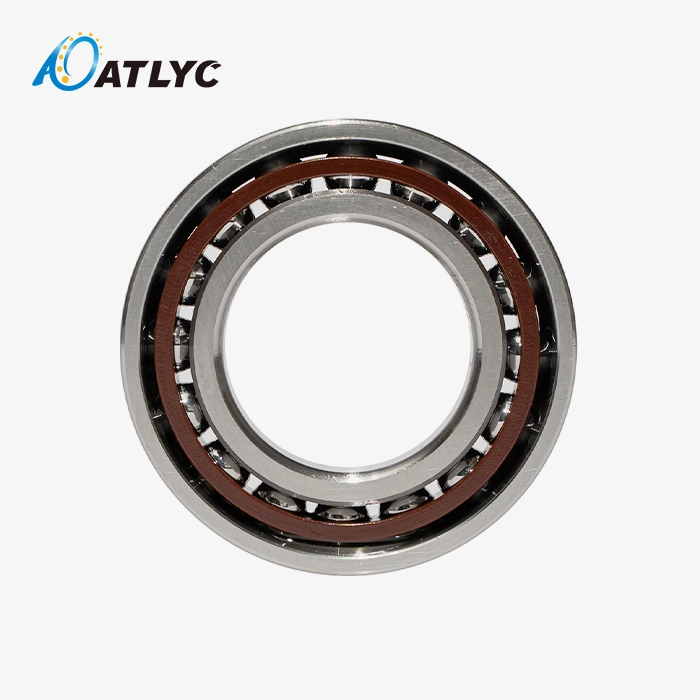
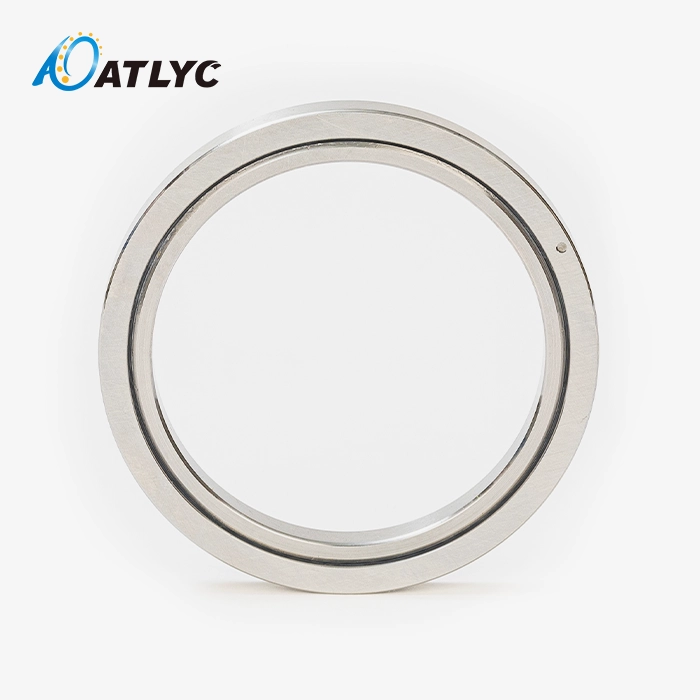
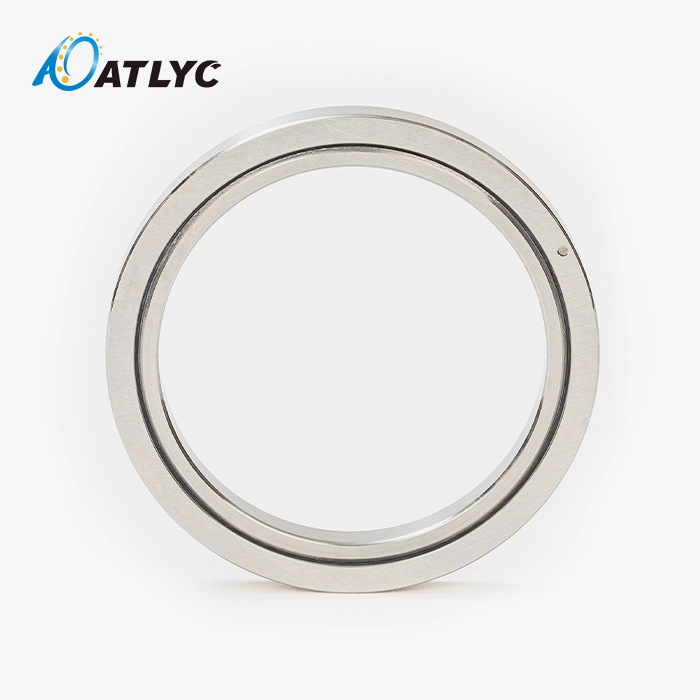
RE Series Crossed Roller Bearings feature V-shaped raceways and circular rollers arranged alternately at 90-degree angles. The layout is orthogonal and provides line contact in all load directions. This makes the bearing stiffer than ordinary ball bearings. The integrated outer ring stabilizes the structure during operation, and the split inner ring allows you to attach the rollers and modify the preload with precision during assembly. Not just any rolling element, but a precise motion component for when losing accuracy is not an option.
Key Specifications at a Glance
| Parameter | Specification |
|---|---|
| Inner Diameter | 20 – 1,100 mm |
| Outer Diameter | 70 – 1,500 mm |
| Width | 12 – 110 mm |
| Material | GCr15, GCr15SiMn |
| Accuracy Classes | P6, P0, P5, P4, P3 |
| Hardness (HRC) | 58 – 64 |
Material and Accuracy Standards
High-carbon chromium steel types GCr15 and GCr15SiMn are both used. These steels are hardened to HRC 58–64 so they last a long time under repeated loads. There are five precision classes: P6, P0, P5, P4, and P3. This means that engineers can choose the bearing grade that fits their tolerance budget. The P4 and P3 classes are especially useful for semiconductor equipment and medical imaging devices that need to have runout at the micron level.
How RE Series Crossed Roller Bearings Work and Their Maintenance
The Working Principle Behind Crossed Roller Design
In an RE Series Crossed Roller, each cylinder-shaped roller sits between two precisely formed gaps that keep the rollers from touching each other. Because the rollers next to each other rotate, line contact can handle all three types of loads at the same time: radial, axial, and moment. The friction coefficient of 0.002 to 0.004 is much lower than that of normal tapered roller bearings. This directly lowers the power demand on the motor and the heat production during continuous-duty cycles.
Lubrication and Inspection Protocols
In most industrial automation settings, bearings that come pre-packed with lithium soap-based grease (like Alvania EP2) work well. Low-outgassing oils should be asked for when placing an order for cleanroom or vacuum uses, which are popular in medical equipment and the making of integrated circuits. The number of times an industrial robot or machine tool needs to be inspected depends on its speed and load, but every 2,000 hours of use is a good rule of thumb. The two most useful things to do during a routine inspection are to look for strange vibration patterns and confirm the condition of the grease.
Troubleshooting Common Issues
Three early signs of bearing trouble are a rise in running force, strange noises, and high temperatures. A rise in running force is often a sign of deteriorating or contaminated oil. Most of the time, strange noises are caused by setting the setup incorrectly during startup. If the temperature is high without a clear load reason, it generally means that there isn't enough lubrication flow. Taking care of these problems early on protects both the bearing and the structure around it, which means longer service intervals and less unplanned downtime.
Comparing RE Series Crossed Roller Bearings with Alternatives
RE Series vs. RB Series
Both the RE and RB models use crossed rollers to work, but they are built in a very different way. The outer ring of the RE Series Crossed Roller Bearing is built in, and the inner ring is split. This makes it perfect for uses where the outer ring needs to spin with the housing. The RB series does the opposite—its split inner ring design works well with inner-ring rotation. If you pick the wrong one, it can change the rigidity of the mounting and the runout performance, so it's important to confirm the rotation direction early on in the design process.
RE Series vs. Standard Ball Bearings
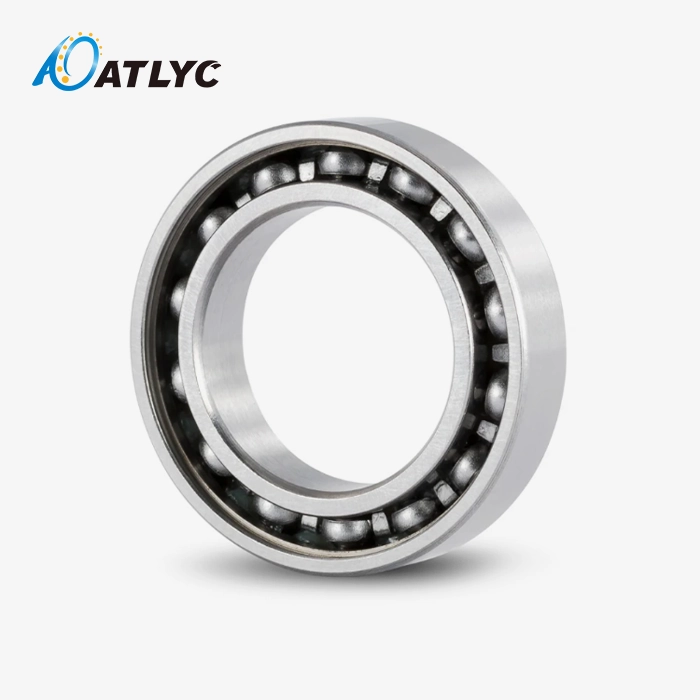
In the presence of moment loads, there is a noticeable difference in how well crossed roller bearings and ball bearings work. Point contact limits how strong ball bearings can be against twisting forces. A single crossed roller bearing can handle up to 85% more radial load than a ball bearing of the same size, but it still has low enough friction for accurate placement. It's also possible to measure the space savings: switching from two sets of ball bearings to one RE series unit can cut the assembly footprint by as much as 60%.
| Feature | RE Series Crossed Roller Bearing | Standard Ball Bearing |
|---|---|---|
| Load Directions | Radial + Axial + Moment (single unit) | Primarily radial or axial |
| Contact Type | Line contact | Point contact |
| Moment Load Capacity | High | Low |
| Running Accuracy | P3 – P6 available | P0 – P5 typical |
| Space Efficiency | High (replaces dual arrangement) | Moderate |
RE Series vs. Slewing Rings
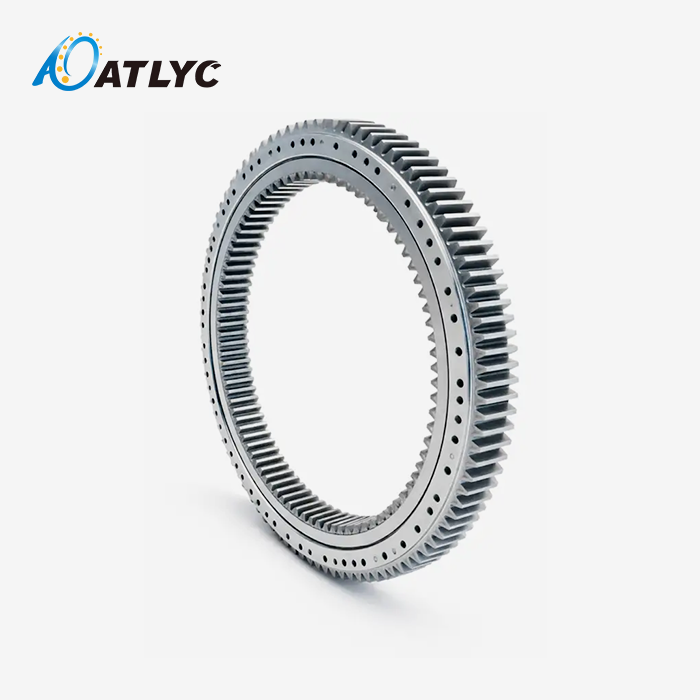
Slewing rings can handle applications with very big diameters, but they give up accuracy for load volume. The mid-to-high accuracy level is filled by the RE Series Crossed Roller Bearing, which has tighter runout limits and less friction than most slewing rings. The RE series costs more per unit, but it is more accurate, which makes it worth it for robotic arms, medical spinning tables, and precision counting units.
Procurement Insights: How to Buy RE Series Crossed Roller Bearings
Verifying Supplier Qualifications
Any RE Series Crossed Roller Bearing supplier you can trust should be certified by both ISO 9001 and IATF 16949. These certificates show that the company has a well-documented quality control system that can be followed from the raw materials to the finished bearing. Before you sign a long-term supply agreement, make sure you get dimensional inspection reports, hardness test certificates, and batch-level runout data. Luoyang Auto Bearing Co., Ltd. (ATLYC), which has been in business since 2010, has both certificates and has sent goods to the US, Germany, South Korea, Russia, Iran, and Turkey.
Lead Times, MOQ, and Logistics
For first orders, standard sizes in the RE series usually ship within 4–6 weeks. For repeat orders on standard sizes, they usually ship faster from stock that has already been made. Order minimums are different for each size class. For example, the MOQ for smaller bearings (20–100 mm inner diameter) is usually cheaper than the MOQ for big bearings (>500 mm inner diameter). For large sales going to North America and Europe, sea freight is the usual method. Express air freight is available for pressing single-unit sourcing or sample requests.
Technical Support and Customization
Six production workshops are run by ATLYC, which has 120 trained workers who do production, research and development, quality control, and assembly. You can change the preload levels, choose from different accuracy classes, make the dimensions not standard, and use cleanroom-grade lubrication. Before an order is made, engineers on staff can look at application sketches and suggest the right RE series size and preload setting. This keeps the cost of re-specification after delivery to a minimum.
Application Scenarios of RE Series Crossed Roller Bearings in Automation
Industrial Robotics and Manipulator Joints
With every movement cycle, robotic joint bearings have to deal with radial, axial, and moment loads at the same time. The crossed roller design takes all three types of load in a single, small unit. This makes the robot arm's structure simpler and lowers the weight of the whole system. This directly leads to faster cycle times and more accurate end-effector positioning in six-axis industrial robots, both of which increase production flow in a way that can be measured.
CNC Machining Centers and Rotary Tables
In machining centers, precision rotary tables need to be placed at the same angle even when cutting with a lot of force. A P4 or P3 accuracy class RE Series Crossed Roller Bearing keeps the table in the same place over long production runs, which directly affects the accuracy of the part's dimensions. The stiff raceway geometry of the bearing resists the moment loads that are created during off-center milling operations. A less rigid bearing would let the table tilt and make parts that aren't within tolerance.
Medical, Semiconductor, and Measuring Equipment
IC manufacturing devices, coordinate measuring machines, and medical imaging equipment all need to be able to rotate smoothly and accurately in controlled environments. The RE series is a great choice for these uses because it has a low friction coefficient and a high runout accuracy. This set of P3-grade bearings can run with an accuracy of 5–10 micrometers, which is good enough for wafer inspection stages and robotic surgery arms.

Conclusion
It is typically difficult to properly accommodate radial, axial, and moment loads in a compact area with precision automation. The RE Series crossed roller bearing provides the solution. It is manufactured from GCr15/GCr15SiMn steel, has a full complement outer ring, split inner ring, and is available in accuracy grades P6 to P3. These properties make it a superb option for robotics, CNC rotary tables, medical equipment, and semiconductor fabrication stages. These bearings offer a stable service life, even under heavy load cycles, thanks to the right lubrication and the supplier’s proven credentials. The best cost-saving action an automation design team can undertake is to choose the correct crossed roller bearing from a reputed and experienced manufacturer.
FAQ
1. What is the difference between RE and RB series crossed roller bearings?
The outer ring of the RE Series Crossed Roller Bearing is one piece, and the inner ring is split. This makes it suitable for uses that need the outer ring to rotate. The RB series has an inner ring that is split so that the inner ring can rotate. Which ring links to the moving part in your assembly will tell you which type to use.
2. How often should I lubricate an RE series bearing in a production robot?
Standard lithium grease should be used for most industrial robot and machine tool applications, and maintenance should be done every 2,000 hours of use. Shorter intervals may be needed in places with a lot of speed or heat. If your application needs to work in a laboratory or a vacuum, make sure you confirm the type of lubrication when you place your order.
3. Can ATLYC manufacture custom sizes or accuracy classes?
Yes, ATLYC can make the RE Series Crossed Roller Bearing in non-standard sizes and with unique accuracy grades.
4. Is preload adjustment necessary for all RE series applications?
To get rid of backlash and make things stiffer, preload is suggested for artificial joints and high-precision tables. A small positive clearance keeps heat from building up in high-speed situations. The right preload setting relies on the size of the load, the speed of spin, and the level of accuracy needed for placement.
Partner with ATLYC for Your RE Series Crossed Roller Bearing Supply
Since 2010, ATLYC has made and shipped precision bearings. Each package is backed by ISO 9001 and IATF 16949 standards. As a direct maker of RE Series Crossed Roller Bearings, we can offer low prices, help with engineering, and production that can be scaled up or down across six workshops. Contact our team at auto@lyautobearing.com to get a sample or talk about buying in bulk to see our product list.
References
1. Harris, T. A., & Kotzalas, M. N. Rolling Bearing Analysis: Essential Concepts of Bearing Technology. Taylor & Francis, 2006.
2. SKF Group. Bearing Selection Process and Product Specifications. SKF Technical Documentation Series, 2019.
3. ISO 492:2014. Rolling Bearings — Radial Bearings — Dimensional and Geometrical Tolerances. International Organization for Standardization, 2014.
4. JTEKT Corporation. Crossed Roller Bearings: Technical Design Guide. JTEKT Engineering Journal, 2018.
5. Hamrock, B. J., Schmid, S. R., & Jacobson, B. O. Fundamentals of Machine Elements. McGraw-Hill, 2014.
6. American Bearing Manufacturers Association (ABMA). ABMA Standard 20: Radial Bearings of Ball, Cylindrical Roller, and Spherical Roller Types. ABMA, 2020.
Learn about our latest products and discounts through SMS or email