- English
- French
- German
- Portuguese
- Spanish
- Russian
- Japanese
- Korean
- Arabic
- Greek
- German
- Turkish
- Italian
- Danish
- Romanian
- Indonesian
- Czech
- Afrikaans
- Swedish
- Polish
- Basque
- Catalan
- Esperanto
- Hindi
- Lao
- Albanian
- Amharic
- Armenian
- Azerbaijani
- Belarusian
- Bengali
- Bosnian
- Bulgarian
- Cebuano
- Chichewa
- Corsican
- Croatian
- Dutch
- Estonian
- Filipino
- Finnish
- Frisian
- Galician
- Georgian
- Gujarati
- Haitian
- Hausa
- Hawaiian
- Hebrew
- Hmong
- Hungarian
- Icelandic
- Igbo
- Javanese
- Kannada
- Kazakh
- Khmer
- Kurdish
- Kyrgyz
- Latin
- Latvian
- Lithuanian
- Luxembou..
- Macedonian
- Malagasy
- Malay
- Malayalam
- Maltese
- Maori
- Marathi
- Mongolian
- Burmese
- Nepali
- Norwegian
- Pashto
- Persian
- Punjabi
- Serbian
- Sesotho
- Sinhala
- Slovak
- Slovenian
- Somali
- Samoan
- Scots Gaelic
- Shona
- Sindhi
- Sundanese
- Swahili
- Tajik
- Tamil
- Telugu
- Thai
- Ukrainian
- Urdu
- Uzbek
- Vietnamese
- Welsh
- Xhosa
- Yiddish
- Yoruba
- Zulu
Why Choose RU Series Crossed Roller Bearing?
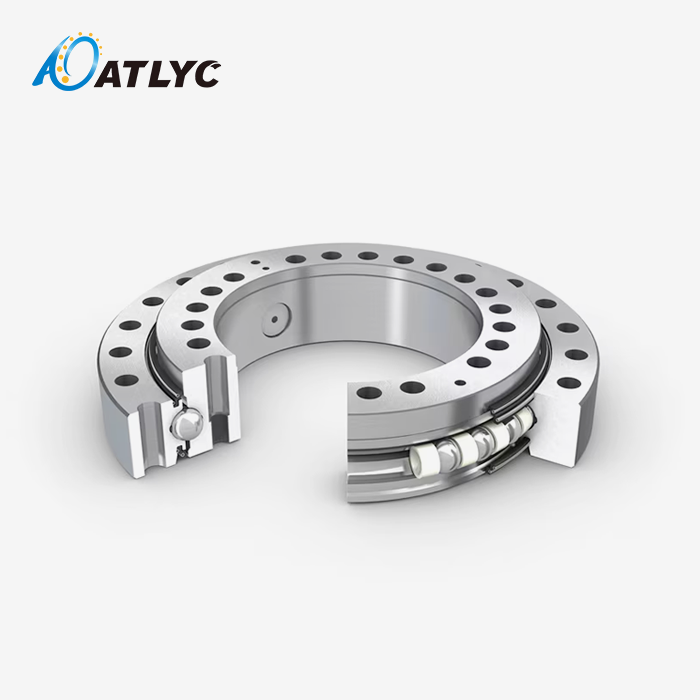
When precise spinning is needed in an industrial setting with difficult loading conditions, the RU Series Crossed Roller Bearing is the most reliable choice. This type of bearing has an outer and inner ring structure that is one piece. The fastening holes are made at the factory, so the bearing can be bolted directly to the frame of the equipment without the need for extra housings. The crossed roller setup can handle radial, axial, and moment loads at the same time, and it keeps the rotational accuracy that is needed for robots and automated systems. These bearings come in sizes ranging from 20 mm to 1100 mm in diameter, so they can be used with small measuring tools all the way up to big industrial rotating tables.
Understanding RU Series Crossed Roller Bearings
Choosing the right bearing technology affects how well your equipment works. The RU Series Crossed Roller Bearing is the next generation of bearing design. It was made for uses where room, accuracy, and load capacity all need to work together.
What Makes RU Series Unique?
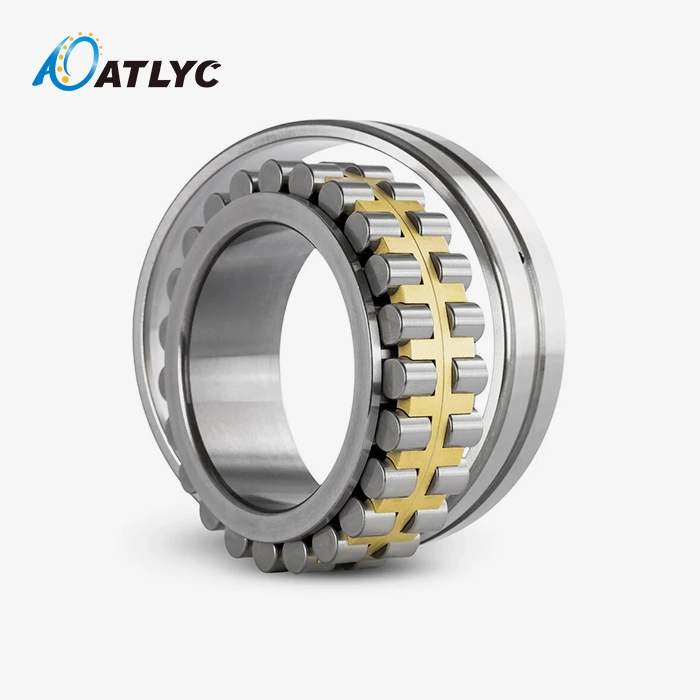
This type of bearing is different from standard ones because of its basic form. In perfectly flat V-shaped raceways, cylindrical rollers are arranged in a horizontal pattern every 90 degrees. Precision spacers between each roller keep this crossed pattern going. This keeps rollers from touching directly, and it spreads the load evenly around the bearing's diameter. The built-in ring design stops the buildup of tolerances that happens in multi-component systems.
The choice of materials has a direct effect on how long something will work. We use GCr15 and GCr15SiMn bearing steels to make RU Series bearings. Both of these steels go through special heat treatment steps that make them as hard as they can be, between 58 and 64 HRC. This metalworking method makes sure that the dimensions stay the same even when the temperature changes, and the bearing will be resistant to impact stress for its whole life.
Technical Specifications That Matter
Knowing the levels of dimensions helps match the bearing's powers to the needs of the application. Inside sizes range from 20 mm to 1100 mm, outside diameters from 70 mm to 1500 mm, and widths from 12 mm to 110 mm. This wide range of sizes can be used for robotic joint applications that need small 20mm hole bearings and big machining centre rotary tables that need 1100mm configurations.
There are grades P6, P0, P5, P4, and P2 for precision classes. P6 and P0 are used for general manufacturing machinery that only needs standard accuracy. For automatic production equipment that needs to be able to position itself consistently, P5 is a good choice. The P4 and P2 grades are for ultra-precision measuring tools and equipment used to make semiconductors, where the angle variation must stay below 2 arc-seconds.
| Category of Specifications | Range/Value | Relevance to the Application |
|---|---|---|
| Inside Diameter | 20–1100 mm | Allows robots to work with heavy spinning tables |
| Outside Size | 70–1500 mm | Scalable to fit a wide range of equipment sizes |
| Width | 12–110 mm | Finds a balance between load ability and room limitations |
| Classes for Precision | P6, P0, P5, P4, P2 | Fits the level of accuracy to the needs of the work |
| What it is | GCr15, GCr15SiMn | Guarantees stability under long-term touch stress |
Concerns about buying related to checking for compatibility and predicting performance during the design steps of tools are directly addressed by these standards.
The Crossed Roller Mechanism Explained
Crossed roller bearings are different from angular contact or tapered roller bearings in how they distribute load. There are 45 degrees between each roller and the bearing plane. Each roller touches both the inner and outer ring raceways. By switching the positions of the rollers, the frame is made so that each roller handles loads from the opposite direction. With this setup, a single bearing can be used as a multi-directional load support system without the need for complex mounting arrangements or adjusting the loading.
The form of the seamless mounting hole gets rid of the need for extra machining. Both rings have pre-drilled and chamfered holes that let standard screws be used to bolt them straight to equipment structures. This feature cuts installation time by about 40% compared to bearings that need custom housings. It also eliminates sources of assembly mistakes by taking out the factors related to housing concentricity.
Advantages of RU Series Crossed Roller Bearings for Industrial Applications
When performance traits are built into production tools, they lead to real operational benefits. By understanding these benefits, procurement teams can use lifetime cost analysis to show that the original investment was worth it.
Superior Load Capacity in Compact Envelopes
Multiple bearing arrangements used to be needed, but now there is only one RU Series Crossed Roller Bearing. The crossed roller design lets it handle radial loads of up to 80% of the basic dynamic load rate, bidirectional axial loads of up to 60% capacity, and moment loads that would be too much for most deep groove ball bearings of the same size.
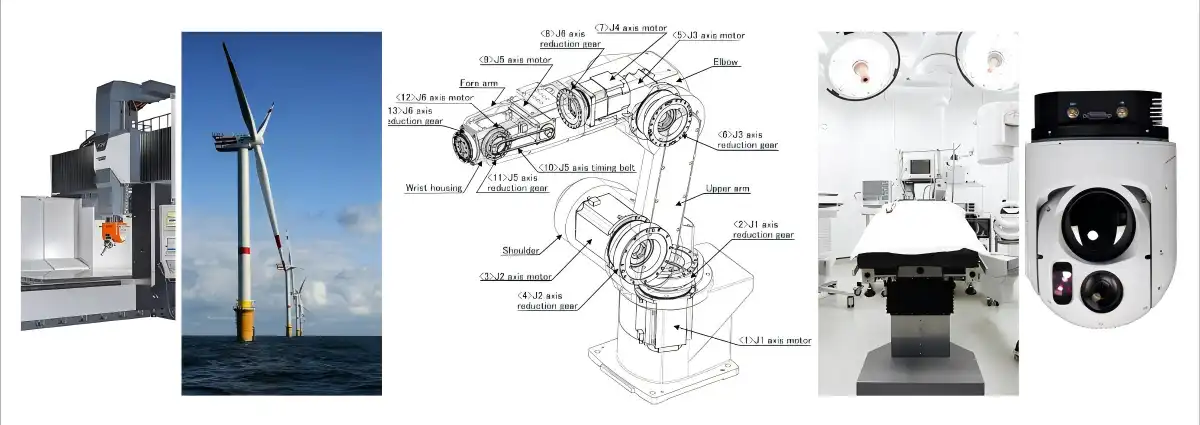
This ability to move in more than one direction is especially useful in six-axis industrial robots, where the load lines on the shoulder and elbow joints are always changing. In a robot shoulder joint, a 150mm RU Series bearing handles the weight of the whole arm unit as well as workpiece loads and keeps the joint's position accurate to within ±0.02mm throughout its full range of motion. To get the same performance with angular contact bearings, you would need to pair them up, which would add 30 to 40 mm to the horizontal length of the joint.
Precision Suitable for Servo-Driven Systems
Servo motor control is needed for modern robotics to keep things at exact angles. By adding irregular displacement mistakes into the mechanical chain, bearing runout directly affects the accuracy of positioning. Radial runout of RU Series bearings made to P5 perfection is less than 5 microns, and axial runout is less than 8 microns.
When this accuracy is built into CNC rotating tables, it leads to better surface finishes that can be seen in the form of fewer tool chatter marks. Surface roughness values (Ra) on turned aluminium aerospace parts are 25–30% better on a machining centre with P5 grade crossed roller bearings in its fourth-axis rotating table than on tables with standard P0 grade bearings.
Maintenance Requirements and Service Life
Total cost of ownership estimates are affected by knowing how often repairs need to be done. Under normal load conditions, the sealed and greased RU Series bearing setup can work for 20,000 to 30,000 hours without needing to be re-oiled, which is about three to four years of constant use. Usually, industrial grease replenishment plans for open bearing setups are every 6 to 12 months. This repair interval is a lot longer than that.
Troubleshooting instructions make upkeep work easier. Noise that isn't normal usually means that contamination is getting in or that the preload isn't adjusted properly if you're using a changeable type. Temperature rises of more than 20°C above the air indicate either too much stress or worn-out grease that needs to be inspected. Periodic vibration analysis with accelerometers attached to the bearing case finds wear patterns two to three months before they break. This lets repairs be planned ahead of time instead of having to be done in an emergency.
These operational traits directly help makers reach their goals of reducing unplanned production pauses and managing the distribution of repair workers.
RU Series Crossed Roller Bearings vs. Alternative Bearing Types
Comparative research makes it clear when RU Series Crossed Roller Bearing technology is clearly better than other bearing options and when other types are better.
Performance Against Standard Ball Bearings
Crossed roller bearings of the same size cost 40–60% more than deep groove ball bearings of the same size. This makes them a good choice for projects with limited funds. Ball bearings can only handle a small amount of axial load (30% of their rotational value, on average). Without special setup arrangements, their moment load capability stays very low.
The viability of an application varies a lot. Ball bearings work well in high-speed situations, like on electric motor shafts, where loads are mostly horizontal and moment loads aren't important. Crossed roller bearings work great in high-precision, slow-rotation situations with complicated loading patterns. When you try to use regular ball bearings in a robotic wrist joint, they wear out quickly and become less accurate because the moment loads are too high, within 6 to 12 months of operation.
Comparison With Angular Contact Bearings
Because their contact angle is usually between 15 and 40 degrees, angular contact bearings can handle both radial and axial loads. To reach the moment load limit, the pairs must be set up in back-to-back, face-to-face, or tandem setups. When compared to a single crossed roller bearing, this pair needs 50–80% more axial room.
This difference in size is especially important for procurement teams that are in charge of projects to make tools smaller. By changing the output shaft of a standard gearbox from a pair of angular contact bearings to a single crossed roller bearing, 40–60 mm of axial length can be recovered. This lets machines have smaller footprints or add more functional parts within the current envelopes.
| Type of Bearing | Load on the Radius | Load on the axes | Moment Load | Efficiency in Space | Typical Cost Index |
|---|---|---|---|---|---|
| Deep Groove Ball | Very good | Okay | Bad | Good | 1.0x (baseline) |
| Angular Contact (paired) | Very good | Very good | Good | Okay | 1.8–2.2x |
| RU Series Crossed Roller | Very good | Very good | Very good | Very good | 2.5–3.0x |
| Slewing Ring | Good | Good | Very good | Very good (big width) | 3.5–5.0x |
The cost-performance positioning shown in this comparison helps engineering teams choose the right bearing technologies during the planning steps.
Slewing Ring Considerations
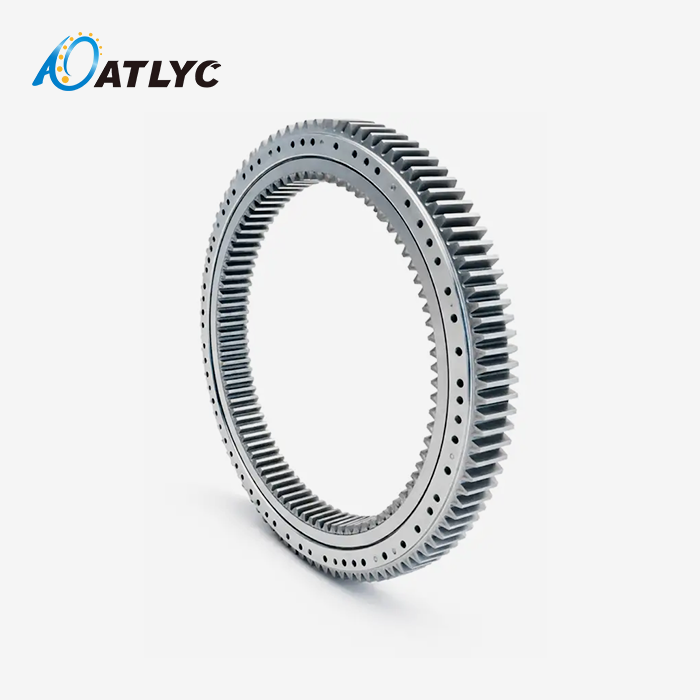
Slewing rings are used in large-diameter applications like crane towers and wind turbine yaw drives to handle very high moment loads. Their choices for external gears make direct drive setups easier. When the width goes above about 500 mm, slewing rings become economically possible because the benefits of their structural design outweigh the higher unit costs.
When the width is less than 500 mm, crossed roller bearings usually offer better value for money. Crossed roller bearings on a 300mm rotating table make it 35–45% cheaper than a similar slewing ring design while keeping the same level of accuracy. When external gearing isn't needed, and mounting room allows for the bearing's small size, the crossed roller method is the most cost-effective option.
Procurement Insights: How to Buy RU Series Crossed Roller Bearings
Getting things bought quickly and correctly keeps both project deadlines and quality standards safe. Knowing about sourcing strategies and proof methods will help you get real RU Series Crossed Roller Bearings that meet your needs.
Sourcing Genuine Products
Verification by the maker is the first step in authentication. ISO 9001 and IATF 16949 licenses show that a company follows the rules for quality management systems and the production standards of the car industry. During the initial review of the seller, ask for proof of certification and check the validity of the certificate using online databases maintained by the issuing body.
Authorised wholesalers work directly with manufacturers to make sure that products can be tracked and that warranties are honoured. Prices that are 40–50% below market values, refusal to provide material certificates, and lack of laser-etched part numbers on bearing rings are all red flags that the goods might not be real. Fake bearings often use lower-quality steel grades that break early under stated loads, which can be dangerous and lead to guarantee issues.
Pricing Dynamics and Bulk Ordering
Standard RU Series bearings cost between $45 and $120 for smaller sizes (20 to 50 mm bore) and between $800 and $2,500 for mid-range units (150 to 300 mm bore). For big rotary table bearings with a diameter of more than 800 mm, the price runs to $8,000 to $25,000. Precision grade standards affect prices, with P4 grade bearings costing 30–40% more than P0 grade versions.
When you buy in bulk, you can get big savings on costs. When you buy more than 50 units, you usually get 12–18% off the unit price. When you sign an annual supply deal for more than 200 units, you can save 20 to 25 per cent and be sure that you'll get your order first during times of high demand. With higher volume promises, payment terms become more flexible, moving from needing to be paid in advance to net-30 or net-60 terms for established relationships.
International Logistics Considerations
Shipping costs depend a lot on the details of the order. For pressing orders under 100 kg, air freight costs about $8 to $12 per kilogram from major production hubs in China to major distribution centres in the US. It takes 5 to 7 days to deliver. Sea freight lowers prices to $0.40 to $0.80 per kilogram, but it takes 25 to 35 days to deliver because of the ocean journey, plus 5 to 10 days for customs clearance and transport within the country.
Lead times rely on how customised the order is. Normal catalogue items are sent out 7–14 days after an order is confirmed. The time it takes to make something goes up to 4 to 6 weeks if you need custom bore sizes or special precision grades. It could take 8 to 12 weeks if you need special materials or a different way to put them. When you plan your purchases around these realistic deadlines, you can avoid project delays and the high costs of fast shipping, which can be more than the cost of the bearing itself.
Trusted RU Series Suppliers and Brand Reliability
Choosing the right supplier affects not only the quality of the product, but also the availability of expert help and replacement parts for as long as the RU Series Crossed Roller Bearing equipment is in use.
Manufacturing Credentials Matter
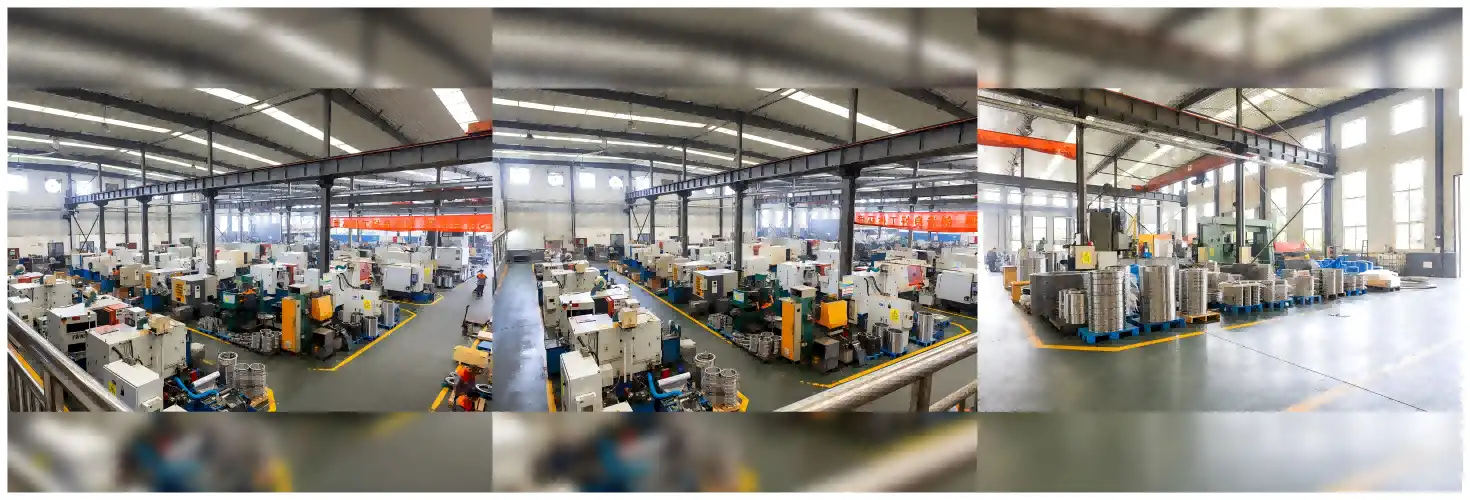
In the fifteen years since we started Luoyang Auto Bearing Co., Ltd. (ATLYC) in 2010, we've grown from a single workshop to six specialised production sites. Our 120-person team is made up of dedicated quality inspection workers and application engineers who help customers choose the right specifications and fix problems. Our quality control systems and compliance with car production standards are confirmed by our ISO 9001 and IATF 16949 certifications.
Supply dependability is directly linked to the amount of goods that can be made. We make more than 180,000 bearing units a year in six different types, so they are always available and don't have long backorder times. This scale can handle both small amounts of prototypes for research and development projects and large amounts of production, up to thousands of pieces, for making tools in a series.
Technical Support and After-Sales Service
Engineering consulting services help buying teams choose the best bearings before they make a purchase pledge. Our application experts look over the formulas for loading, make sure that the size choices are in line with operational factors, and suggest precision grades that meet the accuracy needs. This help at the front end stops design mistakes that cost a lot of money and are only found after the equipment is put together.
Technical support after the sale lasts for the whole span of the object. Support for troubleshooting helps maintenance teams figure out what's wrong with performance and tell the difference between bearing issues and other mechanical issues. When replacement is needed, our documented traceability systems find the exact specs from the original order data. This makes sure that the new bearings exactly match the parameters used for the first fitting.
Customer Experience Evidence
Our clients include companies in Germany and South Korea that make parts for cars, companies in the US that make tools for industrial robotics, and companies in Turkey and Russia that make precise machines. These ties, many of which have been going on for more than five years, show that delivery speed and product quality are maintained even during high-volume production runs.
Repeat buy rates above 75% show that customers are happy with both the goods and the way the business is managed. Our automotive OEM customers really like our IATF 16949 approval and organised change management processes, which keep the supply chain stable when we switch products and add more capacity.
Conclusion
When choosing RU Series Crossed Roller Bearing technology, you have to weigh the performance needs against cost and source trustworthiness. The RU Series has a very high load capacity, high accuracy, and a small form that makes equipment construction easier while keeping accuracy in operation. The long-term performance and total ownership costs are directly affected by the quality of the materials, the accuracy of the manufacturing, and the credibility of the seller.
A full review of a source that includes licenses, production capacity, technical support, and customer references can help with making choices about what to buy. When you look at prices, you should take into account bulk discounts, the best ways to handle foreign logistics, and realistic wait times. Understanding the unique needs of an application in terms of load capacity, precision grades, and mounting configurations is important to make sure that the bearing standards meet the performance goals of the equipment over a long period of time.
FAQ
1. What makes RU Series bearings different from other crossed roller types?
The built-in ring design with pre-drilled mounting holes gets rid of the need for a separate housing, making installation easier and lowering the build-up of physical tolerances. This design feature sets the RU Series Crossed Roller Bearing setup apart from the RA, RB, and RE lines, which need presser flanges or split ring designs to be put together.
2. Can RU Series bearings integrate with servo motor systems?
Runout accuracy good enough for servo-driven pointing systems is provided by precision grades P5 and up. The low friction coefficient and constant torque characteristics throughout spinning make closed-loop control possible without adding mistakes that hurt positioning accuracy or needing to be fixed in software.
3. What lead times apply to bulk orders for international shipping?
Standard catalogue items ship between 7 and 14 days, and sea freight delivery to US ports takes a total of 35 to 45 days. Custom requirements take 4 to 6 weeks to make, plus shipping time. For urgent needs, air freight choices cut the total delivery time to 10-14 days, but they cost about 15–20 times more than sea freight prices.
Get Precision RU Series Crossed Roller Bearings from ATLYC
ATLYC's team is ready to help you buy RU Series Crossed Roller Bearings by giving you expert advice, offering low prices, and delivering your orders safely around the world. As a well-known company with ISO 9001 and IATF 16949 certifications, we can guarantee quality no matter how many units we make, from prototypes to thousands of units every year. For application-specific advice, thorough specs, and quotes that are made just for your project, email our engineering team at auto@lyautobearing.com. We offer technical support to automakers, industrial automation builders, and OEMs of precise machinery all over North America. Our technical knowledge is backed by fifteen years of manufacturing experience, and we are dedicated to long-term relationship success.
References
1. Harris, T.A. and Kotzalas, M.N. (2006). Essential Concepts of Bearing Technology: Rolling Bearing Analysis, 5th Edition. CRC Press, Taylor & Francis Group.
2. Schaeffler Technologies AG & Co. (2019). Rolling Bearings: Catalogue HR 1 – Principles, Types and Selection Criteria. Schaeffler Technologies.
3. NSK Ltd. Technical Development Centre (2018). Precision Crossed Roller Bearings: Engineering Guidelines and Application Manual. NSK Motion & Control.
4. ISO 492:2014. Rolling Bearings – Radial Bearings – Dimensions and Tolerances. International Organisation for Standardisation.
5. Wensing, J.A. (1998). On the Dynamics of Ball Bearings. Doctoral Thesis, University of Twente, Netherlands.
6. THK Co., Ltd. Engineering Division (2021). Crossed Roller Bearing Units: Technical Reference for Precision Rotary Applications. THK Linear Motion Systems.
Learn about our latest products and discounts through SMS or email