- English
- French
- German
- Portuguese
- Spanish
- Russian
- Japanese
- Korean
- Arabic
- Greek
- German
- Turkish
- Italian
- Danish
- Romanian
- Indonesian
- Czech
- Afrikaans
- Swedish
- Polish
- Basque
- Catalan
- Esperanto
- Hindi
- Lao
- Albanian
- Amharic
- Armenian
- Azerbaijani
- Belarusian
- Bengali
- Bosnian
- Bulgarian
- Cebuano
- Chichewa
- Corsican
- Croatian
- Dutch
- Estonian
- Filipino
- Finnish
- Frisian
- Galician
- Georgian
- Gujarati
- Haitian
- Hausa
- Hawaiian
- Hebrew
- Hmong
- Hungarian
- Icelandic
- Igbo
- Javanese
- Kannada
- Kazakh
- Khmer
- Kurdish
- Kyrgyz
- Latin
- Latvian
- Lithuanian
- Luxembou..
- Macedonian
- Malagasy
- Malay
- Malayalam
- Maltese
- Maori
- Marathi
- Mongolian
- Burmese
- Nepali
- Norwegian
- Pashto
- Persian
- Punjabi
- Serbian
- Sesotho
- Sinhala
- Slovak
- Slovenian
- Somali
- Samoan
- Scots Gaelic
- Shona
- Sindhi
- Sundanese
- Swahili
- Tajik
- Tamil
- Telugu
- Thai
- Ukrainian
- Urdu
- Uzbek
- Vietnamese
- Welsh
- Xhosa
- Yiddish
- Yoruba
- Zulu
How to Install Crossed Roller Bearing RB Series Correctly?
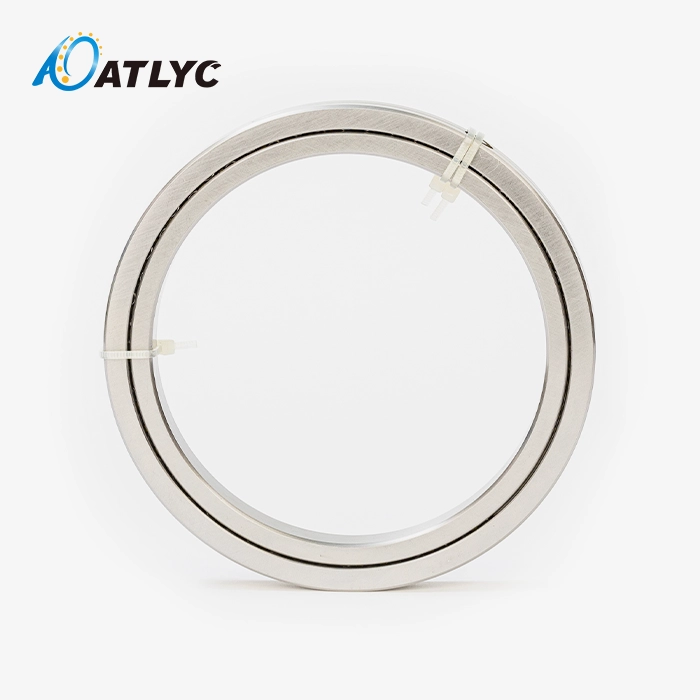
The right way to install a Crossed Roller Bearing RB Series starts with careful planning and positioning. To keep the limits for the combined inner ring structure and the separable outer ring with plug, the parts must be handled carefully. Before tightening the outer ring plug to the manufacturer's suggested torque, make sure the bearing is facing the right way and clean the mounting surfaces fully. If you place the bearing correctly, it will be able to handle radial, axial, and moment loads and keep its high level of runout accuracy, which is important for robotic joints and precision rotary tables.
Understanding the RB Series Crossed Roller Bearing
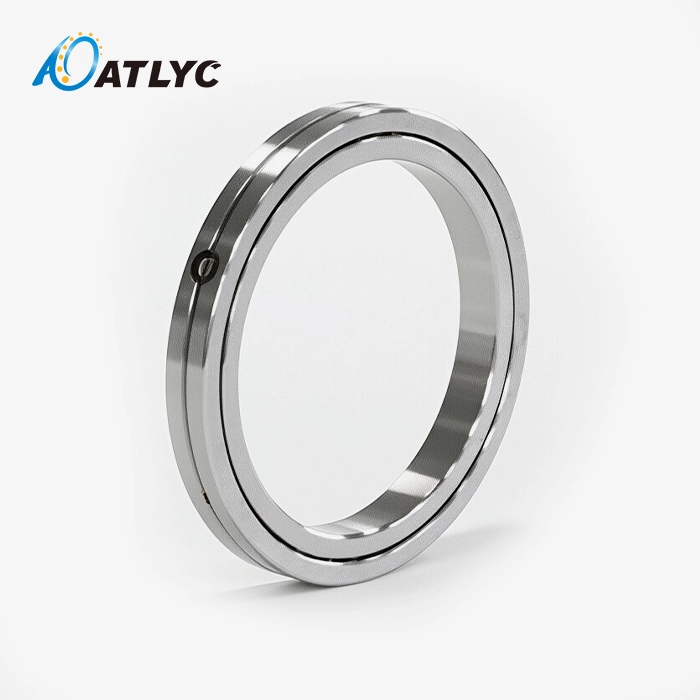
For tasks that need to be very precise but can't take up much room, the Crossed Roller Bearing RB Series is a high-tech engineering answer. In contrast to regular ball bearings, this design places cylindrical rollers perpendicular to each other in V-groove raceways. This makes a stepped pattern that changes how loads are distributed through the bearing structure.
Unique Structural Configuration
When you build a combined inner ring, you get a hard base that doesn't need to be matched as most paired bearing systems do. The outer ring can be taken off and put back on, and it has a plug device that makes installation and future upkeep easier. This way of building structures works really well in artificial waist joints and machine center indexing tables, where the inner ring often rotates under heavy moment loads.
By using Gcr15 and Gcr15SiMn alloy steels to make these bearings, the material features will be the same all the way through the raceway surfaces. Heat treatment methods that are designed to reach certain hardness levels make things last longer, even when they are loaded and unloaded over and over again. The end result is a part that stays the same size even when the temperature changes that happen a lot in industrial automation settings.
Technical Specifications That Matter
The sizes range from 20 mm to 1100 mm in diameter on the inside, up to 1500 mm on the outside, and from 20 mm to 110 mm in width. In this size range, you can fit everything from small manipulator wrists to big rotating tables used in chip manufacturing. Engineers can fit the accuracy of a bearing to the needs of the application by using precision grades like P6, P5, P4, and P2. Tighter tolerances allow measuring tools to be placed within a micrometer.
The orthogonal roller design can handle radial forces, axial thrust, and rolling moments all at the same time in a single, small unit. This ability to handle loads in more than one way gets rid of the need for room and complexity that come with stacked bearing arrangements. These specs make it clear to sourcing workers who are looking at a supplier's skills why the RB Series is at the top of the market for automation equipment.
Application Environments
Industrial articulated robots depend on these bearings at the elbow and shoulder joints, where movement has a direct effect on how accurately the end-effector is placed. In CNC machining centers, precision hollow rotary tables use the through-hole design to route cables while keeping their stiffness when cutting forces are halted. Medical imaging machines like CT scanners depend on spinning that is smooth and has low friction, which keeps vibrations from reaching sensitive detection arrays as little as possible. Each use case shows why following the right installation steps is important to protect big investments in equipment.
Common Installation Challenges and How to Avoid Them
A lot of early Crossed Roller Bearing RB Series problems in industrial settings are caused by mistakes made during installation. Knowing about possible problems before you start installing is the difference between a good installation and expensive equipment downtime.
Misalignment Issues
If the bearing hole and shaft are not lined up correctly, or if the outer ring is not lined up with the housing, the load is spread out unevenly across the roller contact surfaces. Even small changes in angle, like 0.01 degrees, can cause stress to build up and speed up the wear patterns. This problem gets even worse when the bearings are bigger in diameter because the limits for size grow at the same rate.
Fixing misalignment starts with setting the right specs for the shaft and housing during the planning phase. Precision measuring tools, like number signs, check for concentricity during assembly before the final torque. Laser alignment devices give you the accurate measurements you need to place bearings that are bigger than 300 mm in diameter.
Contamination Control
The perfectly smooth raceway surfaces can be damaged by dust, metal chips, or water that gets in during installation. Even contamination as small as 10 microns can make holes that cause spalling to happen. There are a lot of floating particles that settle on surfaces during assembly in machine shops where bearings are fixed.
Setting up a controlled building environment is necessary to keep things from getting dirty. The best conditions are in a clean room, but movable laminar flow enclosures that make limited clean zones are also useful options. Wearing lint-free gloves and cleaning parts with filtered compressed air right before putting them together greatly lowers the risk of contamination. Do not take bearings out of their packaging until they are ready to be installed, and cover equipment that is only partly put together overnight to keep dust from building up.
Torque Application Errors
The outer ring plug holds the roller unit in place, but it needs specific force values to work right. When you under-torque, you let the roller wobble while it's rotating. When you over-torque, the outer ring deforms, which causes changes in the preload that raise the working temperature and cause more friction losses. Most standard torque wrenches aren't calibrated accurately enough for this important bolt.
If you buy regulated torque tools with digital readouts, you won't have to guess at this step of the installation process. Manufacturers' specs usually give torque ranges instead of single numbers, which take into account the state of the threads and how well they are oiled. By writing down the real torque values that were applied in maintenance logs, information is created that can be used to figure out problems with future performance. When working with bearings in robotic applications where shaking is constant, using thread-locking compounds made for precision screws stops the threads from slowly coming loose over time.
Step-by-Step Installation Process for RB Series Crossed Roller Bearing
Each step of the fitting process must be done carefully to make sure the Crossed Roller Bearing RB Series works the way it was meant to. When you rush through assembly to meet your production deadlines, mistakes are more likely to happen that show up weeks or months later as unexpected failures.
Preparation and Inspection Phase
First, make a list of all the tools you'll need, such as precise measuring tools, the right moving equipment for bigger bearings, calibrated torque wrenches, and the right lubricants. Check that the markings on the bearings meet the requirements for purchase. Pay special attention to the accuracy grade and internal clearance classifications.
Check the bearing visually in good lighting for any damage that happened during shipping. Turn the inner ring by hand to make sure it moves smoothly and doesn't have any rough spots that could mean the rollers are broken. Using calibrated micrometers, measure important measurements like the bore diameter, the outer diameter, and the width, and then compare the results to the verification papers. In this step of proof, mistakes in the making process or damage from shipping are found before they damage expensive machinery.
Mounting Sequence
Place the bearing so that the outer ring plug can be reached during fitting. If the job needs the inner ring to be able to turn, attach the outer ring to the frame before putting the shaft in place. A thin, even layer of the lube recommended by the maker should be put on the raceway surfaces and roller contact areas. Do not use too much grease, as it can create hydraulic resistance that raises the temperature and power.
Slowly slide the shaft into the bearing hole without pushing it. Look for resistance, which could mean that the bearing isn't lined up right or is dirty. For interference fits, use bearing heaters to evenly warm up the inner ring. Make sure the temperature never goes above 120°C to keep the metal from changing. When cold pressing is needed, arbor presses with the right-sized fittings spread the mounting forces out equally. This keeps the bearing safe from shock loads that can damage the raceways.
Verification and Testing Procedures
Turn the bearing assembly slowly by hand and check to see if it moves smoothly all the way around. Any stiffness, binding, or uneven resistance is a sign of a problem that needs to be looked into right away. Dial markers placed at different points around the bearing's diameter can be used to measure radial and axial runout. Runout numbers that are higher than the specified limits show that the parts are not aligned correctly or are broken.
Install any seals or caps that are called for in the design, making sure they are seated and oriented correctly. Connect any outside greasing lines if the system uses a central location for distributing grease. Run the equipment through break-in processes at lower speeds and loads before putting it through full working loads. During this phase, use touch thermometers or infrared cameras to keep an eye on the temperature of the bearings and look for hot spots that could mean there are problems with the system.
Comparing Installation with Other Bearings: Why RB Series Requires Special Attention
When installing the Crossed Roller Bearing RB Series, you need to pay extra attention compared to other bearings. These bearings are useful for robotics. They can be installed with more care than other types of bearings because they need to be precise. Knowing these differences helps buying teams make sure that the right amount of money is spent on training and tools.
Dimensional Tolerance Sensitivity
Most ball bearings can work with shaft and housing specs between h6 and h8 without losing efficiency. To keep the concentricity needed for best load distribution, the RB Series often needs shaft sizes to be within h5 standards or tighter. This stricter tolerance requirement includes requirements for the roundness and perpendicularity of the housing hole.
Load Distribution During Assembly
When installing traditional cylindrical roller bearings, alignment is not as important because the axial and thrust loads are handled by different parts. These functions are all in one unit in the crossed setup, which means that mistakes in installation can affect performance in more than one load way at the same time. This integration saves room, but it also takes away the error cushion that comes with different bearing setups.
Precision Grade Implications
Standard deep groove ball bearings can handle some inaccuracy when they are mounted because the balls and raceways self-align to a certain point. Crossed roller bearings make line contact between cylinder-shaped surfaces, but they can't fix mistakes in angle. Instead of depending on the design of the bearing to handle imbalance, the installation process must get rid of it.
Because the rollers are set up at 90-degree angles that alternate, any axial movement during fitting changes how the rollers fit against both the inner and outer raceways. BB Series bearings with split inner and outer rings can be adjusted after they have been installed, which lets small mistakes be fixed. The RB Series' built-in inner ring takes away this option for change, so initial placement accuracy is very important.
Maintenance and Aftercare to Maximize the RB Series Crossed Roller Bearing Performance
The quality of the installation determines how well the Crossed Roller Bearing RB Series works at first, but regular upkeep determines how reliable it is in the long run. The large investment these precision parts represent is protected by creating organized treatment procedures.
Lubrication Management
Keeping the right amount of grease between the rollers and the raceways is important for crossed roller designs to have a low friction coefficient. The amount of time between lubrications depends on the working speed, the load, and the surroundings. In clean settings with normal speeds, equipment may only need to be re-oiled every three months, but in harsh conditions, it needs to be taken care of every month.
Instead of just putting new grease on top of old lube that has oxidized or become dirty, remove it first when applying grease. This process of cleaning makes sure that the lubricant qualities are the same all the way through the bearing. Only use lubricants that are made to work with the equipment. Using lubricants that aren't made to work with each other can lead to chemical reactions that hurt performance. For medical imaging tools with temperature-sensitive parts, you need synthetic oils that don't change viscosity when the temperature does.
Performance Monitoring Protocols
Centralized lubrication systems that are controlled by customizable computers make sure that the amounts and times are always the same. These systems are especially useful in robotic setups where it's hard to get to bearing areas by hand during production. By adding lube state monitors, predictive maintenance plans can be made that schedule service based on how much the lubricant is wearing down, not just at random times.
Setting baseline measures during commissioning gives you a way to track the slow loss of performance. Write down the working temperatures, vibration patterns, and spinning torque values of the bearings when they are under normal load. By plotting this data over time, you can see how problems are getting worse before they become catastrophic.
Handling and Storage Considerations
Strange noises can be an early sign of problems to come. Clicking sounds could mean that dirt or dust is stuck between the rollers and the raceways. Humming or buzzing sounds like there isn't enough oil or the parts aren't lined up right, which causes uneven loads. If you take care of these signs right away, small problems won't get worse and cost a lot of money to fix or even require a whole new bearing.
By placing accelerometers near bearings and using vibration analysis, changes in frequency bands that are caused by wear can be found. Maintenance teams can connect certain sound patterns with specific types of failure, which lets them focus their fixes. Using thermal imaging during operation can find localized hot spots that show misalignment or greasing problems that can't be seen with the naked eye.

Conclusion
Whether precision automation equipment works as planned or breaks down and costs a lot of money to fix depends on how well the Crossed Roller Bearing RB Series is installed. The RB Series configuration offers high load capacity and rigidity in small packages, but these benefits require fitting methods that match the accuracy of the bearing. Problematic setups are different from successful ones because they don't control contamination, line precisely, or use the right torque values. Regular upkeep, such as cleaning and checking performance, protects large investments in equipment by extending bearing life. When procurement professionals work with qualified suppliers, they can get not only precise parts, but also the expert help and documentation they need to be successful in demanding industrial uses over the long run.
FAQ
1. What tools are essential for installing RB Series crossed roller bearings?
For installation, you need precise torque tools that are accurate to within ±3% to secure the outer ring plug, dial indicators that can resolve to 0.001mm for checking runout and alignment, precision micrometers for checking dimensions, and cleaning supplies that don't leave lint behind. Crossed Roller Bearing RB Series heaters for thermal assembly methods and special lifting fixtures that hold both rings at the same time are helpful for larger bearings. Filtered compressed air and laminar flow boxes are examples of clean room tools that keep things clean during assembly. When you buy the right tools, you can avoid installation mistakes that hurt the performance of bearings in robotic and precision cutting tasks.
2. How do I know if my bearing installation was successful?
If the installation goes well, the spin will be smooth the whole way around, with no binding, roughness, or uneven resistance when turned by hand. The values for radial and axial runout are within the ranges given in the bearing documentation. During break-in rounds, the operating temperature stays the same all the way around the bearing. During the first action while the load is on, there is no strange noise or shaking. There is proof that the right steps were taken by keeping records of the real force values, alignment measures, and dimensional checks. During commissioning, baseline performance data is gathered to set points for future condition tracking.
3. What causes premature failure in crossed roller bearings?
Some common reasons why things fail are contamination from particles introduced during installation or poor seals, imbalance that causes uneven load distribution, poor lubrication that causes metal-to-metal contact, and too much preload that causes heat and faster wear. Damage during installation from bad handling or mounting forces can lead to tiny raceway flaws that spread and cause spalling failures. Operating conditions that are higher than the design limits for temperature, load, or speed wear down bearing materials over time. Damage is done to the bearing system by vibrations from parts that aren't adjusted. If you install and maintain your bearings correctly, you can reduce these failure modes and increase their life to close to the L10 estimates that were estimated.
Partner with ATLYC for Your Precision Bearing Requirements
ATLYC has been making high-quality Crossed Roller Bearing RB Series for 15 years and is a valued provider around the world. Our ISO 9001 and IATF 16949-certified factories in Luoyang have 120 highly skilled workers who are devoted to making high-precision bearings that meet the highest international standards. We make RB Series bearings with inner sizes ranging from 20 mm to 1100 mm and accuracy grades from P6 to P2. These bearings are used in robots, machining centers, and medical equipment. Our engineering team offers full technical help during the planning, installation, and upkeep stages, making sure that your equipment works at its best. ATLYC is the best partner for car and industrial OEMs that need stable supply chains because they offer competitive prices and reliable lead times. Email our team at auto@lyautobearing.com to talk about your unique application needs and find out how our precision manufacturing can help you reach your production goals.
References
1. Harris and T.A. M.N. Kotzalas & Co. (2006). The fifth edition of Advanced Concepts of Bearing Technology: Rolling Bearing Analysis is now out. Florida's CRC Press in Boca Raton.
2. The company Schaeffler Technologies AG & Co. The catalog for rolling bearings is HR 1, and it talks about how to design and calculate rolling bearing arrangements. Schaeffler Technologies is based in Herzogenaurach, Germany.
3. ISO 492:2014. Radial and rolling bearings, as well as geometrical product specifications (GPS) and tolerance values. Geneva, Switzerland, is home to the International Organization for Standardization.
4. Weck, M. And Brecher, C. (2006). Design and Use of Machine Tools, Second Edition. This is published by Springer-Verlag in Berlin, Germany.
5. The author, R.G. J.K. Nisbett & Co. (2015). The tenth edition of Shigley's Mechanical Engineering Design. New York's: McGraw-Hill Education LLC.
6. Nakamura, T. & Shimizu, K. (2018). Industrial robots and automation equipment can use precision bearing technology. Issue 3 of Volume 12 of the Journal of Advanced Mechanical Design, Systems, and Manufacturing.
Learn about our latest products and discounts through SMS or email