- English
- French
- German
- Portuguese
- Spanish
- Russian
- Japanese
- Korean
- Arabic
- Greek
- German
- Turkish
- Italian
- Danish
- Romanian
- Indonesian
- Czech
- Afrikaans
- Swedish
- Polish
- Basque
- Catalan
- Esperanto
- Hindi
- Lao
- Albanian
- Amharic
- Armenian
- Azerbaijani
- Belarusian
- Bengali
- Bosnian
- Bulgarian
- Cebuano
- Chichewa
- Corsican
- Croatian
- Dutch
- Estonian
- Filipino
- Finnish
- Frisian
- Galician
- Georgian
- Gujarati
- Haitian
- Hausa
- Hawaiian
- Hebrew
- Hmong
- Hungarian
- Icelandic
- Igbo
- Javanese
- Kannada
- Kazakh
- Khmer
- Kurdish
- Kyrgyz
- Latin
- Latvian
- Lithuanian
- Luxembou..
- Macedonian
- Malagasy
- Malay
- Malayalam
- Maltese
- Maori
- Marathi
- Mongolian
- Burmese
- Nepali
- Norwegian
- Pashto
- Persian
- Punjabi
- Serbian
- Sesotho
- Sinhala
- Slovak
- Slovenian
- Somali
- Samoan
- Scots Gaelic
- Shona
- Sindhi
- Sundanese
- Swahili
- Tajik
- Tamil
- Telugu
- Thai
- Ukrainian
- Urdu
- Uzbek
- Vietnamese
- Welsh
- Xhosa
- Yiddish
- Yoruba
- Zulu
What Makes RA8008UUCC0 Crossed Roller Bearings So Precise?
Precision in industrial automation isn't just desirable—it's essential. The RA8008UUCC0 Crossed Roller Bearing achieves its exceptional accuracy through a sophisticated crossed roller arrangement, precisely machined V-groove raceways, and a controlled CC0 preload that eliminates internal clearance. Combined with high-grade GCr15 bearing steel and ISO P5/P4 manufacturing tolerances, these components deliver zero-backlash operation and exceptional runout accuracy. This design enables engineers to address complex load scenarios within an ultra-compact 89mm × 96mm × 8mm envelope, making these bearings indispensable in robotics, semiconductor fabrication equipment, and medical imaging systems.
Understanding the Precision Behind RA8008UUCC0 Crossed Roller Bearings
The foundational precision of crossed roller bearing technology begins with its orthogonal roller orientation. Rather than aligning all rolling elements in a single plane, this design alternates rollers at 90-degree angles within precision-machined raceways. This configuration fundamentally changes how loads transfer through the bearing assembly, creating multiple contact points that distribute stress evenly across the structure.
Innovative Internal Design and Load Distribution
The crossed roller arrangement transforms how industrial equipment handles complex loading conditions. When your robotic arm extends under load, it experiences simultaneous radial force from gravity, axial thrust from acceleration, and moment loads from cantilevered weight distribution. Traditional ball bearings require multiple units positioned at specific intervals to manage these combined forces, increasing assembly complexity and dimensional requirements.
The RA8008UUCC0 addresses this challenge through its orthogonal roller placement. Cylindrical rollers positioned at alternating right angles create line contact with V-groove raceways, offering substantially greater contact area than point-contact ball bearings. This geometry achieves superior load distribution across all rolling elements. Spacers between adjacent rollers prevent direct roller-to-roller contact, eliminating friction-induced wear patterns and ensuring smooth, consistent rotation throughout the bearing's operational life.
Engineers selecting this bearing gain immediate design advantages. A single crossed roller unit replaces arrangements requiring paired angular contact bearings or combined radial-thrust configurations. Assembly time decreases, potential misalignment errors reduce, and overall equipment dimensions shrink while maintaining equivalent—often superior—load capacity.
High-Quality Materials and Manufacturing Standards
Material selection directly influences bearing precision and longevity. The RA8008UUCC0 utilises GCr15 bearing steel, the international equivalent of AISI 52100, containing approximately 1% carbon and 1.5% chromium. This alloy composition undergoes specialised heat treatment to achieve hardness between HRC 58-64, providing exceptional wear resistance while maintaining the dimensional stability critical for precision applications.
Advanced variants employ GCr15SiMn steel, incorporating silicon and manganese to enhance hardenability and fatigue resistance. These elements refine grain structure during heat treatment, producing more uniform hardness distribution throughout the raceway surfaces. The result is extended fatigue life under cyclic loading conditions typical in automated manufacturing environments.
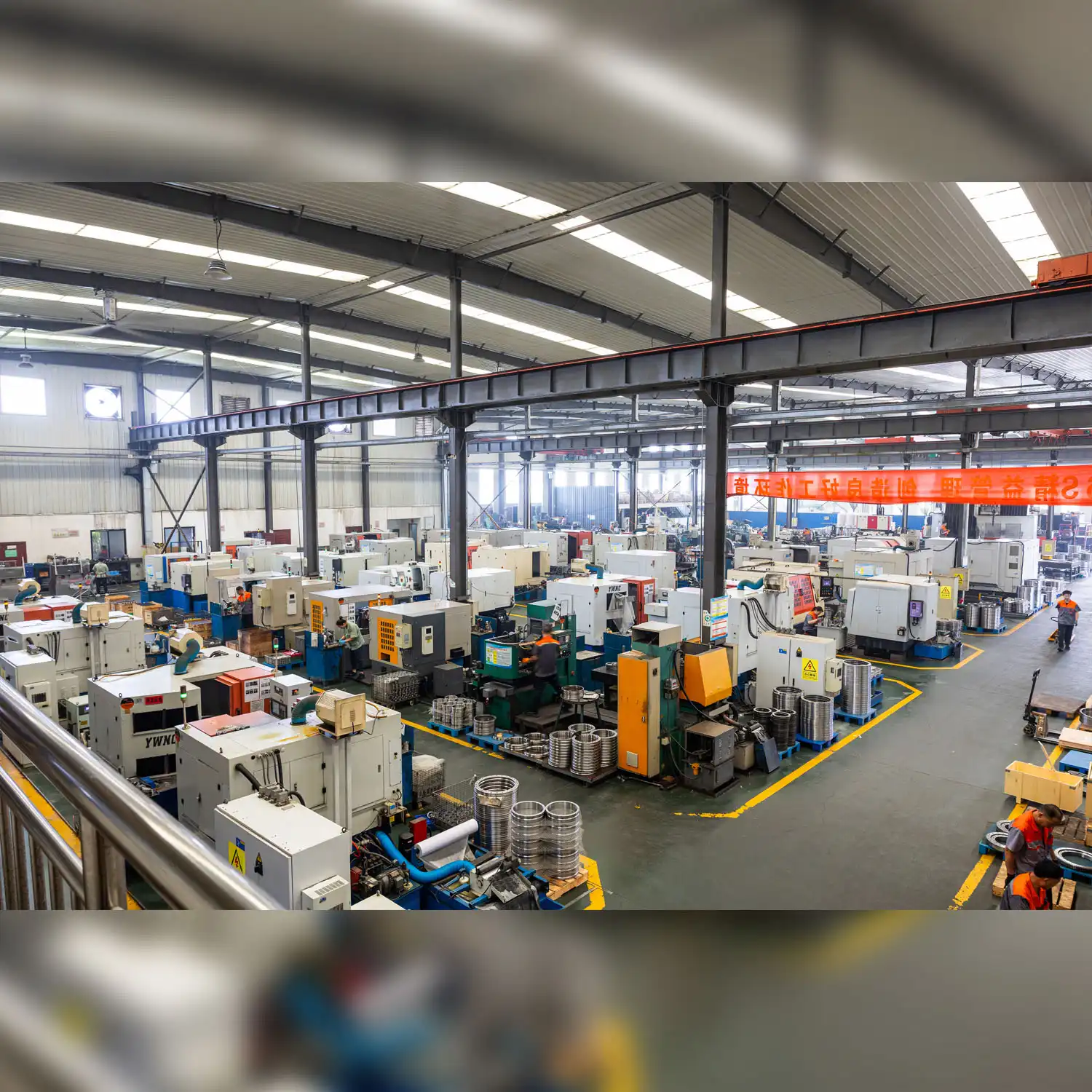
Manufacturing precision determines whether material properties translate into actual performance. At Luoyang Auto Bearing, our ISO 9001 and IATF 16949 certified processes maintain rigorous dimensional tolerances. Raceway grinding operations achieve surface finishes below 0.2 Ra micrometres, minimising friction and ensuring uniform roller contact patterns. Measurement protocols verify roundness, concentricity, and raceway profile geometry at each production stage, guaranteeing each bearing meets specified accuracy grades from P6 standard tolerance through P2 ultra-precision classification.
Structural Geometry and Rotational Accuracy
The separable outer ring design characterises the RA series construction. This engineering choice serves multiple precision-enhancing functions beyond simplifying installation. During manufacturing, the integrated inner ring can be ground as a complete unit, eliminating potential misalignment between split ring halves. This unified structure maintains superior concentricity between the inner raceway and mounting surfaces.
The outer ring separates for assembly around the roller and spacer set, then reunites to form a precision envelope. Manufacturing processes match outer ring halves, grinding them as a pair to ensure perfect circumferential alignment. Identification markings enable proper reassembly orientation, maintaining the precision geometry established during initial manufacturing.
This structural approach creates exceptionally low runout values. Radial runout—the variation in bearing diameter during rotation—directly affects equipment precision. Automated inspection systems rotating each bearing under measurement probes verify runout remains within specified limits, often achieving values below 5 microns for P5 grade and 2.5 microns for P4 grade components.
Key Specifications and Performance Metrics of RA8008UUCC0 Bearings
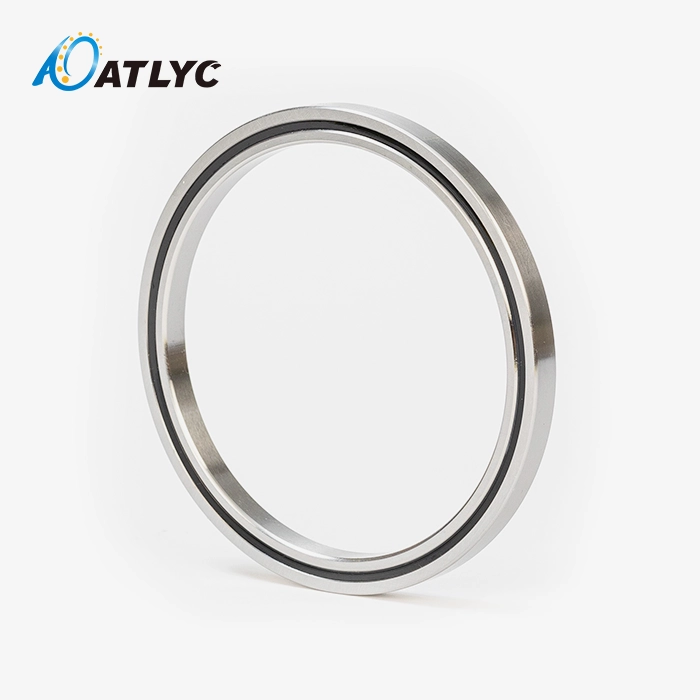
Dimensional specifications define how components integrate into larger assemblies. The RA8008UUCC0 Crossed Roller Bearing features an 89mm inner diameter, 96mm outer diameter, and 8mm width. These compact dimensions enable integration into space-constrained applications where traditional bearing arrangements physically cannot fit. The remarkably thin 8mm cross-section reduces axial space requirements by approximately 50% compared to standard-width crossed roller bearings, allowing engineers to design more compact equipment without compromising load capacity.
Load Ratings and Operational Parameters
Static and dynamic load ratings quantify bearing performance under different operational conditions. Static load capacity indicates the maximum load a stationary bearing can support without permanent deformation, while dynamic ratings specify load capacity during rotation. The crossed roller configuration of the RA8008UUCC0 delivers higher load ratings per unit volume than comparable ball bearing designs.
The bearing handles radial, axial, and moment loads simultaneously within its compact envelope. This multi-directional load capability eliminates the need for supplementary bearing arrangements. When designing a rotary table for semiconductor wafer handling, a single crossed roller bearing provides the rigidity and precision that would otherwise require paired angular contact bearings plus a separate thrust bearing, simplifying procurement and assembly while reducing potential error sources.
The CC0 preload designation specifies a negative internal clearance of -2 to -5 microns. This controlled interference fit between rollers and raceways eliminates internal play, creating zero-backlash operation essential for precision positioning. While preloaded bearings exhibit slightly higher starting torque than clearance-fit designs, the resulting rigidity and positioning accuracy prove indispensable in applications like robot wrist joints where even microns of play would degrade end-effector positioning accuracy.
Comparison with Alternative Bearing Models
Understanding how the RA8008UUCC0 compares to similar models helps procurement professionals make informed decisions. The RA8007 offers a slightly smaller 70mm bore with a 7mm width, suitable for more compact applications but with correspondingly reduced load capacity. The RA8009 increases to a 90mm bore with a 9mm width, providing greater load capacity for heavier-duty applications.
The KG series represents an alternative thin-section crossed roller design. While offering similar compact dimensions, KG bearings typically feature different internal geometry and sealing arrangements. Comparative analysis shows that the RA series generally provides superior moment load capacity due to its optimised raceway angle and roller length-to-diameter ratio. This advantage proves particularly valuable in cantilever loading scenarios common in robotic applications.
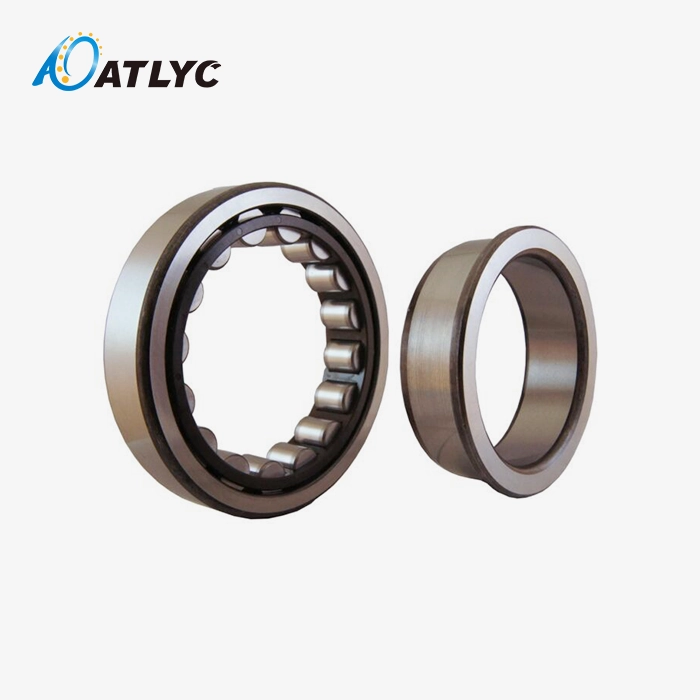
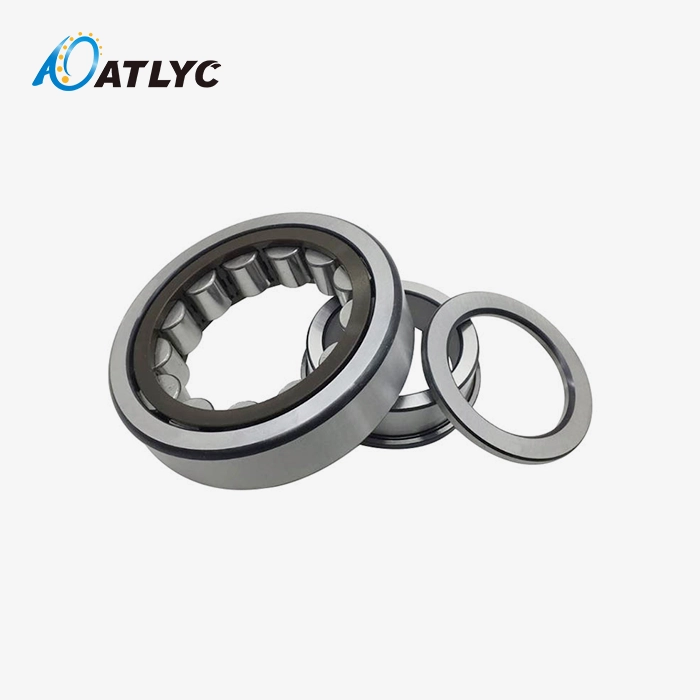
When comparing against cylindrical roller bearings, crossed roller designs demonstrate clear advantages in applications requiring simultaneous multi-directional load handling. A cylindrical roller bearing excels at pure radial loads but requires supplementary thrust bearings for axial loads and offers limited moment capacity. The crossed roller configuration integrates these capabilities within a single, more compact assembly.
Maintenance Practices and Service Life Extension
Proper maintenance practices directly impact bearing precision and operational lifespan. The UU designation indicates sealed construction with synthetic rubber seals on both sides. These seals retain the lithium soap-based grease pre-filled during manufacturing while excluding contaminants that would accelerate wear and degrade precision.
Recommended inspection intervals depend on operating conditions. Equipment operating in clean environments under moderate loads may require inspection only during scheduled maintenance shutdowns. Applications involving elevated temperatures, contamination exposure, or continuous high-load operation benefit from more frequent monitoring. Inspection procedures should verify smooth rotation, absence of unusual noise or vibration, and proper seal integrity.
Lubrication management proves critical for maintaining precision. The pre-filled grease typically provides adequate lubrication throughout the bearing's service life in standard applications. Equipment operating in vacuum environments, extreme temperatures, or food-grade applications may require specialised lubricants. When replacement becomes necessary, cleaning procedures must remove old grease completely before applying fresh lubricant matching the original specification.
Monitoring rotational torque provides early indication of developing issues. Gradually increasing torque suggests contamination, inadequate lubrication, or wear progression. Sudden torque changes may indicate seal failure or mechanical damage. Implementing torque monitoring as part of predictive maintenance programmes helps identify problems before they impact production, reducing unplanned downtime and protecting your investment in precision equipment.
RA8008UUCC0 in Action: Applications and Industry Use Cases
The versatility of crossed roller bearings becomes evident when examining their deployment across diverse industrial sectors. Each application leverages specific performance characteristics that address unique operational challenges.
Industrial Robotics and Automation
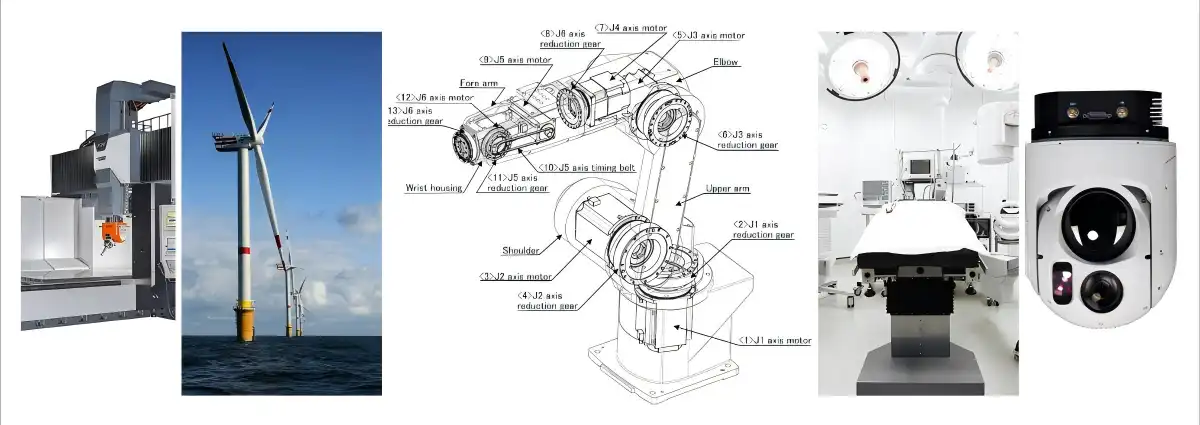
Among the most demanding bearing conditions are robot joint applications. The wrist joint of a six-axis industrial robot is subject to moment loads due to off-centre mass distribution, cantilevered loads from tooling and workpieces, and continual acceleration and deceleration. Because of its small size and zero-backlash operation, the RA8008UUCC0 is able to overcome these obstacles.
By incorporating these bearings into the elbow and wrist joints, a manufacturer of collaborative robots was able to reduce the weight of their design by 30% when compared to their prior iteration, which used paired angular contact bearings. Because of the drop in inertial loads caused by the weight loss, acceleration was boosted, and energy efficiency was enhanced. Simplifying programming and enhancing repeatability to within ±0.02mm, the zero-backlash characteristic eliminates positioning mistakes that previously needed adjustment through control algorithms.
Along with pinpoint accuracy, semiconductor production robots necessitate immaculate cleanliness. Tolerance of particle formation from bearing components is not acceptable for wafer handling systems operating in ISO Class 4 cleanrooms. The crossed roller design reduces sliding friction and wear debris formation, while the UU seals prevent grease migration. After using sealed crossed roller bearings in its wafer transfer robots, a producer of equipment claimed to have eliminated rejects caused by contamination.
Precision Machining Centres and Indexing Systems
Rotary tables used in CNC machining centres require exceptional stiffness and positioning accuracy. When a five-axis machining centre rotates its table under cutting loads, any bearing deflection translates directly into dimensional errors in the workpiece. The crossed roller bearing's high rigidity under moment loads maintains positional accuracy even as cutting forces vary throughout the machining cycle.
A machine tool manufacturer documented their experience integrating the RA8008UUCC0 into a compact rotary table design. Previous designs using crossed roller bearings with standard clearance exhibited 12 microns of positional drift under 500 Nm moment loads. Switching to the CC0 preload specification reduced positional drift to 3 microns, bringing dimensional accuracy within the ±5 micron tolerance required for aerospace component production.
Inspection equipment utilised in quality control applications demands stable, repeatable motion. Coordinate measuring machines (CMMs) employ rotary tables to orient workpieces during dimensional verification. Any play in the rotary bearing introduces measurement uncertainty, limiting inspection capability. The zero-backlash operation of preloaded crossed roller bearings eliminates this error source, enabling measurement uncertainty below 2 microns.
Medical Equipment and Imaging Systems
The requirement for silent, vibration-free operation is coupled with the high degree of accuracy demanded by medical imaging equipment. Bearings that can handle cantilevered loads from X-ray sources and detectors weighing 20-30 kg must rotate smoothly over 360 degrees in order for portable C-arm fluoroscopy systems to rotate imaging heads around patients.
The RA8008UUCC0's small size and quiet operation made it a top pick for a medical equipment manufacturer's mobile imaging system. The preloaded design removed picture shake caused by bearing motion, and the narrow 8 mm width allowed integration within the space-constrained swing arm assembly. As examination times decreased, patients became more satisfied because they needed fewer repeat exposures to achieve better image stability.
Surgical robots are an additional tough medical use. To keep the operating room sterile, instrument manipulators must place surgical tools to within millimetres, all while keeping a low noise level so as not to disturb the focus of the surgical team. Both needs are met by sealed crossed roller bearings, which allow for precise motion but contain lubricants that could potentially contaminate sterile fields.
Comparing RA8008UUCC0 Crossed Roller Bearings with Alternatives
Procurement decisions benefit from understanding comparative advantages between bearing technologies and sourcing options. Performance characteristics, total cost of ownership, and supply chain reliability all influence optimal component selection.
Performance Comparison with Other Bearing Types
Because of its low friction and high-speed capability, ball bearings are the most prevalent bearing technology. When contrasted with line-contact roller designs, their point-contact shape severely restricts load capacity. In most cases, the load capacity of a crossed roller bearing is two to three times higher than that of a ball bearing of the same size. In applications where space is limited but load capacity is paramount, crossed roller technology is the best choice.
Angular contact ball bearings that are installed in pairs to handle both radial and axial loads need to be mounted precisely with a regulated preload during installation. With their factory-set preload, crossed roller bearings simplify assembly and eliminate installation errors that could impair performance. This benefit lowers overall manufacturing costs for OEM customers by reducing assembly time and skill requirements.
Compared to crossed roller types, tapered roller bearings take up more axial space, but they are superior at handling heavy thrust and radial loads. Crossed roller bearings are the best option when there is little axial space but plenty of room in the radial envelope, which is a common occurrence in equipment design restrictions. Conversely, tapered roller layouts may be more suitable for situations that have sufficient axial space yet demand high load capacity.
Total Cost of Ownership Considerations
Purchase price represents only one component of bearing total cost. Service life, maintenance requirements, and downtime costs significantly impact overall expenditure. The sealed construction of RA8008UUCC0 bearings extends relubrication intervals, reducing maintenance labour costs. Pre-filled lithium soap grease typically provides adequate lubrication for 10,000-20,000 operating hours depending on load and speed conditions.
Energy consumption deserves consideration in applications involving continuous operation. The crossed roller bearing's controlled preload creates slightly higher friction than clearance-fit designs, increasing torque requirements. However, this energy penalty remains modest—typically 5-15% higher than zero-preload equivalents—and may be justified by precision advantages. Applications prioritising positioning accuracy over minimal friction clearly benefit from preloaded designs.
Downtime costs frequently exceed component costs in automated manufacturing environments. Production line interruptions for bearing replacement can cost thousands of dollars per hour in lost productivity. The extended service life and predictable wear characteristics of quality crossed roller bearings reduce unplanned maintenance, protecting production schedules and improving overall equipment effectiveness metrics important to plant managers evaluating supplier performance.
Supplier Selection and Authenticity Verification
Major brands in the bearing market include NSK, SKF, Koyo, NTN, and Nachi, as well as OEM producers such as Luoyang Auto Bearing, which offer competitive prices and equivalent specs. While making sure components are authentic and of high quality, procurement experts must strike a balance between cost and brand recognition.
In particular, counterfeit bearings pose a threat to high-value precision components in the supply chain. You can tell a genuine RA8008UUCC0 Crossed Roller Bearing by its tamper-evident seals, consistent surface polish across all machined surfaces, and laser-etched identification markings. Reputable suppliers provide certifications of materials, reports on dimensional inspections, and traceability documentation that associates components with particular production batches.
If the product is to be used in an automotive setting, it must comply with IATF 16949 quality standards, and the supplier must have an ISO 9001 quality management certification. Luoyang Auto Bearing maintains consistent quality and continuously improves our services, as shown by our certifications. We have grown from a single workshop to six locations since our founding in 2010, a testament to our 15 years of manufacturing experience and the trust our customers have placed in us.
Global logistics difficulties are affecting lead times, which is increasing the importance of a reliable supply chain. Suppliers that keep sufficient stock on hand, provide fair minimum order sizes, and consistently show up when they say they will assist procurement teams in keeping production running smoothly. By keeping in touch with suppliers in different parts of the world, you can spread out your risk and have backup plans in case any of your supply channels encounter logistical problems.
Procurement Guide: How to Buy RA8008UUCC0 Crossed Roller Bearings?
Strategic procurement of precision bearings requires understanding technical specifications, supplier capabilities, and commercial terms that affect total cost and supply chain reliability.
Supplier Evaluation Criteria
Assessing supplier credibility begins with verifying manufacturing capabilities and quality systems. Site visits or virtual factory tours provide insights into production scale, equipment sophistication, and process controls. Observe whether suppliers employ automated inspection systems, maintain climate-controlled manufacturing environments, and implement statistical process control methodologies that ensure consistent quality.
Quality certifications provide objective evidence of management system maturity. ISO 9001 certification demonstrates commitment to quality management principles, including customer focus, process approach, and continual improvement. For automotive applications, IATF 16949 certification adds automotive-specific requirements addressing defect prevention, supply chain management, and continuous improvement. Suppliers holding both certifications demonstrate capability to meet demanding OEM requirements.
Technical support capabilities influence long-term partnership success. Suppliers offering application engineering assistance help optimise bearing selection for specific requirements. Access to technical documentation, including CAD models, load rating calculations, and installation guidelines, accelerates product development. Customisation capabilities enable modifications that address unique application requirements—specialised seals for extreme environments, alternate materials for specific temperature ranges, or modified geometries for unusual mounting constraints.
Commercial Terms and Logistics
Minimum order quantities (MOQs) vary by supplier and product specialisation. Large bearing manufacturers may require substantial MOQs, particularly for specialised configurations, to justify production setup costs. Smaller specialised manufacturers like Luoyang Auto Bearing often accommodate lower MOQs, supporting prototype development and low-volume production. Clarifying MOQ requirements during supplier selection prevents surprises during procurement negotiations.
Lead times depend on whether components ship from stock or require manufacturing. Stock items typically ship within days, while manufactured-to-order components may require 4 to 8 weeks, depending on production scheduling and component complexity. Establishing blanket purchase orders with scheduled releases provides predictable demand signals, helping suppliers maintain appropriate inventory levels, potentially reducing lead times for repeat orders.
Shipping logistics significantly impact total landed cost. International shipping involves freight charges, customs duties, and potential delays at customs clearance. Suppliers experienced in export operations provide proper documentation, including commercial invoices, packing lists, and certificates of origin that facilitate smooth customs processing. Understanding Incoterms—whether purchasing FOB (Free on Board) or CIF (Cost, Insurance, and Freight)—clarifies responsibility for shipping arrangements and risk transfer.
Pricing Strategies and Negotiation
Bearing prices reflect material costs, manufacturing complexity, quality grade, and supplier positioning. Precision grades P5 and P4 command premium pricing over standard P0 tolerance components due to additional grinding operations and stringent inspection requirements. Preloaded configurations may incur modest surcharges reflecting assembly complexity and performance verification testing.
Volume discounts reward larger purchase commitments. Suppliers often structure tiered pricing with breaks at specific quantities—purchasing 100 pieces versus 50 might reduce unit cost by 15%, while 500-piece orders might achieve 25% savings. Procurement professionals should calculate actual savings considering inventory carrying costs and potential obsolescence risk before committing to large volumes purely for price advantages.
Long-term agreements benefit both buyers and suppliers. Committing to annual volumes enables suppliers to optimise production planning and raw material procurement, generating cost efficiencies that can be shared through improved pricing. Buyers gain pricing stability and supply security, particularly valuable during periods of market volatility. Including periodic price review mechanisms addresses potential cost fluctuations while maintaining relationship stability.
Payment terms influence cash flow and may affect pricing. Standard international terms often specify a 30% deposit with a 70% balance against shipping documents, though established relationships may negotiate net-30 or net-60 terms. Suppliers offering favourable payment terms may reflect associated carrying costs in their pricing, making cash-discount opportunities worth exploring for organisations with available capital.
Conclusion
The precision of RA8008UUCC0 crossed roller bearings stems from sophisticated engineering combining orthogonal roller orientation, precision-machined raceways, controlled preload, and high-grade materials. These components deliver zero-backlash operation within ultra-compact dimensions, addressing complex loading requirements in robotics, medical equipment, and precision machinery. Procurement professionals benefit from understanding technical specifications, comparing alternatives, and selecting suppliers offering certified quality, technical support, and reliable delivery. The bearing's performance advantages translate directly into improved equipment accuracy, reduced maintenance requirements, and enhanced productivity, delivering measurable value throughout its service life.
FAQ
What distinguishes the CC0 preload specification from standard clearance bearings?
The CC0 designation indicates negative internal clearance of -2 to -5 microns, creating controlled interference between rollers and raceways. This preload eliminates internal play, delivering zero-backlash operation essential for precision positioning systems. Standard clearance bearings retain slight internal play, resulting in positioning uncertainty unacceptable in applications like robotic wrist joints or precision indexing tables where micron-level accuracy is required.
How does the separable outer ring design affect installation procedures?
The separable outer ring simplifies installation in space-constrained applications but requires careful handling. The outer ring separates to enable assembly around the roller set, then reconnects to form the complete bearing. Match marks on the outer ring halves must align properly during reassembly to maintain manufactured precision. Avoid disassembling bearings after installation, as improper reassembly can compromise runout accuracy and performance.
What maintenance practices extend bearing service life?
The sealed UU configuration retains pre-filled grease while excluding contaminants, typically providing adequate lubrication for 10,000-20,000 operating hours. Maintenance involves monitoring rotational smoothness, checking for unusual noise or vibration, and verifying seal integrity. Equipment operating in harsh environments benefits from more frequent inspection. When relubrication becomes necessary, completely remove old grease before applying fresh lubricant matching original specifications to prevent compatibility issues.
Partner with a Trusted RA8008UUCC0 Crossed Roller Bearing Manufacturer
ATLYC brings 15 years of precision bearing manufacturing expertise to demanding industrial applications. Our ISO 9001 and IATF 16949 certified facility employs 120 skilled professionals across six specialised workshops, producing crossed roller bearings that meet P5 and P4 accuracy standards. We supply mid-to-large automotive manufacturers, industrial equipment OEMs, and global distributors throughout South Korea, the United States, Germany, Russia, Iran, and Turkey. Our RA8008UUCC0 Crossed Roller Bearing supplier capabilities include technical application support, customisation services, and competitive pricing with reliable lead times. Contact our engineering team at auto@lyautobearing.com to discuss your precision bearing requirements and experience the quality that has built our reputation across international markets.
References
1. Harris, T.A., and Kotzalas, M.N. (2006). Advanced Concepts of Bearing Technology: Rolling Bearing Analysis, Fifth Edition. CRC Press.
2. Nachi Technical Review Staff. (2019). Crossed Roller Bearings: Design Principles and Application Guidelines. Nachi-Fujikoshi Corporation Technical Publication.
3. ISO 492:2014. Rolling Bearings — Radial Bearings — Geometrical Product Specifications (GPS) and Tolerance Values. International Organisation for Standardisation.
4. Schaeffler Technologies AG. (2018). Crossed Roller Bearings in Robotics: Application Guide for Precision Automation. Schaeffler Technical Documentation.
5. Bhushan, B. (2013). Principles and Applications of Tribology, Second Edition. John Wiley & Sons.
6. Wada, S., and Tsushima, N. (2020). Precision Bearing Technology for Industrial Robotics. Journal of Precision Engineering and Manufacturing, Vol. 21, pp. 1547-1562.
Learn about our latest products and discounts through SMS or email