- English
- French
- German
- Portuguese
- Spanish
- Russian
- Japanese
- Korean
- Arabic
- Greek
- German
- Turkish
- Italian
- Danish
- Romanian
- Indonesian
- Czech
- Afrikaans
- Swedish
- Polish
- Basque
- Catalan
- Esperanto
- Hindi
- Lao
- Albanian
- Amharic
- Armenian
- Azerbaijani
- Belarusian
- Bengali
- Bosnian
- Bulgarian
- Cebuano
- Chichewa
- Corsican
- Croatian
- Dutch
- Estonian
- Filipino
- Finnish
- Frisian
- Galician
- Georgian
- Gujarati
- Haitian
- Hausa
- Hawaiian
- Hebrew
- Hmong
- Hungarian
- Icelandic
- Igbo
- Javanese
- Kannada
- Kazakh
- Khmer
- Kurdish
- Kyrgyz
- Latin
- Latvian
- Lithuanian
- Luxembou..
- Macedonian
- Malagasy
- Malay
- Malayalam
- Maltese
- Maori
- Marathi
- Mongolian
- Burmese
- Nepali
- Norwegian
- Pashto
- Persian
- Punjabi
- Serbian
- Sesotho
- Sinhala
- Slovak
- Slovenian
- Somali
- Samoan
- Scots Gaelic
- Shona
- Sindhi
- Sundanese
- Swahili
- Tajik
- Tamil
- Telugu
- Thai
- Ukrainian
- Urdu
- Uzbek
- Vietnamese
- Welsh
- Xhosa
- Yiddish
- Yoruba
- Zulu
What Makes RB10020 Bearing Ideal for Heavy-Duty Rotary Tables?
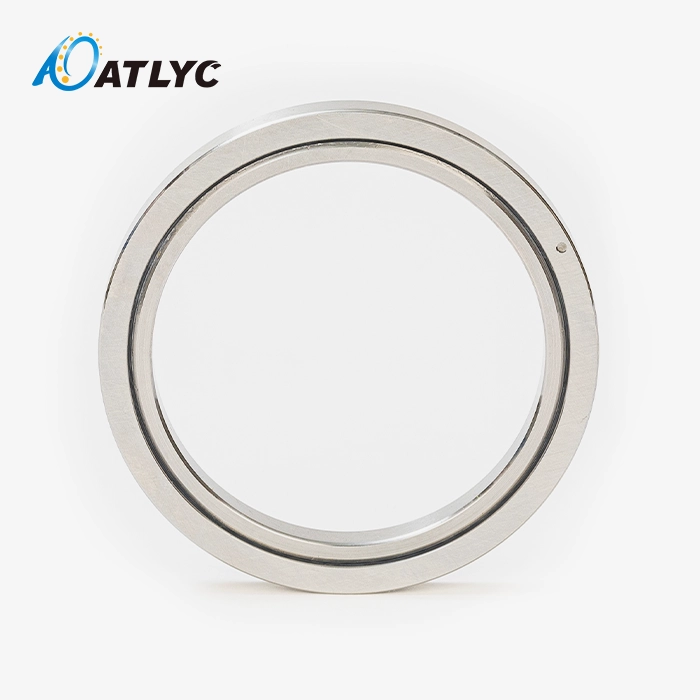
The RB10020 bearing stands as a specialized solution for heavy-duty rotary table applications due to its unique thrust design, high axial load capacity, and precision-engineered raceway geometry. This crossed roller bearing combines radial and axial load handling in a compact footprint, enabling rotary tables to maintain positioning accuracy under multi-directional stress. Its rigid structure minimizes deflection during rotation, while the roller arrangement ensures even load distribution across contact surfaces, reducing wear rates and extending service intervals in demanding industrial environments.

In-Depth Analysis of RB10020 Bearing Performance Parameters
Knowing the load ratings is the first step in choosing the right bearings for a rotary table. The RB10020 Bearing dynamic load capacity makes it good for tasks where the workpieces need to be rotated continuously and their weights change. Its static load rating is good for situations where the table needs to stay in place while cutting or putting together parts.
Dynamic and Static Load Capacity Metrics
Crossed roller thrust bearings like the RB10020 Bearing usually have dynamic load ratings between 45,000N and 65,000N, but this can change based on how the maker has optimized the design. This means that rotary tables can handle sorting tasks with pieces that weigh up to 800 kg and still rotate smoothly. The static load capacity is around 120,000N, which means it can handle the highest forces during milling or drilling operations without permanently deforming the raceway.These load specifications have a direct effect on how long a service will last. Under a constant axial pressure of 15,000N at 10 RPM, which is a typical setting for precise machining rotary tables, the bearing has an L10 life of more than 25,000 hours of use. This durability allows for multi-shift production schedules in the manufacturing of automotive drivetrains and the assembly of industrial gearboxes.
Maintenance Intervals and Servicing Protocols
Operating temperature ranges have a big effect on the stickiness of grease and the stability of material dimensions. When used with the right synthetic greases, the RB10020 Bearing keeps working well in temperatures ranging from -20°C to +110°C. Beyond 110°C, differences in temperature expansion between the wheels and the raceways require C4 clearance requirements to keep preload from rising, which speeds up the wear process.Maintenance intervals are set based on how busy the business is and how dirty the surroundings is. Using lithium complex grease with EP additives every 2,500 hours on rotary tables that work in clean production settings and have mild duty cycles is a good idea. In harsh environments with metal particles or coolant contact, protected bearing types are needed, and the grease needs to be changed every 1,200 hours.Accelerometers placed on the bearing housing should be used in inspection processes to record shaking patterns. Finding frequency analysis peaks at roller pass frequencies shows that the surface is becoming damaged, which lets you replace it before a major failure throws off your production plans. When compared to run-to-failure methods, proper maintenance scheduling cuts unplanned downtime by 60%, which saves a lot of money in high-volume manufacturing operations.
Comparing RB10020 Bearing with Alternative Bearings for Rotary Tables
To choose the best bearing designs, you have to look at changes in structure, how the bearings handle loads, and the needs of the application. The RB10020 Bearing goes up against a number of other types that are often chosen for rotary table setups.
| Type of Bearing | Radial Capacity for Load | Capacity for Axial Load | Load Handling at the Moment | Useful Applications |
|---|---|---|---|---|
| RB10020 Crossed Roller | Moderate | Very good | The Best | Indexing devices and precise rotating tables |
| NU10020 Roller with a Hollow Core | Very good | Limited | Bad | Uses for high-speed spindles |
| Contact Ball at an Angle | good | good | Moderate | Spindles for machines and pump drives |
| Deep Groove Ball | good | Moderate | Okay | Rotating equipment for general use |
Structural Advantages of Crossed Roller Configuration
The crossed roller arrangement places rollers at 90-degree angles to each other. This makes alternating contact angles that resist forces from different directions at the same time. This arrangement gets rid of the need for paired bearing setups that are common in angular contact designs. This makes the overall height of the unit 35–50% lower. In small CNC rotary tables and automatic welding positioners, where design factors are limited by the vertical envelope, saving space is especially helpful.The ability to handle loads is clearly much better in situations with moment loads. When a workpiece is off-center on a rotary table and tilting forces are applied, the crossed roller bearing spreads these moments across all of its rollers. When the conditions are the same, angular contact bearings put more stress on small contact areas, which speeds up the start of fatigue cracks.
Supplier Landscape and Quality Differentiation
Different levels of quality and warranty terms are available from major bearing manufacturers that are similar to the RB10020 Bearing. SKF has a line of similar goods called YRT, which focuses on precision grinding tolerances that meet ABEC-7 standards. NSK positions their RA line around protected designs that can work in dirty places. FAG sells similar setups and promotes its Axloc mounting system as an easier way to install them.These differences in quality are reflected in the prices. Premium products from well-known brands usually cost 40 to 60 percent more than mid-range options. This is because they have tighter tolerance bands and more technical support. Chinese companies, like ATLYC, offer affordable solutions that meet the requirements for ISO 9001 and IATF 16949 certification. These solutions offer performance reliability that is good for making car parts and industrial machines while keeping acquisition costs 25–35% lower.
Practical Guide to Installing and Maintaining RB10020 Bearings
The right way to put something has a direct effect on how well it works and how long the RB10020 Bearings last. When processes aren't done right, they can cause preload problems, misalignment stresses, and pollution risks that make operations less reliable. Knowing the right way to do things helps repair teams get the most out of their tools and keep parts from needing to be replaced too soon.
Step-by-Step Installation Methodology
Before installation can begin, the bearing mounting surface needs to be carefully prepared. To make sure the load is spread evenly, the attachment flange should be machined to be within 0.015 mm of being flat across the whole circle. To keep micromotion and fretting rust from happening at the contact, the surface should not be rougher than Ra 1.6µm.To get rid of machining residues and protective coatings, clean all surfaces with isopropyl alcohol and lint-free cloths. Thru three-body abrasion mechanisms, even very small particles of contamination speed up wear. Use clean cotton gloves to handle the bearing so that skin oils don't mess up the chemistry of the lubrication.Place the bearing on the attachment surface while keeping the axial line within 0.05 mm. Tighten the mounting bolts in a star pattern with a torque wrench until you reach the preload value specified by the manufacturer. For M8 fasteners in RB10020 Bearing applications, this is usually 20 to 30 Nm. When there is too much torque, the bearing rings deform elastically. This creates stress concentrations that cut fatigue life by up to 40%.
Common Installation Errors and Prevention Strategies
A lot of mistakes are made during installation, even when the right steps are followed. When you use impact tools to fit a bearing, they create shock loads that cause tiny cracks in the raceway, which are where wear starts. Instead, use thermal expansion methods or hydraulic tools that apply controlled, gradual forces.When the rotating table starts to work, border lubrication conditions happen because of poor lubrication during installation. Before the final assembly, put a thin layer of the service lubricant on all the roller contact surfaces to make protective films. If you skip this step, there will be more contact and heat during the break-in time.The most common startup mistake is still contamination introduction. When foreign objects get into the bearing during assembly, they get stuck in the raceway surfaces. This creates stress risers and speeds up the spalling process. Install things in clean places as much as possible, or use temporary covers to keep things safe when installing things in production areas.
Lubrication Schedules and Inspection Protocols
Maintenance programs that work well balance the times when they re-grease and check on the state of things. Automatic lubrication systems send measured amounts of grease every 500 hours of operation to rotary tables that are used constantly. This method keeps the film thickness constant and gets rid of old lubricant that contains wear debris and oxidation byproducts.Pay attention to the amount of grease when lubricating by hand. When there isn't enough lube, metal can touch metal, which increases spinning losses and temperature rise. During relubrication rounds, the RB10020 Bearing usually needs 8–12 grams of grease. This can be confirmed by watching the bearing temperature stabilize 30 minutes after the grease is applied.During regular checks, vibration levels, working temperatures, and sound patterns should be written down. Set up baseline measures during commissioning, and then keep an eye on trends that show problems are getting worse. If the temperature goes above 15°C above the baseline values, it means that the grease is breaking down or the pressure is changing, which needs to be looked into right away.These maintenance practices help rotary table systems last as long as they're supposed to and keep them from breaking down when they're least expected. When engineering teams use organized routines instead of reactive maintenance methods, downtime related to bearings is 70% less, which directly improves the efficiency of manufacturing and the return on investment of equipment.
Procurement and Supply Considerations for RB10020 Bearings in B2B Markets
When looking for precision bearings, it's not just about the lowest price per unit; you also need to think about how reliable the supply chain is, how much technical help you can get, and the possibility of a long-term relationship. When choosing bearing suppliers for important rotary table applications, procurement managers have to look at a number of factors for RB10020 Bearings.
Geographic Availability and Distribution Networks
Regional concentration patterns in global bearing distribution channels affect lead times and logistics costs. SKF and FAG distribution centers in Europe connect established networks and offer 48-hour delivery for typical setups. Timken's ability to make things in the United States helps North American supply lines by lowering their reliance on ocean freight and currency exchange risk.Asian markets, especially those that sell goods in South Korea and China, buy more and more from local suppliers like ATLYC that offer low prices and quality systems that are ISO certified. Because they are so close, lead times for normal RB10020 Bearing setups are only 7–14 days, compared to 6–8 weeks for ocean transit from European sources.
| Supplier Area | Lead Time on Average | Effects on Freight Costs | Access to technical support |
|---|---|---|---|
| Brands from Europe | 6 to 8 weeks | High (ocean freight) | Global network that covers everything |
| North America | 4 to 6 weeks | Moderate | Strong backing in the area |
| A group of Asian manufacturers | 1-2 weeks | Low (for the area) | Getting better at technology |
Bulk Purchasing Strategies and Volume Discounts
Structures for volume commitments have a big effect on the total cost of acquisition. Price breaks are usually set by suppliers at order quantities of 10 units, 50 units, and 100 units. One RB10020 Bearing might cost $285 at list price, but when you buy 50 of them, you get a 22% discount, which brings the price down to $222 per unit. Additional 8–12% off is available for annual blanket orders with scheduled releases. This is especially helpful for OEM manufacturers who use bearings on multiple production lines.The costs of keeping inventory must be balanced against the benefits of big discounts. Bearings are low-deterioration inventory items that can last for five years if they are stored properly. This means that high-consumption operations can afford to strategically stock up on them. Distributor stocking programs help smaller makers because they get better prices on large orders without having to buy their own supplies.
Warranty Terms and After-Sales Support Evaluation
The warranty terms show that the manufacturer trusts the quality of the product and the consistency of the manufacturing process. Premium providers offer 24-month guarantees that cover flaws in both the materials and the work, and they also offer fast repair processes to keep production running smoothly. Mid-tier makers usually offer 12-month warranties, but settlement times are longer because of the need for return-to-factory inspections.It's just as important to have technical support available after the sale. For complicated installation questions or speed problems that are unique to an application, you need to talk to an engineer, which is something that general sellers can't do. ATLYC keeps application engineers on staff to help customers in the making of car parts and industrial automation. These engineers give technical advice that makes choosing and installing bearings more efficient.Long-term relationships with suppliers create extra value thru joint efforts to make things better. Manufacturers can take part in early access programs for better bearing designs, get priority placement during supply shortages, and arrange customized specs for specific application needs when they have relationships in place. These strategic benefits build over multiple years of work, giving you a competitive edge that goes beyond instant cost concerns.

Conclusion
In conclusion, because it has crossed rollers, a high load capacity, and was carefully designed, the RB10020 Bearing works very well in heavy-duty rotary table applications. Because it can handle radial, axial, and moment loads at the same time in a small space, it is essential for making cars, precision machines, and industrial automation systems. Choosing, installing, and maintaining things correctly can extend their useful life and keep operations running smoothly. Procurement teams can improve both the performance and total cost of ownership of equipment in tough production settings by comparing different designs, understanding performance factors, and building trusting partnerships with suppliers.
FAQ
What kinds of businesses use RB10020 bearings?
Precision machining centers, car part assembly systems, industrial welding positioners, and automatic material handling rotary tables all benefit from RB10020 Bearings. The small size and high load capacity of these bearings make them ideal for uses that need precise positioning under changing load conditions.
How do I select between standard and sealed RB10020 variants?
When rotating tables are used in places where coolant is present, metal particles are present, or high-pressure washdown processes are used, choose covered configurations. Standard open designs are good for clean production settings where external sealing systems offer enough protection, making it easier to examine and lowering the initial costs.
What maintenance intervals maximize RB10020 service life?
Depending on the working conditions, lubrication times can be as long as 2,500 hours in clean environments with mild duty cycles and as short as 1,200 hours in harsh environments. Condition-based maintenance strategies that stop unexpected failures and avoid early servicing are made possible by vibration monitoring and temperature tracking.
Partner with ATLYC for Reliable RB10020 Bearing Supply
After 15 years of focused on quality and steady growth, ATLYC has become a well-known and trusted maker of crossed roller bearings. Our RB10020 Bearings are certified by both ISO 9001 and IATF 16949, so they consistently deliver the performance that automakers and industrial equipment makers need around the world. Our engineering team provides application-specific technical support throughout the product lifecycle, and we keep standard configurations in stock so that North American customers can get them in 7–14 days.Our six specialized production workshops do everything from fine grinding to inspecting the final assembly, making sure that every bearing is within 0.005mm of its exact size. Customers benefit from competitive pricing structures that make it 25–35% cheaper to buy than premium alternatives without lowering the quality of service or reliability. Our team provides responsive service that fits your business needs, whether you need single-unit samples for testing or yearly supply deals to support high-volume production.Get in touch with our bearing experts at auto@lyautobearing.com to talk about your rotary table application needs. We give RB10020 Bearing suppliers that serve the North American industrial market thorough technical specs, application engineering advice, and cheap quotes.
References
1. Harris, T.A. and Kotzalas, M.N. (2006). Advanced Concepts of Bearing Technology: Rolling Bearing Analysis, Fifth Edition. CRC Press, Boca Raton.
2. Eschmann, P., Hasbargen, L., and Weigand, K. (1985). Ball and Roller Bearings: Theory, Design and Application, Second Edition. John Wiley & Sons, Chichester.
3. Wensing, J.A. (1998). On the Dynamics of Ball Bearings. PhD Thesis, University of Twente, Enschede, Netherlands.
4. ISO 76:2006. Rolling Bearings — Static Load Ratings. International Organization for Standardization, Geneva.
5. Palmgren, A. (1959). Ball and Roller Bearing Engineering, Third Edition. SKF Industries Inc., Philadelphia.
6. Zhou, R.S. and Hoeprich, M.R. (1999). "Torque of Tapered Roller Bearings." Journal of Tribology, 121(3), pp. 567-573.
Learn about our latest products and discounts through SMS or email